Morning in Gale Crater on Mars. A cold, dusty landscape illuminated by pale sunlight. This color image was acquired on January 8, 2018, by NASA's Curiosity rover. 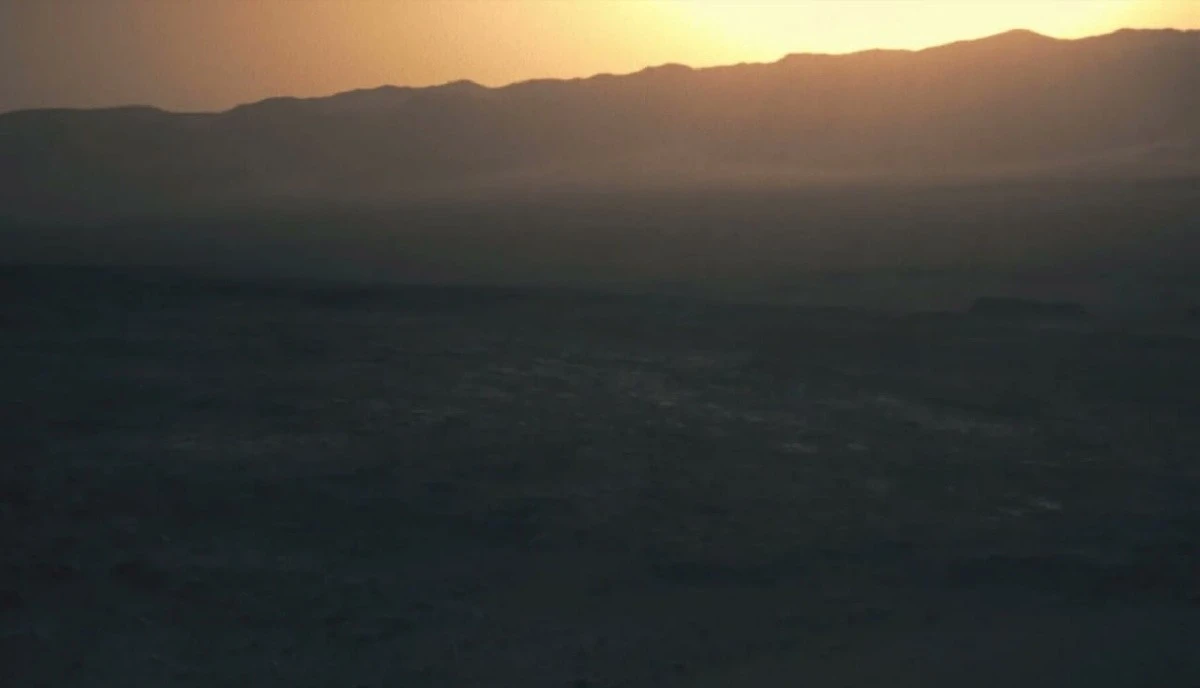
Gale Crater is one of the most fascinating places on Mars. It is approximately 154 kilometers in diameter, and Mount Sharp, a gigantic structure over five kilometers high, rises in its center. Its multilayered structure represents a kind of "archive" recording the planet's climatic history.
This is where the Curiosity rover has been working since August 6, 2012, studying rocks and trying to understand whether Mars once had conditions suitable for life.
Interestingly, neither Curiosity nor its younger sibling, Perseverance, are capable of directly detecting life on Mars. But they aren't looking for life itself—they're trying to determine whether Mars once had conditions suitable for its existence.
This is due to the limitations of their equipment. There are no instruments on board that could definitively detect microorganisms or, for example, fossilized remains of ancient life. This is too complex a task for autonomous vehicles, operating on average 225 million kilometers from Earth.
However, they do have the ability to analyze the chemical composition of rocks and the atmosphere. And in this, they have succeeded. 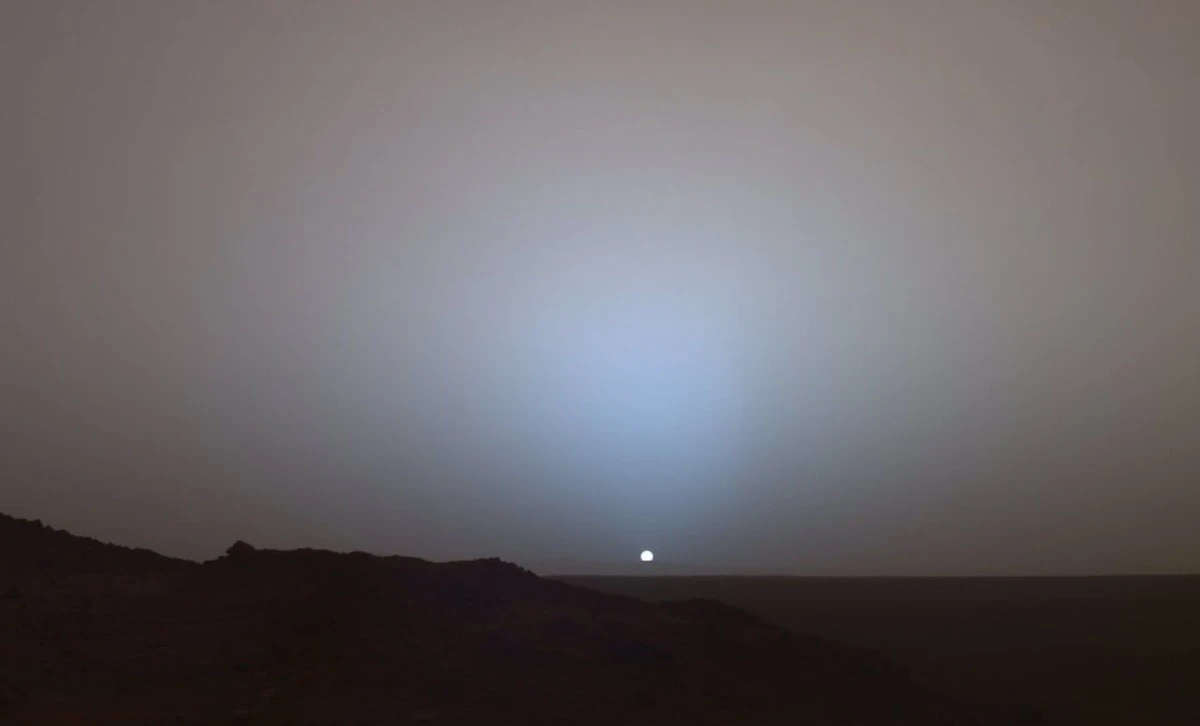
A Martian sunset captured by NASA's Spirit rover in Gusev Crater on May 19, 2005
Both rovers have already discovered organic compounds on Mars—carbon-containing molecules considered important building blocks of life. Curiosity found ancient organics in sedimentary rocks of Gale Crater, and Perseverance recorded a variety of organic molecules in Jezero Crater, where it has been located since February 18, 2021. Furthermore, Curiosity detected seasonal variations in atmospheric methane—a gas often associated with biological activity on Earth, although on Mars it may have a non-biological origin.
This isn't definitive proof of the presence of life, but it's considered an important signal: conditions suitable for its emergence may have once existed on Mars.
Perseverance has another task. It not only analyzes samples but also collects them for eventual delivery to Earth. The rover drills through the rock, extracts cores, and hermetically seals them in special containers. Perseverance typically takes pairs of samples, keeping one sample "in its belly" and a duplicate on the surface. This is done in case something happens to the rover and the samples cannot be retrieved. In that case, small drones could be sent to Mars to collect the duplicates. 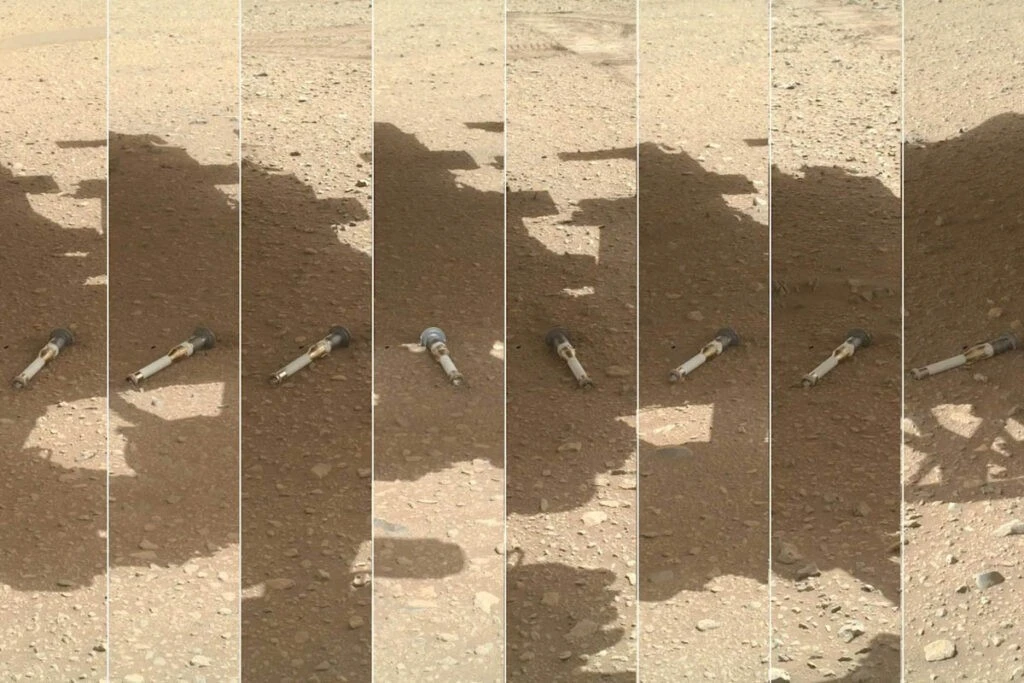
Martian soil samples collected by NASA's Perseverance rover have been hermetically sealed in special capsules and left on the surface.
Unfortunately, NASA is currently experiencing financial problems, so the sample return mission is up in the air.
Sometimes I fantasize about how science unites all of humanity, and how the China National Space Administration (CNSA) is proposing to NASA to organize a joint sample return mission, the scientific value of which is difficult to overstate.
If Martian soil ever does end up in Earth laboratories, more precise analytical methods—those impossible to implement with rovers—could provide definitive evidence of whether life once existed on Mars.
Add your comment
You might be interested in:











Detailed image of Mars taken by ESA's Mars Express

Elon Musk decided to send a million people to Mars and make

Extremely detailed view of Mars taken by the Curiosity rover

NASA's Curiosity rover showed what the night sky looks like

Winter on Mars looks like this (4 photos)

Girls gave Jared Leto a painted hat
NASA has discovered rocks that look like a teddy bear on
Did an alien ship crash on Mars? Curiosity found a

First aid kit, sleep and rock and roll: rockers from 30

17 Photos That Will Stop You in Your Tracks (18 Photos)

Behind the Camera on 'Back to the Future' (45 Photos)

What Would Happen to a Human on Every Planet in the Solar
Stunning Views of the Martian Horizon from 400 Kilometers
20+ Fascinating Photos of Rare and Unusual Sightings (40

50 Incredible Treasures People Rescued From the Trash (51
22 Examples of Pure Design Genius That Deserve a Huge

Hard to Believe Your Eyes: 20 Unreal Photos With

The Sexual Customs of the Vikings: Why an Older Partner Was
