Piggy banks "attack" a popular beach (3 photos + 1 video)
Dozens of plastic piggy banks washed up on a Texas beach. They were empty, and it's unclear where they came from. 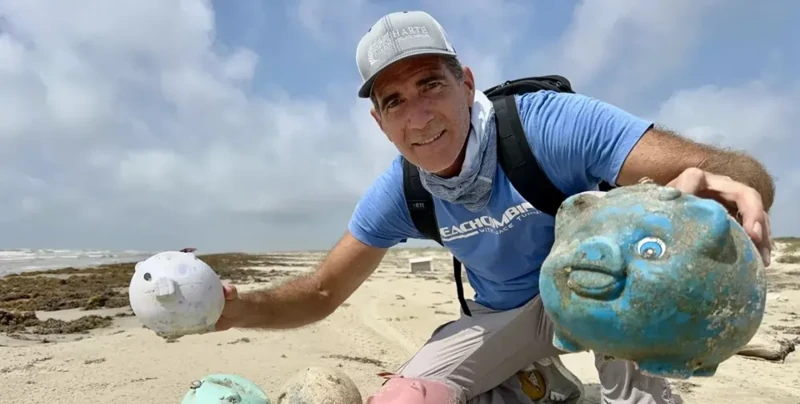
A Texas man collecting shells on the beach dug up more than five dozen piggy banks. But no one knows for sure where they came from. One theory is that the pigs may have ended up in the ocean when an unnamed container ship sank. 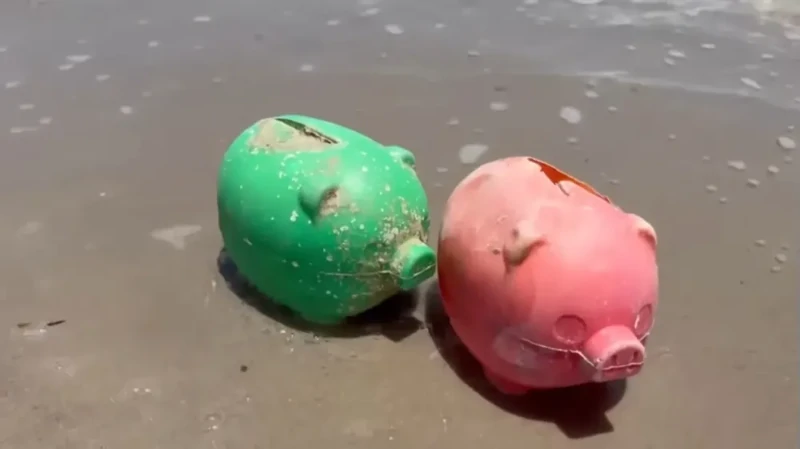
Jace Tunnell, a marine biologist at the Hart Research Institute, found 60 brightly colored piggy banks on several South Texas beaches this year, including 14 in just one day. He suspects they were discarded by disgruntled customers or the result of an accident at sea.
Tunnell said that all the discarded piggy banks he collected, as well as dozens found by other scavengers on the Bolivar Peninsula and South Padre Island, originated from South America or the Caribbean.
He concluded that the tsunami of plastic pigs could have been a byproduct of the container ship accident, but noted that the markings on the items could be an important clue in solving the mystery. The multicolored plastic piggy banks appeared to be manufactured in various countries. One of the most common models was made in the Dominican Republic, others had Spanish inscriptions, and at least one had markings from Guatemala. 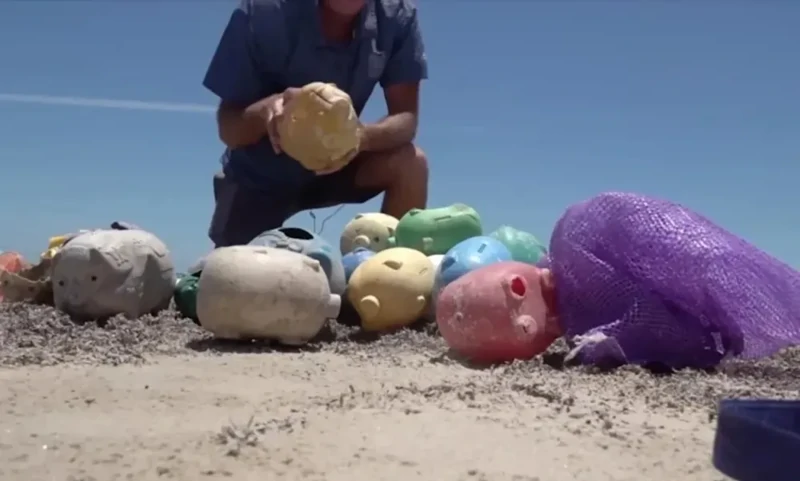
"After using these piggy banks, you'll notice a lot of cuts. There's no other way to get the money out, so people throw them away, whether in the ocean or on land," Tunnell said.
Some of these piggy banks looked as if they'd never been used, as if they'd been thrown away immediately after purchase.
Tunnell speculated that the pigs floated easily to the surface because they were empty—and were likely pulled by a current that carried them to the Texas coast. He also noted that this was the strangest find in years, and he's found more than 60 messages in a bottle, a safe, a prosthetic leg, three bowling balls, and even boats that he believes came from Cuba.
The man didn't find a penny in any of the 60 piggy banks he'd found and cautioned novice treasure hunters against getting their hopes up.
"Every time I post something like this, people ask, 'What was in there?' "Did you find any money?" I just tell them, "Sea urchins. That's the only thing I found," Tunnell said.
Even with years of experience in the maritime industry, Tunnell can't say for sure why there are so many piggy banks.
"Perhaps the people of the Gulf of Mexico are simply saving up for something big, one pig at a time," Tunnell suggested.