Invisible invasion: like a freshwater jellyfish Captured Europe (3 photos + 2 videos)
When it comes to invasive species, the imagination usually conjures up images of aggressive and visible creatures: Asian hornets devouring bees, hogweed taking over fields, or crayfish displacing native species. Ecological invasions are associated with loud conflicts and rapid ecosystem changes. But sometimes, the invasion occurs almost silently. So quietly that most people aren't even aware it exists. 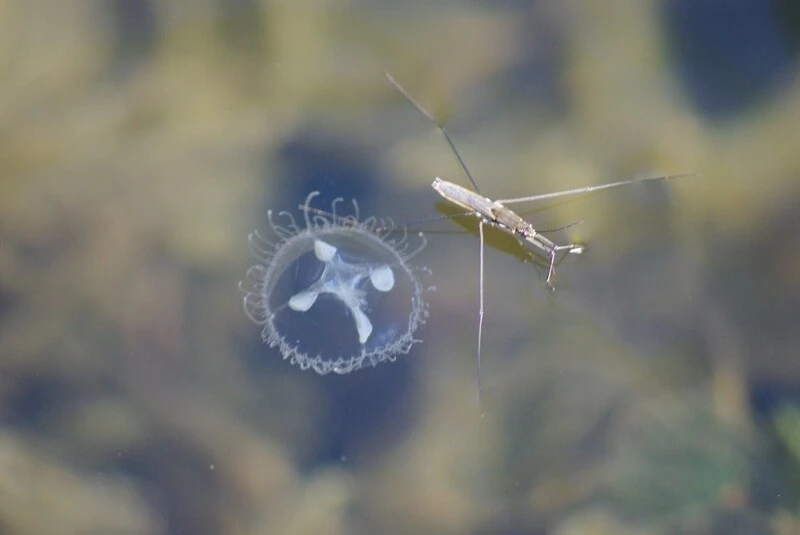
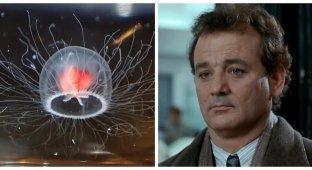
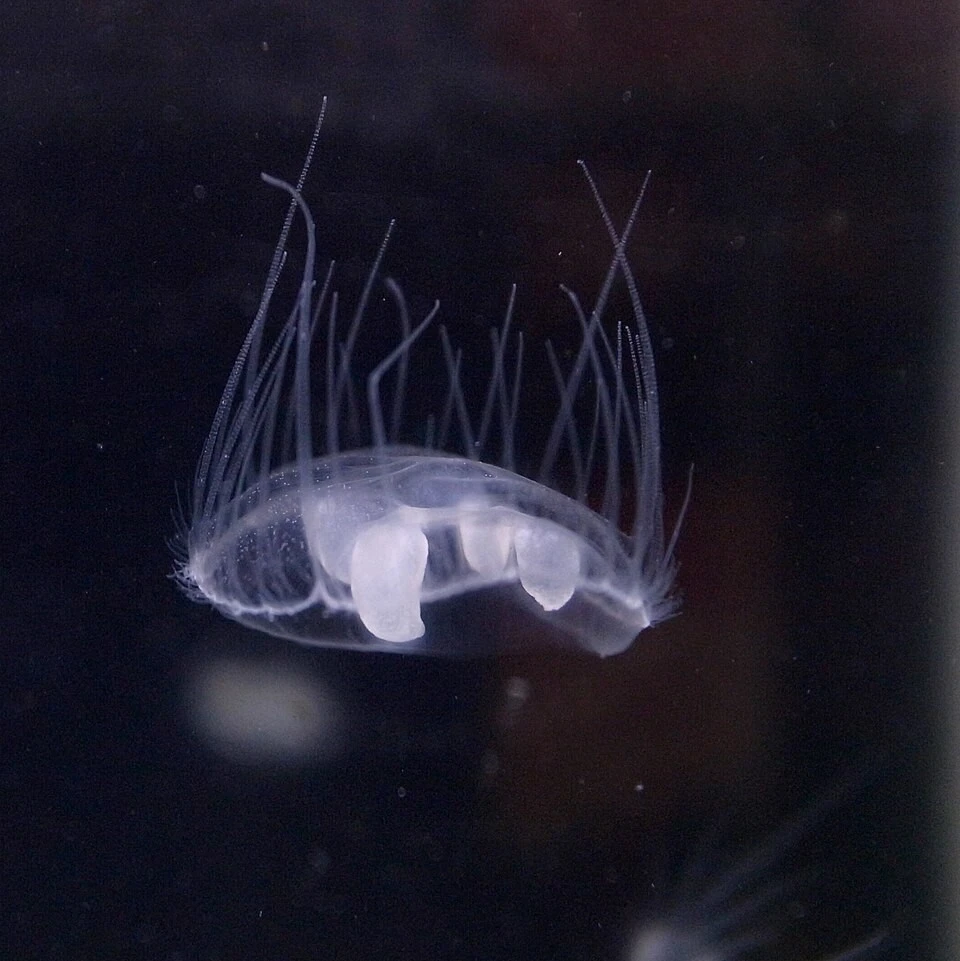
One such "invisible" invader is the freshwater jellyfish Craspedacusta sowerbii – a translucent, coin-sized animal that has been spreading throughout the waters of Europe and around the world for over a century. Despite its global distribution, this species remains virtually unknown to the general public. An international team of researchers set out to discover why this is so and how public perception influences the ability to notice biological invaders. The results of the study were published in the journal People and Nature.
At first glance, the very idea of a freshwater jellyfish sounds strange. Jellyfish are often thought of as purely marine creatures—symbols of saltwater, tides, and beach burns. However, among the thousands of marine species, several rare lineages of coelenterates have managed to colonize freshwater. Craspedacusta sowerbii is the most successful representative of this group.
The species is believed to have originated in the Yangtze River basin in China. But today, jellyfish are found on every continent except Antarctica. They are found in lakes, quarries, slow-moving rivers, reservoirs, and even artificial ponds—from North America to Australia, from South Africa to Scandinavia.
The paradox is that this animal is widespread yet almost invisible.
Part of the reason lies in its unusual life cycle. When we think of jellyfish, we imagine a free-swimming, gelatinous creature with tentacles. But this is only one life stage. Craspedacusta sowerbii spends most of its time as a microscopic polyp—a tiny, immobile organism attached to rocks, plants, or bottom surfaces. These polyps can remain undetected for long periods and survive adverse conditions.
True jellyfish appear only under certain circumstances—usually in the summer, when the water warms up sufficiently. Then, dozens or hundreds of transparent creatures, only 1–2 centimeters in diameter, suddenly appear in the lake. They live a relatively short time and disappear just as quickly.
Because of this seasonality, even experts may remain unaware of the species' presence in a particular lake for years. And ordinary people often mistake the find for an optical illusion, debris in the water, or insect larvae.
To understand how well the public knows about the existence of freshwater jellyfish, scientists conducted a large international survey. For nearly two years, researchers collected responses from 17 European countries. The study involved 1,388 people with varying levels of education, ages, and experiences with nature.
Participants were shown images of Craspedacusta sowerbii and asked questions about whether they knew this organism, where they had encountered it, whether they considered it dangerous, how they felt when they encountered it, and whether the spread of such species should be managed.
The results were surprising even to the authors themselves.
More than 80% of participants had never heard the scientific name of the species, and only about 10% were able to correctly identify the jellyfish. Moreover, this lack of familiarity was observed even among people actively interested in nature.
Even more curious was the confusion about its habitat. Almost half of the participants confidently stated that they had encountered these jellyfish in the sea. The problem is that Craspedacusta sowerbii is strictly a freshwater organism. It doesn't live in salt water at all.
Researchers believe that a cognitive habit effect is at work here: people so strongly associate jellyfish with the sea that they automatically interpret any similar object as a marine creature. Simply put, human perception often sees not what is present in nature, but what it expects to see.
This effect is especially important for understanding so-called cryptic invasions—hidden biological invasions. Typically, society notices an invasive species if it looks alarming, causes economic damage, or makes news. But there are species that spread almost unnoticed, evoke little emotion, and have no significant economic impact. As a result, their presence can remain unnoticed by science and conservation policy for a long time.
This is likely what happened to the freshwater jellyfish.
Interestingly, people's reactions to the discovery were more positive than negative. Many described the jellyfish as "beautiful," "delicate," "mesmerizing," and even "magical." The translucent body, smooth movements, and the very unusual existence of jellyfish in the lake surprised observers.
However, attitudes changed when the animals appeared en masse. When the water literally filled with dozens of gelatinous bodies, people often felt alarm or caution. The very fact of an unexpected jellyfish "bloom" was perceived as a signal that something unusual was happening in the ecosystem.
At the same time, Craspedacusta sowerbii poses virtually no serious threat to humans. It has stinging cells, like its marine relatives, and theoretically, it is capable of stinging. However, its toxicity is very low, and its tentacles are too small to cause serious harm to human skin. Only a small proportion of respondents reported any sensations after contact, and most often they reported a mild tingling sensation.
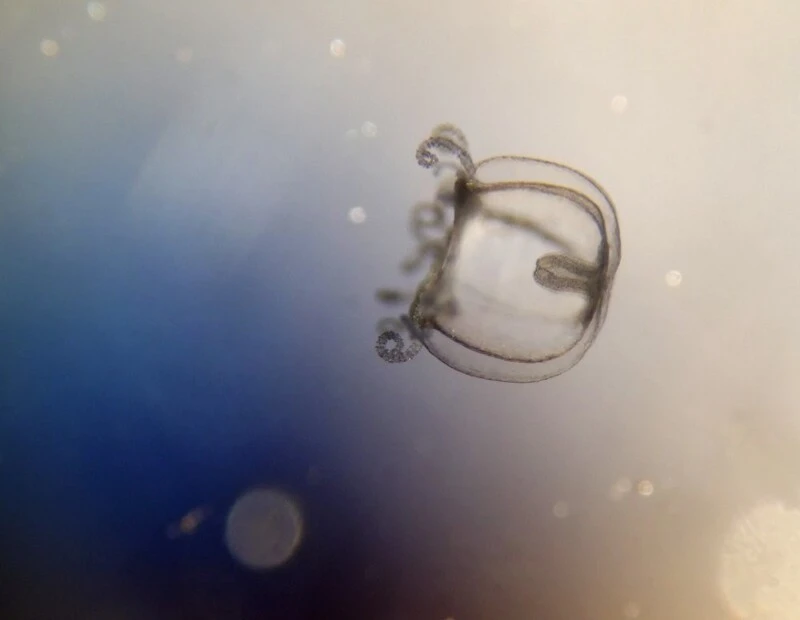
The real concern is not the danger to humans, but the potential impact on food webs in freshwater ecosystems.
While the species' impact has not yet been fully studied, jellyfish are known to actively feed on zooplankton—tiny crustaceans and other organisms that themselves serve as food for juvenile fish, insect larvae, and a variety of aquatic animals. If jellyfish become numerous, they can interfere with the distribution of energy within the ecosystem, effectively competing with other predators for the same resource.
The extent of this impact remains a matter of debate. In some bodies of water, the effect is almost imperceptible, while in others, more complex reorganizations of food chains may occur. Scientists are cautious in their conclusions: invasiveness does not necessarily mean an ecological catastrophe.
But there is a worrying factor: climate.
The appearance of jellyfish is closely linked to water temperature. Warm summer conditions are usually required for the transition from the latent polyp stage to the visible jellyfish. With global warming, such conditions are becoming more frequent and lasting longer. This means that population surges may become more regular, and the species' range may expand further north.
In fact, climate change could transform a currently rare and almost unnoticed phenomenon into a more common part of European landscapes.
Another interesting finding in the study: it wasn't education level or even environmental awareness that had the decisive impact on attitudes toward the species, but personal experience. People who had personally seen jellyfish in the wild were more likely to consider the problem important and support monitoring invasive species.
This fits well with modern environmental psychology: abstract threats are rarely taken seriously until people encounter them directly. A biological invasion only becomes "real" when it literally appears before our eyes.
The study's authors believe that conservation policy too often focuses on "high-profile" invasions—species that are frightening, cause economic damage, or easily make the media rounds. But ecosystems change in other ways too: slowly, imperceptibly, and without dramatic headlines.
A freshwater jellyfish reveals how limited our perception of nature can be. Sometimes, an entire invasive species can live for decades right next to people—in urban lakes, reservoirs, and quarries—remaining almost invisible.
And perhaps the main conclusion of this work is that the most significant ecological changes don't always look like catastrophes. Sometimes they resemble a small, transparent creature, drifting quietly through warm water, while no one pays attention.