Right now, as you read this, there are creatures living on your face. Tiny, eight-legged, silent. They sit upside down in your pores, feeding on your sebum, and apparently quite content. Meet Demodex folliculorum and Demodex brevis—two species of mites that have made the human face their permanent home. 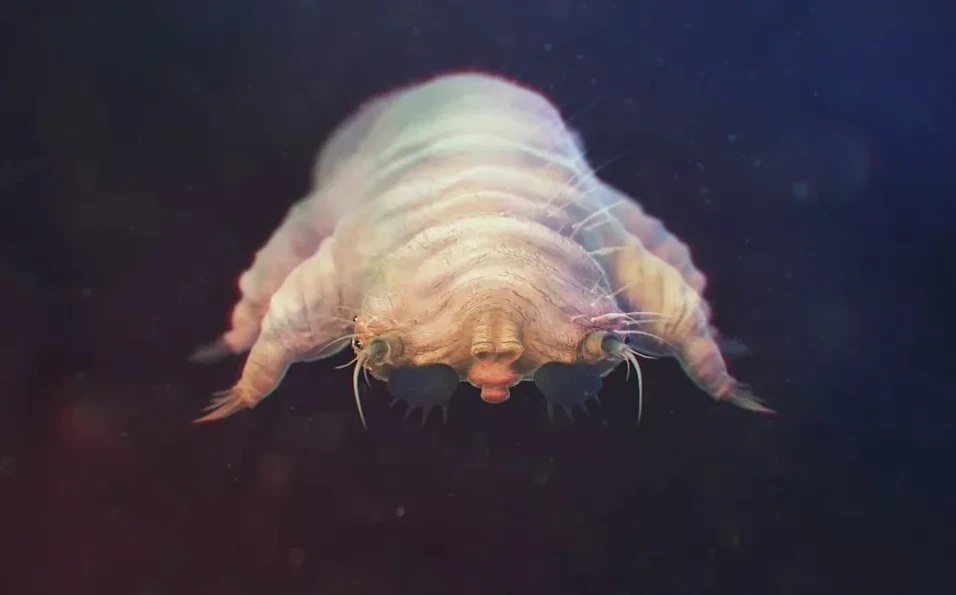
Hello, are you here by appointment? I'm here by prescription.
Demodex mites are not parasites in the traditional sense. It's more correct to call them symbionts or, at worst, opportunistic cohabitants. They belong to the class of arachnids—that is, they are relatives of spiders and scorpions, only 0.15–0.4 mm in size. You can't see them with the naked eye, but under a microscope, they look fantastic: an elongated, translucent body, eight short legs at the front, and a long, scaly tail. 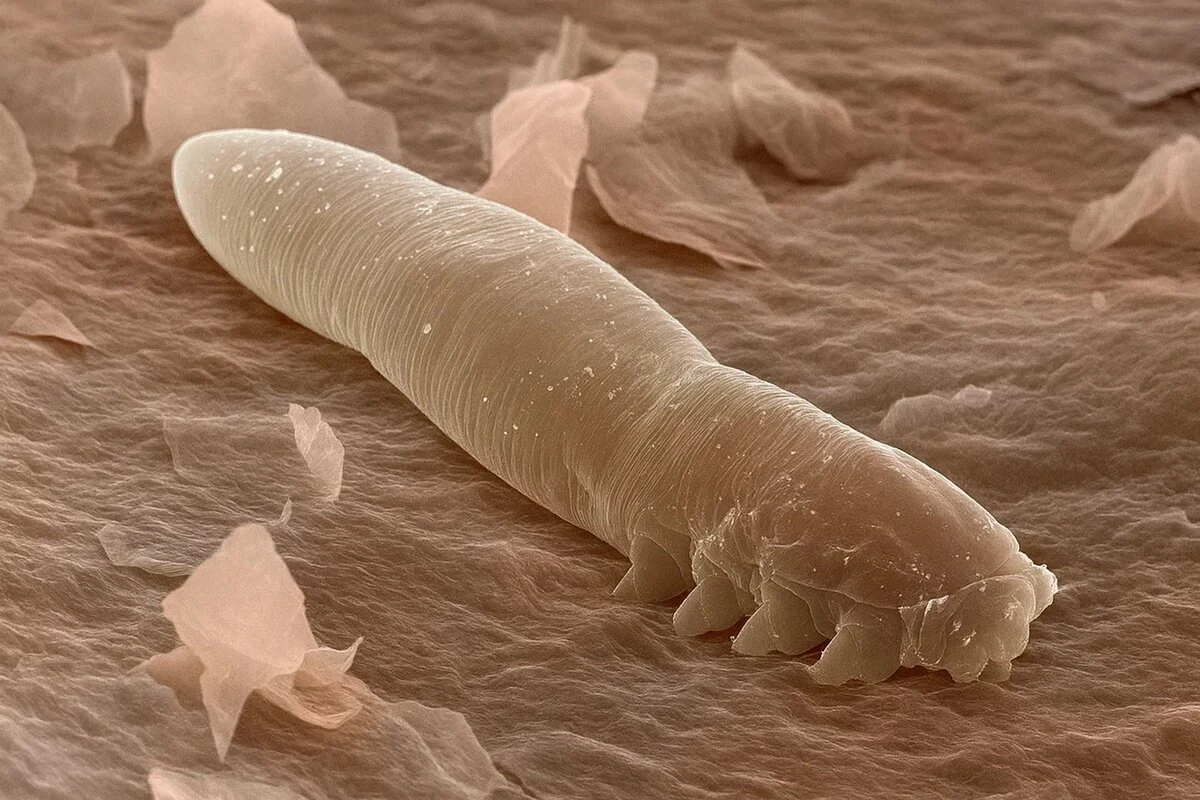
Gummy worm?
Folliculorum lives in hair follicles—primarily on the nose, cheeks, forehead, and eyelids. Brevis prefers the sebaceous glands and burrows a little deeper. They both feed on the same thing: sebum and epithelial cells. Overall, their diet is modest but stable. How many mites are there on us? Young people have a few or even dozens. People over 60 have potentially thousands: the older the skin, the more active the sebaceous glands and the more hospitable the environment. Research shows that almost 100% of adults have mites—it's just that most have few of them and they don't show any signs of it. How long have they been with us? Genetic analysis has shown that demodex mites have accompanied humans for at least several hundred thousand years—that is, even before Homo sapiens spread across the planet. Different human populations carry slightly different strains of the mites, which scientists use as a kind of biological passport of human migrations. 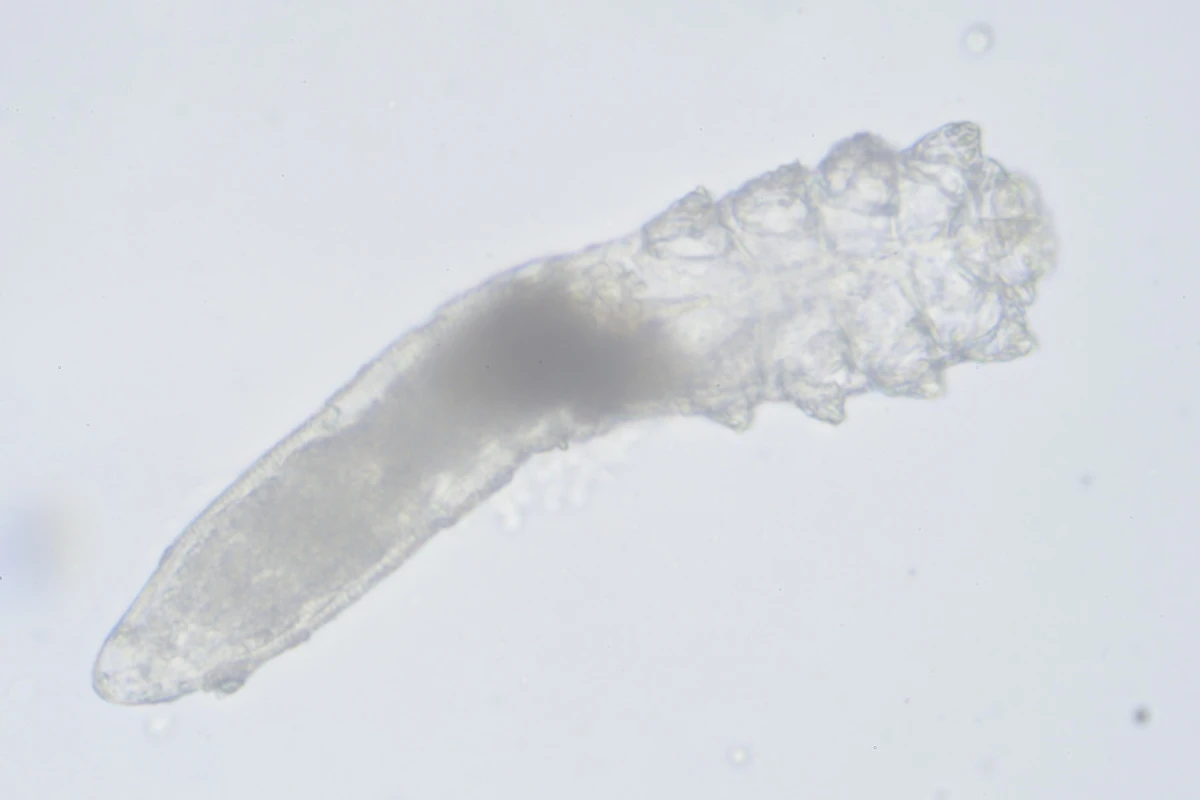
It's populated the entire world and doesn't even know it.
Demodex was discovered back in 1842, almost simultaneously, by two scientists—the German anatomist Gustav Simon and the French dermatologist Ferdinand Berger. Both discovered the mites by accident while examining the contents of pores under a microscope. The reaction of the scientific community was roughly the same as yours now. For a long time, they were considered unequivocally harmful—rosacea, acne, blepharitis, and other skin conditions were attributed to them. Then the pendulum swung the other way: people began to say they were completely harmless. The truth, as always, lies somewhere in the middle. In a healthy person with a normal immune system, Demodex mites exist quietly and unnoticed. Problems arise when there are too many of them—for example, with weakened immunity, hormonal imbalances, or excessive use of oily cosmetics, which literally feeds the colony. 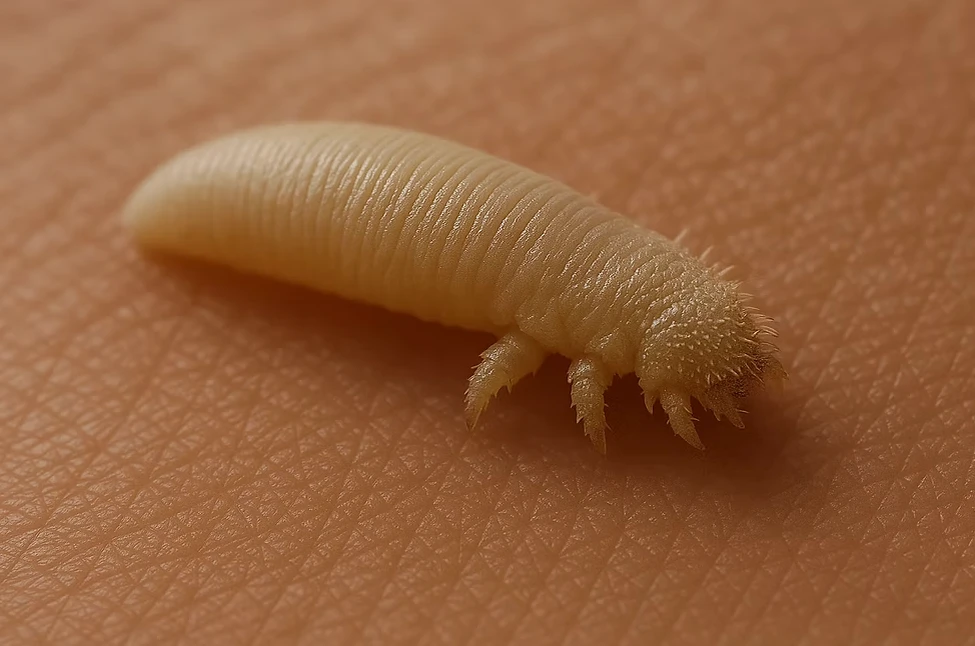
Oh yes, this foundation is simply delicious!
The life cycle of Demodex mites is about two weeks. At night, when the skin is resting, the mites crawl to the surface to mate. Yes, our faces are literally a nightclub at night :DD. In the morning, they return deep into the follicles. The eggs are laid directly in the pore, and the larvae go through several stages of development and become adults in about a week. 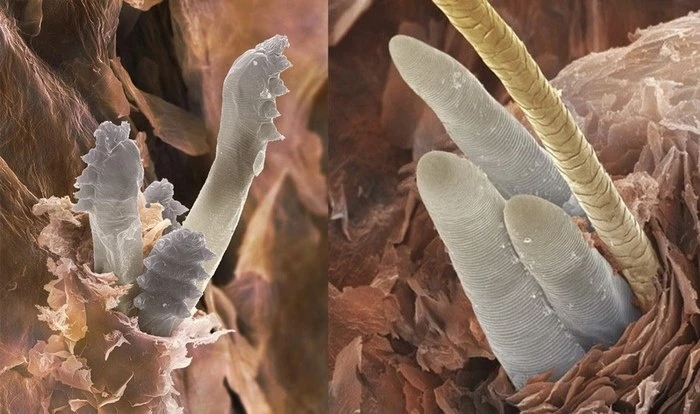
Guys, that was a blast tonight. Okay, let's get back to the follicle.
They don't have eyes—they're not needed in the dark pore. They have primitive mouthparts for piercing cells and sucking up the contents. Their legs are equipped with claws that they use to cling to the walls of the follicle. Basically, evolution has honed them for a single purpose—living on humans and eating. 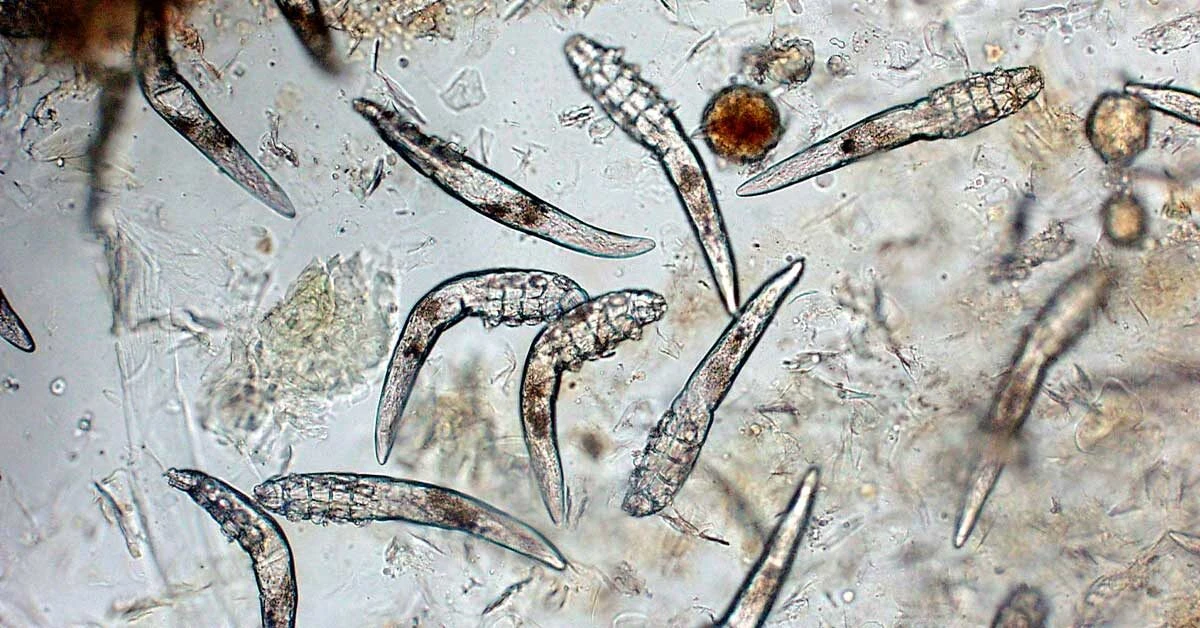
They look like tardigrades, but with a tail.
Demodex mites are one of the most striking examples of what's called the skin microbiome. We tend to think of our bodies as private and private, but in reality, we're an entire ecosystem. Hundreds of species of bacteria, fungi, viruses, and those mites live on human skin. Most of them aren't just harmless—they're essential. They compete with pathogens, help maintain the skin's acid balance, and train the immune system. Attempts to destroy this ecosystem with antibacterial soaps and harsh scrubs usually end badly—harmful microorganisms take the place of beneficial ones. Nature abhors a vacuum. So next time you look in the mirror, remember: you're not looking at yourself alone. And there's nothing wrong with that! 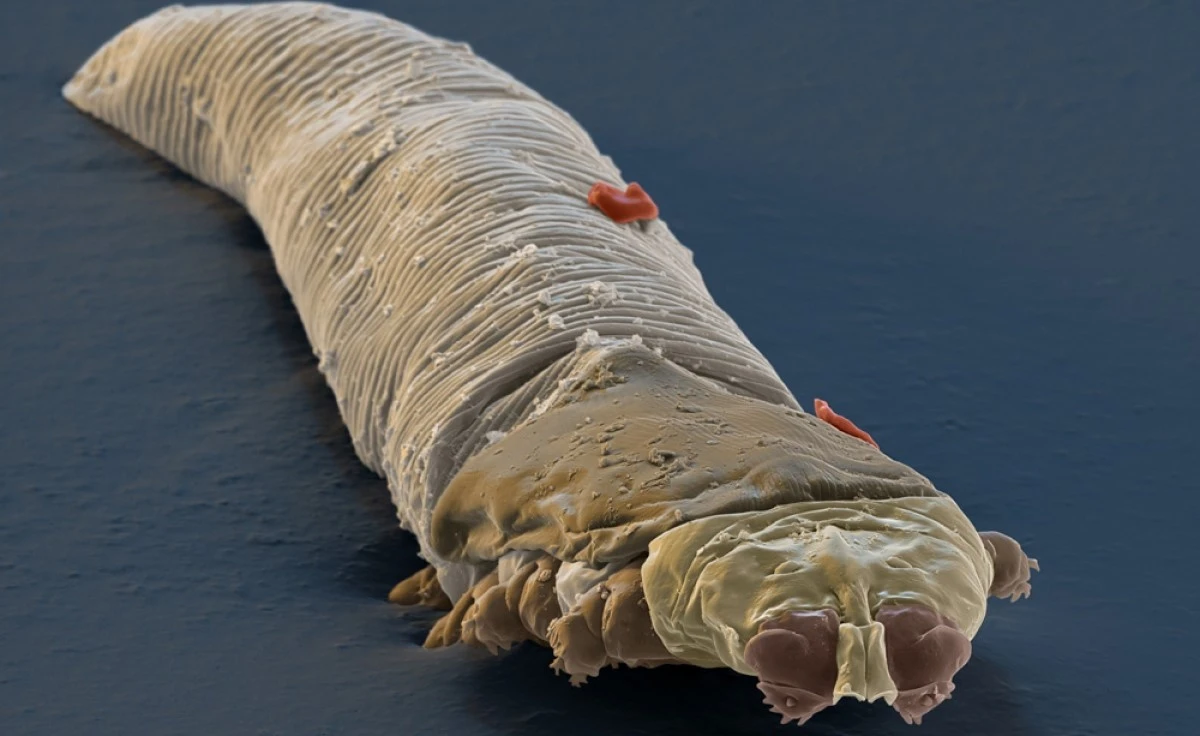
"Loneliness doesn't exist," the Demodex mite confidently proves.
Add your comment
You might be interested in:















Protective film Removing it with a power screwdriver

How to start a 102-liter engine

When a child plays hide-and-seek at a professional level

Man sets up bedroom camera and discovers the reason for his

Super dads who swoop in to save the day

Precision carpentry

Looks like it's time to buy WinRAR

How to hang wallpaper neatly

Athlete in Bavarian dress flies over a lake on a hydrofoil
