The Great Unconformity: Why a Billion Years Are "Missing" in Earth's History, and Geologists Don't Know Where It Is (11 photos)
There's a gap in Earth's history where a billion years are missing.
Not figuratively speaking, like "oh, we don't remember the nineties very well," but literally: there were rocks, there were eras, there were oceans, continents, microbes—and then someone carefully erased it all with planet-sized sandpaper. 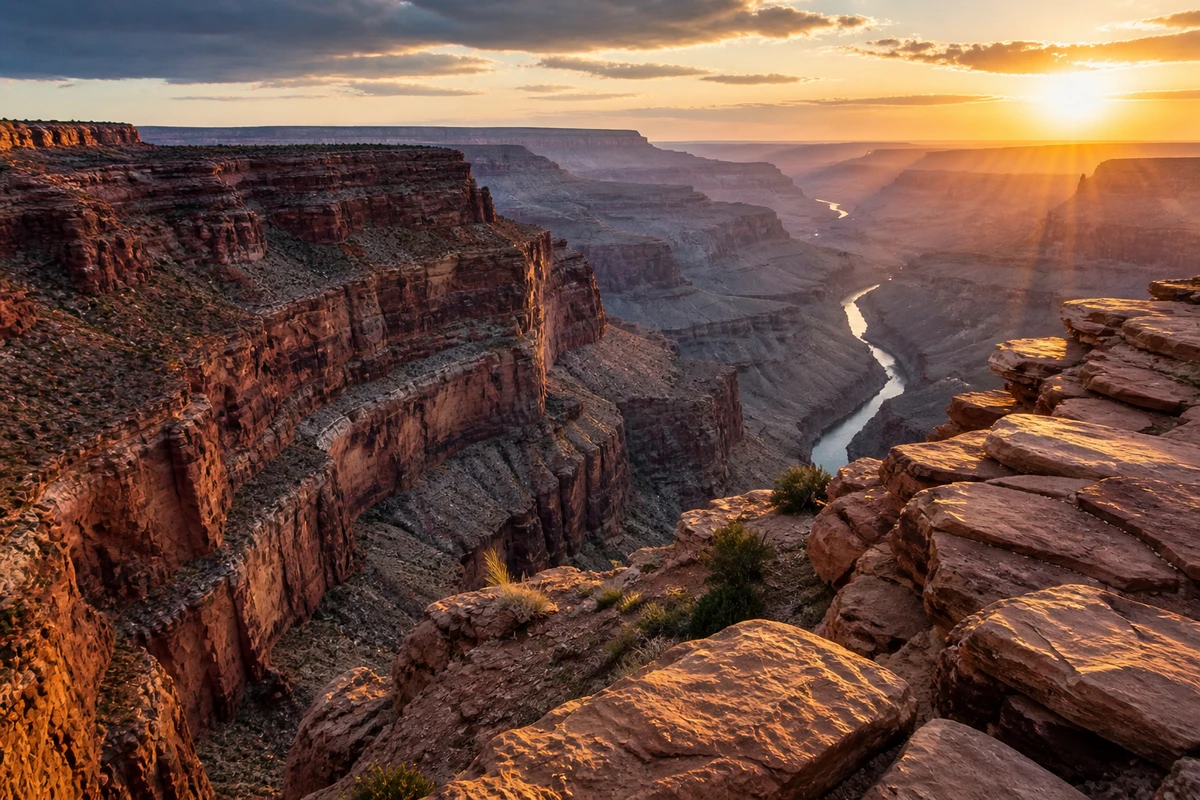
In the Grand Canyon, you can touch this missing space. Below are rocks 1.7 billion years old. Above, sandstone about 525 million years old. And in between, there's nothingness.
Geologists have dubbed this the Great Unconformity.
It sounds like a family squabble between tectonic plates, but in reality, we are confronted with one of the planet's strangest mysteries: where did a huge chunk of its history disappear to—and why, immediately after this loss, life suddenly blossomed in all its glory on Earth, after previously leading a modest, single-celled existence. 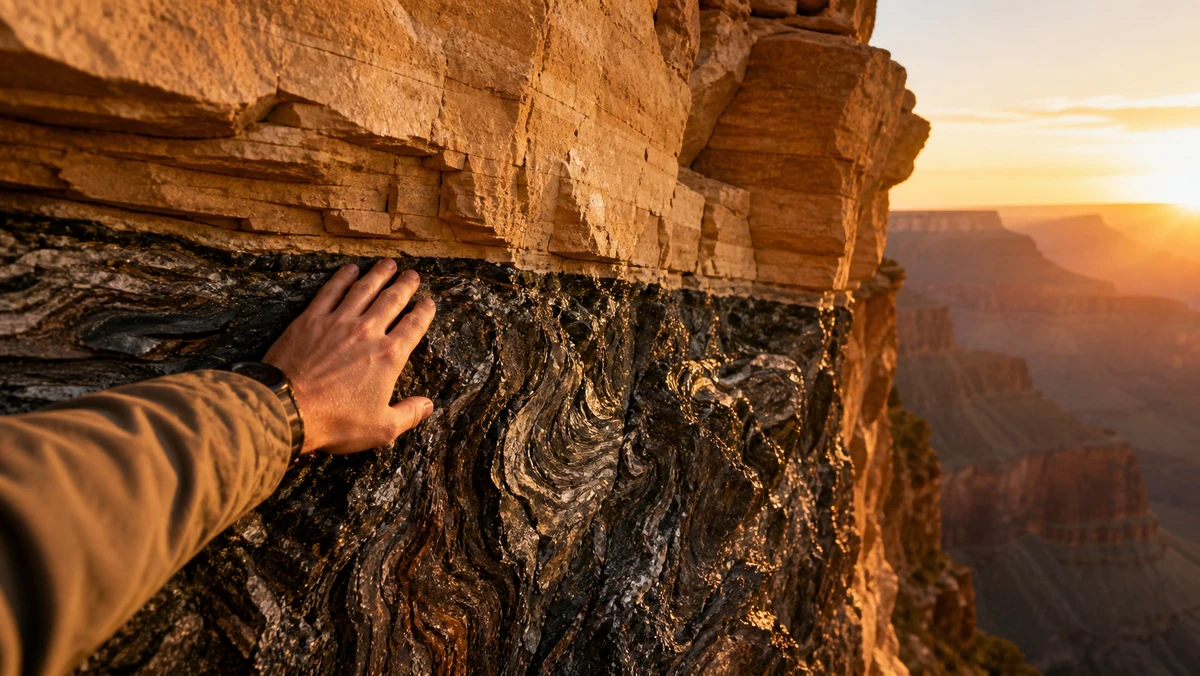
This story began in August 1869. Major John Wesley Powell, a one-armed Civil War veteran, was sailing a wooden boat through the canyons of the Colorado River when he saw something strange in the gorge walls. 
Major John Wesley Powell
Young sedimentary layers lie directly on an ancient crystalline basement, and between them lies a nearly straight line, concealing a 1.2-billion-year-old chasm where not a single stone remains.
Powell compared the rock layers to the pages of a book from which someone had torn out entire chapters. Geologists would later call this boundary the "Great Unconformity."
155 years have passed since then. The pages have never been found.
What a hole in the planet's history looks like
In the Grand Canyon, you can touch this "unconformity" with your hand.
If you place your palm on the boundary between two strata on the route descending to the Inner Canyon, you'll simultaneously touch rocks separated by a gap of over a billion years. 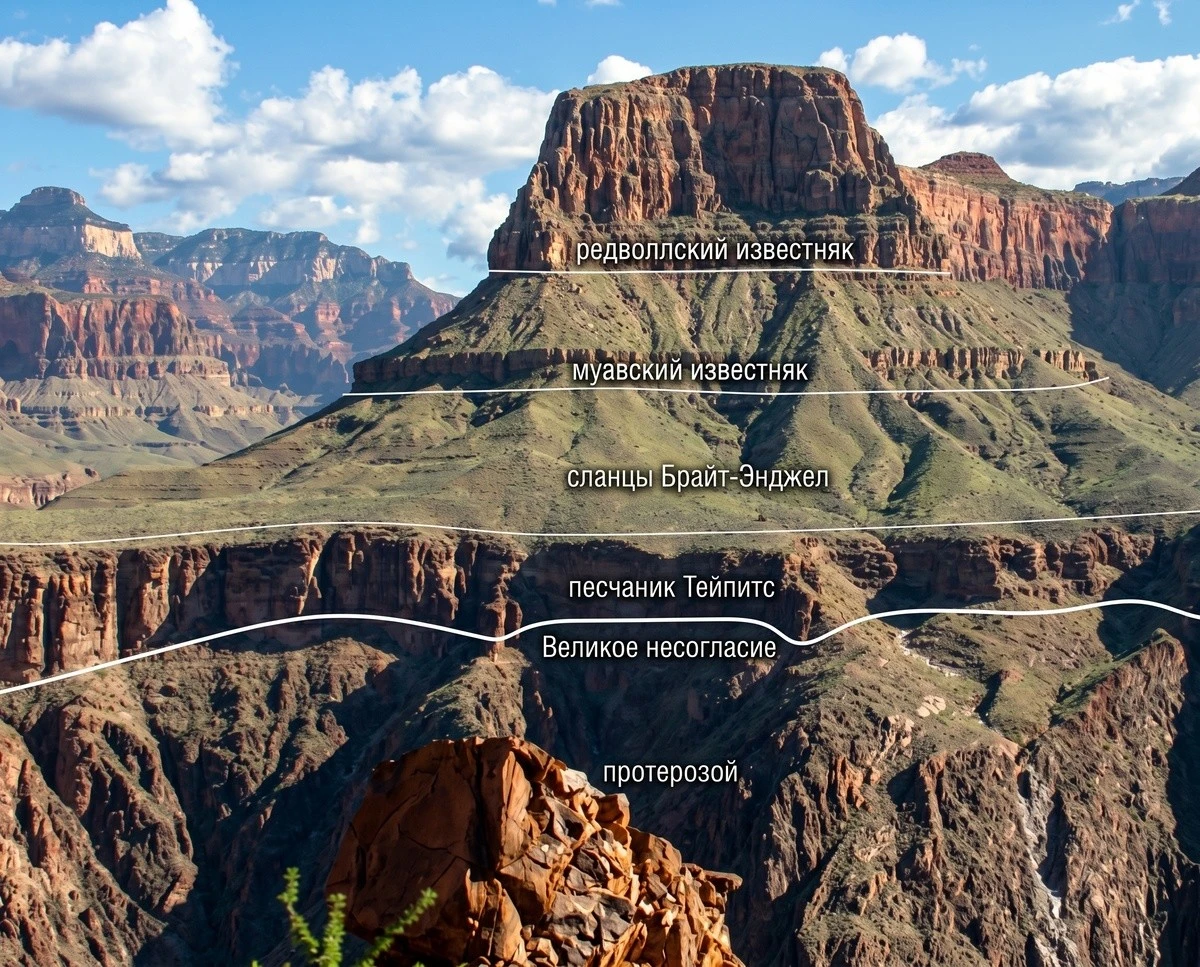
Below is a pockmarked dark shale, hard as metal, twisted by the pressure of the depths. Above is warm, golden sandstone. The contact between them is surgically clear—like the boundary between yesterday and the day after tomorrow...only "today" has disappeared somewhere.
Similar discrepancies are known on many ancient continental cores—in North America, China, Australia, and the Baltic Shield.
Everywhere the same picture emerges: an ancient foundation, billions of years old, overlain by sediments 500–520 million years old. But the geological eras between them have vanished, the gap empty. 
The scale of the loss is difficult to comprehend in our everyday sense. So, let me give you an analogy: if the entire history of Earth is a year, then the missing period is the entire autumn: September, October, and November.
What fell into this hole?
A significant portion of the missing interval falls within the so-called "Boring Billion." This period spans roughly 1.8 to 0.8 billion years ago, and there's a logic to the nickname.
By Earth standards, that time was relatively stable: there were fewer drastic climate shifts, and oxygen levels were much lower than today—estimates range from fractions of a percent to several percent of current levels. Tectonics, however, did not stop: it was then that the supercontinents Columbia and Rodinia assembled and broke apart. 
It's just that compared to other eras, everything moved slowly and without global catastrophes.
Life during that period was not stagnant. By this time, eukaryotes already existed—cells with nuclei were becoming more complex, new forms of reproduction were emerging, and early lines of multicellularity were emerging.
Acritarchs—microscopic organic membranes of ancient cells—and algae with signs of photosynthesis are found in Siberia.
Fragments of that time have been preserved in other basins and shields, and it is they that allow us to know at least something about that era.
Two theories about where 1 billion years disappeared. And both are correct.
Scientists have two main theories about what happened.
Theory one: glaciers as sandpaper. Approximately 717 million years ago, Earth experienced a series of extreme glaciations, known to science as "Snowball Earth." Geologists distinguish at least two major episodes: the Sturt glaciation, approximately 717–659 million years ago, and the Marin glaciation, approximately 650–635 million years ago. 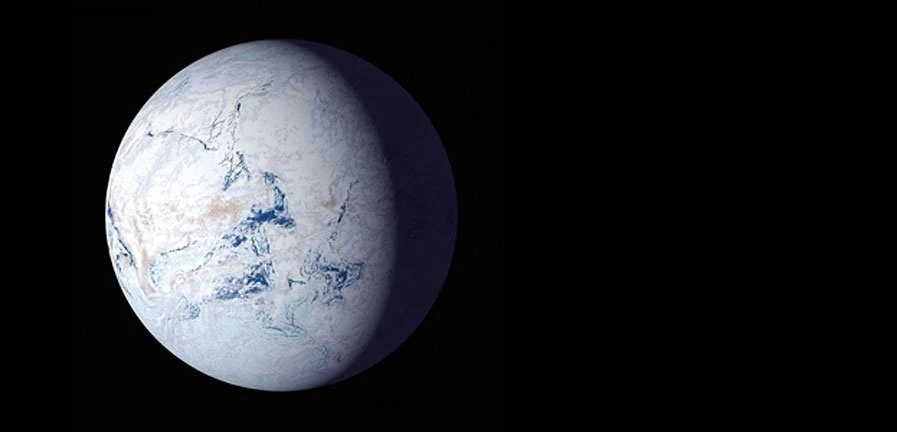
Ice could have reached low latitudes, and the oceans were covered with a thick ice shell.
Severe erosion is associated with these cryogenic glaciations. The mass of ice on the continents dramatically lowered sea levels, and glaciers moved toward the coastal zones, like sandpaper, sanding away excess material from the continents.
Theoretical two: a supercontinent is to blame. When continents collide, the edges rise and begin to wear away.
Scientists believe both factors could have played a role.
But, curiously, it was this "missing billion" that may have triggered the rapid development of life on the planet.
How the Erased Billion Helped the Explosion of Life 
Immediately after the Great Unconformity, something strange happens in the fossil record: animals become dramatically more complex and begin building skeletons.
Trilobites, arthropods, and early chordates all appear almost simultaneously. Scientists call this the "Cambrian Explosion" and are still debating the causes. 
Geophysicists Shanann Peters and Robert Gaines have proposed a counterintuitive connection: the erosion that created the unconformity may have triggered this explosion. When the sea flooded the exposed basement, fresh granite began to actively weather, saturating the water with calcium and phosphorus. According to the authors' calculations, this altered ocean chemistry so much that building shells and skeletons became evolutionarily advantageous. A beautiful hypothesis—but just that, a hypothesis, and the debate around it continues. 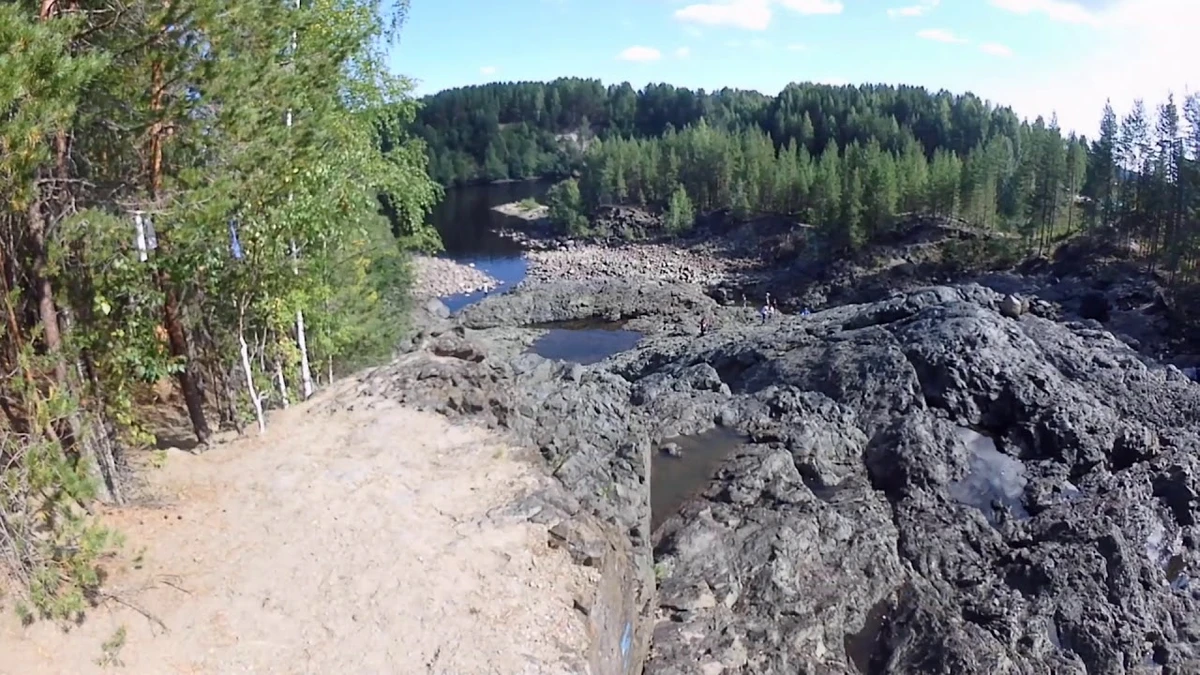
But perhaps the most interesting remains are found in the Yakutian Anabar Shield.
Special microfossils have been found there—the petrified remains of microscopic organisms: ancient algae, bacteria, and protozoa. These are living witnesses to that lost billion years, found nowhere else. 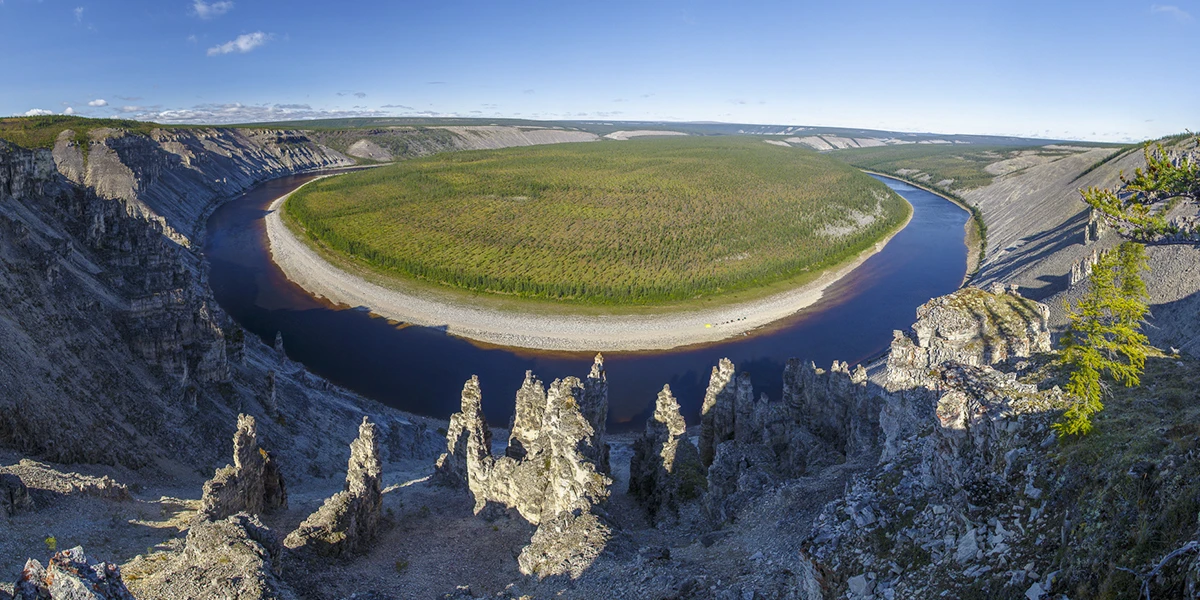
In other places, these rocks were completely eroded away. Yakutia preserved them by chance—and now it's one of the few archives of that era on the planet.
The Great Unconformity isn't just a geological anomaly. It's proof that the planet can destroy its own record on a scale that's hard to imagine. Kilometers of crust, billions of years of history—all of it was erased before the sea preserved the surface beneath a layer of new sediment.