Bumblebees: New Data on the Fantastic Intelligence of These Insects (6 photos)
Right now, thanks to bumblebees, a small scientific revolution is taking place! They're proving to us that insects aren't mindless biorobots, but developed living beings that can communicate, learn new things, share experiences, and even play! 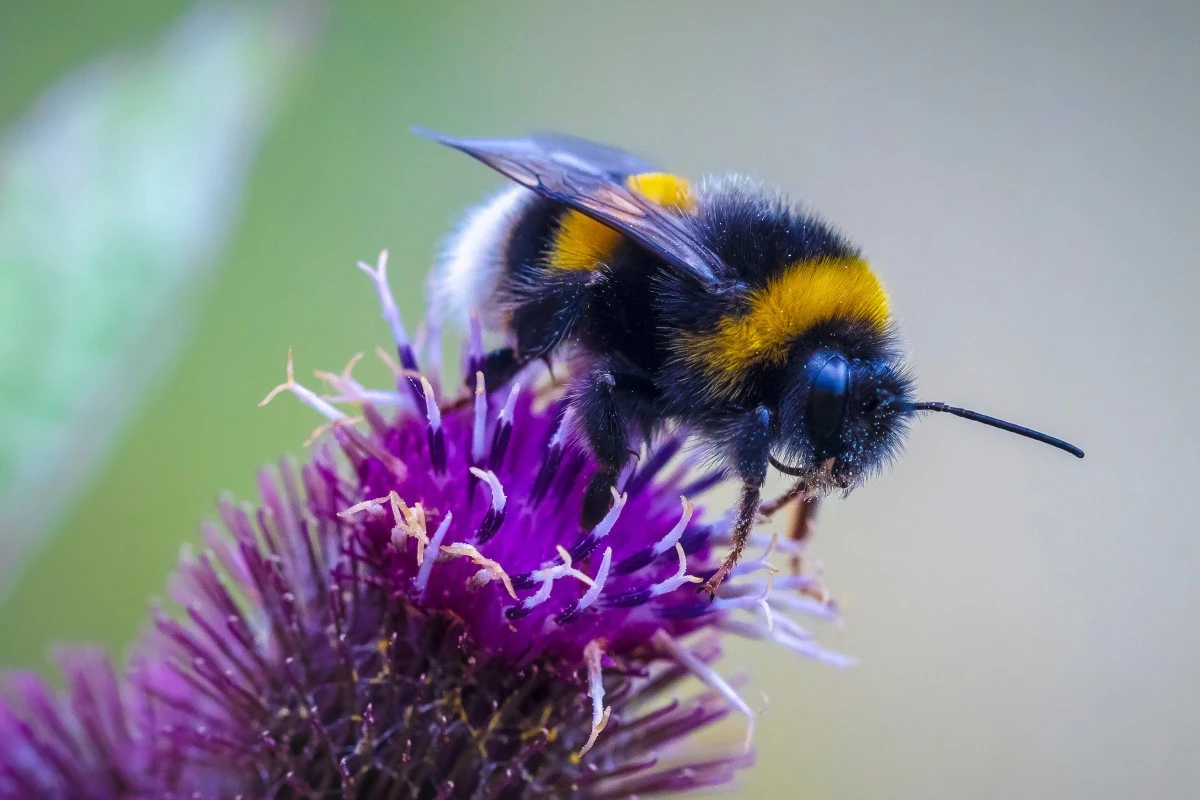
It all started in 2022, when a mixed team of Finnish and British zoologists decided to conduct a fascinating experiment. They placed a hive of bumblebees in a controlled environment, where they had to crawl through a chamber filled with small balls to reach a saucer of sweet nectar. The balls were completely ordinary, they didn't smell like food, and there was no reward or punishment for rolling them. 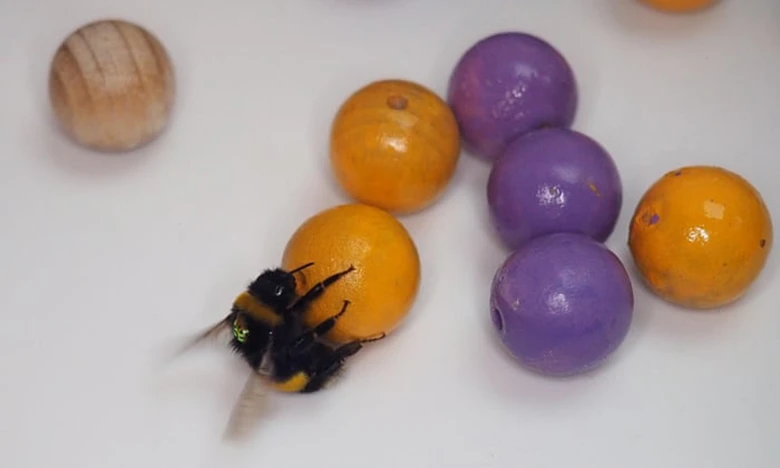
Weeee!
And you should know what happened! Every single foraging bumblebee rolled the balls at least once a day, and some of them spent up to an hour doing this! And even when the balls were moved to another room, requiring the bumblebees to make a detour to reach them, they still flew to their favorite toys! 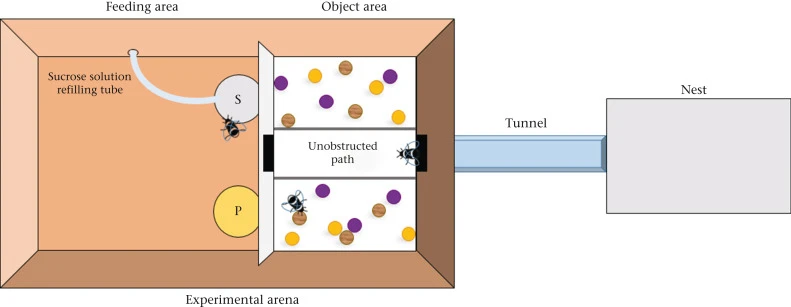
A difficult choice: eat or play with balls?
Centuries of animal observation have shown us that developed play behavior is a sign of an animal with a flexible mind, one that learns well and easily changes its behavior. Bumblebees, too, have shown excellent learning abilities. In one experiment, bumblebees were taught to roll a ball to the center of a platform to receive syrup. In another, they were taught to pull a string to retrieve a treat from under a glass plate. Zoologists from the University of London trained their subjects to pull two levers at once to remove a shutter blocking access to food. 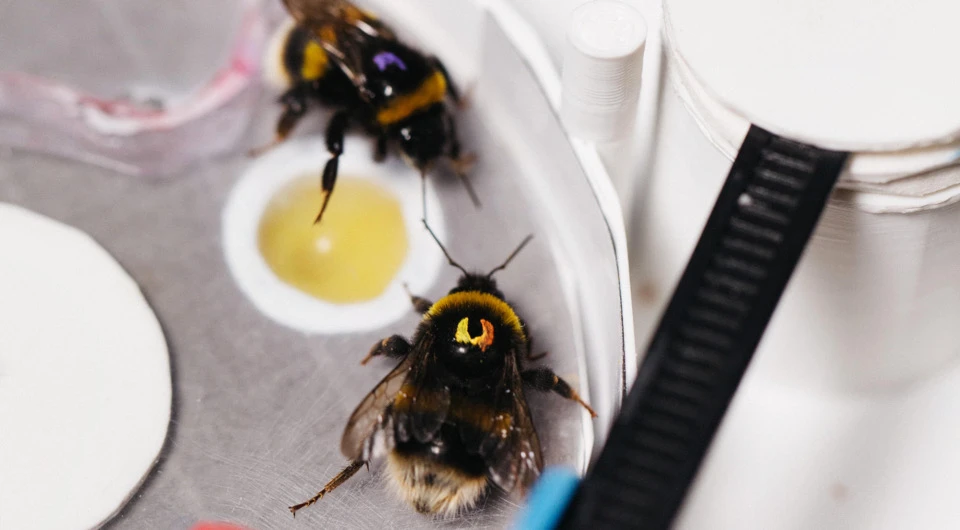
So, how are we going to get the treat?
And in all cases, the insects didn't simply mechanically repeat the learned actions; they analyzed their surroundings and changed their strategy. For example, they rolled the lightest ball of several offered onto the platform or ignored the wrong-colored saucer, which repeatedly turned out to be empty. And most importantly, they shared information with each other. 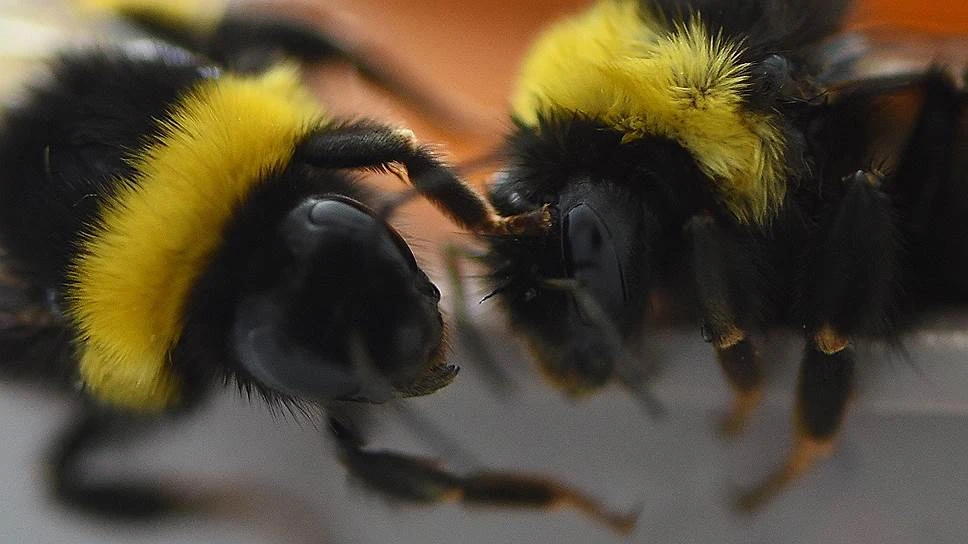
— Share your wisdom, sister. — Red flowers have more nectar, and don't touch the blue ones, they make you see strange things.
Over time, scientists noticed that it was enough to teach just one bumblebee the trick, and within a few weeks the entire family would master it independently, without human contact. It turned out that young bumblebees, on their first foraging trips, follow their more experienced relatives and remember all their actions, adopting useful habits. In other words, insects with a brain of only a couple of million cells can pass information from generation to generation, forming a lasting cultural tradition. And yet, we once thought that the transmission of knowledge was the preserve of humans! In the wild, this system allows bumblebees to build a comprehensive database. The colony knows where flower-rich meadows are and which flowers yield the most nectar. 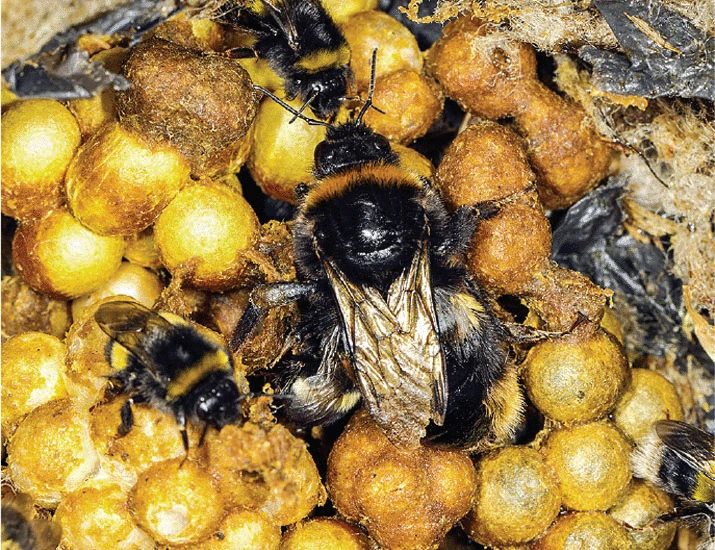
Johnny, I need even more nectar!
And the most interesting thing is that all these complex systems—social behavior, learning abilities, and even play—are contained within a tiny cluster of neurons the size of a poppy seed! This is precisely why people once believed that insects were simple biorobots operating according to predetermined patterns. And bumblebees are proving us very wrong.