Feast your eyes on the globular cluster M15: it's about 13 billion years old (4 photos)
Imagine an object that witnessed the dawn of creation, when the first stars were just beginning to shine, piercing the pitch darkness with their rays. And this isn't some distant galaxy visible only with the most advanced space telescopes, but an ancient stellar cluster—the kind from which galaxies once formed. 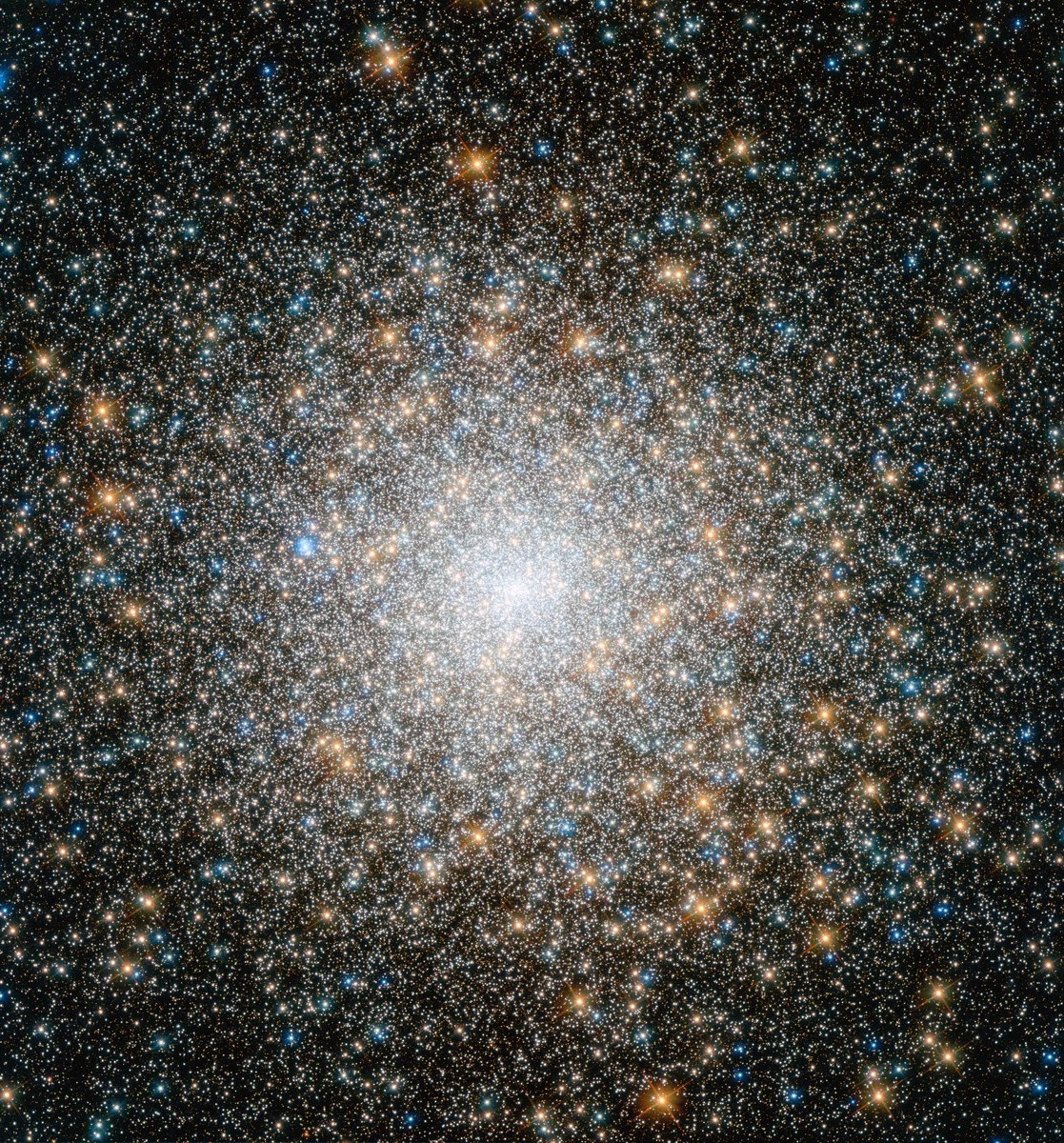
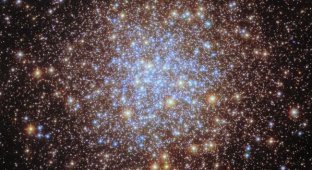
Globular cluster M 15 captured on November 14, 2013, by the Hubble Space Telescope
This is the globular cluster M 15 (NGC 7078), located in the Milky Way, approximately 36,000 light-years away in the direction of the constellation Pegasus. This cluster is a cosmic time capsule, containing secrets of the early universe that still puzzle astronomers.
M 15 is one of the densest and oldest clusters in our galactic neighborhood. It is approximately 13 billion years old. For comparison, the universe is 13.8 billion years old. Hundreds of thousands of stars (some estimates put the number at around a million) are concentrated within the cluster's spherical volume, which has an average diameter of 175 light-years. This enormous density leads to frequent interactions between stars and creates unique conditions for studying stellar evolution. 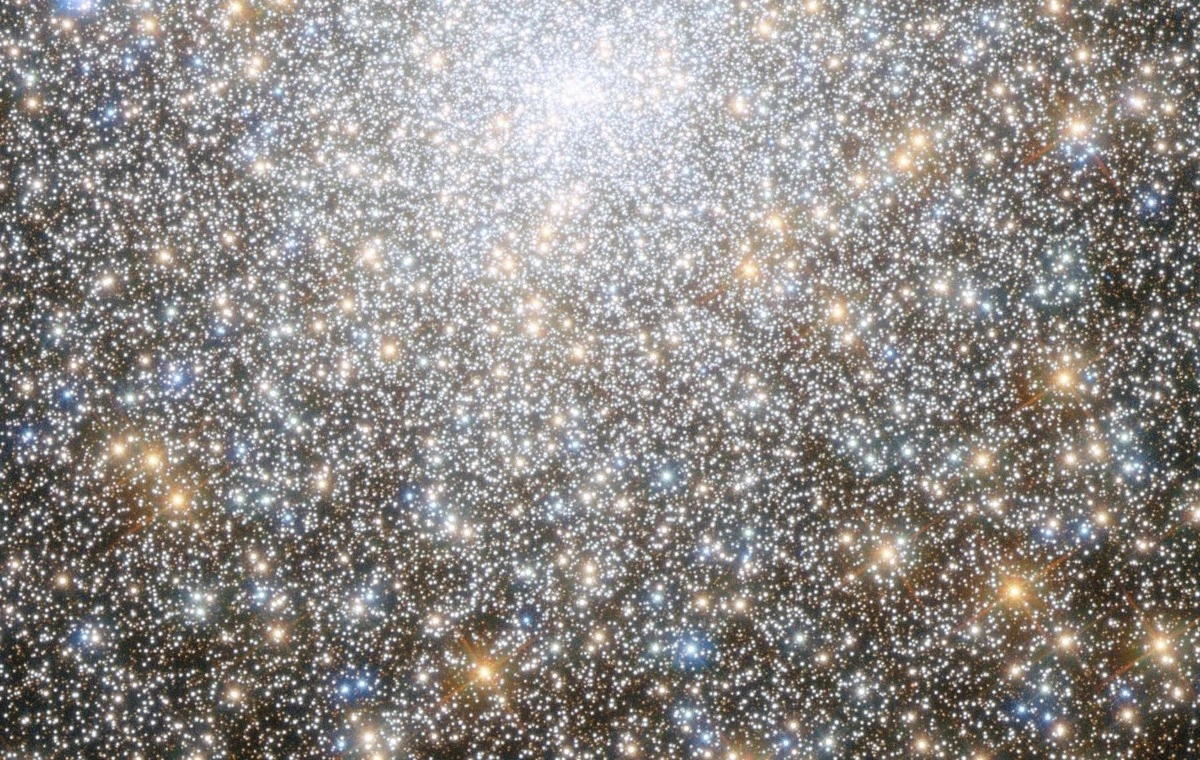
One of the most intriguing mysteries of M 15 lies in the cluster's core. Observations of the motion of stars in the central region indicate the presence of a massive yet very compact object. The leading hypothesis is that it is an intermediate-mass black hole—the "missing link" between stellar-mass black holes and the supermassive monsters at the "hearts" of galaxies. If this is confirmed, further research could shed light on the formation and growth mechanisms of supermassive black holes. 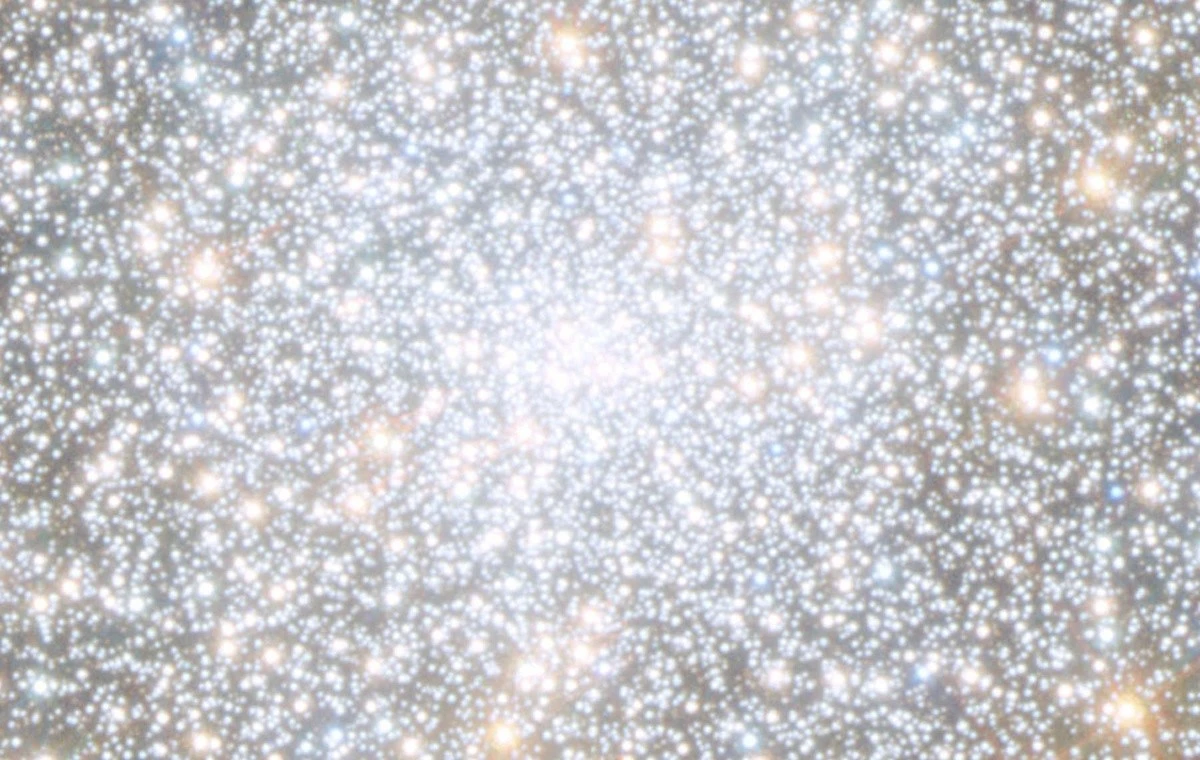
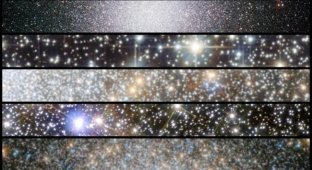
The "Heart" of M 15
Furthermore, nine pulsars (rapidly rotating neutron star beacons) have already been discovered in M 15—a very large number for a globular cluster, and a direct consequence of the high frequency of close gravitational interactions in the dense core, where binary systems often form and "shuffle."
M 15 moves in an extremely elongated (elliptical) orbit around the center of the Milky Way. The cluster periodically "dives" into the dense galactic disk, then is carried high into the tenuous halo—a spherical region home to the most ancient stellar populations in our galaxy. Each such passage through the disk is a test of strength, capable of tidally tearing stars from the cluster's outer regions. 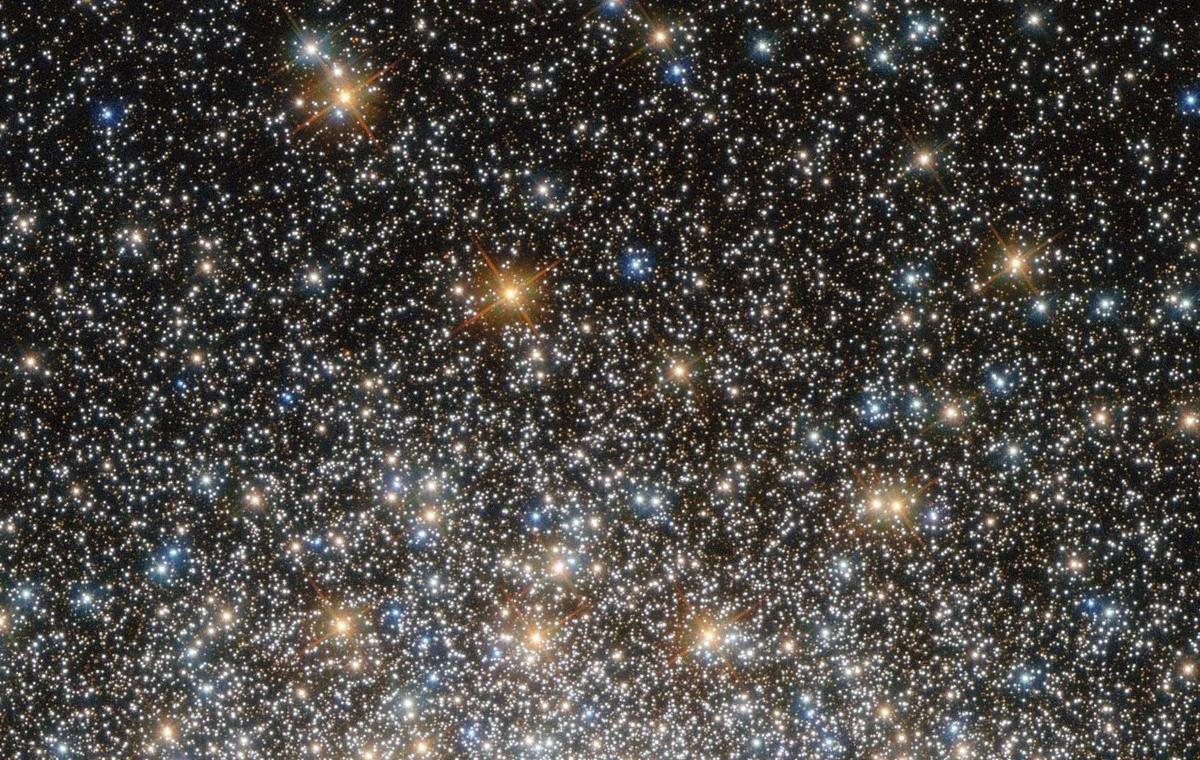
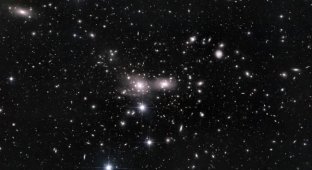
The outer region of M 15, where the concentration of stars is significantly lower than in the core/ © NASA/ESA
The cluster's chemical composition, poor in heavy elements ("metals"), suggests that it formed from the primordial gas of the early universe. By studying M 15, astronomers are gaining insight into the birth of the first stellar systems. The cluster is therefore a valuable target for observation, including by space telescopes such as the NASA/ESA Hubble Space Telescope and the NASA James Webb Space Telescope.