Virgo Cluster: the most detailed images of the galactic Megalopolis (11 photos)
About 55 million light-years from Earth lies one of the most astonishing structures in the nearby Universe—the Virgo Cluster. 
Southern Part of the Virgo Cluster
It is a gigantic galaxy family, containing over 2,000 members bound together by gravity. The cluster extends for approximately 200 million light-years. For comparison, the Milky Way is "only" 100,000 light-years in diameter.
In this article, we will examine unprecedentedly detailed images of the southern part of the cluster, obtained on June 5, 2025, by the Vera Rubin Ground-Based Observatory, located on El Peñón Peak of Cerro Pachón (elevation 2,682 meters) in northern Chile.
What we see in the images
The images of the southern part of the cluster show galaxies of a wide variety of shapes and sizes. Massive elliptical galaxies with the yellowish glow of old stars sit alongside spiral galaxies where active star formation continues. Scattered between them are hundreds of smaller galaxies—dwarf satellites of the giants. 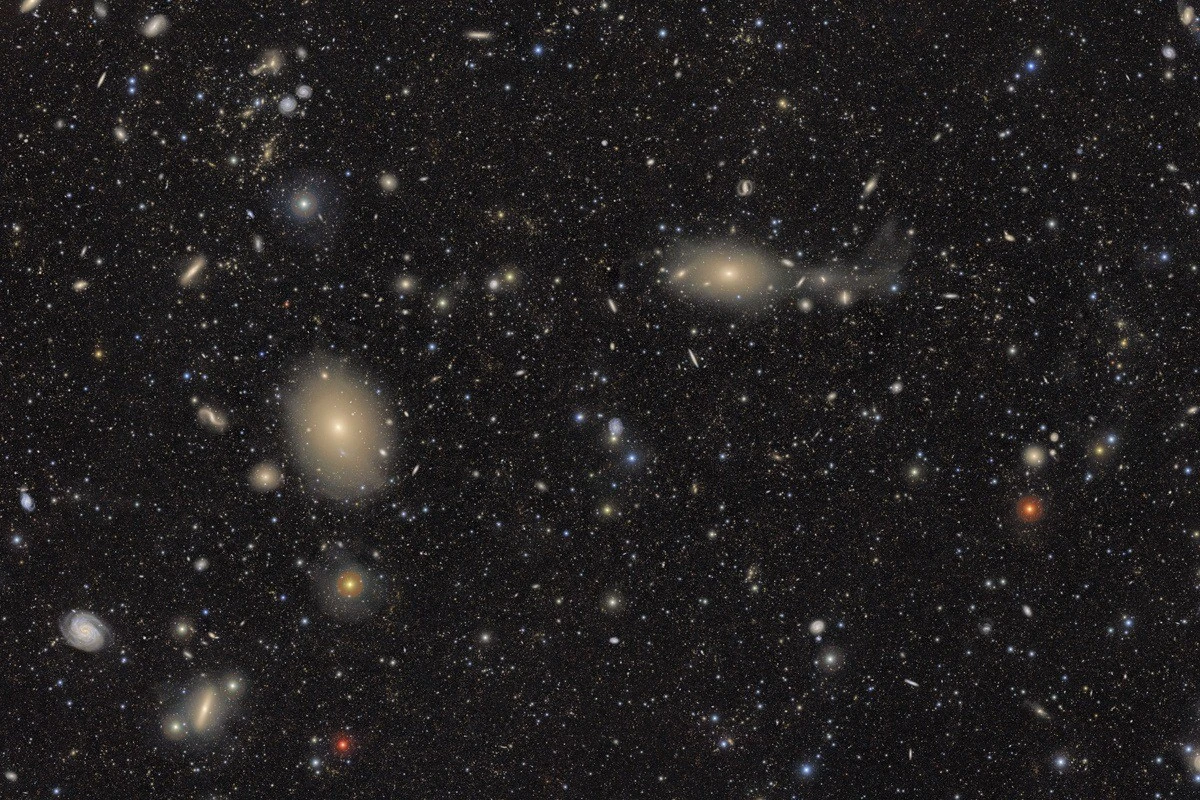
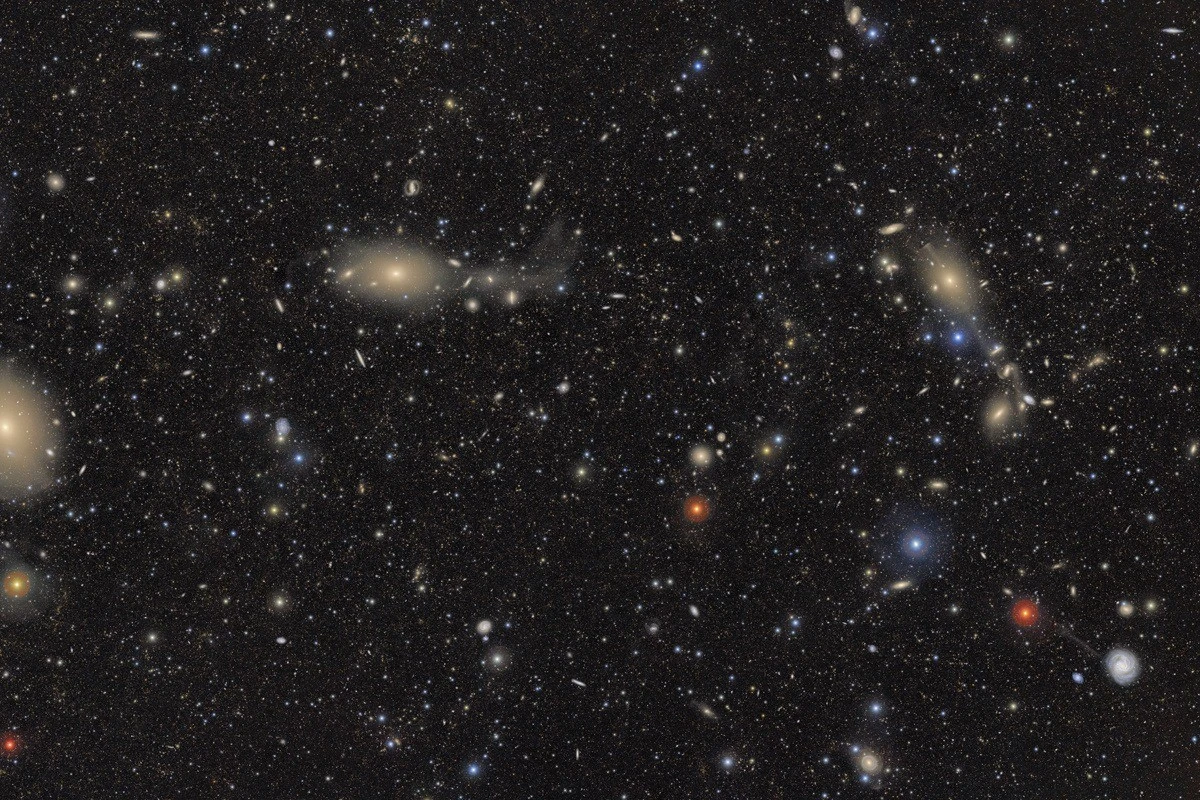
Large galaxies, as observed by space-based and ground-based telescopes, contain globular clusters—ancient, dense associations of stars over 10 billion years old. Similar formations exist in the Milky Way, confirming the universality of the mechanism by which galaxies form and evolve.
The oldest galaxies in the cluster are up to 13 billion years old—they were born in the very early Universe, when it was still a completely different place. 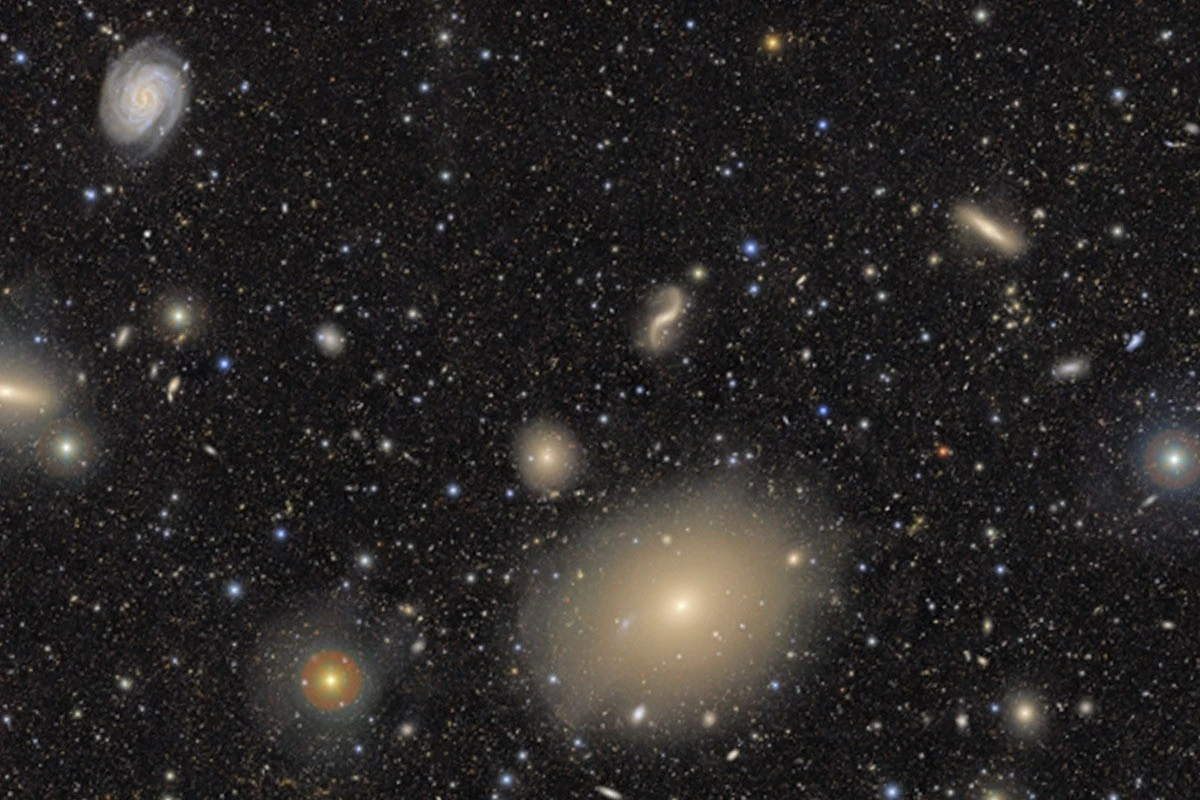
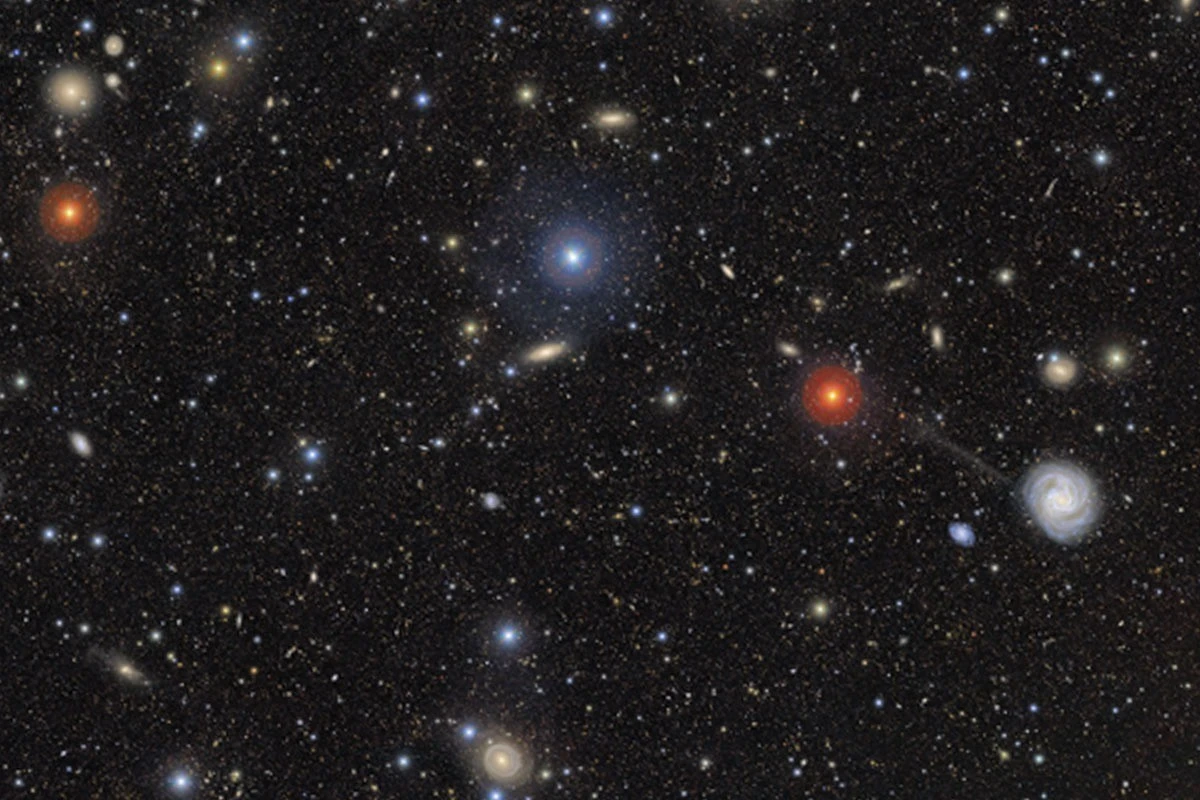
The Gravitational Dance of Galaxies
The Virgo Cluster is not a static picture, but a very dynamic system. The galaxies here move at speeds of up to 1,000 kilometers per second, constantly interacting. Some galaxies are hurtling toward each other and will collide in the future, creating a more massive galaxy. Others already bear the scars of past collisions—warped arms and elongated tidal tails of stars and gas. 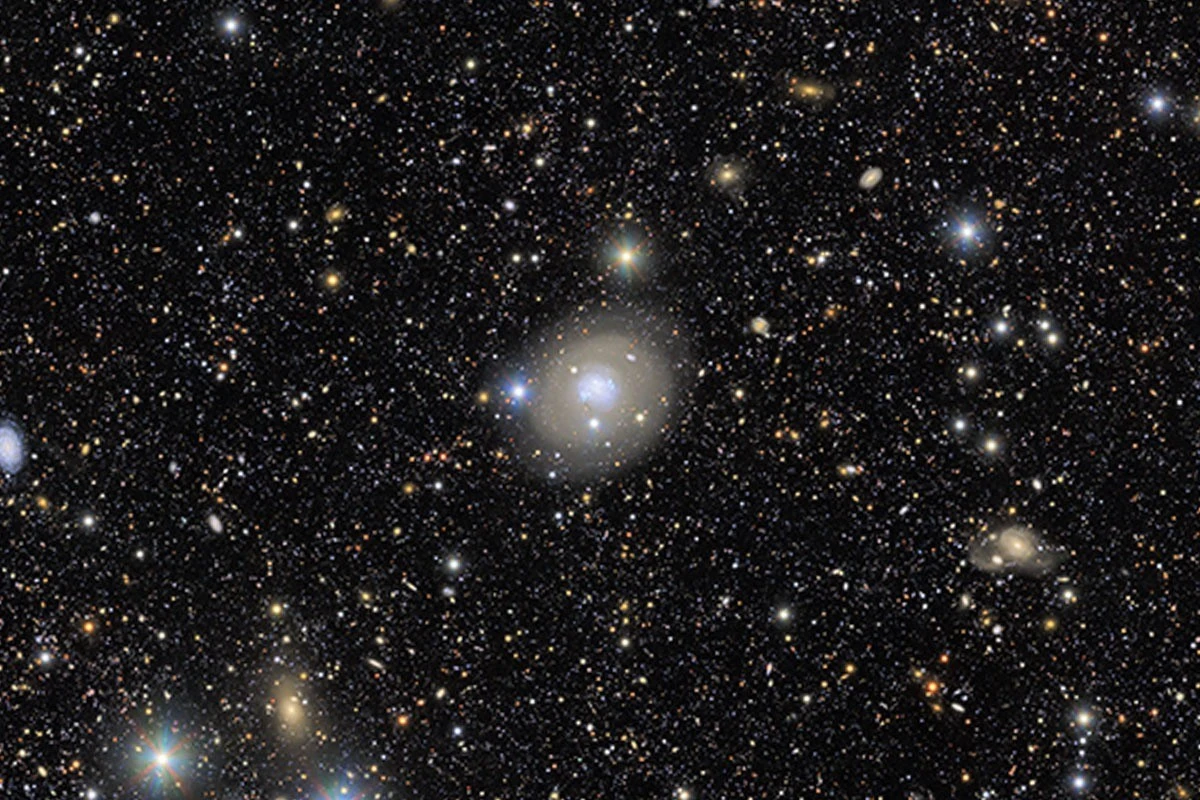
The central galaxy is surrounded by dwarf companions. 
Two curious spiral galaxies. Their research will help better understand the structure of the Milky Way.
The cluster's gravity is so strong that it holds together not only the galaxies but also a vast amount of intergalactic gas, heated to millions of degrees. Remarkably, this gas, glowing in X-rays, contains more mass than all the cluster's stars combined.
Vera Rubin Observatory: A New Era of Detail
The Vera Rubin Observatory is equipped with the largest digital astronomical camera in the world. Its 3.2-gigapixel sensor is capable of capturing vast swaths of the sky with incredible detail. 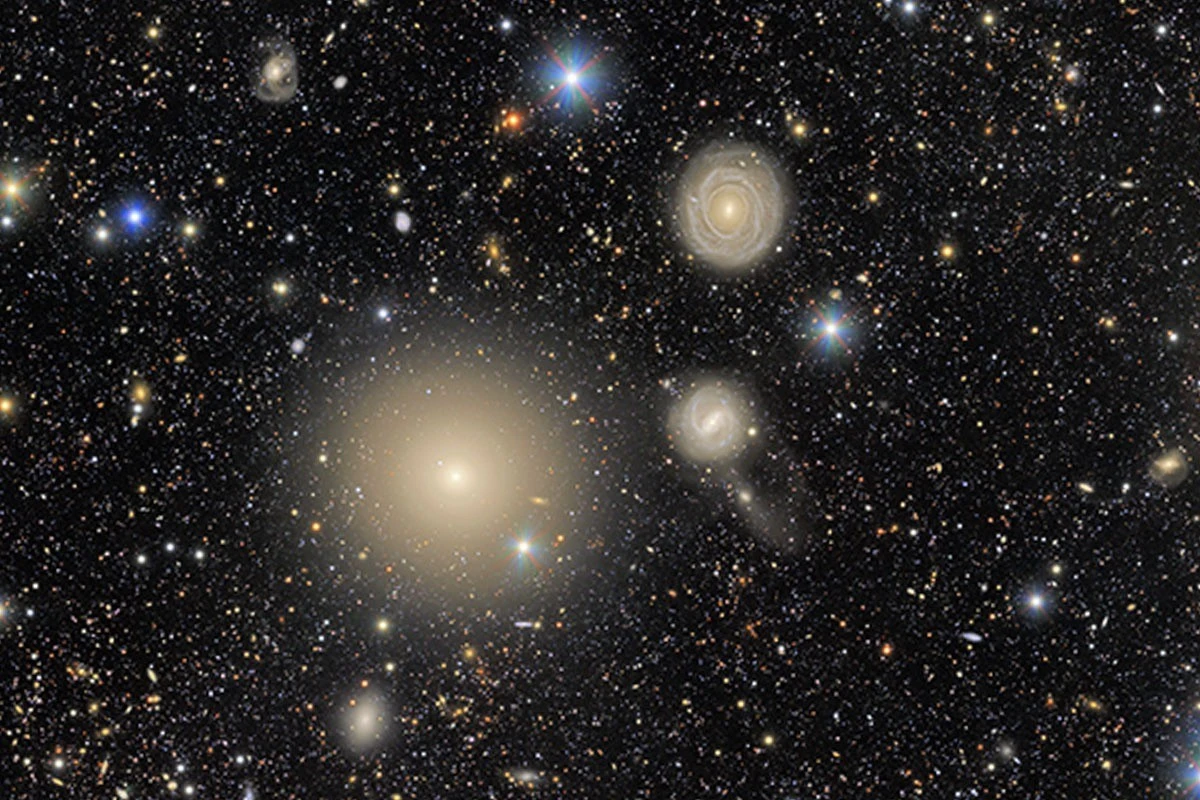
Notice the galaxy with a "tail." It experienced a close interaction with another galaxy. 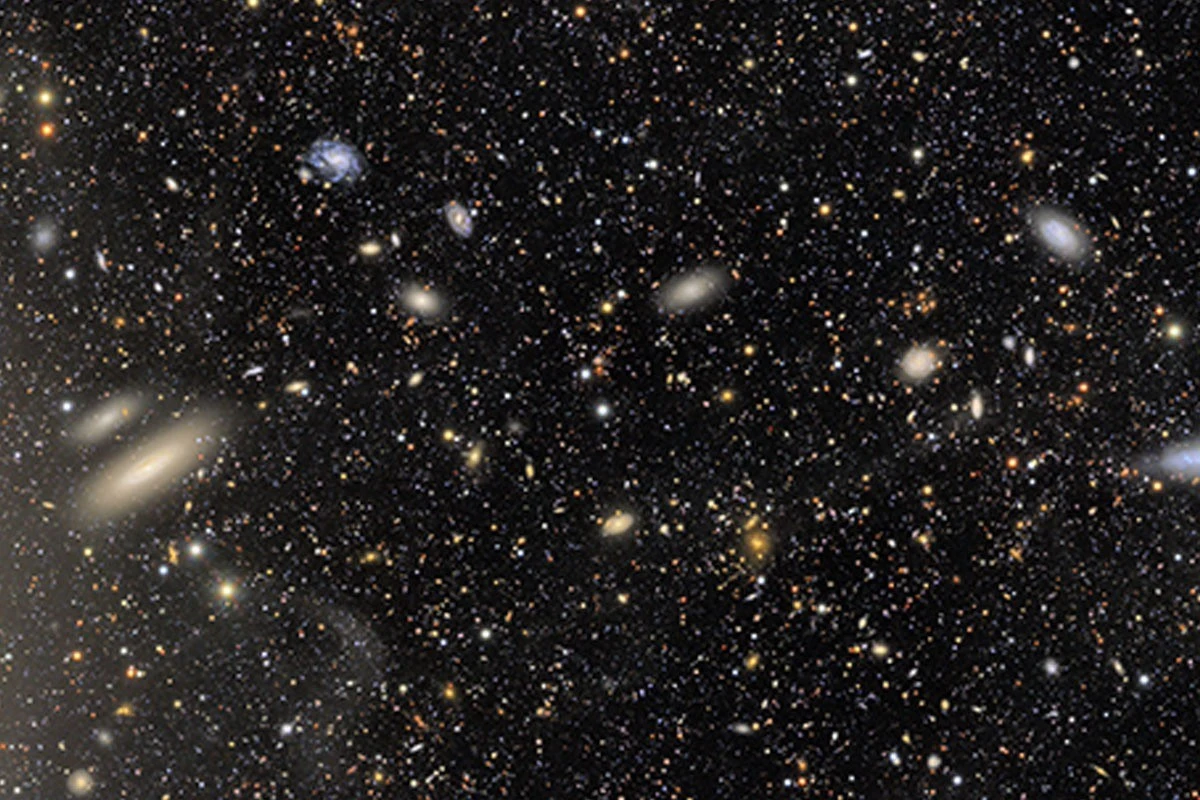
Almost all the bright points in the frame are galaxies.
Thanks to these capabilities, scientists obtain images that reveal not only bright galaxies but also faint structures—star streams, the remains of destroyed dwarf galaxies, and distant background objects. Each image contains so much information that studying it could take years! 
Bright blue stars of the Milky Way captured in this frame 
At the center of the frame is what appears to be a galactic stream.
These deep images cover a total of about 10 million galaxies (including background ones) – representing about 0.05% of the 20 billion galaxies that the Rubin Observatory will image over the next decade.