Over 100,000 ancient stars in a single frame: incredible details of the globular cluster M 72 (11 photos)
Located in the constellation Aquarius, approximately 54,570 light-years from Earth, lies the globular cluster Messier 72 (M 72), home to over 100,000 ancient stars tightly packed into a relatively small sphere. 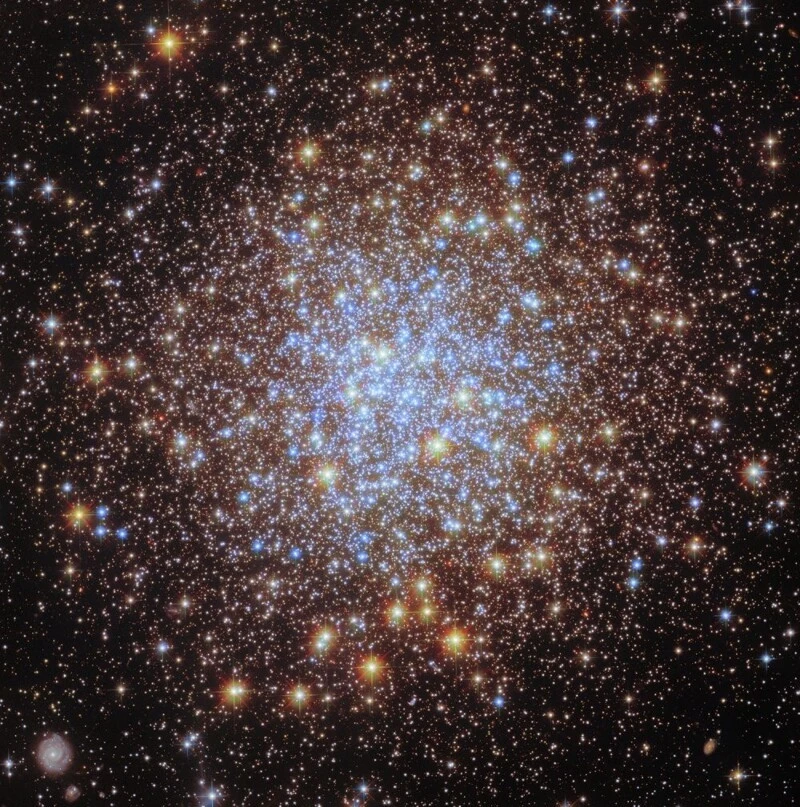
I invite you to admire the details of this grandiose structure, images of which were obtained by the NASA/ESA Hubble Space Telescope during observations in 2025.
Star City in the Constellation Aquarius
The star cluster M 72 is estimated to be 9.5 billion years old, meaning its stars began shining long before the formation of our Solar System, which is approximately 4.6 billion years old. 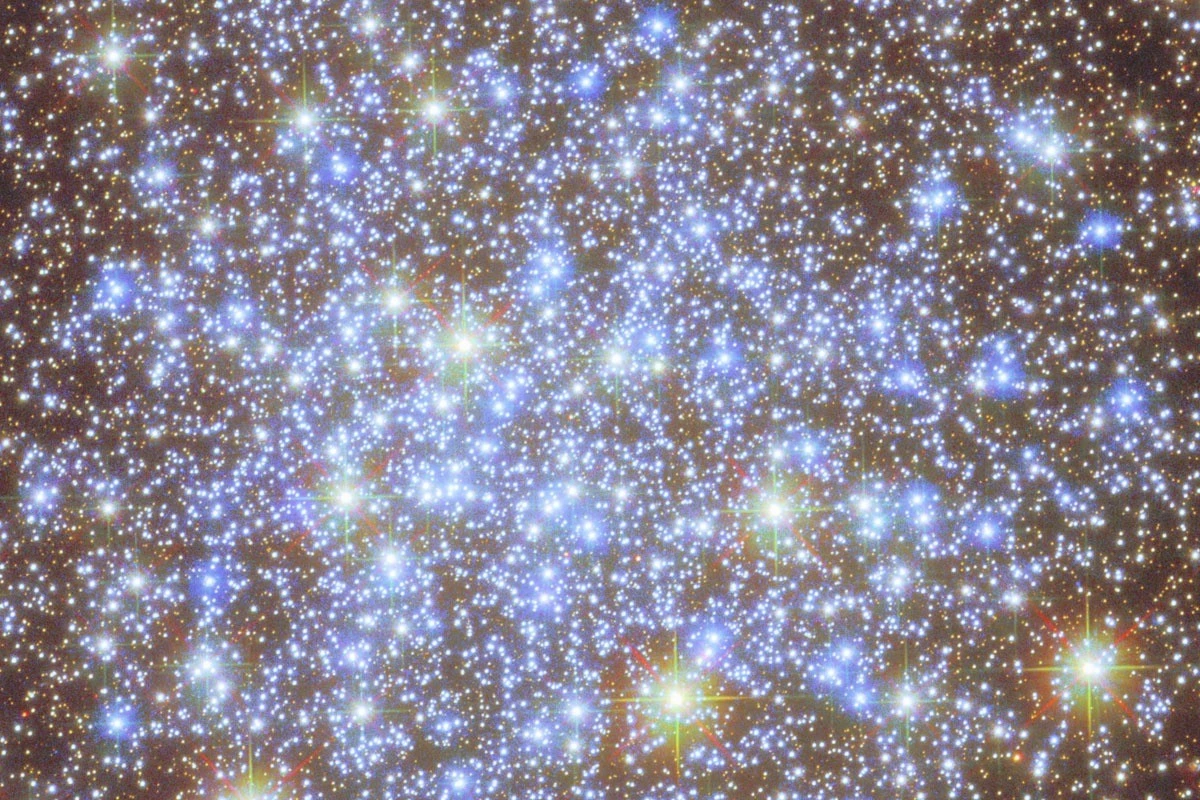
By adding ultraviolet data to the optical data, we can see a stunning variety of colors, each shade telling its own story.
Color Palette of Stellar Generations
The blue stars in the image are stars that were initially more massive, but over the course of their evolution, heated up to extremely high temperatures, burning through most of their hydrogen reserves. 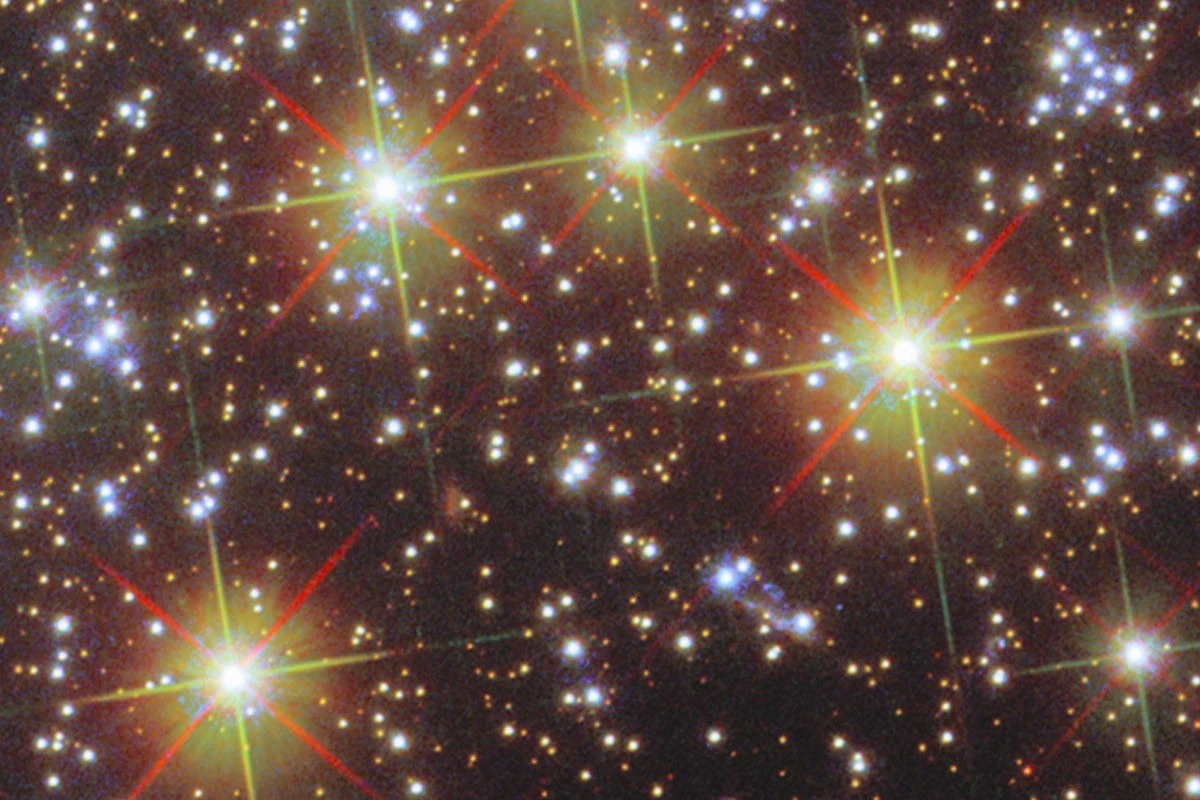
Red-orange Sun-like stars nearing the end of their lives 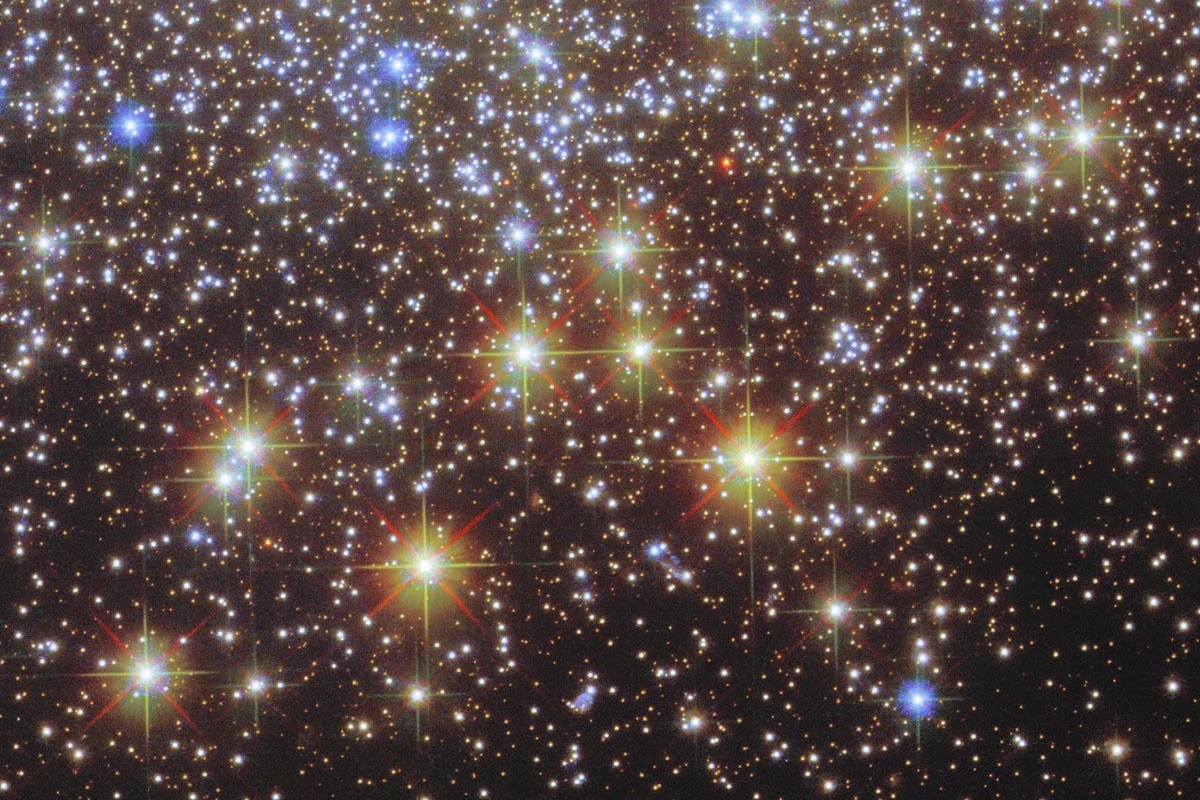
Red-orange objects are lower-mass Sun-like stars that, over the course of their billion-year lives, have transformed into red giants. They have swollen to enormous sizes, but have also cooled significantly, acquiring a characteristic reddish hue.
By studying the stars of M 72, scientists are better understanding how globular clusters form and how the galaxies in which they originate evolve. Given that M 72 shows no signs of multiple generations of stars (in this case, they are all old) and a strong variation in chemical composition, it can be confidently concluded that this globular cluster formed in the Milky Way and is not the core of a devoured galaxy.
Stellar Density of the Cluster
The mass of M 72 is 168,000 times that of the Sun. It consists of more than 100,000 gravitationally bound stars, packed into a sphere just 104 light-years in diameter. 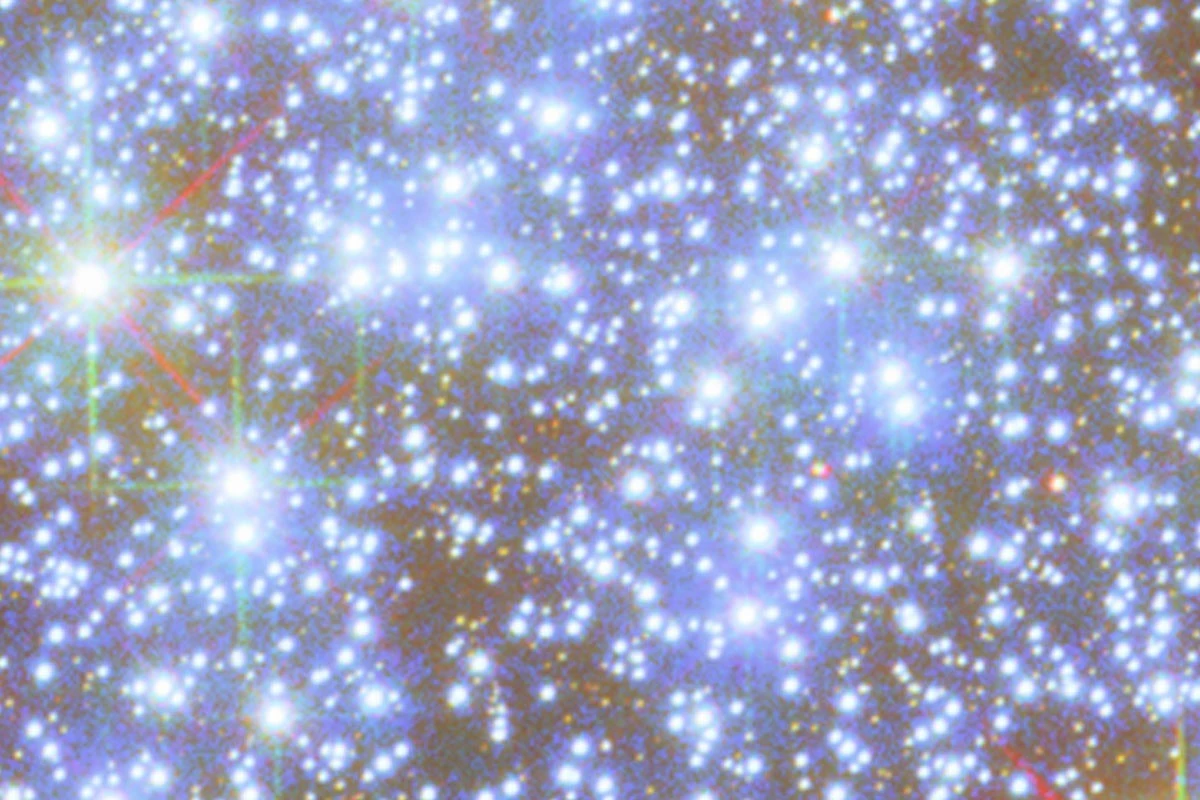
The "Heart" of a Globular Cluster
If our Solar System were at the center of the cluster, the nearest stars would be located approximately 400 light-days away—almost four times closer than Proxima Centauri, the closest star to the Solar System.
Extreme Conditions
M 72 contains regions where stars are packed so tightly that they not only exert an increased gravitational influence on each other but can even interact closely and collide. 
Regions where stars are extremely densely packed 
Such collisions produce amazing objects called "blue stragglers"—stars that seem to reverse time, returning from "old age" to their bright, hot "youth."
Cosmic Beacons
43 variable stars have been discovered in the cluster, most of which are of the RR Lyrae type. 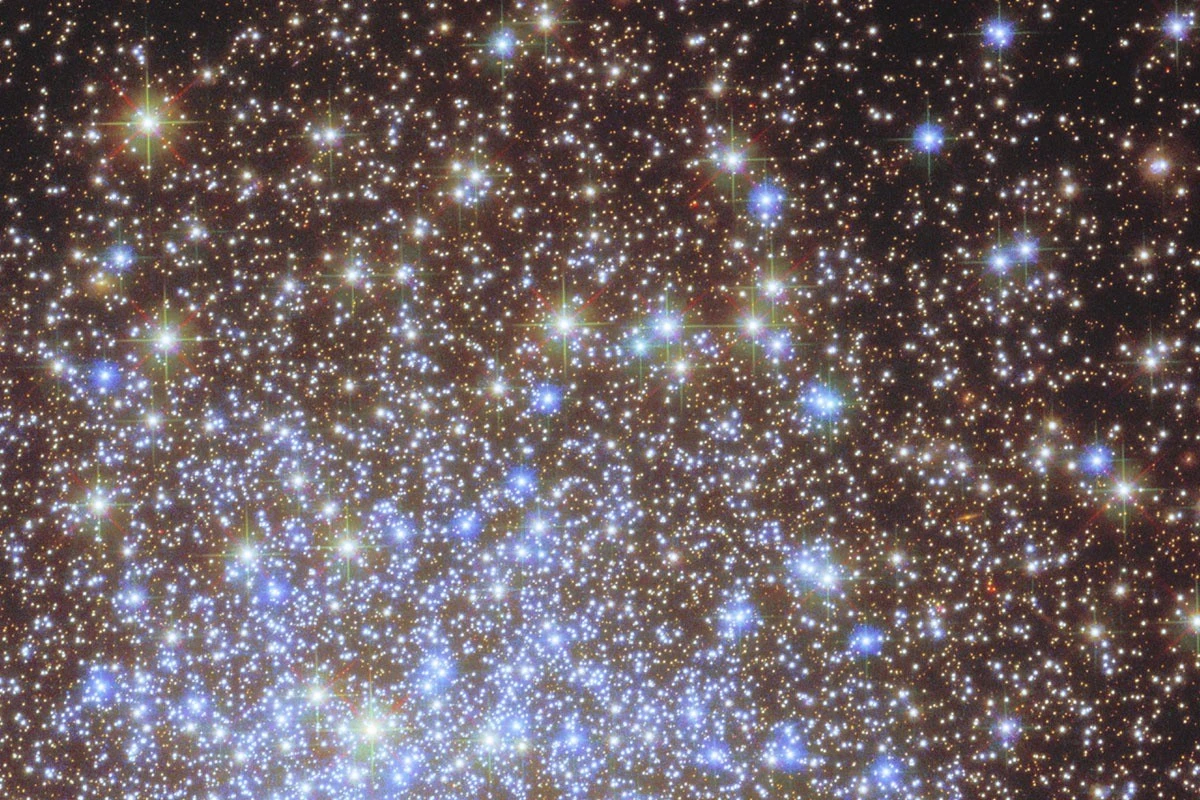
These stars regularly change their brightness and serve astronomers as "standard candles" for measuring cosmic distances.
A Special Place in the Catalog
The Messier catalog includes 110 objects, and M 72 occupies a special place as one of the most distant globular clusters on the list. 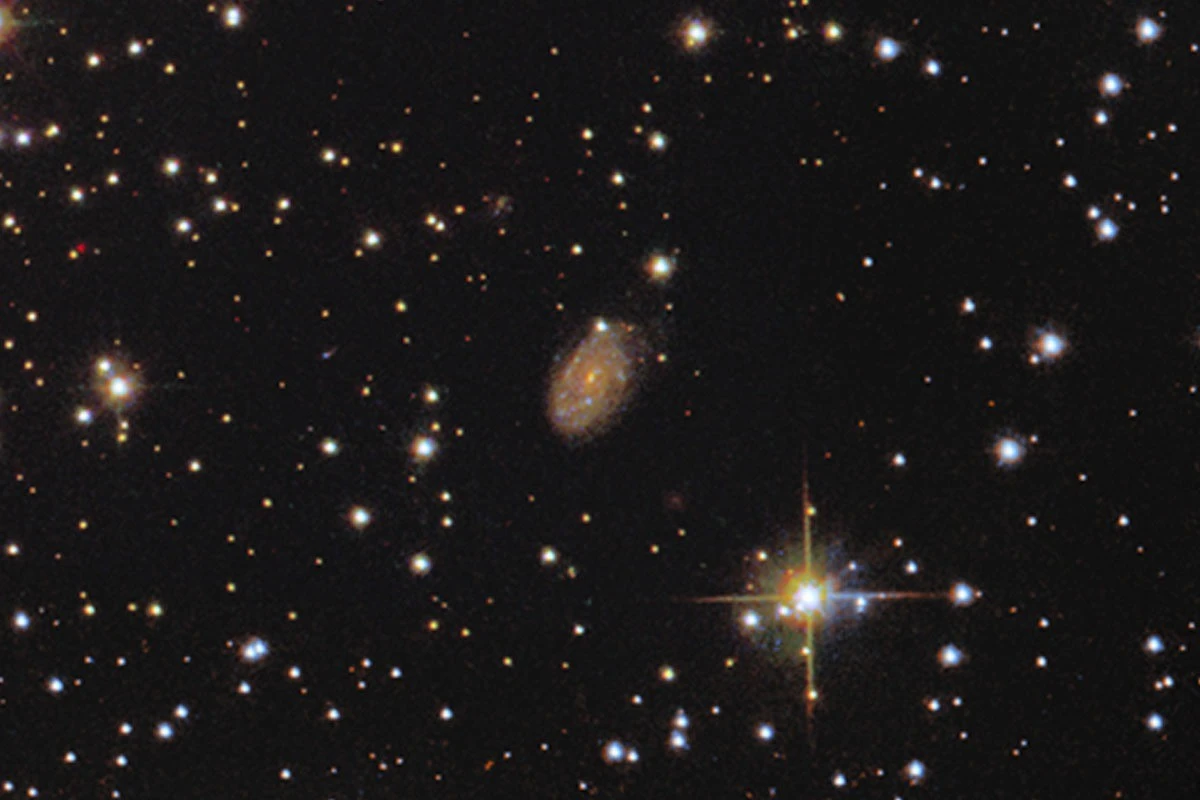
Distant background galaxies, tens of millions of light-years away, were captured in the frame. 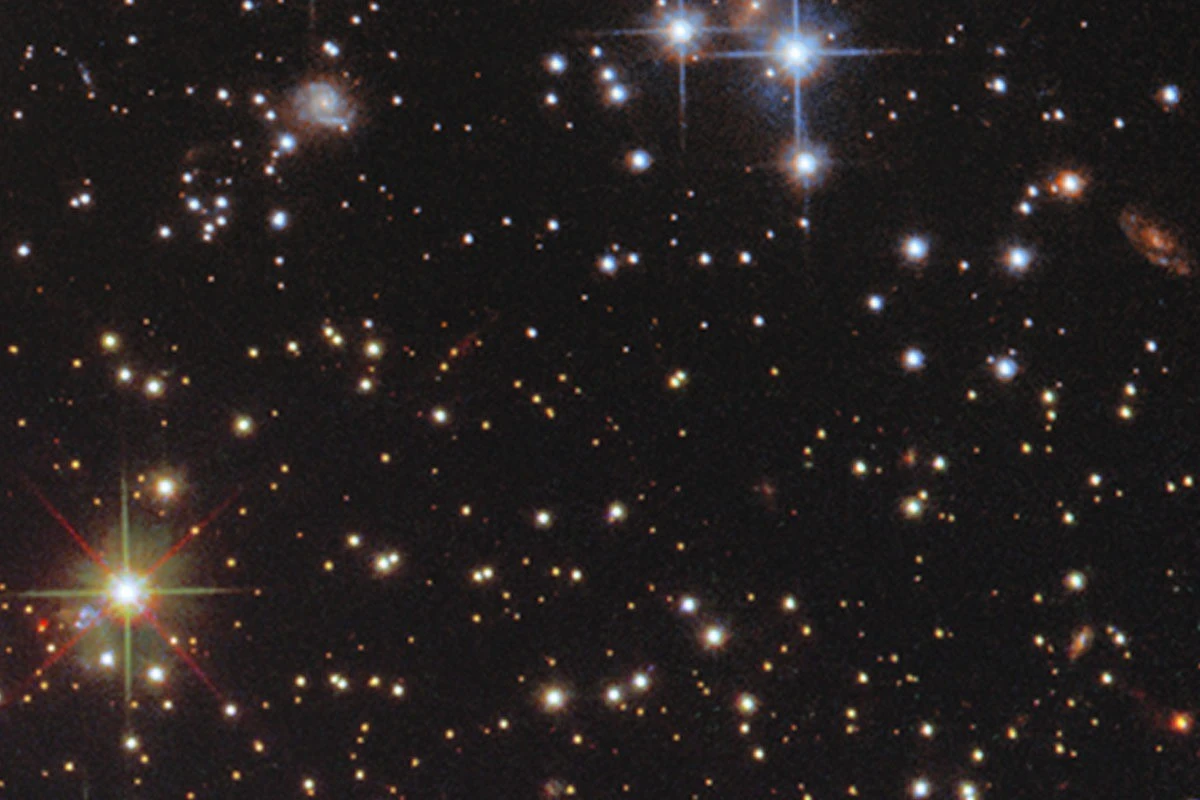
The cluster was discovered by the French astronomer Pierre Méchain in 1780, but at the time—due to technical limitations—scientists had no idea they were observing a cluster of thousands upon thousands of stars; they thought it was simply a gas and dust nebula.
After 245 years, we not only understand the true nature of M 72, but can even see individual stars!
A Window into the Early Universe
Studying ancient clusters like M 72 gives scientists a unique opportunity to peer into the universe's past. Stars in globular clusters formed from the primordial gas of the early universe, when heavy elements were 10-100 times less abundant than they are today. 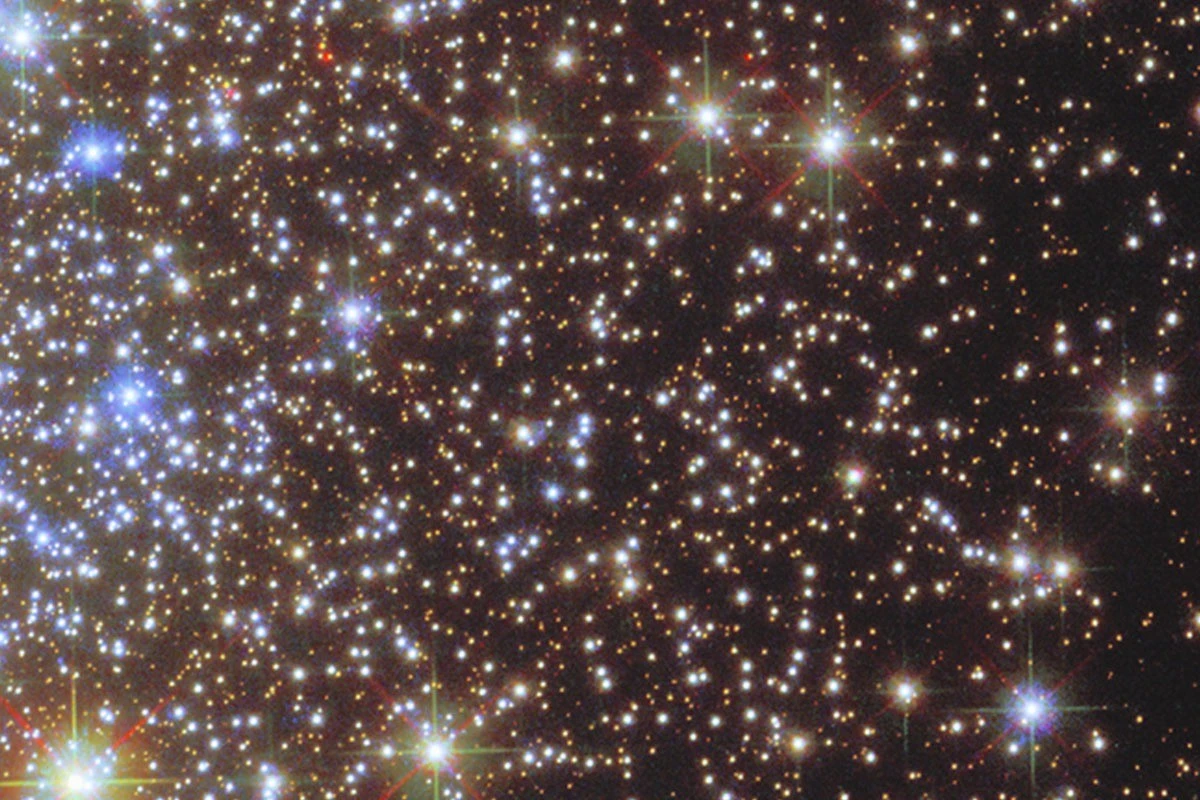
This means that analysis of data collected from observations of M 72 tells us what the universe was like more than nine billion years ago, when it was less than half its current age of 13.8 billion years.
A Cosmic Longevity
Unlike open star clusters, which disintegrate after a few million years, globular clusters like M 72 are incredibly stable thanks to the powerful gravitational ties between the stars that comprise them. Such objects can exist virtually forever—some of the known globular clusters are over 13 billion years old!
M 72 continues its slow dance around the center of the Milky Way, carrying with it memories of a time when our galaxy was actively forming and absorbing smaller galaxies. And thanks to the legendary Hubble Space Telescope, anyone can admire this ancient wonder in all its colorful detail.