Space Chronicle #2: A Review of Astronomical Images (5 photos)
The Cosmic Chronicle is a fascinating journey through space and time through astronomical images.
The Epicenter of Star Formation
The Silver Coin Galaxy (NGC 253) is one of the closest bright massive galaxies outside the Local Group, located approximately 10 million light-years from Earth. NGC 253's diameter is approximately 120,500 light-years, making it 20,500 light-years larger than the Milky Way. 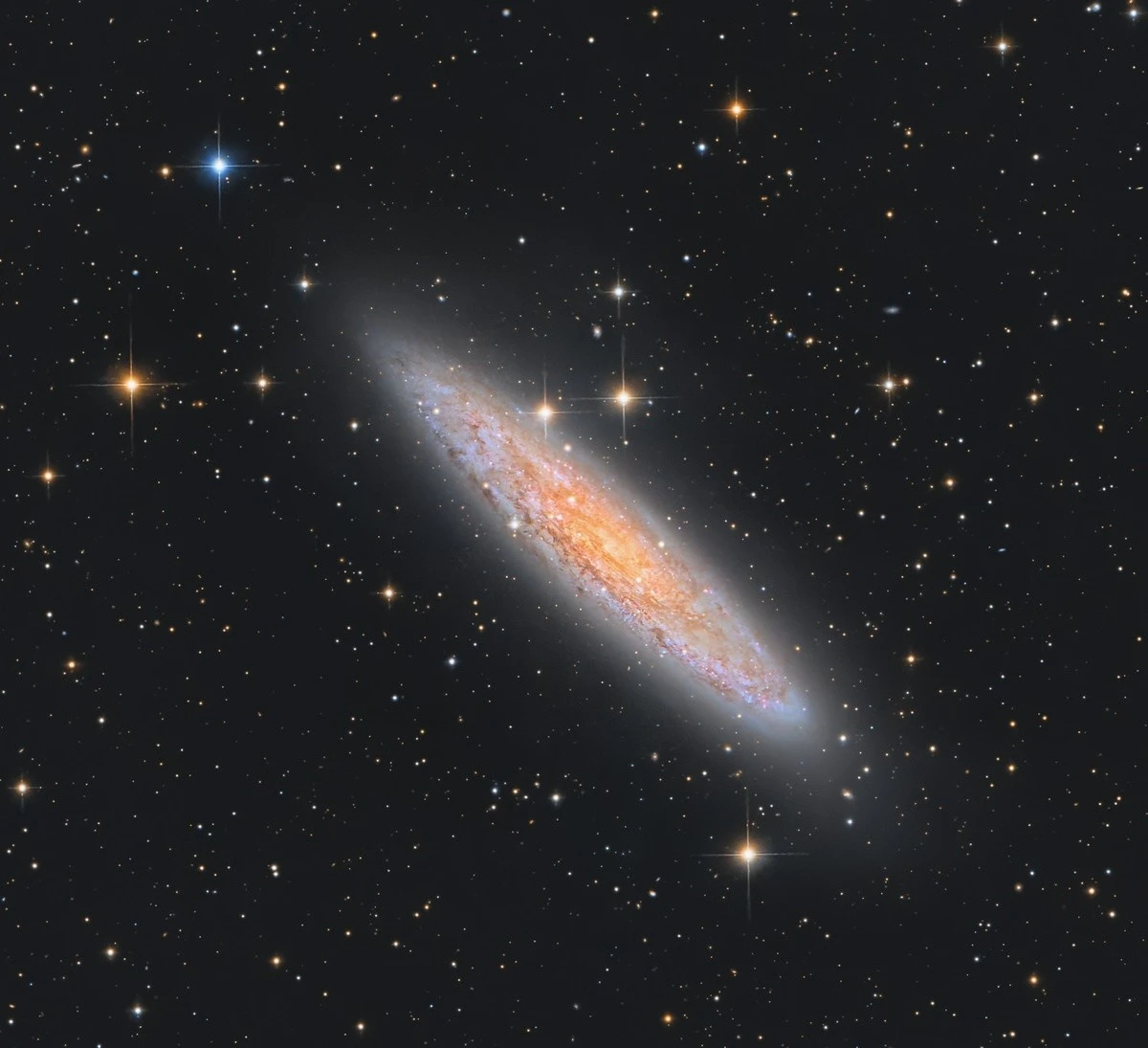
NGC 253 is a starburst galaxy. The most intense processes are occurring in its core and along its spiral arms, where the rate of new star formation is significantly higher than in most typical spiral galaxies. Its high infrared luminosity is due to radiation being absorbed and re-emitted by vast regions of cosmic dust, which also indicates abundant reserves of cold molecular gas—the essential material for star formation.
This vigorous star formation may be related to the recent—by cosmic standards—consumption of a dwarf galaxy.
This image was taken on September 19, 2025, by amateur astronomer Chuck Ayoub.
Map of the Small Magellanic Cloud
Radio image of the Small Magellanic Cloud (SMC), obtained by the Australian Square Kilometre Array Pathfinder (ASKAP) as part of the EMU Early Science project in 2017. Sixteen of the telescope's 36 antennas were used to collect the data. 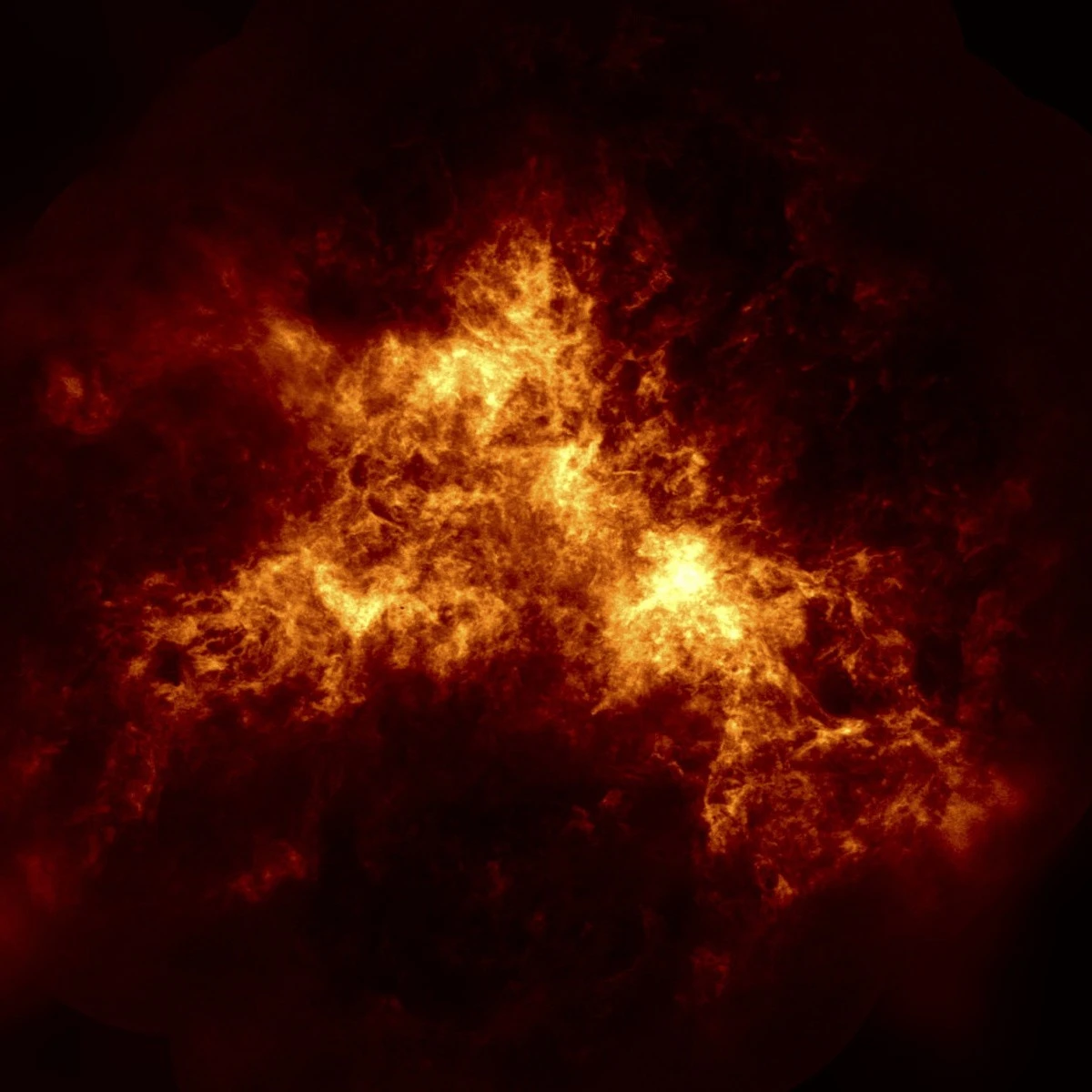
The MMO is a dwarf satellite galaxy of the Milky Way, orbiting at a distance of approximately 203,000 light-years from us. The diameter of this stellar factory along its major axis is "only" 7,000 light-years.
ASKAP's data have identified regions of rapid star formation, which have become targets for observations by other instruments. This helps scientists better understand the mechanisms of star formation, evolution, and death.
Ancient Stellar Metropolis
Messier 5 (M 5) is a globular star cluster in the constellation Serpens, approximately 24,500 light-years from Earth. This image was taken by the NASA/ESA Hubble Space Telescope on May 2, 2011. 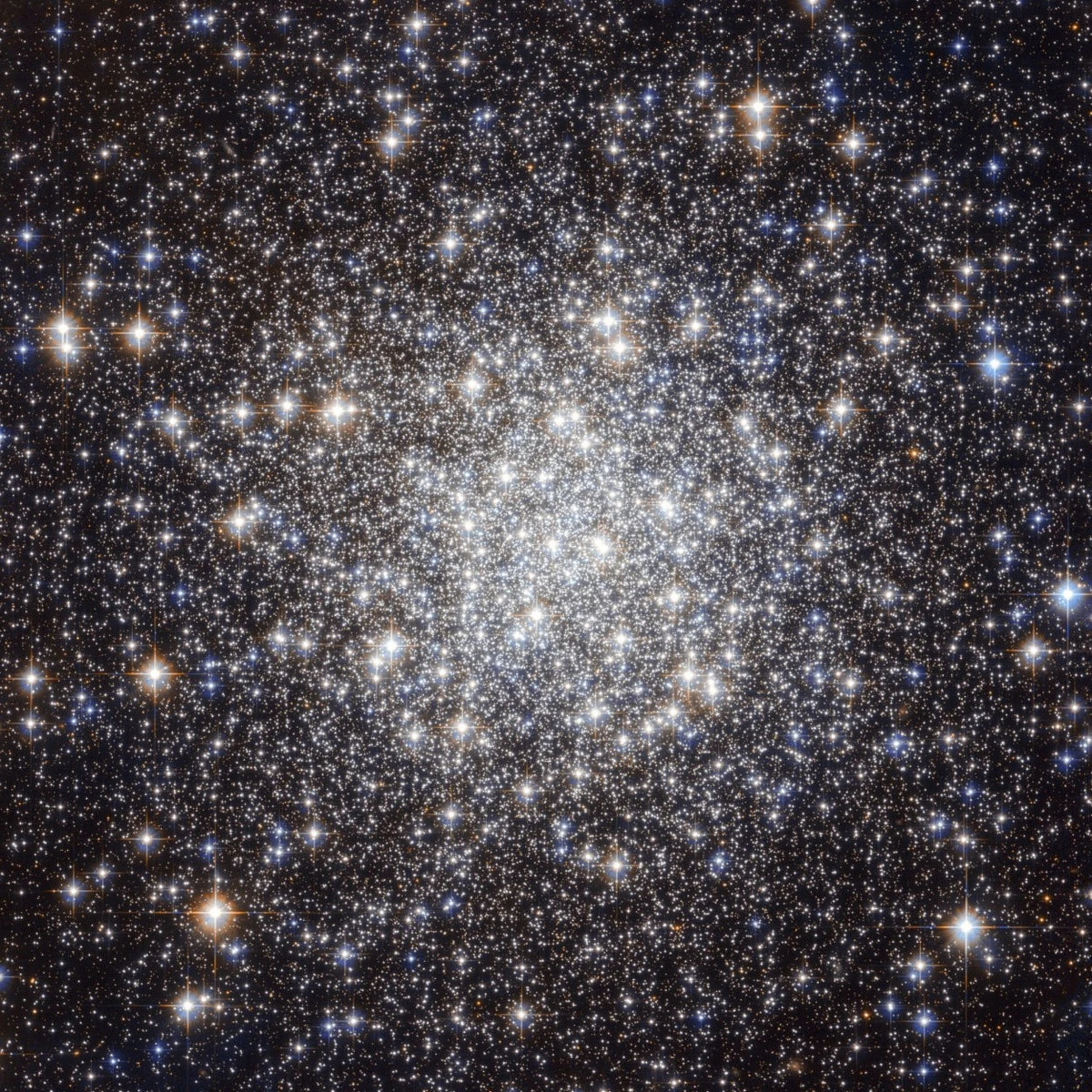
M 5 is home to more than 100,000 gravitationally bound stars, tightly packed into a sphere approximately 165 light-years in diameter.
The cluster is over 13 billion years old! For comparison, the Milky Way is about 13.61 billion years old, and the universe is 13.8 billion years old.
Cometary Nucleus
The four-kilometer-wide nucleus of comet 67P/Churyumov-Gerasimenko in natural color, photographed by the European Space Agency (ESA) Rosetta probe from a distance of 20 kilometers on August 21, 2014. 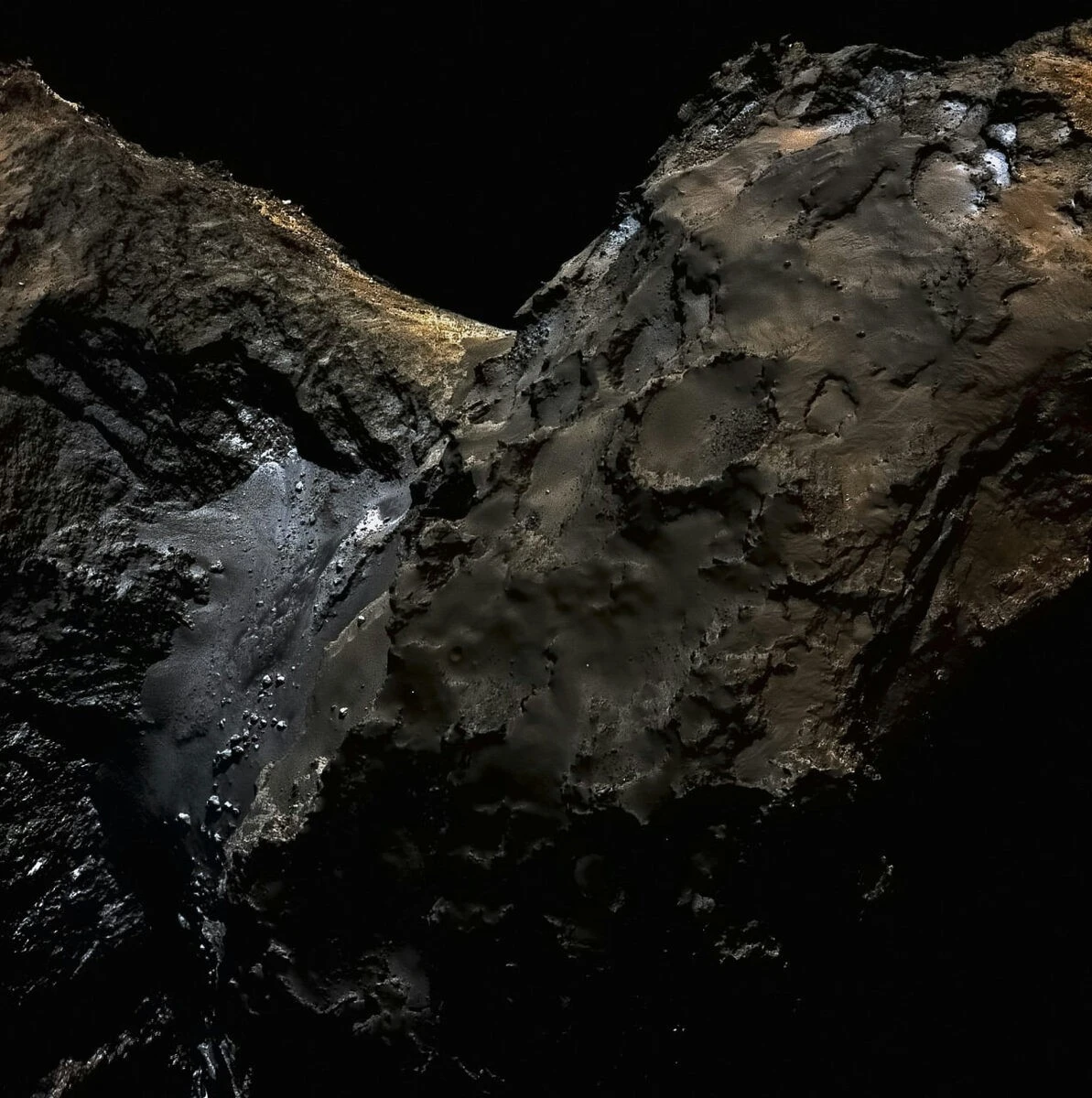
Rosetta entered orbit around the comet on August 6, 2014, and on November 12, it dropped the Philae lander onto its surface—the first-ever landing on a comet. Due to weak gravity and the uneven, loose surface, Philae bounced off twice and landed in the shadow, significantly shortening its active life. Nevertheless, the spacecraft operated for almost 57 hours, successfully transmitting all its data.
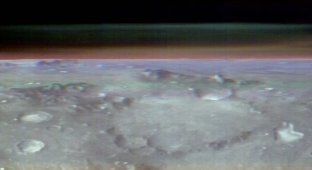
Lunar landscape from Clementine
The large dark spot in the frame is the Sea of Dreams (Mare Ingenii), located on the far side of the Moon. This image was taken on April 9, 1994, by the Clementine spacecraft. 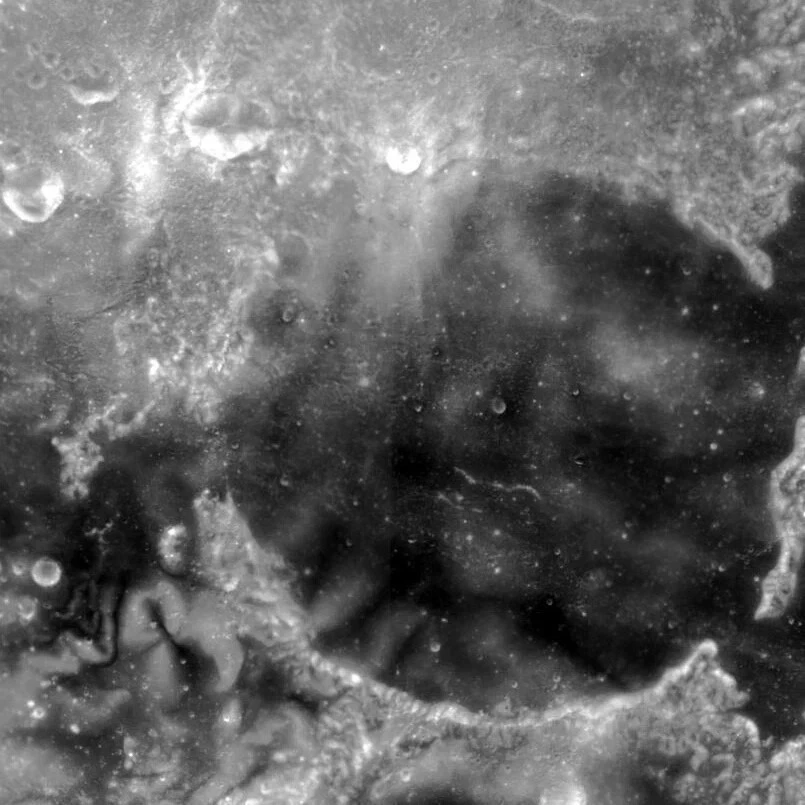
Clementine was a joint NASA and North American Aerospace Defense Command (NORAD) experimental mission launched on January 25, 1994. In late April of that year, the probe was sent to asteroid 1620 Geographe, but on May 4, its onboard computer failed, and the spacecraft became uncontrollable.
Yet the mission proved to be a great success, producing the first complete map of the Moon in ultraviolet and infrared wavelengths.