Moloch looks like he's about to lie down on the sand and die. He trudges along the sand slowly and swaying, pausing every few steps, with a terrifying tumor dangling from his neck. But in reality, this issue's hero is healthy and feeling great! 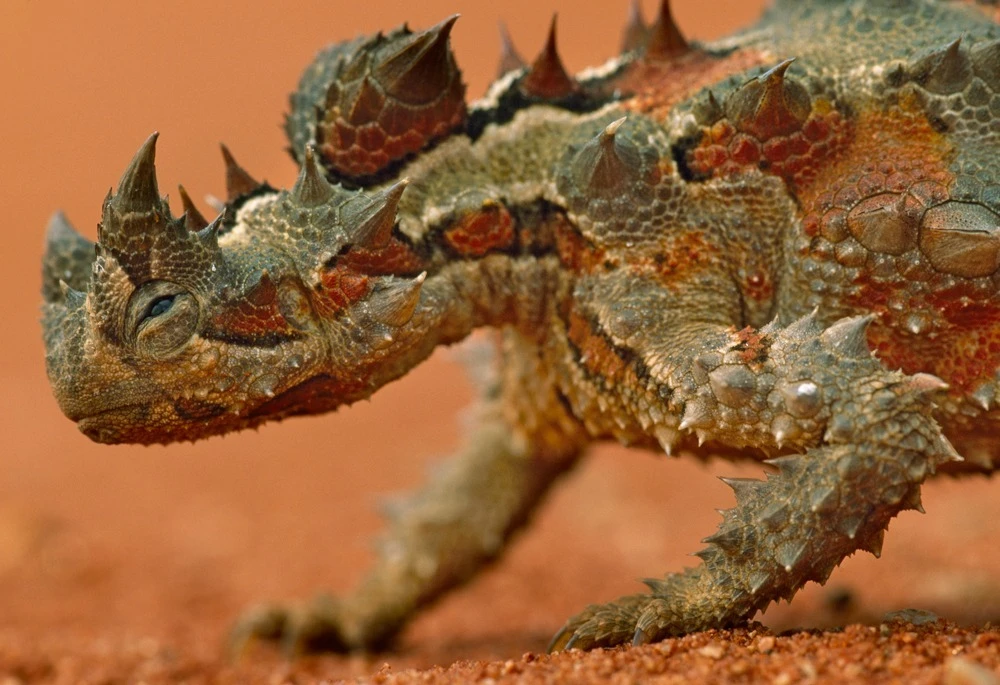
Barely alive.
After all, the growth on the neck is a very important, albeit disposable, part of the reptile. It's its false head. When attacked by a predator undeterred by the prospect of a lump of spines for breakfast, the moloch lowers its head, exposing its false head to the attack. After all, you'd better lose a lump of connective tissue than a skull! 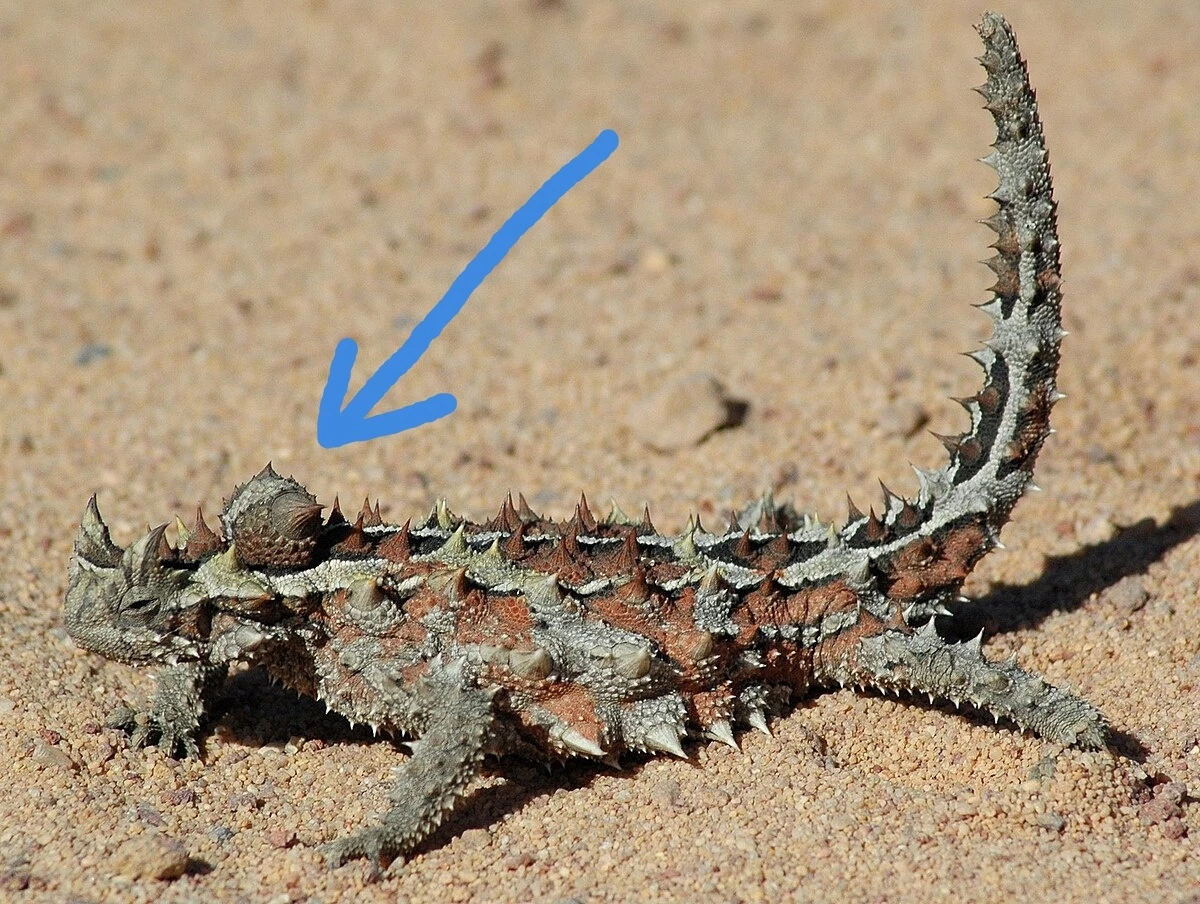
We're talking about this unusual growth on its neck. 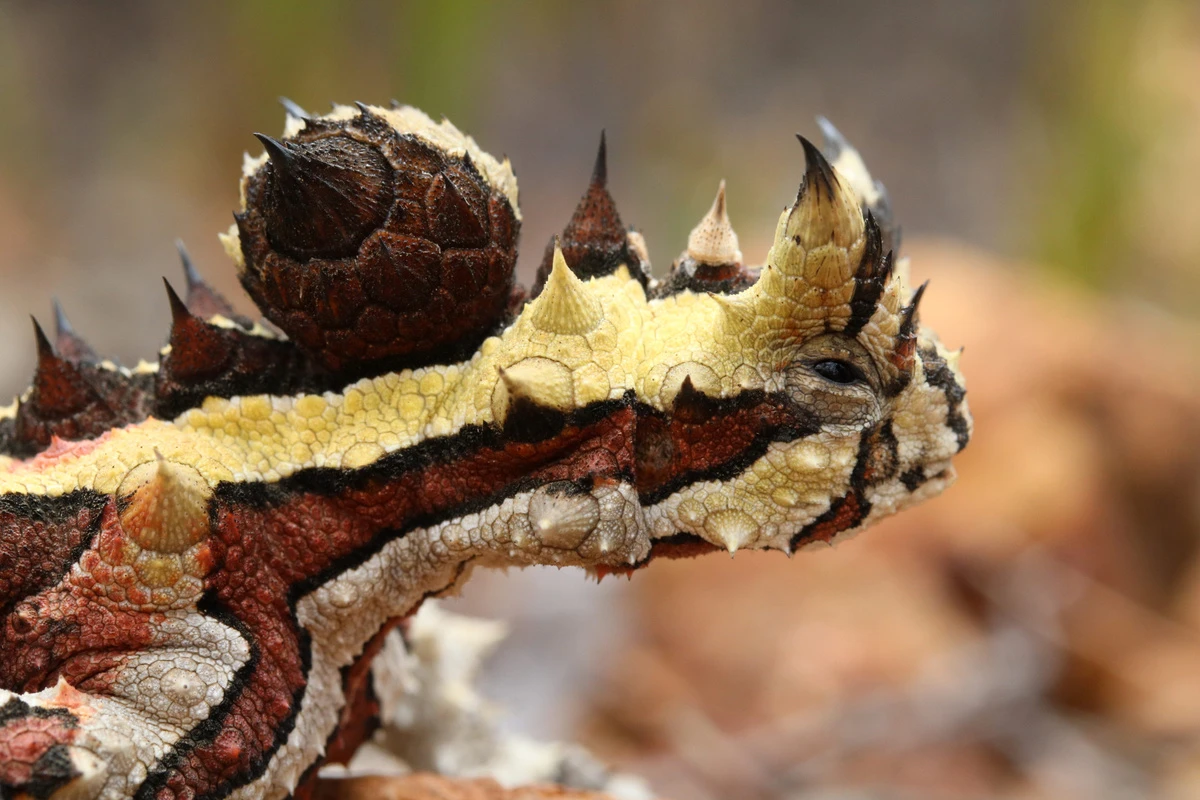
The tree dropped a pine cone.
And its strange movements aren't due to the disease that has ravaged its body; it's a carefully calculated strategy. Although the molochs emerge from their hiding places at dusk, they try to avoid revealing themselves, so they move slowly and with frequent pauses. And thanks to their silhouette-blurring camouflage and numerous spines, the moloch quite naturally disguises itself as a dried-up plant struggling to survive in the Australian desert. But unlike local plants, the thorny devil (as English speakers call it) thrives in any weather because it can extract moisture directly from the air! 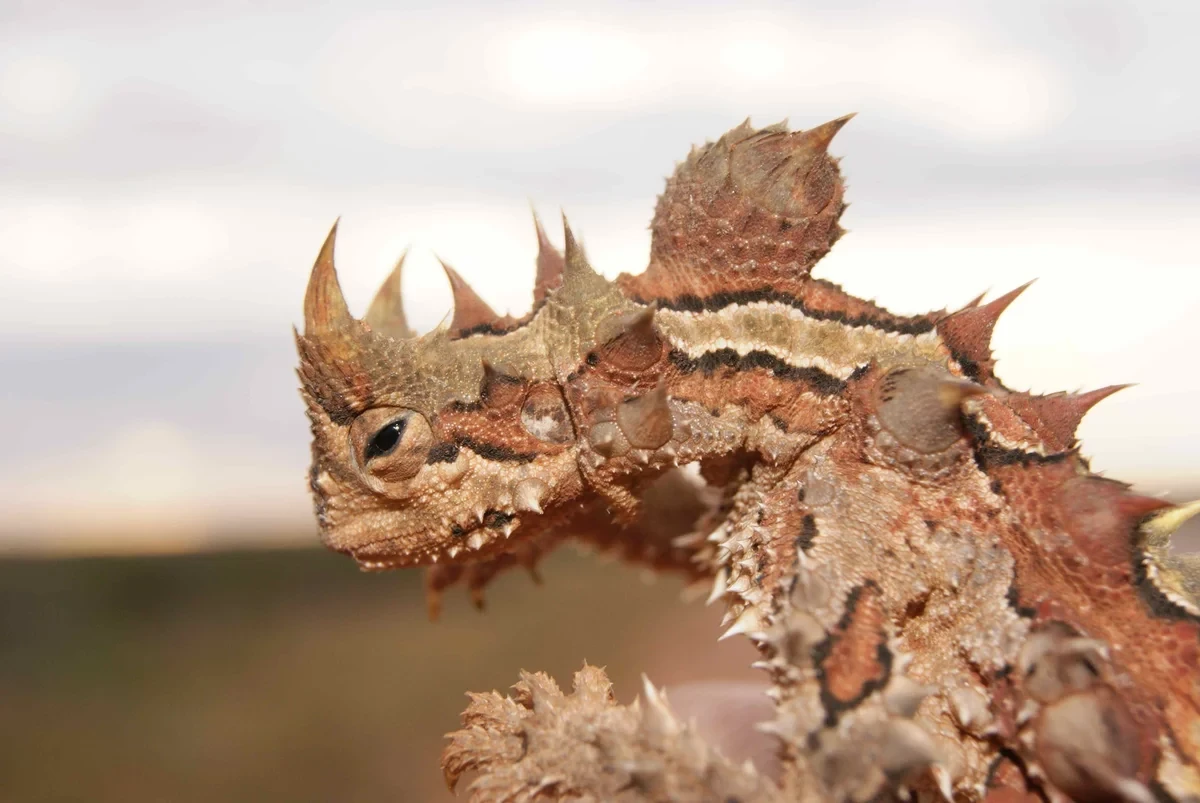
Don't bother me, I'm trying to drink.
In the pre-dawn twilight, when the air begins to warm, moisture falls as droplets of dew. The water settles, among other things, on the moloch, which at this hour deliberately climbs a dune or rock. And then something magical happens. The dew settling on the moloch is sucked into microscopic canals and flows straight to the reptile's mouth. All it needs to do is lick the water off! 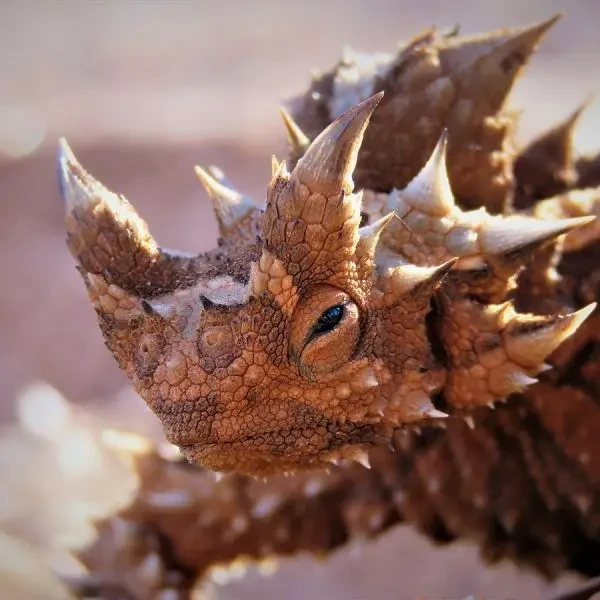
All the Moloch's scales are like the channels of microscopic rivers. These channels are ingeniously connected so that all the droplets flow directly into the mouth. 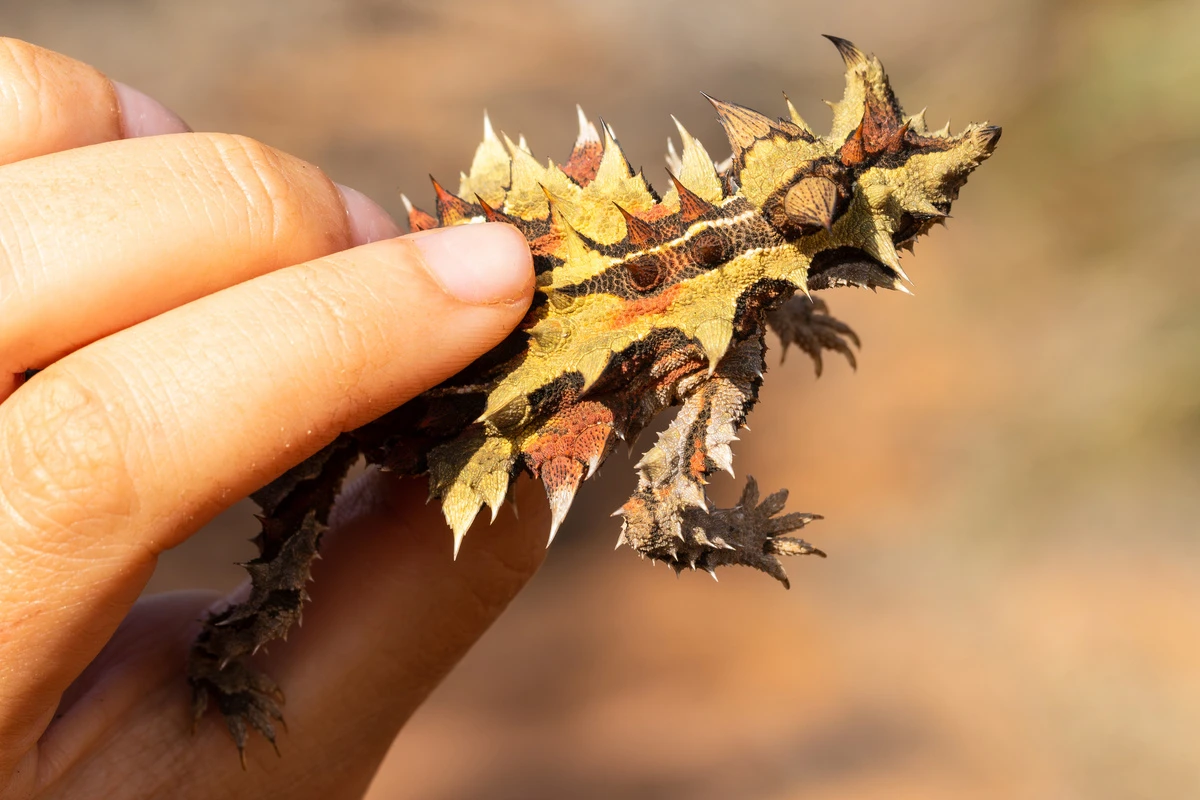
I guess they can be thrown like shurikens :D
But no, there's no magic involved; it's just ordinary physics, albeit a rather complex one. Molochs have learned to exploit the capillary effect. Water molecules inside the canal "stick" to the walls and draw the bulk of the water further, gradually moving toward the reptile's mouth. The chances of observing this effect in everyday life are close to zero, as it weakens the wider the lumen of the tube or canal. But this doesn't bother the Molochs, as the width of their skin tubes is only hundredths of a millimeter! 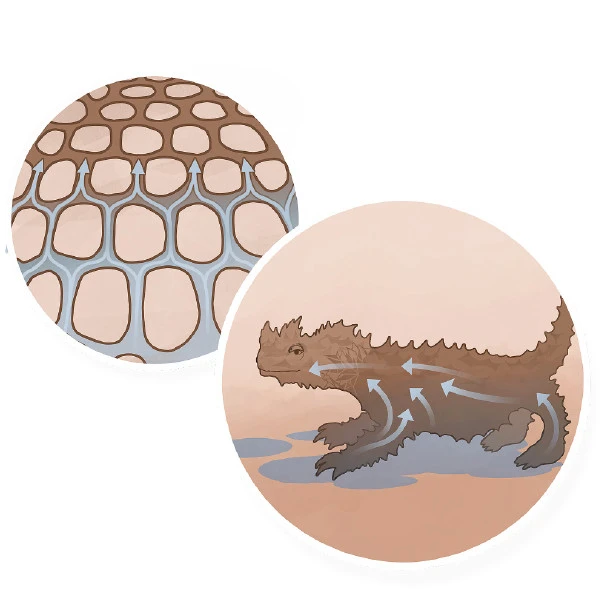
Thanks to this feature, Molochs are able to extract water even from wet materials. 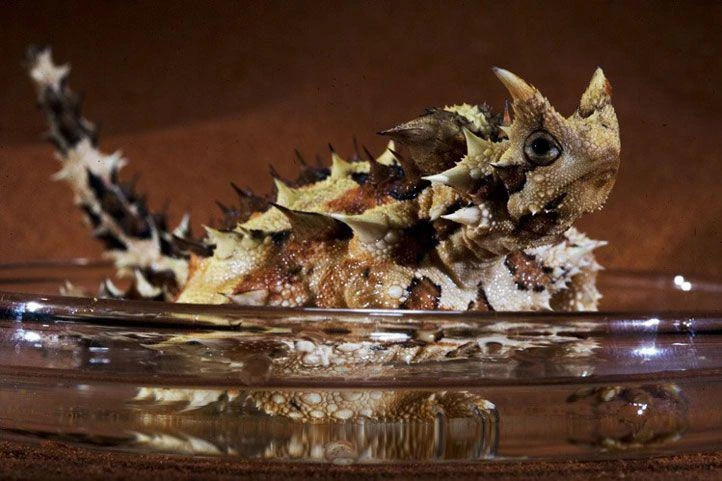
Despite their abilities, molochs never refuse open water sources. However, they drink rather strangely: they bury their entire bodies in a puddle and wait until the channels deliver water to their mouths.
When the moloch is full, it heads to the nearest anthill to feed. Despite its small size, the moloch is a voracious creature, eating 1,500-2,000 insects daily. Fortunately, these ubiquitous insects thrive even in the desert. Then, after drinking and eating, the reptile disappears into an abandoned burrow, under a dry bush, or between rocks. After all, who in their right mind would walk under the scorching sun? 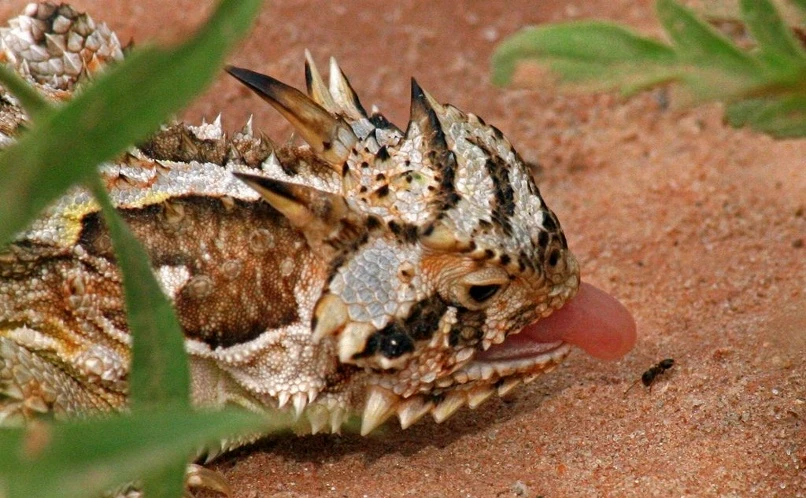
Why is my tongue so short!!!
Add your comment
You might be interested in:













17 Photos That Will Stop You in Your Tracks (18 Photos)

Behind the Camera on 'Back to the Future' (45 Photos)

22 Examples of Pure Design Genius That Deserve a Huge

What Would Happen to a Human on Every Planet in the Solar

The Sexual Customs of the Vikings: Why an Older Partner Was
Stunning Views of the Martian Horizon from 400 Kilometers

15 Mind-Blowing Sex World Records You’ve Probably Never
20+ Fascinating Photos of Rare and Unusual Sightings (40

30 Fascinating Movie Details You Probably Never Noticed (31
