Cardboard Grandmas: Hong Kong's Poverty Without the Glitter (9 photos)
It's a cliché, but Hong Kong truly is a city of contrasts. Everyone wants to live here (due to its special economic and social status), but it's uninhabitable and unpleasant. When you're working and earning a salary, it's more or less bearable, but what do you do when you're retired? 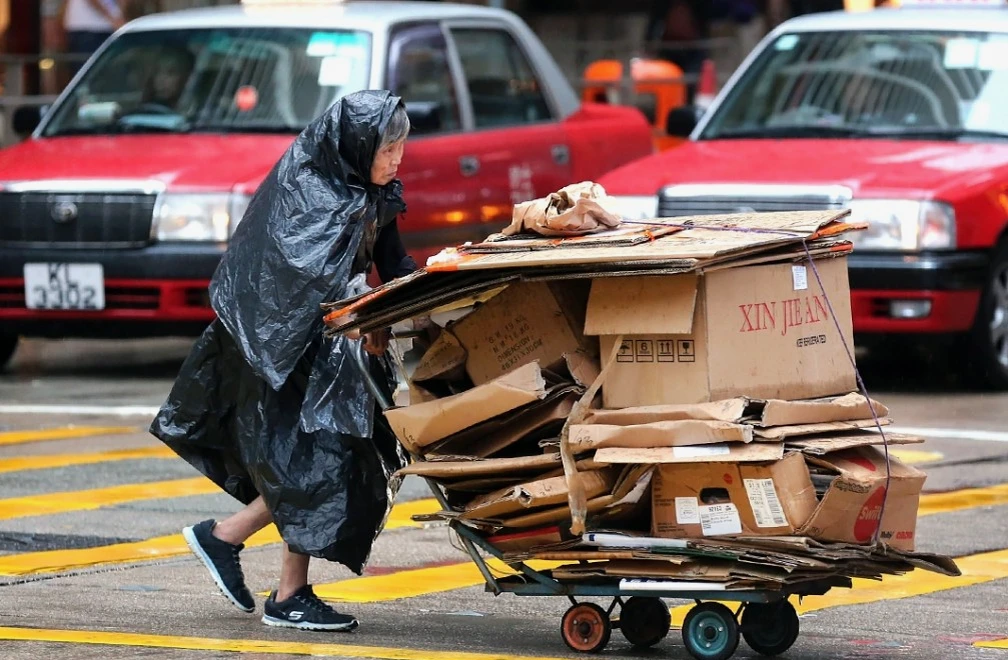
Night Shift Pensioners
They're called "cardboard grannies." They're in their 70s, 80s, and even 95s. Around two in the morning, they go out into the big city to work to earn money for food. The cardboard is usually discarded by businesses and restaurants (from vegetable deliveries). The old ladies sort the cardboard they find into categories, load it onto a cart, and take it to the local recycling company. These old ladies usually don't get home until 11 a.m. 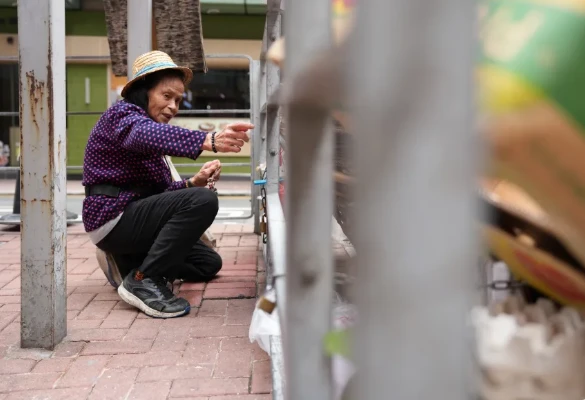
Many 80-year-old old ladies have been doing this for 20 or even 30 years.
Of course, you can't live on this; you have retirement savings. But they don't do this as a hobby; they do it to tide them over. These cardboard old ladies earn pennies for their grueling labor, and it's a thankless job for us anyway. 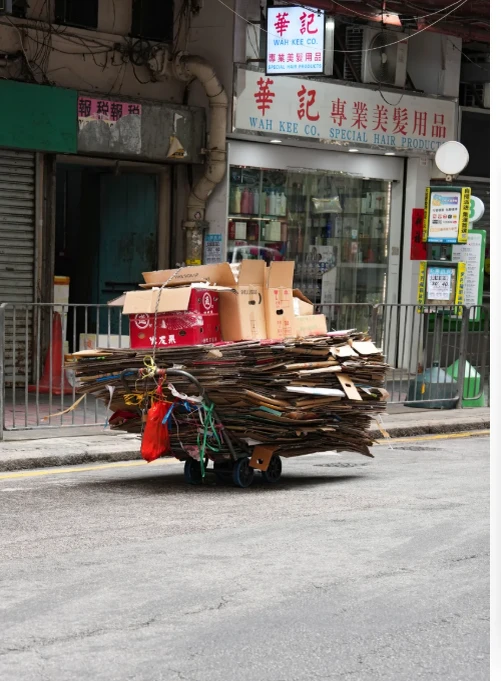
The cart can be rolled away or thrown away.
An experienced grandmother earns about 100 Hong Kong dollars a day, enough for two small meals, usually lunch and dinner. However, in recent years, the cardboard grandmothers who spent 30 years cleaning the streets of Hong Kong from cardboard trash have been feeling the pinch. 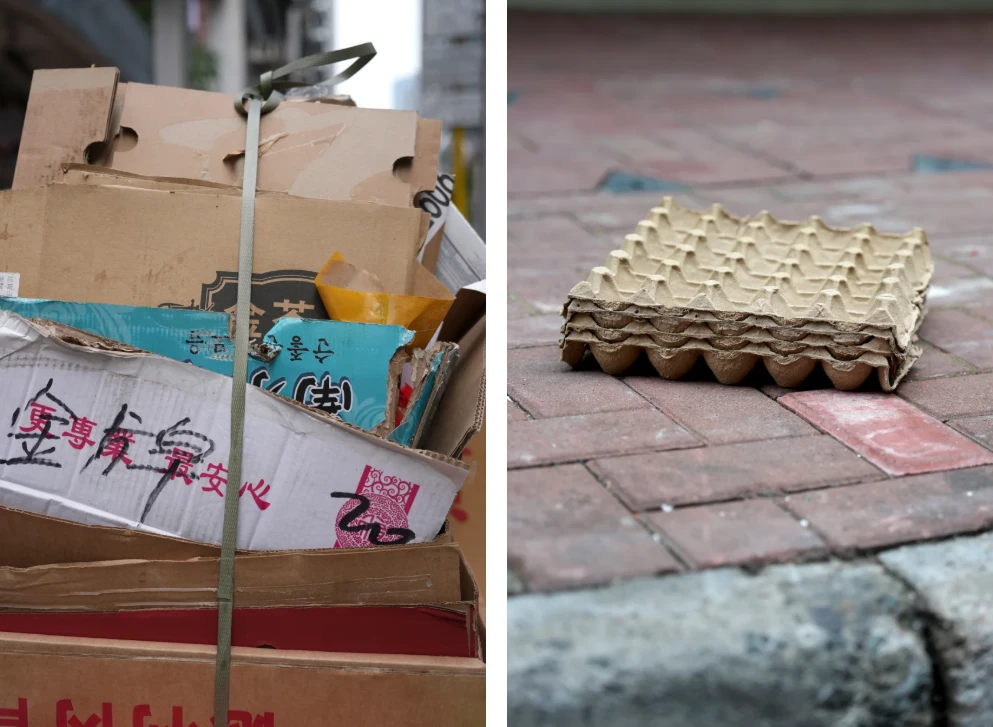
Need to sort by grades
Previously, processing companies paid HK$0.60 per kilogram, the minimum recommended by the government. Now they offer only HK$0.30. 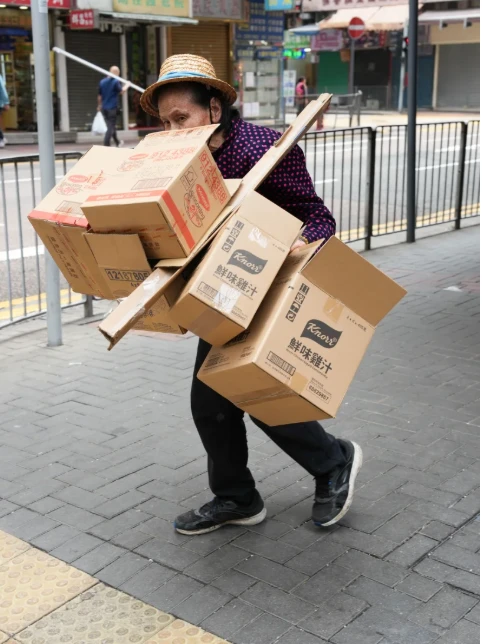
These are grocery boxes.
And sometimes, some kind foreigner, ignorant of the rules, throws a pile of trash collected by a grandmother into a dumpster while she's away from the pile in a nearby alley. And it's not the person's fault; he wanted to help, but he's stuck working all night at the dumpster.
Rich City, Poor Old People 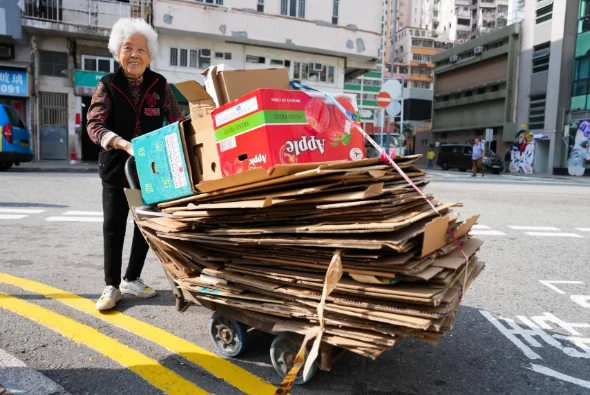
Why are the old ladies so cheerful on the streets of Hong Kong? Because the weak can't cope.
Hong Kong's paradox lies in the horrific gap between the city's wealth and the poverty of its elderly residents. A 2024 report by the charity Oxfam estimated that 580,000 elderly people in the city live in poverty. The government provides them with a small monthly allowance, but in one of the most expensive cities in the world, this is insufficient. Many work part-time; they simply have no other choice. 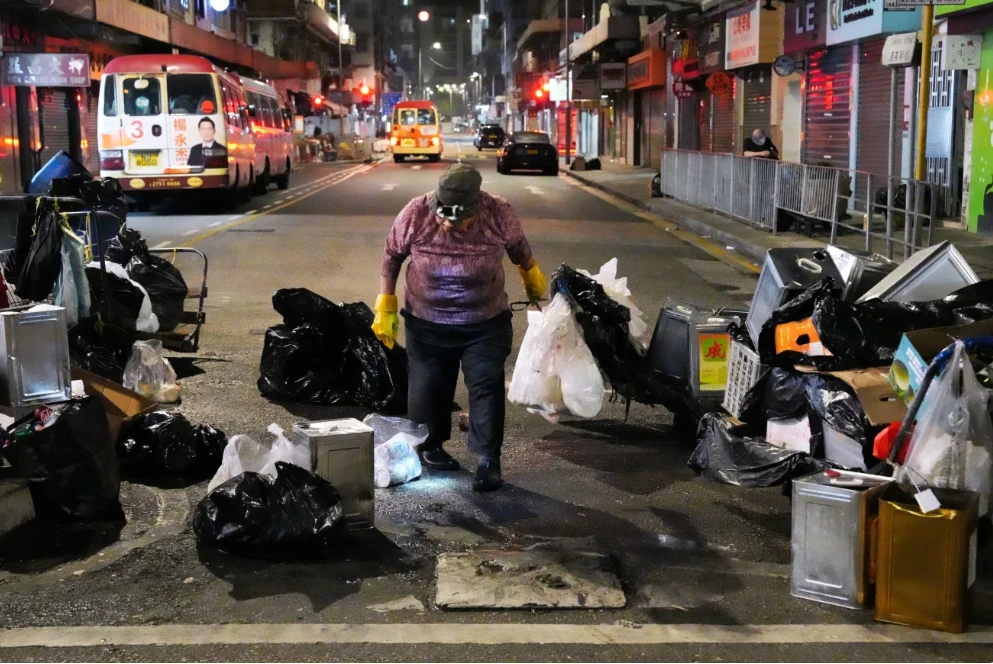
They can be accused of stirring up trash.
And yet, they litter here like crazy, and they're good at it! About 1.51 kg of waste is produced per capita daily. This is significantly more than in Tokyo (0.88 kg), Seoul (0.95 kg), and Taipei (1.14 kg). And only 30-40% of trash is recycled, while in Taiwan and South Korea, more than half is recycled. So, cardboard drop-off points and cardboard grannies are truly needed.
And what about the cardboard grandpas? 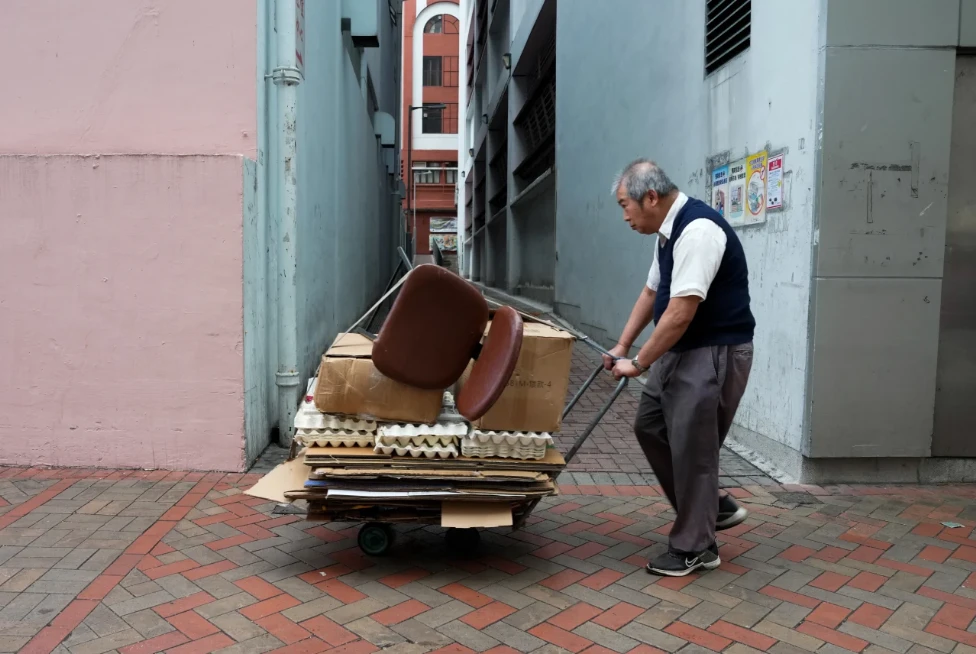
And he found himself a chair at the same time.
And of course, there are the very old ones. Some can simply find other jobs, like nominal security guards for pennies, where they wouldn't hire an old woman. That's why there are fewer of them here. Many of the old people's children have left Hongong for different parts of the world; after all, it is a city of peace, in a sense. However, moving doesn't mean getting rich, so those who have achieved something at all take the old people with them. 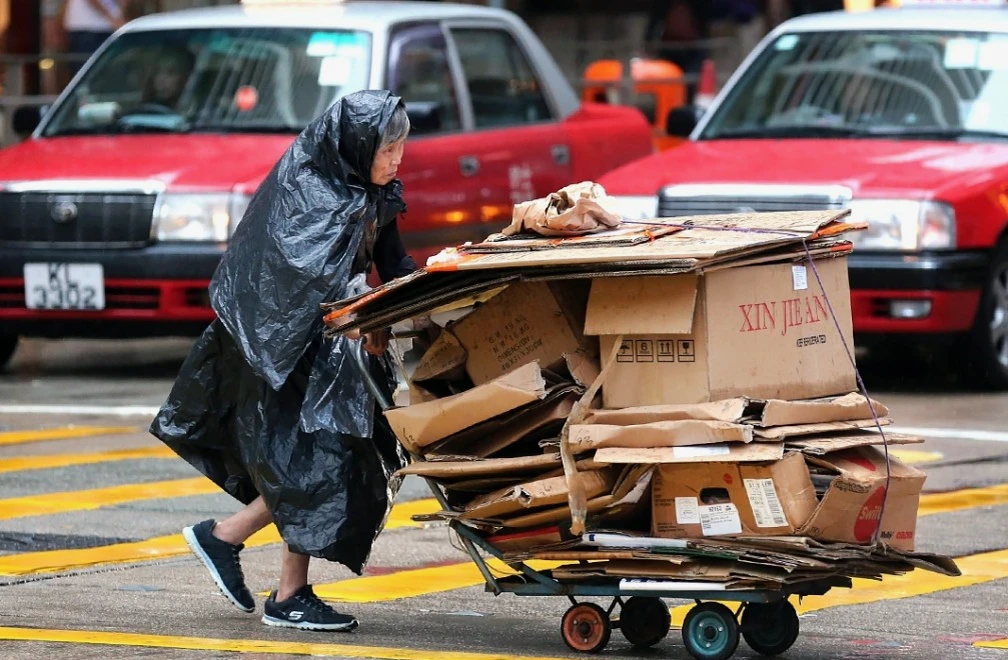
No Country for Old Men
And these grandmothers remain, the whole phenomenon is that there are quite a lot of them.