Why Portugal Spares the Bull but Not the Man: The Truth About Europe’s Most Dangerous Bullfight (14 photos)
Once a year, on August 14, the quiet town of Abiul transforms into the capital of Portuguese bullfighting. This festival has no match in Spain. Here, matadors wielding swords are nowhere to be seen; instead, cavaleiros take to the ring mounted on rare Lusitano horses. Beside them are the forcados—unarmed men who take down a half-ton bull with their bare hands. The tradition dates back to 1836, when Queen Maria II banned the public slaughter of bulls. Since then, Portuguese bullfighting has been considered the least bloody variation of the sport. Here is how it differs from Spanish corrida, who the forcados are, and what really happens to the bull after the fight. 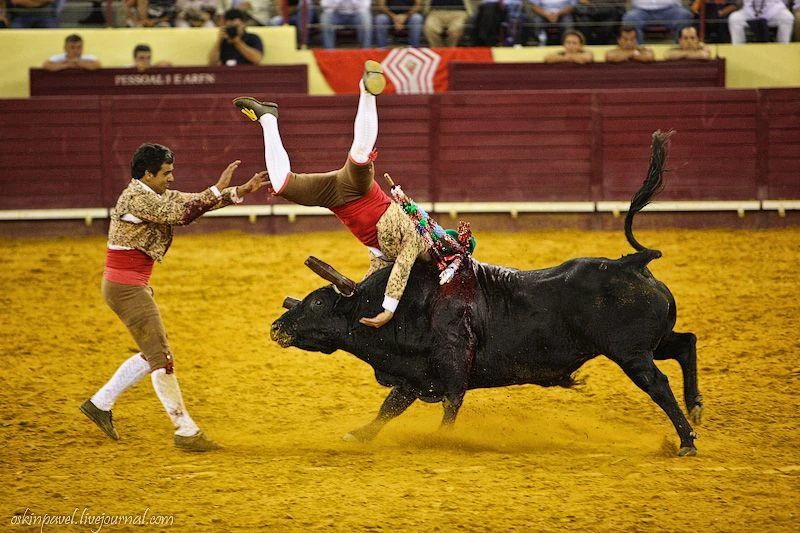
A Duel, Not an Execution: How Portuguese Bullfighting Differs From Spanish
Participants explain the main difference simply. In Spanish bullfighting, the outcome is predetermined. The matador carries a sword, and the fight almost always ends in the bull's death. In Portugal, the foot fighters carry no weapons at all, and victory is guaranteed to no one.
“In Spanish bullfighting, there is no real physical contact between the matador and the bull. For us, a bullfight is a genuine duel between man and beast—a breathtaking, highly dangerous undertaking,” explains one Portuguese fighter. 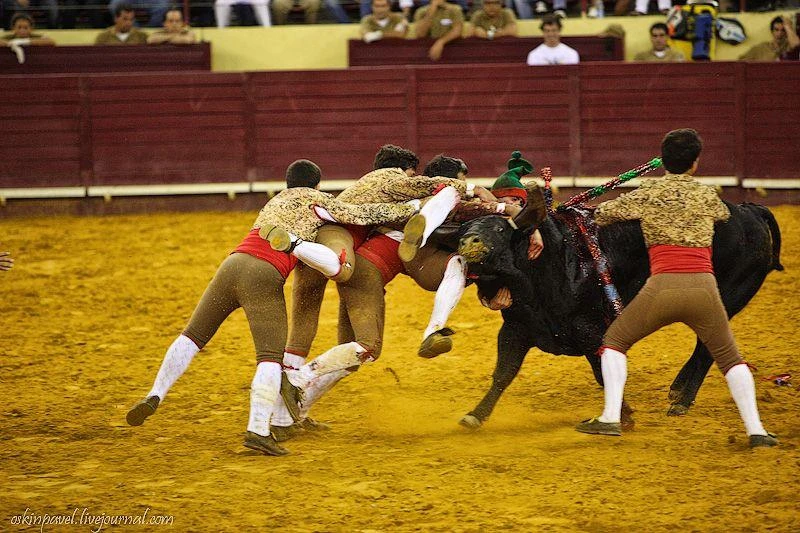
Bare hands against half a ton of muscle: foot fighters in Portugal are not allowed weapons.
For the Portuguese, bullfighting is primarily a test of personal courage rather than a spectacle of slaughter. It wasn't always this way. Killing the bull in the arena used to be a standard part of the spectacle until 1836, when Queen Maria II issued a royal decree banning public bull slaughters. Since then, the bull leaves the ring alive almost everywhere in the country. The only exception is the border town of Barrancos, where the ancient tradition persists to this day.
Cavaleiros and Lusitano Horses: Aristocrats vs. Commoners
The participants fall into two camps: mounted cavaleiros and foot-fighting forcados. Centuries ago, only aristocrats rode horseback, while commoners made up the foot teams. This distinction in status remains visible today. The cavaleiros' outfits are lavishly embroidered with gold, evoking 18th-century court attire, whereas the forcados wear far more modest uniforms. 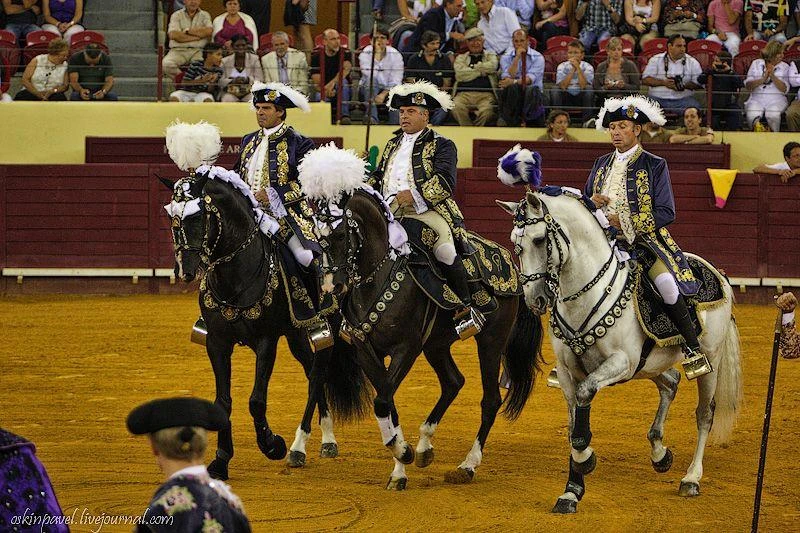
The cavaleiros' attire is practically a museum piece, recreating the cut and embroidery of 18th-century courtly fashion.
The horses are chosen just as meticulously. Since the 18th century, only Lusitano stallions have been used in the ring. This breed boasts nerves of steel and can turn on a dime as a bull charges. An ordinary horse would panic facing an enraged beast; a Lusitano will not. There is a political backstory to this tradition: in the early 18th century, King Philip V of Spain banned horseback bullfighting in his realm. Portugal alone preserved the classical Iberian horse lineage. Today, a trained Lusitano costs a small fortune and takes years to train. 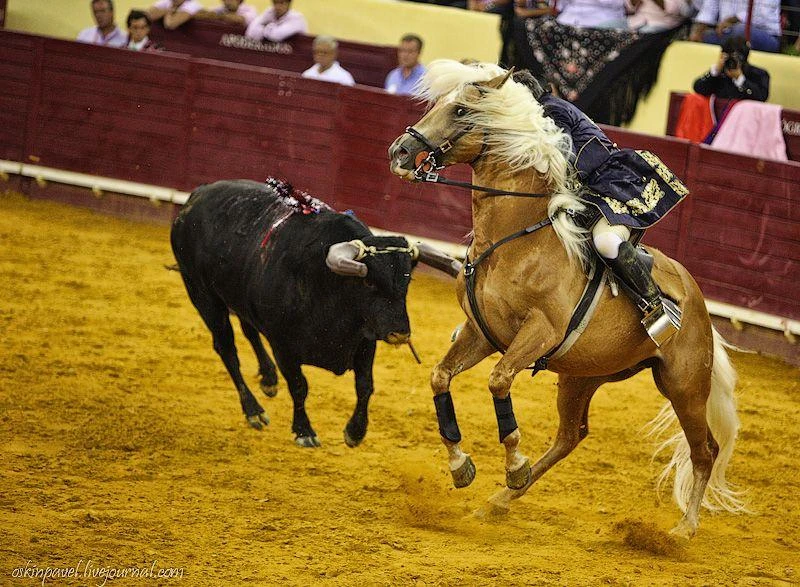
A Lusitano stallion maintains a precise distance from the bull—the cost of a miscalculation is far too high.
The Farpas: Act One of the Fight
The cavaleiro enters the ring first. His job is to tire out and provoke the bull before the team of forcados arrives. Prancing around the beast, the rider places sharp darts called farpas into its shoulders. They embed themselves in the thick layer of fat on the animal's crest, causing minimal harm—roughly equivalent to a quick needle prick. 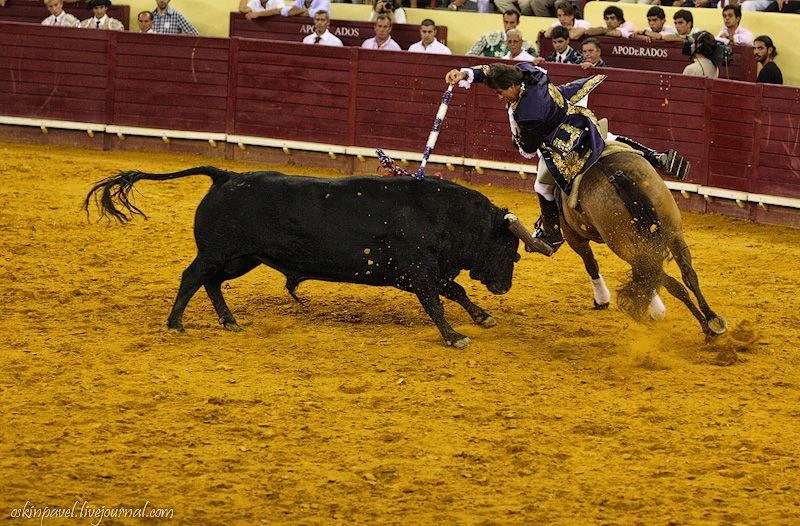
The farpa stays embedded for just a few seconds—long enough to trigger the bull's charge.
The wooden shaft of the dart snaps on impact, leaving a small flag at the end that further incites the bull. In a single performance, a cavaleiro lands three or four farpas, dodging lethal horns at the last possible second. For Portuguese aficionados, this display of horsemanship—rather than the climax with the forcados—represents the pinnacle of skill.
From 'Infants' to Veterans: The Path of a Forcado
The forcados follow a strict age hierarchy. The youngest group, known as the infantis ('infants'), consists of boys aged 10 to 14 who train on young calves rather than full-grown bulls. Next come the juvenis (juveniles), aged 14 to 18. The main group comprises men aged 18 to 35, though this limit is flexible—some continue stepping into the ring well into their 40s if their health allows. 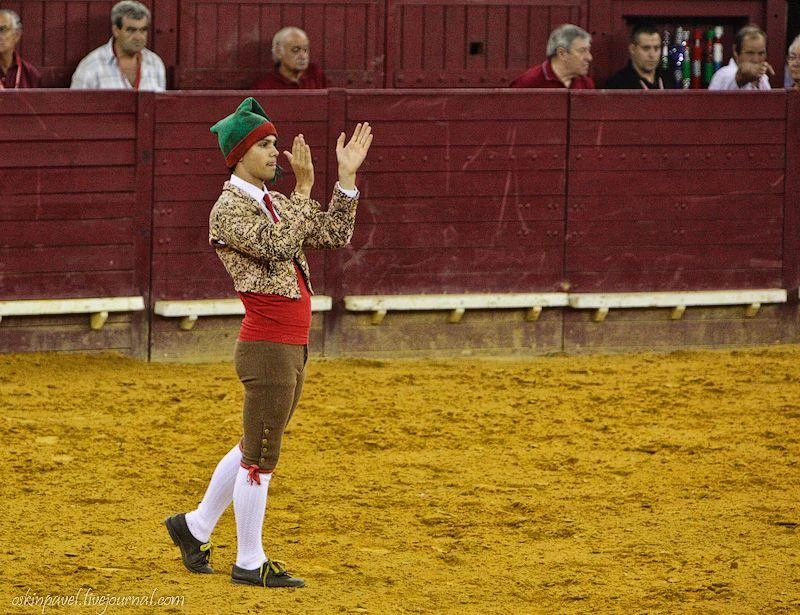
The journey from infantis to full-fledged forcado takes years of rigorous training.
Portugal's forcados are almost exclusively amateurs; professional fighters have all but disappeared. None of them are paid for their performance. They take to the ring for honor and the thrill of the sport. For some, it's about adrenaline; for others, it's a family legacy. Multigenerational dynasties of forcados still exist across the country, the oldest being the Santarém group, which has performed continuously since 1915.
Training and Roles: Anatomy of an Eight-Man Team
Preparation begins with grueling, two-hour practice sessions where several eight-man teams train together. That eight-man team steps into the arena as a single unit. Every fighter has a specific role, and one person's mistake puts the entire group at risk. 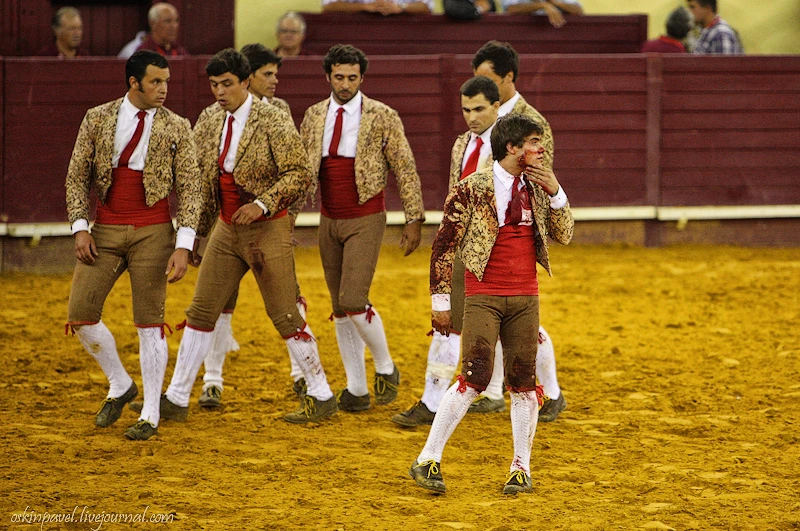
Blood on the uniforms is no theatrical effect—injuries during the pega happen at almost every performance.
One man taunts the bull and absorbs the initial head-on impact. Another must grab the bull by the tail to steer it off course. The entire maneuver is commanded by the cabo (team leader), whose orders are absolute. To his team, he is a coach, an older brother, and a guardian angel. Severe injuries are common: failed catches have left fighters in comas for days. 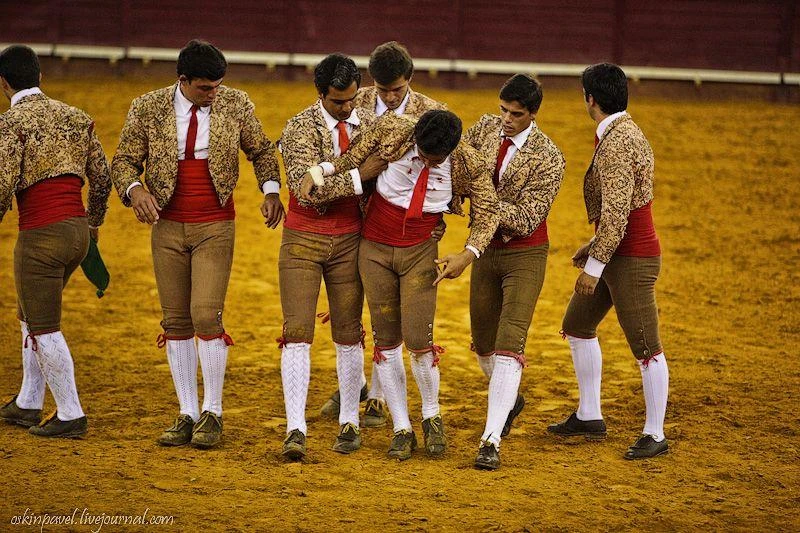
An injured fighter is carried off by his comrades—the team never leaves a wounded teammate behind.
The Pega: The Bullfight's Ultimate Feat
The setup for the climax is deceptively simple. Facing the fiercest bull of the event comes the team's most daring man: the forcado de cara (front man). His job is to charge straight at the animal and grab its head between the horns—a move known as the pega de cara. 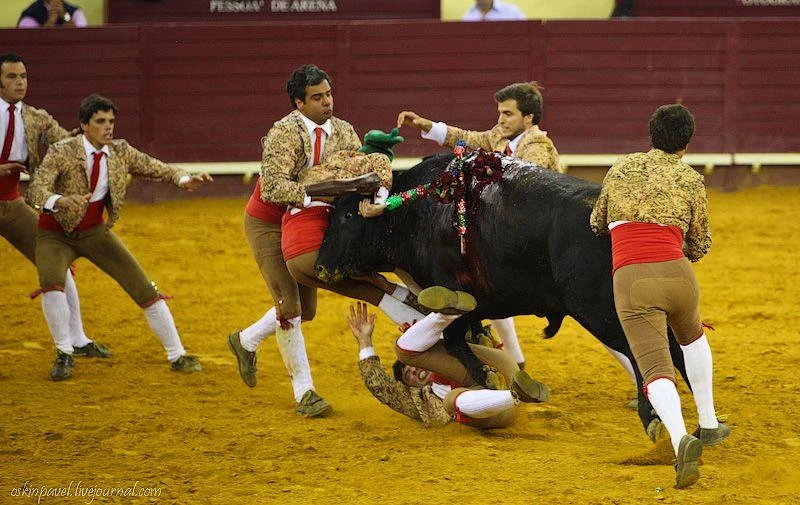
If the tackle fails, they try again—a fallen fighter is not a rarity, but part of the game.
A bull can fling a man off his feet with a flick of its neck. If the first attempt fails, they reset and try again. The cost of failure is high: severe bruises and broken bones are the rule rather than the exception. 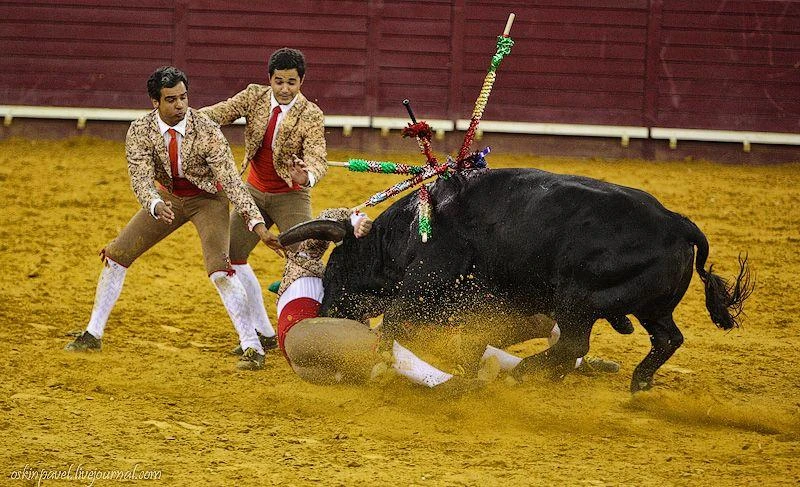
The team rushes in instantly—at moments like this, split seconds decide everything.
While the front man holds fast to the bull's head, the other seven pile in—some locking onto the neck, another grabbing the tail—to immobilize the beast completely. This is the signature, most perilous moment of the entire show, and the reason arenas sell out.
The moment the crowd waits for: a fighter airborne, inches from the horns.
In the Ring: Weight, Audiences, and Aftermath
Bulls selected for the ring are three to four years old and weigh between 500 and 600 kilograms (1,100–1,300 lbs). Larger animals are not allowed into Portuguese arenas—it would give the men zero chance of survival. Before entering the ring, the bull's horn tips are fitted with leather padded sheaths. While these dull the impact, they won't prevent severe injury if a forcado missteps. Courage alone is not enough; cold composure, sharp instincts, and flawless timing are essential. 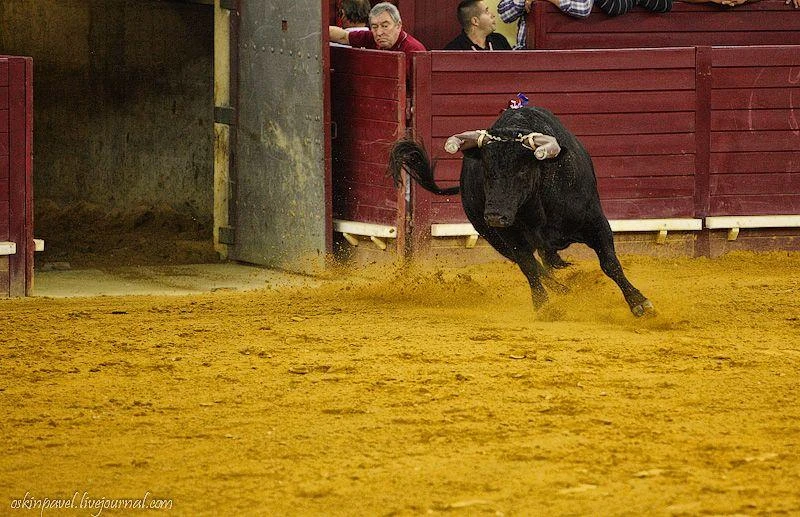
Leather horn sheaths are the fight's only concession to safety.
Bullfighting remains hugely popular in Portugal, consistently drawing packed crowds. Dating a forcado is a point of pride for many young women. Once the duel is over, a herd of calm steers is released into the ring to lead the exhausted bull back to its pen. Unlike in Spain, the animal is never killed before an audience. 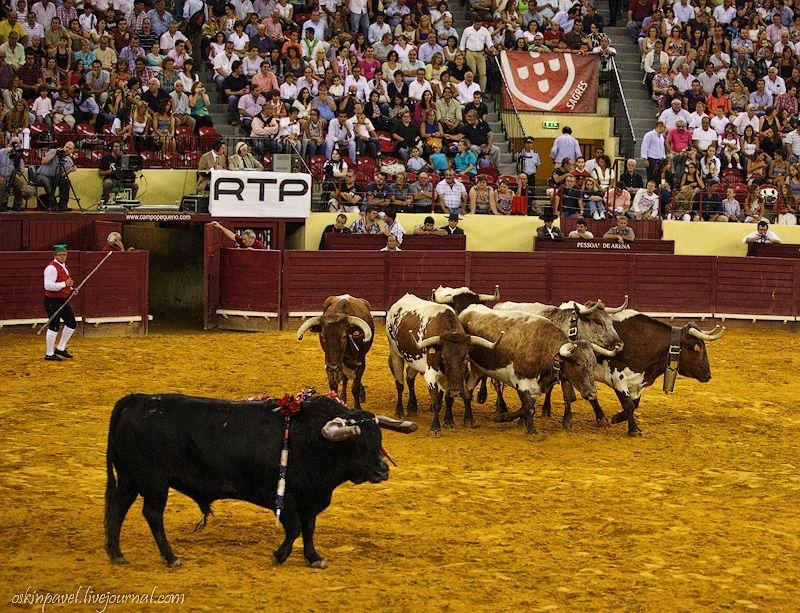
The steers lead the bull quietly out of the arena without a struggle—a tranquil end to a dramatic spectacle.
Yet describing the tradition as humane is only partially accurate. What happens to the bull offstage varies. Some are slaughtered behind closed doors days after the fight. Others that showed extraordinary spirit are spared, retired to pasture, and used for breeding. The myth of a completely bloodless Portuguese bullfight is more of a romanticized simplification than fact. While public bloodshed is avoided, the bull's life is not always spared. 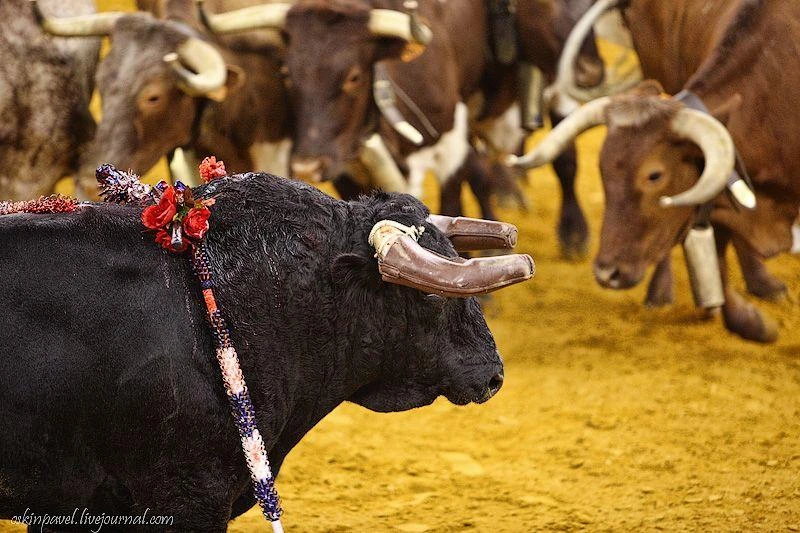
Ribbons and flowers adorn the bull before it enters the ring—a ceremonial touch inherited from ancient festivals.
Portuguese bullfighting also has its share of superstitions. Every forcado owns two neckties: one red and one black. The red tie is worn for every fight, while the black tie is reserved strictly for mourning the death of a relative or teammate. 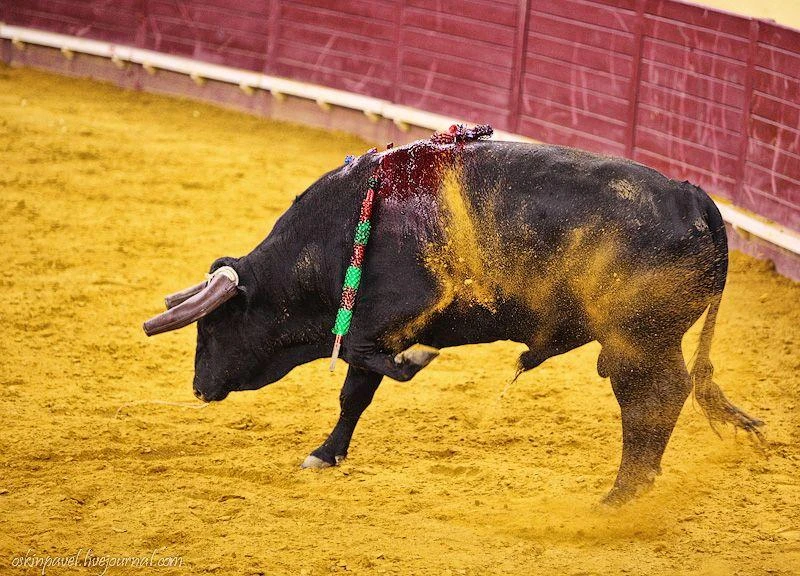
Even without a death sentence, the bullfight remains an edge-of-your-seat spectacle: blood spilled in the ring is a reality for both sides.
Portuguese bullfighting relies not on killing, but on the voluntary, uncompensated risks taken by its participants. Perhaps that is why, every August 14 in Abiul, people gather less to watch a contest and more to witness a rare display of raw human courage. What do you think—does sparing the bull in the arena make Portuguese bullfighting more humane, or is it merely a romantic formality?