The Serial Killer Who Thought 'No Body, No Crime' Would Keep Him from the Gallows (5 Photos)
On February 28, 1949, a scene played out at Chelsea Police Station that would go down in British legal history. Sitting opposite Detective Inspector Albert Webb was an impeccably dressed 39-year-old man with manicured hands. His name was John George Haigh. 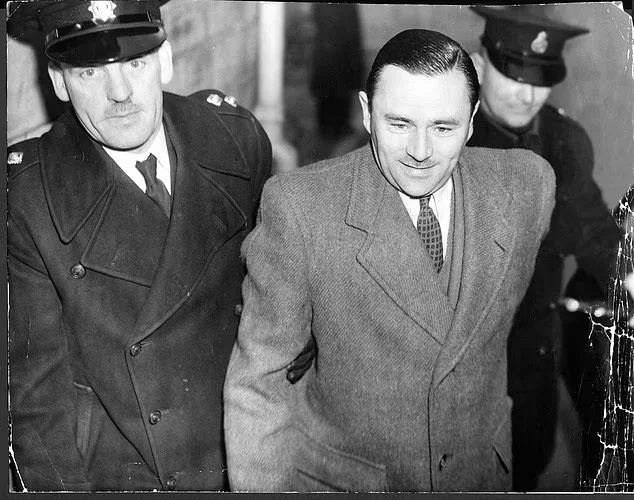
Police suspected him in the disappearance of a wealthy widow. There was no physical evidence and no body. Haigh remained silent for a long time before asking the detective a pointed question: what were the chances of ever being released from Broadmoor Criminal Lunatic Asylum? Webb replied that he didn't know.
Haigh smiled, adjusted his lapels, and uttered words that were entered verbatim into the interrogation record. He declared: "I've destroyed her with acid. You'll find nothing but sludge on the ground. How can you prove murder without a body?"
Haigh was entirely convinced of his own invulnerability. While serving a previous sentence for fraud, he had come across the Latin legal term
corpus delicti
—the body of the crime—in the prison library. In his staggering ignorance, Haigh took it literally: no body, no crime. He convinced himself that British justice could never send him to the gallows unless a coroner laid a corpse bearing clear signs of violent death onto the autopsy table. That fatal misunderstanding would cost six people their lives.
For decades, the British press painted Haigh as a suave, sophisticated monster, dubbing him the "Acid Bath Vampire." In reality, Detective Webb and pathologist Keith Simpson were dealing with a lazy, pathologically greedy, and rather mediocre con artist who had simply stumbled upon a gruesome way to dispose of his defrauded marks.
The story of his final undoing began nine days prior to that interrogation. On February 18, 69-year-old Olive Durand-Deacon vanished from London's upscale Onslow Court Hotel. A well-to-do widow and factory owner, she was always on the lookout for new business ventures. Two days later, her close friend, a Mrs. Constance Lane, grew alarmed. As she spoke to the hotel manager, another resident overheard them—John Haigh. He gallantly offered to escort Mrs. Lane to the police station to file a missing person's report.
At the station, Haigh played the part of the concerned neighbor to perfection. He told the desk officer that Olive had arranged to pitch him an idea for manufacturing artificial fingernails. They were supposed to meet outside the hotel, but she had never shown up. The police took the report, and the case might have been filed away as an ordinary disappearance had Detective Webb not run a routine background check.
Scotland Yard's reply arrived swiftly: the "concerned neighbor" was a career criminal. John George Haigh already had three prison terms behind him for forgery, fraud, and theft. Webb immediately ordered a covert search of Haigh's room at the hotel.
Investigators found no blood or weapons there, but they did uncover something just as crucial: a dry-cleaning receipt for a Persian lamb coat. Police seized the coat from the cleaners at once. Mrs. Lane positively identified it as belonging to the missing Olive Durand-Deacon. Haigh had dropped it off the very day after the widow vanished.
Investigators now had grounds to detain him, but Webb still needed a crime scene. Among Haigh's papers, detectives found a lease for a small two-story workshop on Leopold Road in Crawley, Sussex. Haigh had rented it under an alias, posing as an engineer and inventor.
On February 26, police forced the lock on the door of the Crawley workshop. What they found inside looked like something out of a horror film. In the center of the dusty room stood three massive glass carboys, each with a 40-gallon capacity. Strewn across the floor were a heavy rubber apron, tall rubber boots, and a gas mask. Nearby sat a stirrup pump. On the brick wall, forensics spotted faint splatters that appeared to be blood. Out back, the soil had been recently turned and covered with rubble. 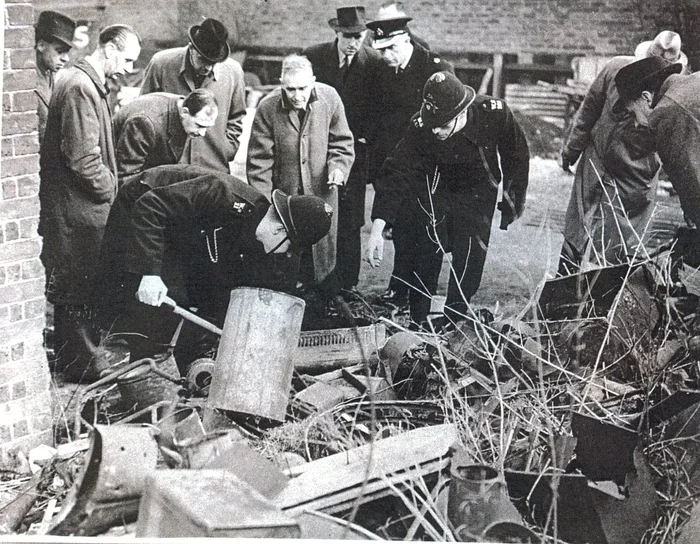
Then came the interrogation that led to Haigh's brazen confession about the acid. Realizing the coat had been traced and the workshop breached, he assumed the game was up—yet believed the law was still on his side. Convinced that without a body the case would collapse in court, Haigh lit a cigarette and dictated, on the record, precisely how he had solved the problem of
corpus delicti
.
His statement laid bare a chillingly mechanical process. He had lured Olive to the Crawley workshop under the pretext of demonstrating equipment for producing plastic nails. The moment the widow turned her back, he shot her in the back of the head with a .38-caliber revolver. He then dragged her body into a metal drum he had prepared earlier. Using the hand pump, he siphoned concentrated sulfuric acid from the carboys into the vat.
Haigh left the barrel sealed for several days. Sulfuric acid is a ferocious chemical agent, charring and dissolving organic matter by violently stripping water from tissue. When Haigh returned to the warehouse, the contents had been reduced to a thick, oily, dark sludge. He simply wheeled the drum outside, tipped the residue onto the yard, and concealed it under a layer of gravel.
Police stenographers could barely keep up, because Haigh didn't stop at the widow. Reveling in his supposed immunity, he confessed to murdering five other people, claiming he had disposed of them using the exact same method—not in Crawley, but in a basement workshop he had previously rented on Gloucester Road in London.
Detectives began unravelling the string of cold cases. Haigh's timeline and motives proved sickeningly mundane: no bizarre occult rituals, just cold, unadulterated financial greed.
His first confirmed victim was his former employer, William McSwan, whom Haigh had known since the 1930s. In 1944, Haigh bumped into McSwan at a pub. William was in hiding to avoid the military draft. Haigh offered to help him, lured him to the Gloucester Road basement, bludgeoned him with a lead pipe, and dissolved his body in an acid bath. The swindler then went to William's parents, Donald and Amy McSwan, claiming their son had fled to Scotland to dodge conscription and had asked Haigh to collect the rent on his London properties.
The parents believed him for nearly a year. By 1945, they began asking uncomfortable questions and demanding to see their son. Haigh invited the elderly couple to the very same basement. He murdered them, dissolved their remains, and skillfully forged powers of attorney. He transferred all the McSwans' real estate into his own name, sold it off, and pocketed what was then an absolute fortune.
The money ran out three years later. Haigh had no job and lived lavishly in high-end hotels. In 1948, he found fresh prey: Dr. Archibald Henderson and his wife, Rosalie. The scheme was repeated down to the smallest detail. Ingratiating himself with the couple, Haigh invited them to his new Crawley workshop to show off a bogus invention, shot them both, and submerged their bodies in sulfuric acid. He then forged letters from the Hendersons, convincing their relatives that the couple had emigrated abruptly to South Africa. He liquidated their estate, cashed their checks, and even adopted their red setter, walking it proudly through the streets of London. 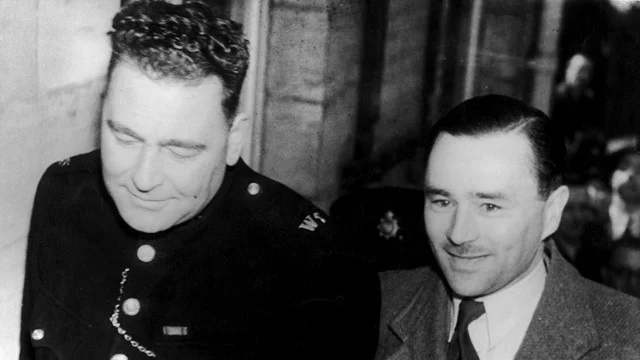
Haigh's confessions were exhaustive. The problem was that Scotland Yard found itself in a legal bind. Police had a murderer’s full confession, yet they still had no bodies. Under British law in the 1940s, an uncorroborated confession could easily be dismantled in court by a sharp defense attorney, who could argue that the statements were coerced or that the accused was simply a delusional fantasist.
Forensic science stepped in to save the case in the person of renowned pathologist Keith Simpson. Webb brought him to the Crawley workshop. Simpson inspected the yard and instructed crime scene technicians to meticulously peel back the earth, layer by layer, where Haigh had dumped the vat's contents.
Officers hauled away more than 400 pounds of acid-soaked earth and oily sludge to the laboratory. For several weeks, Simpson and his team painstakingly worked through the toxic mire, sifting it through fine wire mesh, washing it with water, and examining every suspicious fragment under magnifying lenses. It was filthy, grueling, and extraordinarily meticulous work. 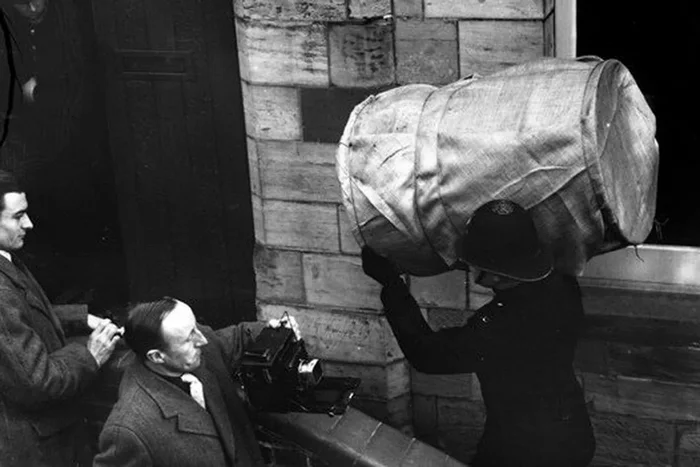
Haigh had understood little about chemistry. Sulfuric acid is remarkably effective at breaking down soft tissue and most bones, but it is powerless against certain organic and synthetic materials. Simpson found irrefutable evidence in the sludge: from the 400 pounds of soil, experts recovered 28 pounds of human body fat, three gallstones (which acid cannot dissolve), and 18 tiny fragments of human bone, including part of a pelvis and a toe bone from a left foot. They also uncovered a red plastic strap from a handbag.
The decisive discovery that would seal Haigh's fate on the gallows was an intact set of upper and lower dentures found embedded in the sludge. Sulfuric acid does not react with acrylic resin.
Detectives tracked down Mrs. Durand-Deacon's personal dentist, Helen Mayo. She arrived at the lab, examined the dentures, and confirmed they were her handiwork. She recognized the unique cast shape and materials she had used for her patient.
Corpus delicti
had been established. A toe bone, gallstones, and an acrylic denture became the "body."
Realizing his "no body" defense had collapsed, Haigh pivoted instantly. In his remand cell, he suddenly began feigning clinical insanity. That was the moment the sensationalized press legend of his "vampirism" was born. Haigh claimed to a prison psychiatrist that he hadn't killed for money; instead, he insisted he had been haunted since childhood by vivid nightmares of a forest of bleeding trees. According to him, he had slit his victims' throats with a penknife, caught their blood in a cup, and drank it.
For dramatic effect, he even began drinking his own urine from a tin mug in full view of the prison guards. He wagered that a psychiatric board would declare him insane and commit him to Broadmoor, just as he had contemplated during his very first interrogation.
The trial opened in July 1949 in Lewes. Haigh's defense was spearheaded by one of Britain's top barristers, Sir David Maxwell Fyfe. His strategy was predictable: the defendant was suffering from severe paranoia brought on by an ultra-strict religious upbringing.
The biographical background the defense leaned on was indeed grim. Haigh had grown up in a household belonging to the Plymouth Brethren, a fundamentalist Christian sect. His parents were so zealous that they erected a high brick wall around their garden to shield their son from the corrupting outside world. There were no radios, newspapers, or books in the home other than the Bible, and any misstep was met with severe beatings. The defense maintained that this harsh isolation had permanently warped Haigh's mind.
The prosecution, however, called its own expert. Dr. Henry Yellowlees, a leading psychiatrist and prison medical officer, tore the vampire defense and insanity plea to shreds. He directed the jury’s attention to the ruthless logistics behind the crimes: madmen driven by an uncontrollable bloodlust do not rent workshops under false names, nor do they purchase commercial quantities of sulfuric acid weeks in advance, nor do they forge legal deeds to sell off their victims' estates. 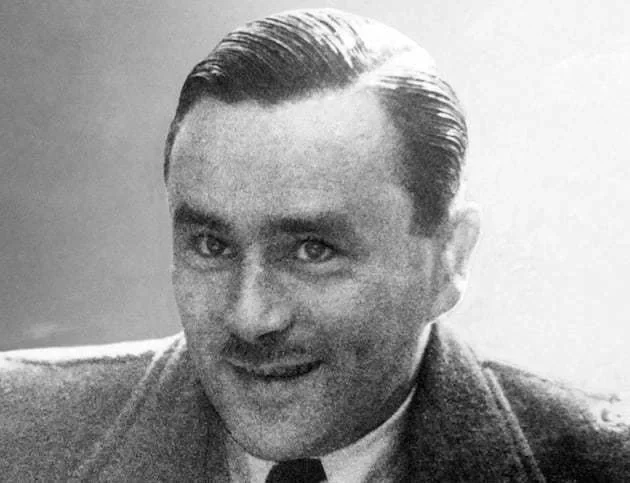
Haigh's actions had been calculated and cold-blooded from start to finish. The recurring nightmares and urine-drinking were nothing more than a cheap theatrical performance by a man desperate to save his own neck from the noose. Yellowlees diagnosed Haigh with severe psychopathic personality disorder and a complete lack of empathy, but concluded he was legally sane. Haigh knew full well what he was doing and went to great lengths to conceal his tracks.
In the dock, Haigh displayed chilling indifference. While experts debated how many pounds of his victim remained in the acidic sludge, he sat quietly in his three-piece suit, methodically working through newspaper crosswords, occasionally brushing specks of dust from his lapels. He chose not to testify in his own defense and declined to address the court.
The jury took just 15 minutes to reach a verdict—one of the swiftest deliberations in British legal history for a serial murder trial. John George Haigh was convicted and sentenced to death by hanging.
On August 10, 1949, Haigh was executed at Wandsworth Prison. The sentence was carried out by the legendary British hangman Albert Pierrepoint.