150 Million Left on the Floor: The Paradox of England's Largest and Most Absurd Heist (9 Photos)
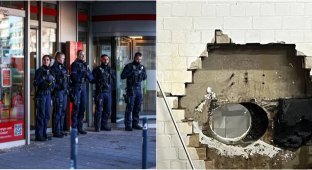
In February 2006, forensic detectives from Kent Police stood inside the cash vault at the Securitas depot in Tonbridge. What they saw defied all logic. The inner perimeter had been breached, a state-of-the-art security system bypassed, and pallets of untouched bank notes lay scattered across the concrete floor, abandoned in a frantic hurry. 
The gang had made off with £53 million, pulling off the largest cash heist in British history. Yet the paradox was that nearly three times that amount was left behind—simply because the robbers had physically run out of room in their getaway truck.
This was no conventional smash-and-grab. The depot had been built like an impenetrable fortress, featuring biometric scanners, multi-ton steel airlocks, and round-the-clock CCTV surveillance. Any attempt at brute force would have immediately triggered silent alarms. The masterminds knew this all too well. Rather than pitting themselves against steel and electronics, they chose to bypass the system entirely by targeting the weakest link in any security network: human nature.
The investigation that followed unfolded like an unprecedented forensic puzzle. Detectives found themselves chasing phantoms with no faces in any database, dealing with a flawlessly synchronized dual kidnapping, and following a trail of evidence stretching from quiet English countryside to London theater dressing rooms. It was a masterclass in criminal logistics—one that ultimately unraveled due to a handful of mundane, almost comical blunders. 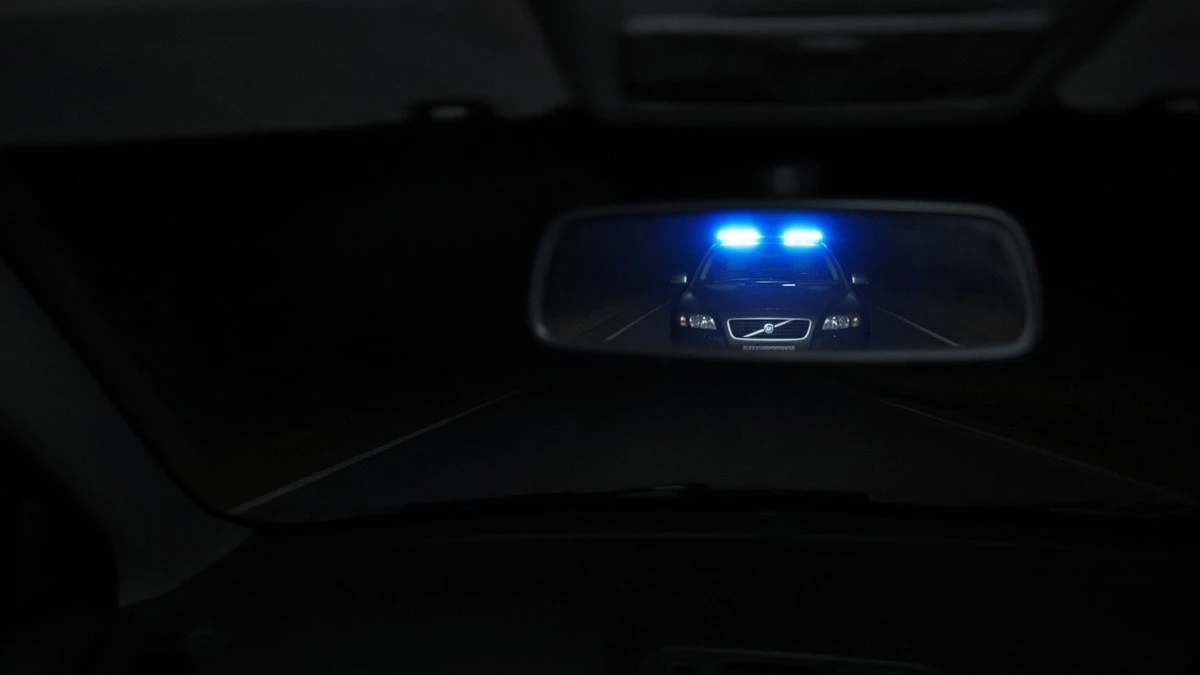
On the evening of February 21, Colin Dixon, the manager of the region's largest cash vault, was driving home in his silver Nissan Almera. The Kent highway was dark and deserted. Around 6:30 p.m., blue flashing lights appeared in his rearview mirror, mounted behind the grille of an unassuming Volvo. Unmarked police patrols were common at the time, so Dixon dutifully pulled over. That standard reaction from a law-abiding citizen was precisely what the gang had counted on.
A man in a high-vis jacket and a traffic officer's cap walked up to the car. Politely but firmly, he asked Dixon to step out and join him in the patrol car for a routine document check. The procedure seemed entirely legitimate, the officer's tone calm and authoritative. The illusion shattered the moment Dixon settled into the back seat of the Volvo. In a swift motion, the fake officer slapped handcuffs on his wrists, and the car sped off in the opposite direction of the local police station.
For investigators dissecting the operation later, the precision of the ambush was striking. The criminals had thoroughly researched Dixon's commute, work schedule, and daily routine. By exploiting basic trust in the uniform, they denied him any opportunity to press a panic button or raise an alarm. That fake traffic stop handed them the master key to the vault. 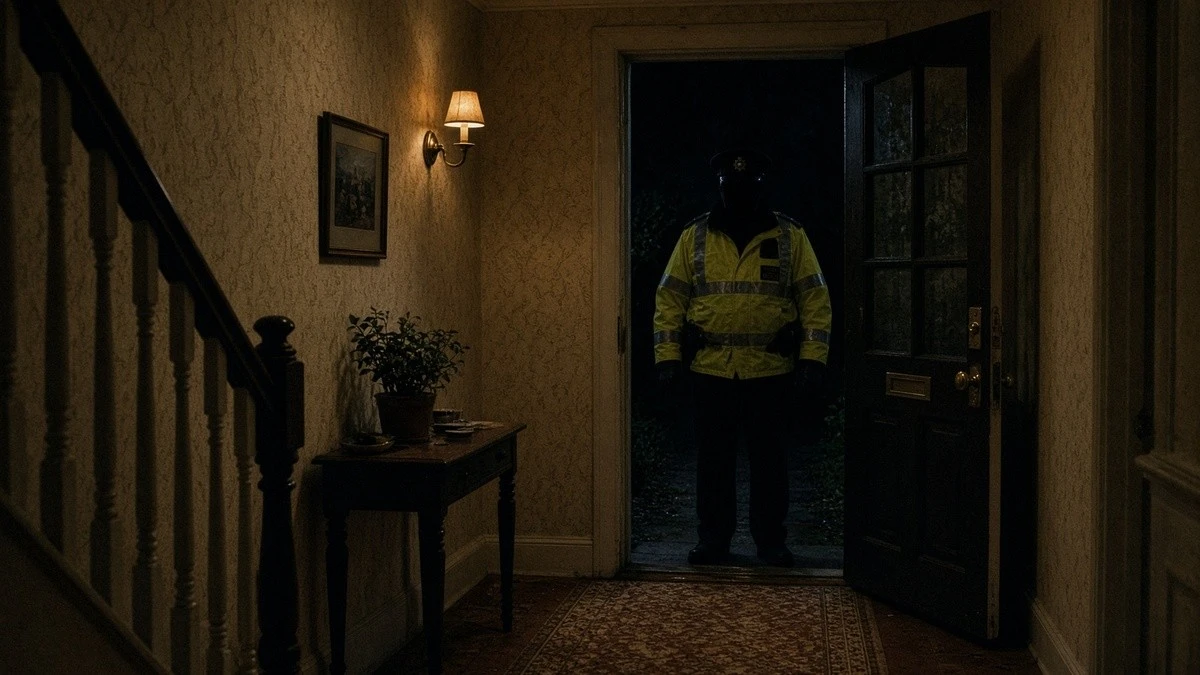
While Dixon was being driven along back roads to an abandoned farm, the second phase of the plan was unfolding a few miles away in the town of Herne Bay. Two men, also dressed in convincing police uniforms, knocked on the door of the Dixon residence. When his wife, Lynn, opened the door, they solemnly delivered grim news: her husband had been involved in a serious traffic accident, and she needed to come with them to the hospital immediately.
The psychological manipulation worked flawlessly. Panic over a loved one's life overrides critical thinking every time. Lynn didn't ask for identification or call the hospital to verify the story. She hurriedly gathered her eight-year-old son and got into the visitors' car. Naturally, they were not taking her to a hospital. A short while later, mother and child were brought to the same unheated barn where Colin Dixon lay bound.
Investigators were later amazed by the sheer synchronization of the abductions. The slightest glitch—a neighbor calling the police or a traffic delay—could have blown the entire operation. By taking his family hostage, the gang gained total leverage over the manager's will. Dixon was no longer a corporate employee safeguarding insured corporate millions; he was a father forced to choose between steel vaults and his child's life. The trap had sprung. 
Around 1:00 a.m., a white Renault truck bearing fake police decals pulled up to the solid gates of the Securitas depot. Inside were a masked, armed assault team and Colin Dixon himself. Broken by threats to his family, the manager buzzed the control room and ordered the outer perimeter opened. Once the truck entered the loading bay, the robbers moved swiftly, overpowering the fourteen night-shift workers and binding their hands with zip ties.
The primary hurdle remained the heart of the complex: the inner vault. Its security relied on biometric scanners configured to read the unique physical traits of authorized personnel. A stolen password or cloned keycard was useless here; the system required Dixon's physical presence. The robbers led the trembling manager to the terminal. His hands shook so violently that the sensitive optical scanner repeatedly failed to read his fingerprint.
Those grueling minutes at the scanner proved to be the turning point of the raid. Detectives analyzing the server logs later traced a series of access rejections. Inside the claustrophobic airlock, tension was at a breaking point: millions of pounds were separated from the gang by a sheet of biometric glass and one man's physiological stress. Finally, after several attempts, the heavy steel deadbolts disengaged with a dull thud. 
Inside the main vault, the gang was met with a sight beyond their wildest dreams. Stacked floor to ceiling were metal cages crammed with cash—over £200 million intended to replenish ATMs across Southeast England. The robbers immediately set to work, forming a human chain to haul heavy metal cages into the back of their 7.5-ton truck.
Yet during the planning phase, they had made a fundamental logistical miscalculation: they catastrophically underestimated the sheer volume and weight of paper currency. After roughly an hour of relentless hauling, the Renault was packed to the roof. The truck's suspension sagged dangerously, threatening to collapse on the way out. The gang managed to cram in £53 million, leaving more than £150 million behind in cages and strewn across the floor.
The decision to abandon the rest was dictated purely by the laws of physics. Locking the depot staff alongside Dixon and his family inside an empty cash cage, the gang vanished into the night. Hours later, when one of the hostages managed to free his hands and trigger the panic alarm, armed police arrived to find a surreal scene: the concrete floor covered in stacks of cash—silent testimony to a brazen heist that had simply run out of cubic feet. 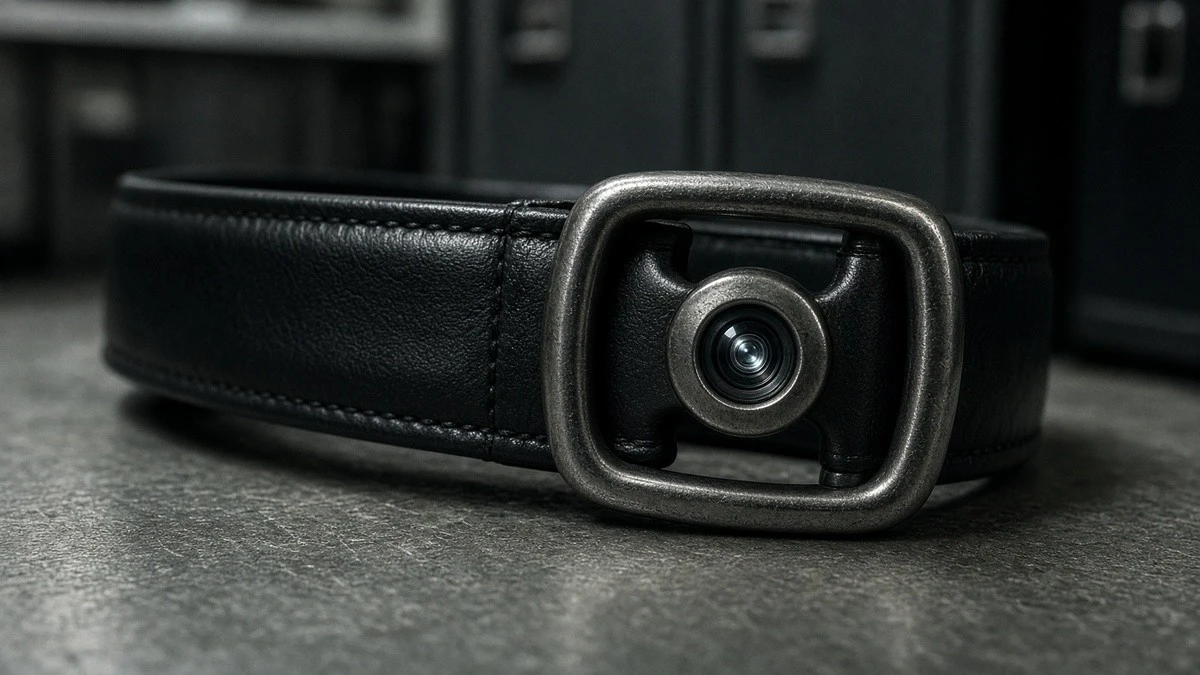
From the outset, investigators knew a robbery of this scale was impossible without intimate inside knowledge. Camera angles, shift schedules, access protocols—all required an insider. Kent Police systematically sifted through the financial records and phone logs of all 100 Tonbridge employees. Before long, the digital dragnet flagged anomalies surrounding Emir Hysenaj, a young worker of Albanian origin.
On the surface, he was just an unremarkable cog in the corporate wheel, but his digital footprint told a different story. Investigators discovered that Hysenaj had been feeding critical intelligence to the masterminds for months. The most damning piece of evidence was a custom leather belt seized during a raid: hidden inside its oversized buckle was a miniature high-resolution camera.
Going about his normal duties, Hysenaj walked through the depot's most secure areas, acting as a walking scanner. He mapped out every security camera, dead zone, and vault entry procedure. Frame by frame, the gang analyzed his hidden footage, gaining an insider's layout of the facility. The insider had become the invisible architect of the breach. 
One of the most daunting hurdles early in the investigation was the complete absence of facial matches. Hostages offered detailed descriptions of their captors, but the accounts conflicted and matched no records in Scotland Yard's databases. The breakthrough came when forensics realized witnesses hadn't seen real faces at all: the gang had used professional, Hollywood-grade silicone prosthetics.
These were no cheap rubber masks with eyeholes, but intricate molded appliances that altered cheekbones, nose shapes, eyes, and apparent age. Realizing the sophistication involved, detectives systematically canvassed London's theater workshops and special-effects makeup studios. Their painstaking work paid off when they found a small shop owner who recognized her work from composite sketches. The clients had ordered the prosthetics claiming they were filming an avant-garde music video.
Realizing her craft had been weaponized for the heist of the century, the makeup artist cooperated fully with police. In exchange for strict anonymity and entry into the witness protection program, she handed over contact details for the buyers. Her testimony cracked the gang's anonymity wide open, turning faceless phantoms into suspects with real names and addresses. 
Hiding £53 million in cash is a logistical nightmare. That much paper occupies immense space, weighs tons, and draws unwanted attention. The master plan began unraveling not through brilliant detective deduction, but due to the mundane realities of property rentals. To stash their vehicles and loot, the gang had paid cash to lease several farm buildings in the Kent countryside.
Just days after the raid, a local farmer decided to check on a barn he had recently rented to a group of "businessmen." Peering inside, he froze. Parked in the shadows was a white, police-decaled van—the very vehicle plastered across news broadcasts nationwide. Tucked under tarpaulins were Securitas cash cages. He immediately called the police.
The farm was cordoned off and meticulously combed for evidence. Forensics recovered millions in stolen cash, along with a wealth of DNA samples, fabric fibers from fake uniforms, and even discarded receipts. The gang, which had executed the raid with surgical precision, showed surprising carelessness during the getaway. Burdened by tons of physical cash, they rushed—leaving behind a glaring trail of breadcrumbs. 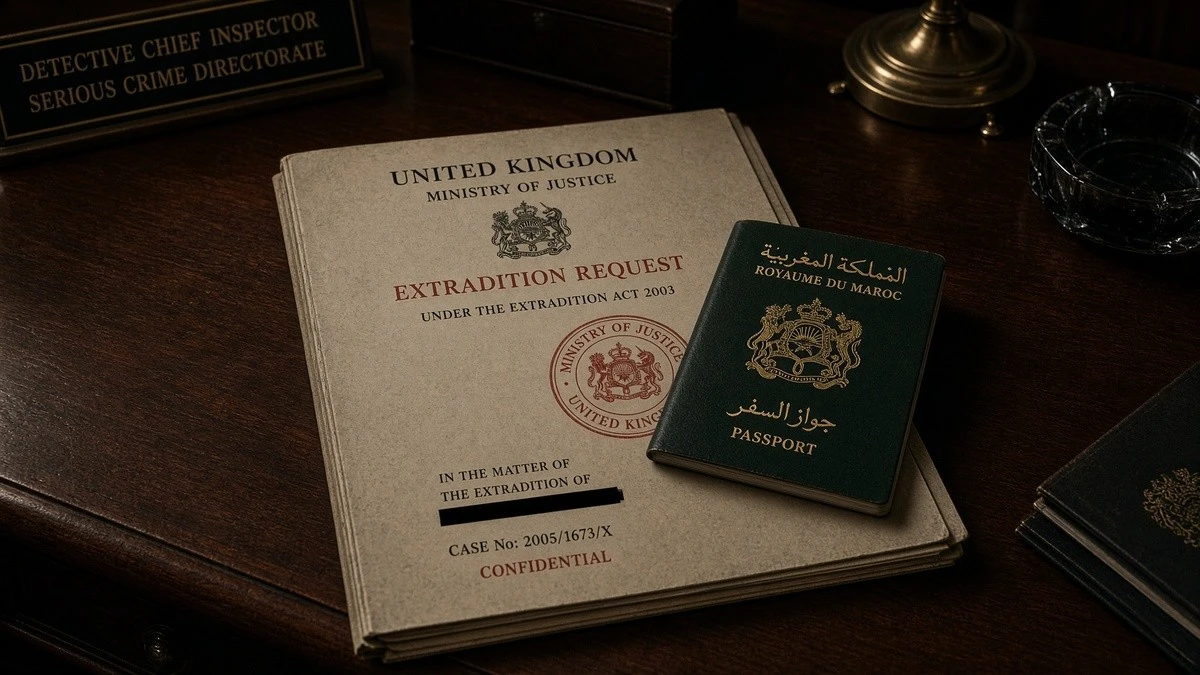
As the net closed in, police arrested member after member, eventually recovering roughly £21 million. But the alleged mastermind—professional mixed martial artist Lee Murray—had vanished. Taking his cut, he fled the UK and resurfaced in the bustling streets of Rabat, Morocco, living lavishly on his ill-gotten gains.
British intelligence tracked him down quickly, but justice ran straight into a legal brick wall. Murray held dual nationality through his Moroccan father, and Moroccan law strictly prohibited extraditing its citizens to foreign jurisdictions. Prosecutors faced a stalemate: they knew exactly where the mastermind was, but couldn't put him in a London dock.
Instead of a high-profile trial at the Old Bailey, the legal battle shifted to North Africa. Detectives had to translate thousands of pages of evidence for local prosecutors. In 2010, a court in Rabat tried Murray under Moroccan law, convicting him and handing down a 25-year sentence in a local prison. Justice was ultimately served, but the paradox lingered: the man who engineered Britain's ultimate security breach never actually stood before a British judge.