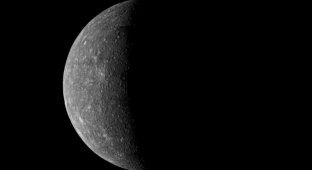
What Would Happen to a Human on Every Planet in the Solar System? Here's Where We'd Last the Longest (9 Photos)
In science fiction, landing on an alien planet almost always starts the same way: the ship touches down, the crew steps outside, and they take in the view. Sometimes someone even removes their helmet because a scanner picked up a promising reading.
In our actual Solar System, such a stroll would come to a fatal end on almost every world long before anyone could pose for a photo. 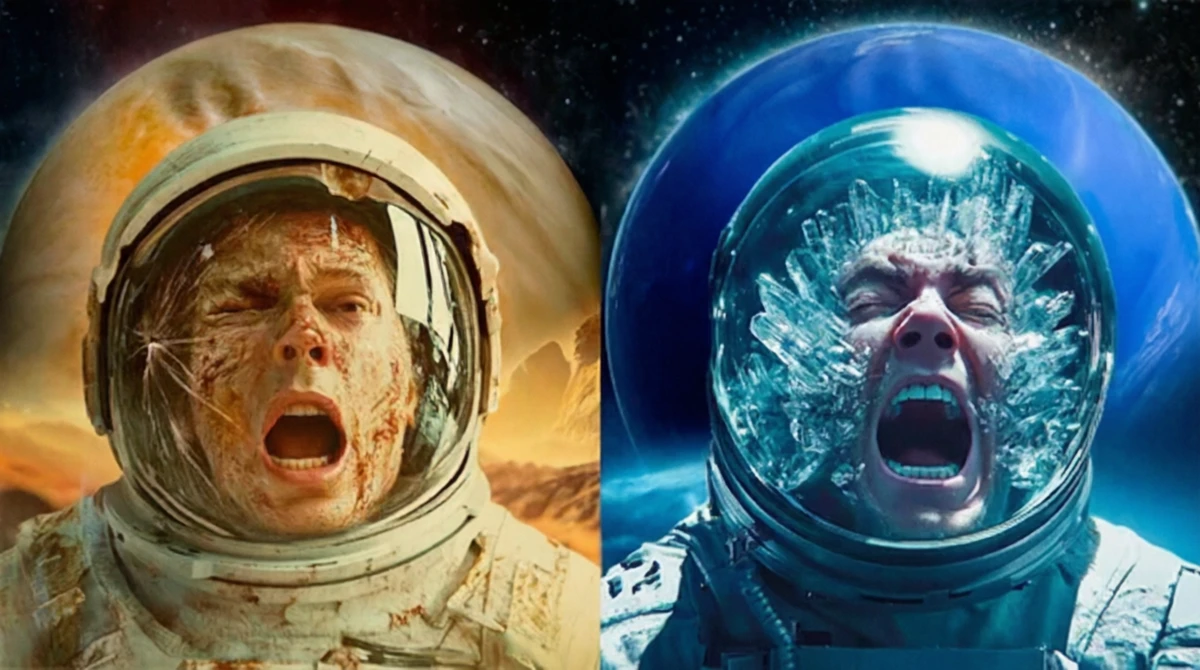
And temperature is far from the only threat. On the planet closest to the Sun, you might find yourself surrounded by ice-cold cliffs, while on some distant worlds, landing is completely out of the question.
Beneath your ship would be clouds, then more clouds, until you reached conditions extreme enough to crush the vessel itself.
Let's set the ground rules: first, we'll see what happens to an unprotected human body, and then we'll gauge our chances with proper gear.
Mercury: Freezing Next Door to the Sun 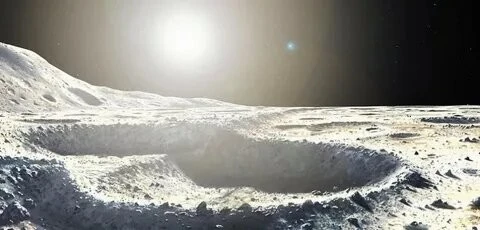
As the closest planet to the Sun, Mercury heats up to around 430°C (800°F) on its day side. But on the night side, temperatures plummet to minus 180°C (-290°F). The planet has virtually no atmosphere to trap heat or smooth out this brutal extreme.
That said, an unprotected human wouldn't have time to weigh their options between burning up or freezing. In a near-total vacuum, your brain would be deprived of oxygen within seconds. You would lose consciousness in about 10 to 15 seconds, followed quickly by fatal tissue damage unless rescued immediately.
You wouldn't freeze solid instantly, either. With almost no surrounding gas to absorb your body heat—unlike in freezing air on Earth—heat loss would be slow. However, touching the subzero ground or scorching surface rocks would cause immediate harm, while direct sunlight would cook you in short order.
With a specially designed spacesuit, Mercury actually allows for a brief walk outside—especially if you land in a twilight zone with manageable temperatures. And there's no rush to beat the sunset: a single day-night cycle on Mercury lasts 176 Earth days, so waiting out the midday heat until evening would require immense patience.
Venus: Stepping Outside Is Worse Than Staying Inside 
Venus is roughly the same size as Earth, but any family resemblance ends there. The surface temperature hovers around 465–470°C (870–880°F), with an atmospheric pressure roughly 90 times that of Earth—equivalent to being nearly a kilometer underwater in Earth's oceans.
A standard spacesuit is useless here. In open space, a suit keeps air in; on Venus, it would need to withstand crushing external pressure while insulating against furnace-like heat. The gas-filled cavities in your body would implode from the compression, while exposure to the atmosphere would cause instant, fatal thermal burns.
There is nothing to breathe either, as the atmosphere is almost pure carbon dioxide. Dense, superheated gas transfers heat rapidly, turning the surface into an inescapable oven. Ducking into the shade won't help: runaway greenhouse effects trap heat so effectively that night offers no relief.
An unprotected human would die instantly. Exploring Venus would require a heavily armored, chilled pressure capsule. Even unmanned probes sent to the surface survived only a few hours at best, and they didn't have to keep a living human alive.
Mars: Tolerable Weather, Completely Unbreathable Air 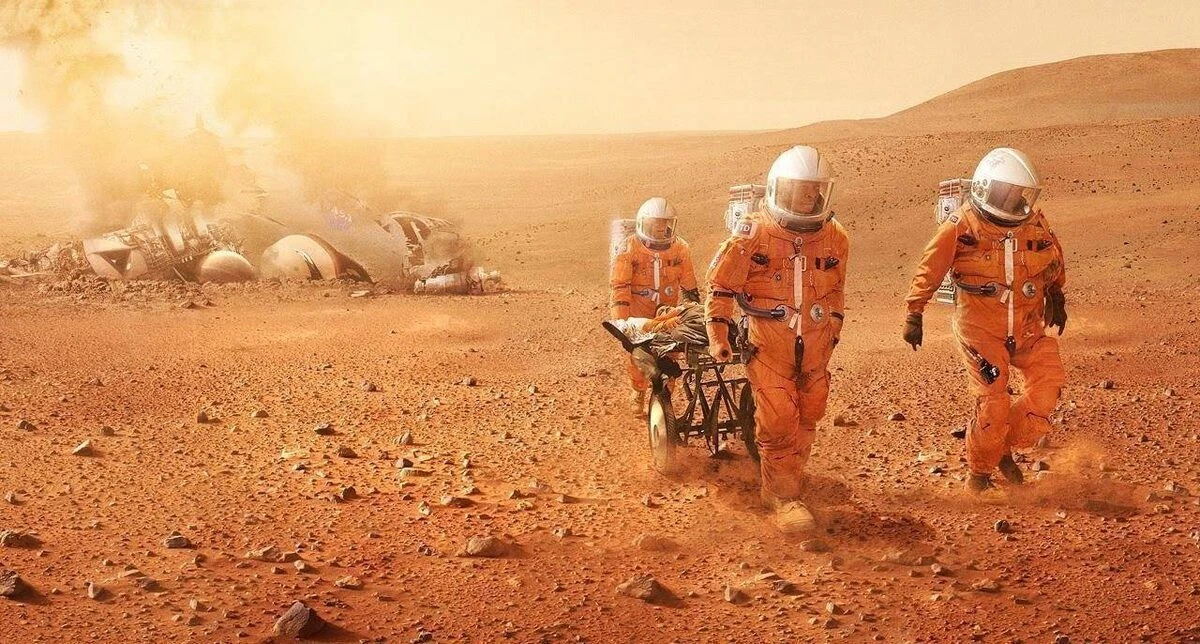
Mars excels at offering a false sense of security. Photos reveal familiar vistas: rocks, sand, mountains, and clouds. On a sunny afternoon at the equator, temperatures can comfortably reach 20°C (68°F), making it look as though all you need is a heavy coat for when night falls.
However, the atmospheric pressure is less than 1% of Earth's, and what little air exists is mostly carbon dioxide. Removing your helmet would cause you to pass out in seconds from oxygen deprivation. The low pressure would also cause body fluids on exposed surfaces (like your eyes and lungs) to boil at body temperature, while your body tissues swell up.
A suit easily solves these immediate problems as long as it remains sealed and supplies oxygen. You could walk around and work on the surface, though trips would be limited by battery life, oxygen reserves, and thermal regulation. For long-term survival, you'd need a pressurized habitat to take off your gear and rest.
Other hazards build up over time. Mars' thin atmosphere and lack of a global magnetic field offer almost no defense against cosmic radiation. Meanwhile, fine Martian dust settles over everything, clogging machinery and complicating the maintenance of airlocks and solar panels.
Dust storms can engulf the entire planet, though the thin air means the wind carries far less force than on Earth. The real danger isn't being blown away, but rather the dust blocking out sunlight and cutting off solar power to your base.
Jupiter: A Free Fall That Never Ends 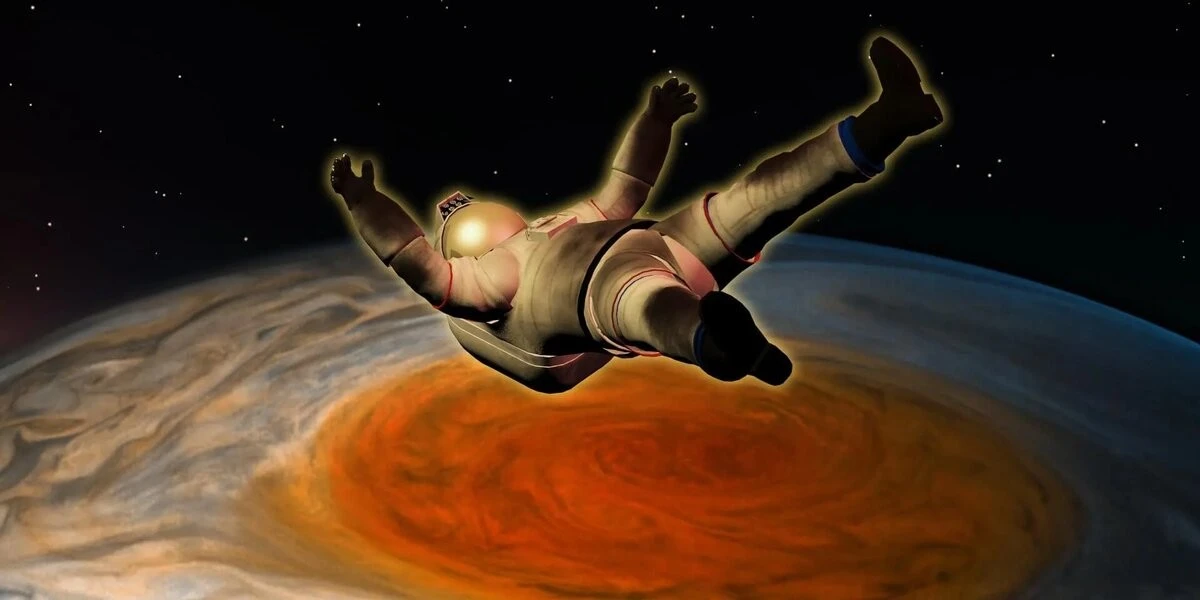
On Jupiter, the command to "deploy landing gear" is meaningless. This gas giant has no solid surface to touch down on. Descending into its atmosphere simply means plunging through increasingly dense layers of gas as pressure and temperature soar.
The upper atmosphere is freezing, made predominantly of hydrogen and helium, with zero breathable oxygen. An unprotected human would perish instantly. Furthermore, there's nowhere to stand: you would sink continuously alongside your ship unless suspended by a specialized craft.
Inside an armored capsule, you might survive the initial atmospheric entry, but sinking further down would eventually crush the vessel. Deep within Jupiter, pressures are so immense that hydrogen condenses into a liquid ocean, and deeper still, behaves like a metallic liquid.
Factor in violent jet streams and planetary storms, and your capsule would face unbearable stress as surrounding conditions grew hotter and denser. Eventually, the hull would crumple or system failure would occur, ending any chance of survival.
Saturn: Rings Are Best Enjoyed From a Distance 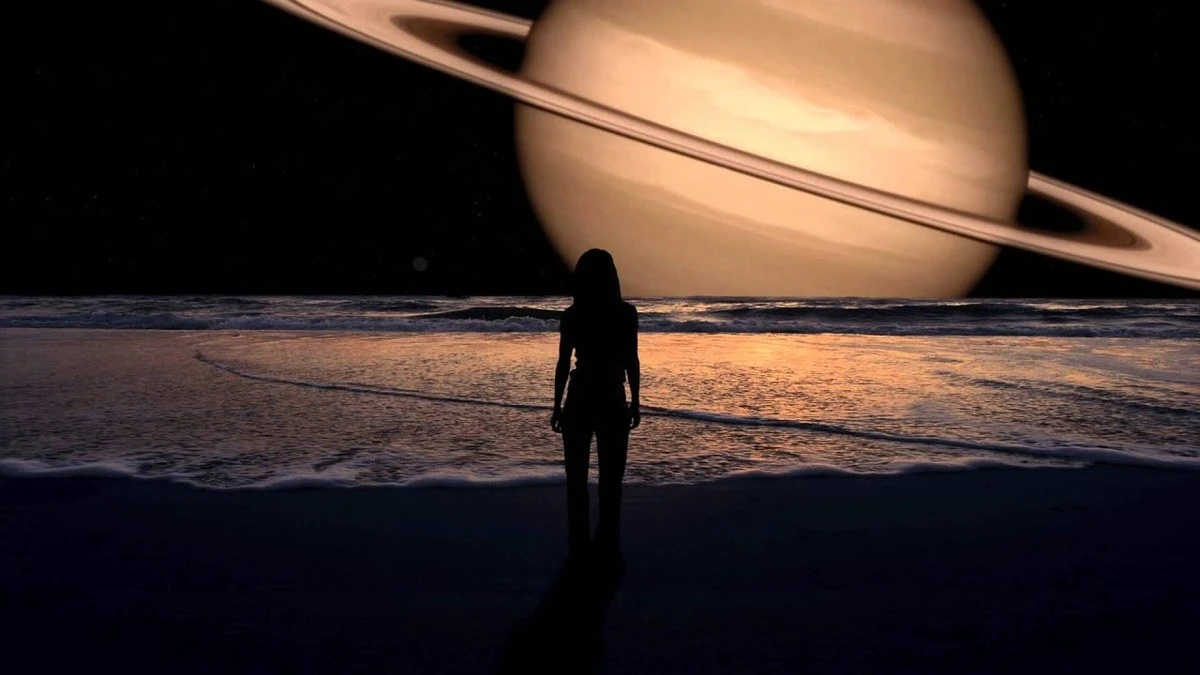
Saturn's iconic rings are breathtaking, but navigating them would require pinpoint accuracy. They consist of countless particles of ice and rock, ranging from tiny specks to mountain-sized boulders. At high relative speeds, even a pebble could pulverize a spacecraft.
Fortunately, you don't have to fly straight through the densest rings. You could bypass them entirely, leaving Saturn itself as the primary obstacle. Like Jupiter, Saturn lacks a solid surface, and its atmosphere is mostly hydrogen and helium.
The upper clouds are freezing, with winds howling at up to 1,800 kilometers per hour (1,100 mph). A spacesuit won't help you fly; remaining at a given altitude would require a buoyant vessel. And without an oxygen supply, you would suffocate long before taking in the view.
Descending deeper into the atmosphere brings crushing pressures and extreme heat. Even the toughest craft would eventually reach its breaking point. While orbiting Saturn offers stunning views, attempting to land on it fails for a simple reason: there is nowhere to land.
Uranus: An Ice Giant With a Scorching Interior 
The term "ice giant" is misleading. It doesn't mean Uranus is covered in a solid crust of ice you can walk on. The planet has no surface; beneath its upper atmosphere lies a dense, superheated mantle under immense pressure.
Some upper layers drop to minus 224°C (-371°F)—among the coldest atmospheric temperatures in the Solar System. Winds can reach 900 kilometers per hour (560 mph), proving that Uranus' serene blue appearance in photos is deceptive.
There is no oxygen—only hydrogen, helium, and traces of methane. Without protection, asphyxiation and rapid freezing would follow immediately. Staying alive in the upper atmosphere would demand a sealed habitat with strong heating and altitude controls.
Deeper down, temperatures rise and pressures escalate dramatically. It's a lose-lose scenario: you must first survive extreme cold, only to be crushed and cooked further down. There is no cozy ice field waiting at the bottom.
Neptune: Winds Faster Than a Jet Airliner 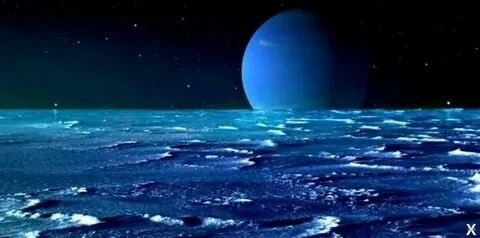
On Neptune, winds can exceed 2,000 kilometers per hour (1,200 mph)—faster than a commercial jet airliner at top speed. Massive storms sweep across the planet, and the clouds contain frozen methane crystals.
It's the combination of elements that proves fatal: no oxygen, extreme cold in the upper atmosphere, and no solid surface below. A spacesuit can keep you breathing, but it can't keep you floating in midair.
A protected module would face immense stress from violent turbulence and drastic wind shears. And if the craft sank deeper, it would soon succumb to soaring heat and pressure. Without specialized gear engineered for extreme environments, the journey would end quickly.
Neptune may be far from the Sun, but it is anything but a calm, frozen orb. Its atmosphere is a chaotic engine of extreme weather—one that leaves no room for human survival.
Pluto: At Least You'd Have Solid Ground Underfoot 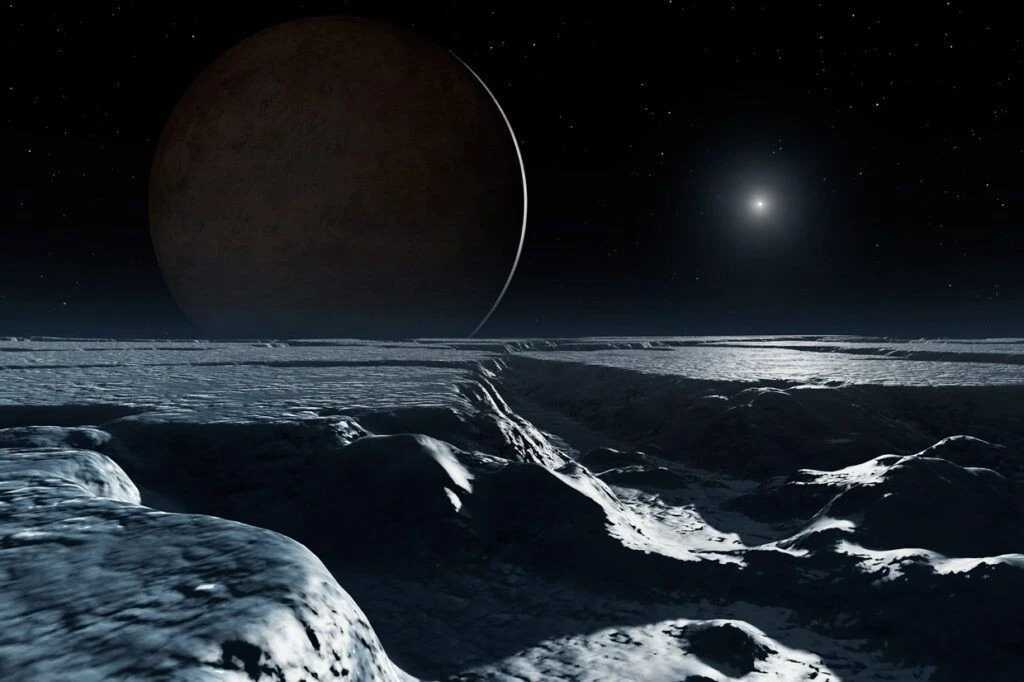
Pluto is classified as a dwarf planet, but it's worth including in our tour. After visiting the gas giants, Pluto feels strangely welcoming: it actually has a solid surface. You could land a spacecraft, step outside, and take in a truly alien landscape.
Surface temperatures hover around minus 230°C (-380°F), and the atmosphere is razor-thin. Without a spacesuit, asphyxiation and vacuum exposure would knock you unconscious within seconds. You wouldn't turn into an ice statue instantly, though that's little consolation for your crewmates.
With reliable survival gear, a walk on Pluto is entirely feasible. You would need robust thermal insulation, pressure support, and a steady power supply. Sunlight is extremely dim here, making solar power far less effective than on worlds closer to the Sun.
Pluto at least allows you to set foot on solid ground and build a habitat. But its extreme distance, bitter cold, and supply challenges make long-term stays daunting. A spectacular view won't keep your habitat warm.