Places where life could exist have been discovered on Mercury (2 photos)
Mercury is one of the most hostile places in the solar system. During the day, the planet's surface heats up to 430 degrees Celsius (enough to melt zinc), and at night it cools to -170. The atmosphere is extremely thin, the magnetic field is weak (about 1% of Earth's), and there is almost no protection from cosmic radiation. Yet, Mercury could be habitable. 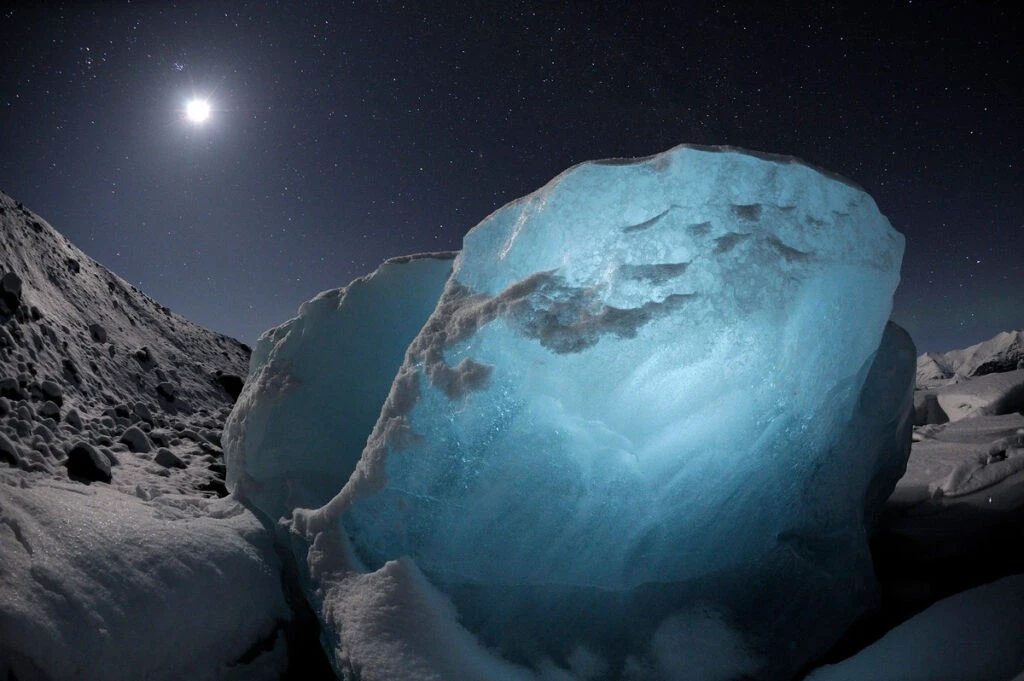
Scientists from the Planetary Science Institute in Arizona, while analyzing archival data, discovered something unexpected on the planet closest to the Sun: salt glaciers that could provide a haven for life.
An Unexpected Find by MESSENGER
NASA's MESSENGER spacecraft, which studied Mercury from March 18, 2011, to April 30, 2015, discovered volatile compounds such as potassium, sodium, sulfur, and chlorine on the planet. Scientists had assumed that over the course of more than 4.5 billion years, these compounds would have been completely stripped away by the planet's monstrous solar wind, extremely thin atmosphere, and low gravity. However, the compounds are definitely present.
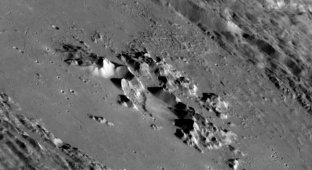
The search for the sources of the volatile compounds led researchers to the 263-kilometer-wide Raditladi crater in the northern hemisphere and the Borealis region located there. Analysis of the data revealed that the volatile compounds are "locked" in giant subsurface glaciers. When asteroids hit these areas, they partially expose glaciers, releasing volatile compounds that temporarily saturate the atmosphere.
The Formation of Salt Glaciers
The study's authors suggest that in the distant past, Mercury was a very different world. Volcanoes emitted water vapor containing salts, which condensed into temporary reservoirs. The water quickly evaporated, but the salts remained; over millions of years, this repeating process led to the formation of multilayered salt deposits—salt glaciers. 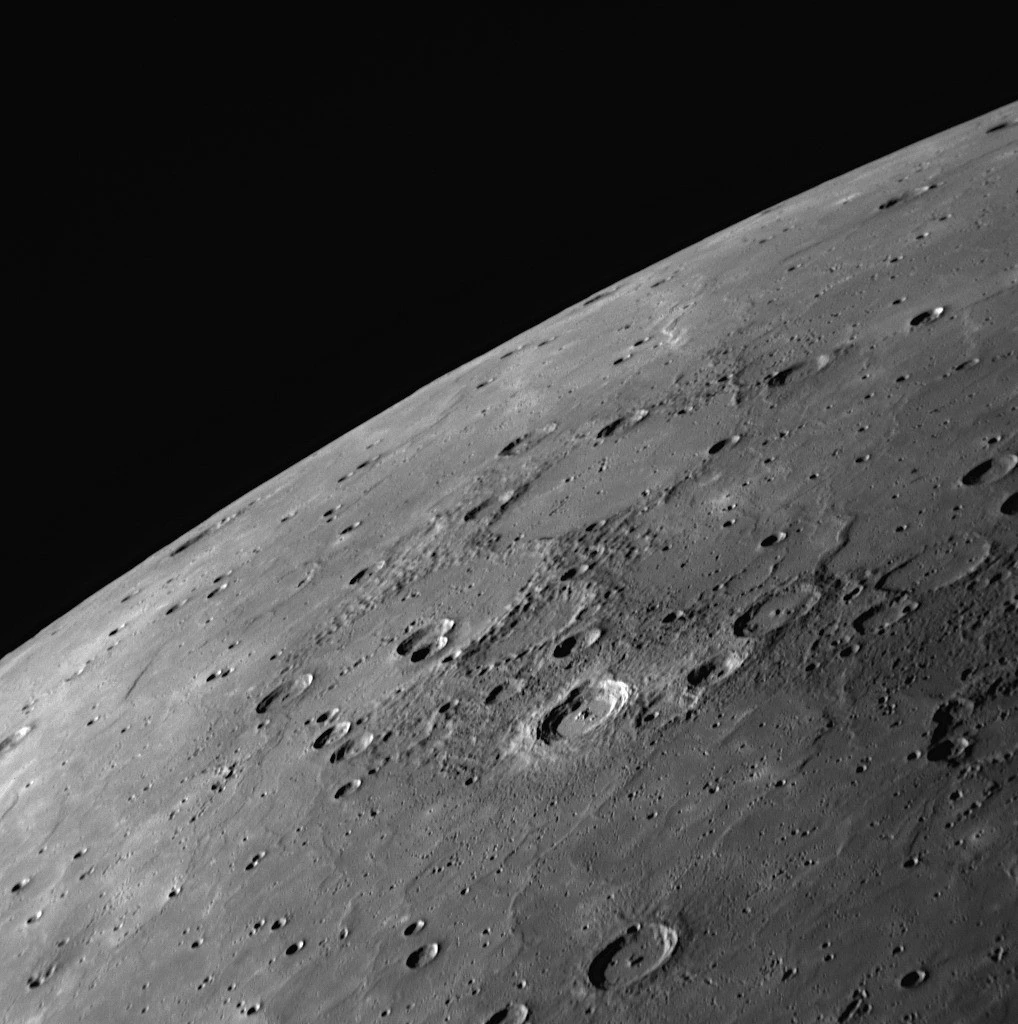
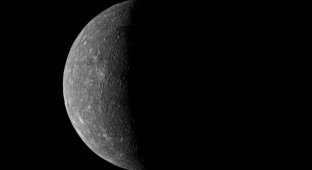
Mercury's north pole is home to craters of eternal darkness, impact features where sunlight never penetrates. Image from the MESSENGER probe
Remarkably, similar places exist on Earth in the Atacama Desert in Chile. And there, despite the extreme conditions, microorganisms that have learned to survive in concentrated salt solutions thrive.
"Specific salt compounds create habitable niches even in the harshest environments," comments Alexis Rodriguez, lead author of the study. "This leads us to consider the possibility of Mercury's subsurface regions that may be more hospitable than its harsh surface."
In November 2026, the BepiColombo probe (a joint European-Japanese mission) will arrive at Mercury, equipped with advanced instruments that will study salt glaciers. This will allow us to test the hypothesis about the potential habitability of the Solar System's smallest planet.