Boston Dynamics engineers attach wheels to their Atlas robot
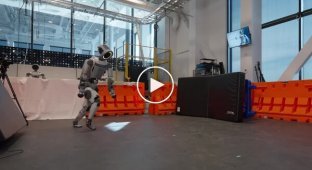
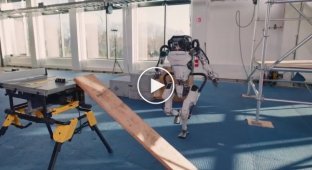
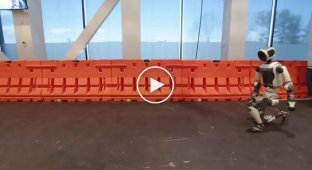
Boston Dynamics specialists put the Atlas robot on wheels. They did this as part of an experiment to see how the robot handles high loads and operating its actuators at their limits.
Boston Dynamics' Atlas robot spun 360 degrees in a jump and pulled off the trick on its very first try. A small detail: instead of feet, it now has electric scooter wheels.
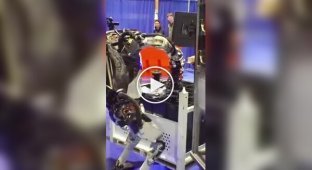
The modification turned out to be surprisingly simple. The wheels were attached via a special adapter directly to the standard ankle actuators, and nothing else major in the hardware had to be changed. The robot's digital model wasn't rewritten from scratch either: in the simulation, the feet were simply replaced with wheels that can spin continuously.
This robot won't be going to the store. The wheeled Atlas is a research testbed where engineers push the motors near their limits. The wheels force the actuators to deliver high torque at high RPMs, so every acceleration, turn, and braking maneuver is a challenge for them.
The second objective is reinforcement learning. The robot learns movements in simulation, but a virtual motor behaves differently from a real one, and what worked in the "matrix" might fall apart in reality. So the engineers first measured how real actuators behave, adjusted the model to match, and then changed the commands, reward function, and pose control. That is how Atlas learned to roll smoothly.