If you prefer hard sci-fi grounded in realism over sprawling fantasy worlds like the MCU or Godzilla movies, chances are you’re already familiar with most of these titles. This list features films that earned high praise from the scientific community. Even their boldest speculative ideas are rooted in actual theoretical data and the laws of physics, biology, or astronomy. We have deliberately passed over classic masterpieces of the distant past like
2001: A Space Odyssey
or
Solaris
to keep the focus on cinema from the last 30 years. The only exception is an obscure 1971 gem that simply deserves a mention for its remarkable scientific accuracy.
Gattaca (1997) 
The plot centers on genetic engineering and the consequences of a world where a person's DNA determines their social standing. While the genetic technology shown is far beyond what was possible at the time, its inner workings are portrayed with impressive accuracy based on real-world scientific research of the era.
The film explores the growing divide between genetically enhanced humans and natural-born "in-valids," eerily echoing scientists' real concerns as the prospect of "designer babies" becomes increasingly plausible.
Her (2013) 
A lonely man falls in love with his AI voice assistant because she is surprisingly good at holding a conversation. The real question is: is this even science fiction anymore?
Deep Impact (1998) 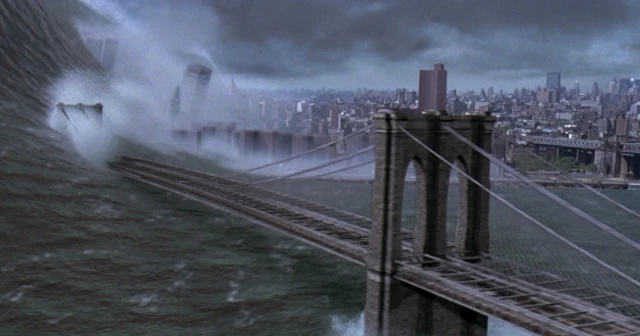
This is
Armageddon
and
2012
done right. Disaster movies are usually supposed to scare audiences and dazzle them with special effects rather than fact-check their science. Yet scientists often single out
Deep Impact
as the best blend of accurate science, impressive VFX, compelling drama, and a realistic portrayal of a comet collision.
The filmmakers aimed for maximum realism, getting crucial details right. They allowed a far more realistic timeline between the comet's discovery and impact than most movies do, and gave the celestial body an accurate size of seven miles (11 km) wide. Furthermore, the collision itself and the physics behind trying to destroy the comet were grounded in real science. If a comet ever heads our way, this is the movie you'll want to rewatch.
Interstellar (2014) 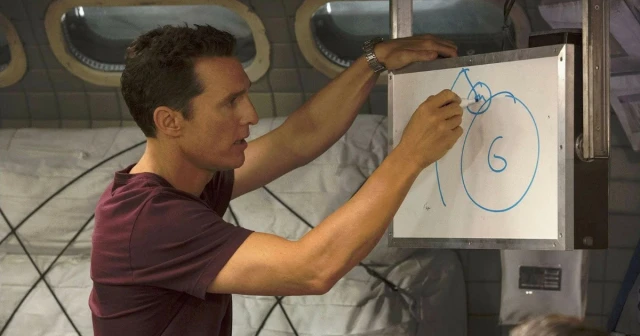
Known for his meticulous attention to detail, Christopher Nolan was never going to make a movie like
Moonfall
. Still, he ventured far beyond our reality into parts of the universe about which humanity has only vague, theoretical knowledge.
Seemingly impossible elements like wormholes and time dilation might feel outlandish, but they are firmly rooted in theoretical physics. The black hole is also rendered with extreme visual precision—showing exactly how light would bend around its gravitational pull.
Credit for the film's scientific accuracy largely goes to executive producer Kip Thorne, a renowned theoretical physicist and Nobel laureate. Having a real scientist on your production team is definitely a recipe for success.
Contact (1997) 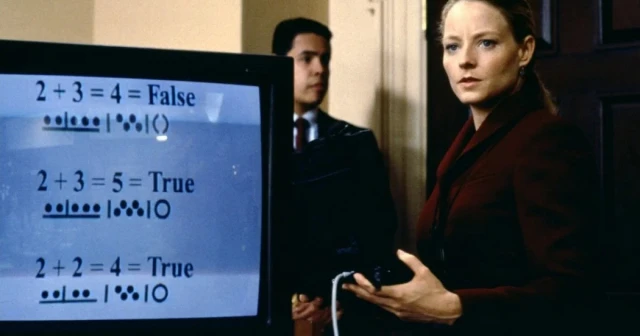
This is the story of searching for extraterrestrial life and what happens when contact is established deep in space. The film realistically depicts the inner workings of the SETI Institute, while the aliens communicate through mathematics—exactly how scientists believe an actual first contact would unfold.
In 2012, NASA ranked
Contact
as the second most scientifically accurate sci-fi film of all time (with
Gattaca
taking the top spot).
The Martian (2015) 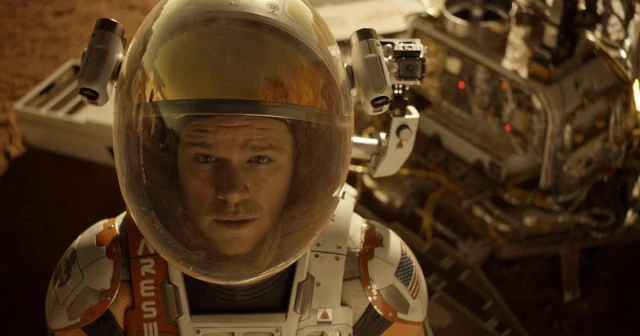
If humanity managed to send a crew to Mars, accidentally left Matt Damon behind, and had to rescue him, things would play out pretty much exactly as shown in the movie. Experts point out that while there are minor inaccuracies, they are mostly cosmetic choices.
Traveling to Mars really does take about eight months, growing potatoes in Martian soil (using the hero's exact method) is theoretically viable, and the dust storms shown in the film actually happen. Even the spacesuit differs from traditional movie gear, being based on real prototypes currently under development at NASA.
Minority Report (2002) 
Sure, the film's central tech—predicting crimes before they happen—is nowhere near reality. But hear us out!
Steven Spielberg and his team paid such meticulous attention to detail that many technologies audiences considered pure fantasy back in 2002 have since become everyday realities. Retinal scanners, gesture-based computer interfaces, and targeted personalized ads are all part of modern life.
Moon (2009) 
This film is a hidden sci-fi gem. Slow-paced, starring Sam Rockwell in virtually a solo role, and made on a micro-budget for the genre, it shines through its incredible attention to detail.
The protagonist works on a lunar base mining Helium-3. This plot point is based on real-world scientific discussions about using Helium-3 as a future energy source (something NASA has actually explored). His companion is GERTY, an AI voice assistant—another prediction that has essentially come true today.
Beyond that, the film excels at portraying other scientific elements, from lunar mining operations to power systems and spacecraft design—all achieved on a modest $5 million budget!
Arrival (2016) 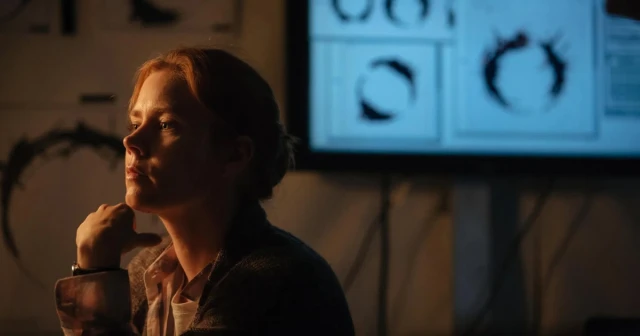
Denis Villeneuve and his team didn't just make a movie; they created a fully realized alien language, consulting linguists and phoneticians to ensure it made sense. This focus on language and communication makes
Arrival
a captivating watch, setting it apart from films that gloss over the complex linguistic hurdles of first contact.
The Andromeda Strain (1971) 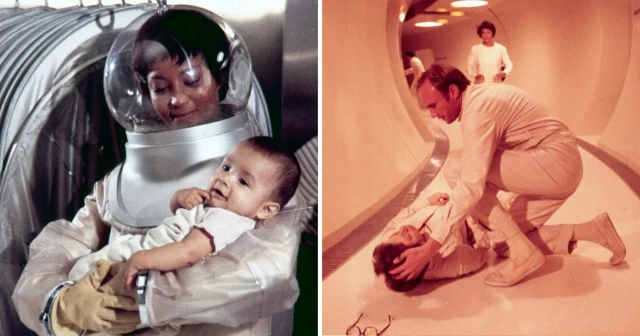
Now for an old-school classic. The story follows a military satellite sent to sample extraterrestrial microbes that crashes in a small American town. A deadly alien organism wipes out everyone except two survivors: an infant and an elderly man. Scientists seal off the area to figure out how the virus operates and how to neutralize it.
A 2003 paper published by the Infectious Diseases Society of America had this to say:
The film is the most significant and scientifically accurate entry in the "killer virus" subgenre. It accurately depicts the arrival of a deadly pathogen, its impact, and the containment and identification efforts. No other film better explains why certain individuals are immune to infection.
Add your comment
You might be interested in:













A young Ukrainian itishnik became the owner of the McLaren

30 photos with the main cat weapon - claws (31 photos)

A car transporter with very rare Mercedes was spotted in

Desert Dynamics buggy with a Chevrolet V8 engine that can

Trailer for the animated series "Marvel Zombies",

A Science Fiction Museum designed by Zaha Hadid Architects

A synchronized swimmer surprised Marvel

What Marvel heroes might look like if they lived in the

Dodge Charger 1971 with a 7-liter engine went under the

A single gesture that made someone’s day: a man gives a

How Rowan Atkinson transforms into Mr. Bean

A clear demonstration of the difference between a $1, $5,

Top 10 Foods That Lower Blood Pressure (11 photos)

An American man reveals a bunker he spent 3 years preparing

Witches on roller skates—brooms included

An orchestra plays a prank on their conductor during his

A dad made a realistic WALL-E costume for his daughter

17 Photos of Famous People Goofing Off Like Kids (18 photos)
