How Japanese Master Artisans Painted with Gold on Lacquer (3 Photos)
To create golden designs on lacquerware, Japanese artisans sprinkled metallic powder over wet lacquer. Known as maki-e, this technique allows the powder to adhere to the fresh surface, leaving behind intricate patterns. 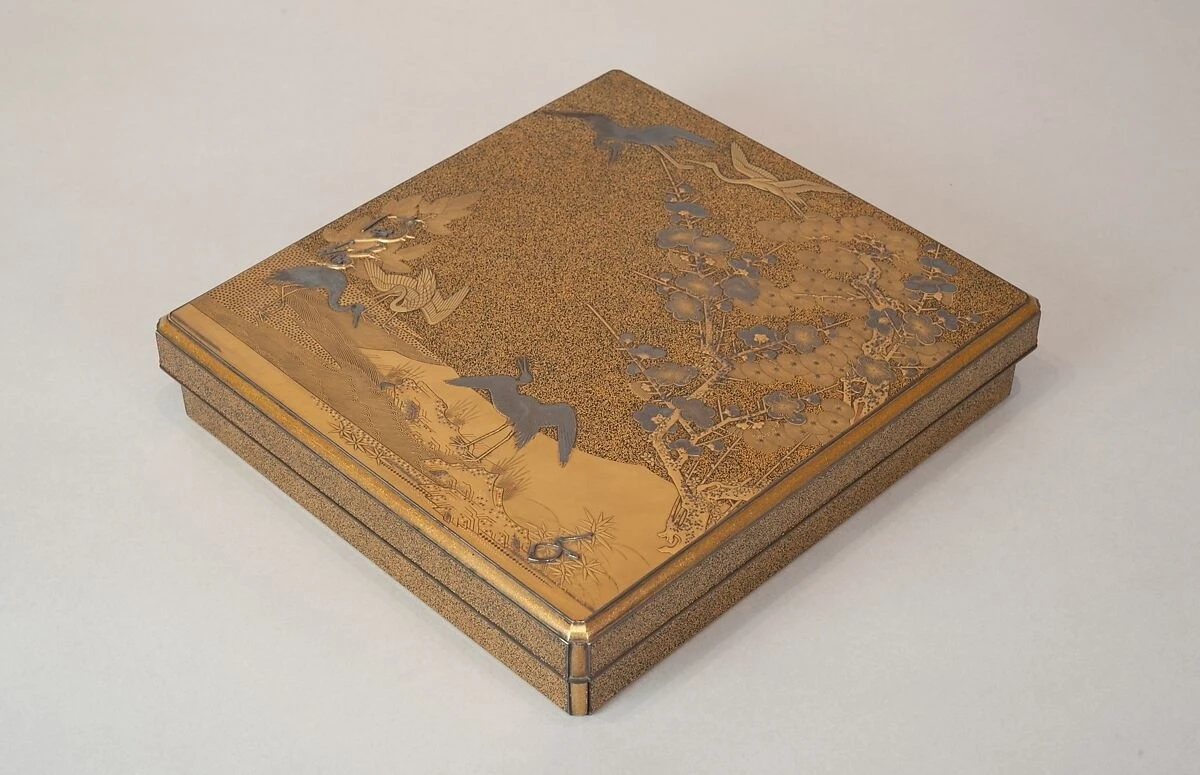
Writing box with cranes, pine trees, and plum blossoms. Japan, 18th century. The Metropolitan Museum of Art.
The lid of an 18th-century writing box from The Metropolitan Museum of Art features cranes, pine trees, and blooming plum blossoms, with two of the cranes crafted from silver foil. Beneath the lid lies a second landscape, depicting birds soaring over a shoreline beneath a silver moon. 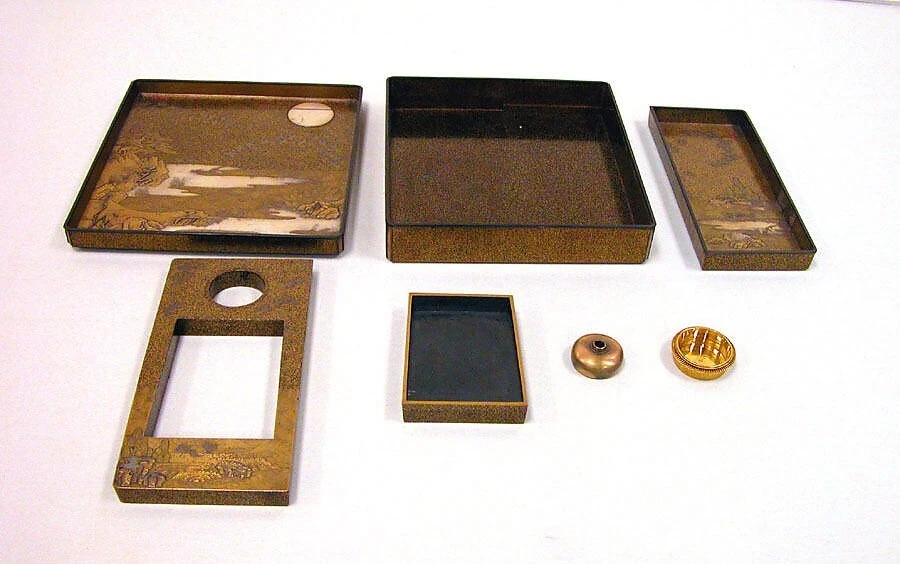
The same box shown open. The silver-moon landscape adorns the underside of the lid. The Metropolitan Museum of Art.
Maki-e was also applied to uniquely shaped boxes. The museum also holds a miniature box—just over two centimeters tall—crafted in the shape of a court lady, combining gold detailing with colored lacquer. 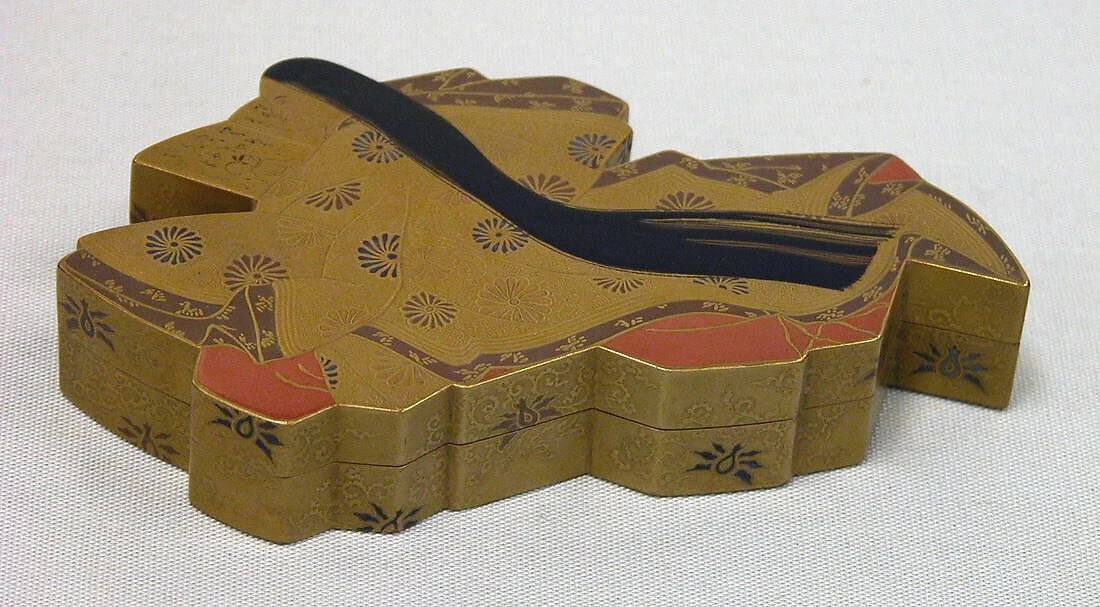
Box in the shape of a court lady. Japan, 18th century. The Metropolitan Museum of Art.