A Heartwarming Collection of Funny and Charming Dog Photos (21 Photos)
They say a dog is the only creature on Earth that loves you more than it loves itself. That unconditional devotion knows no eras, borders, or language barriers. Today, we invite you to take a journey back in time through 20 colorized photos from the 20th century—a century where man's best friend stood by our side through thick and thin, in everyday moments and grand celebrations alike. 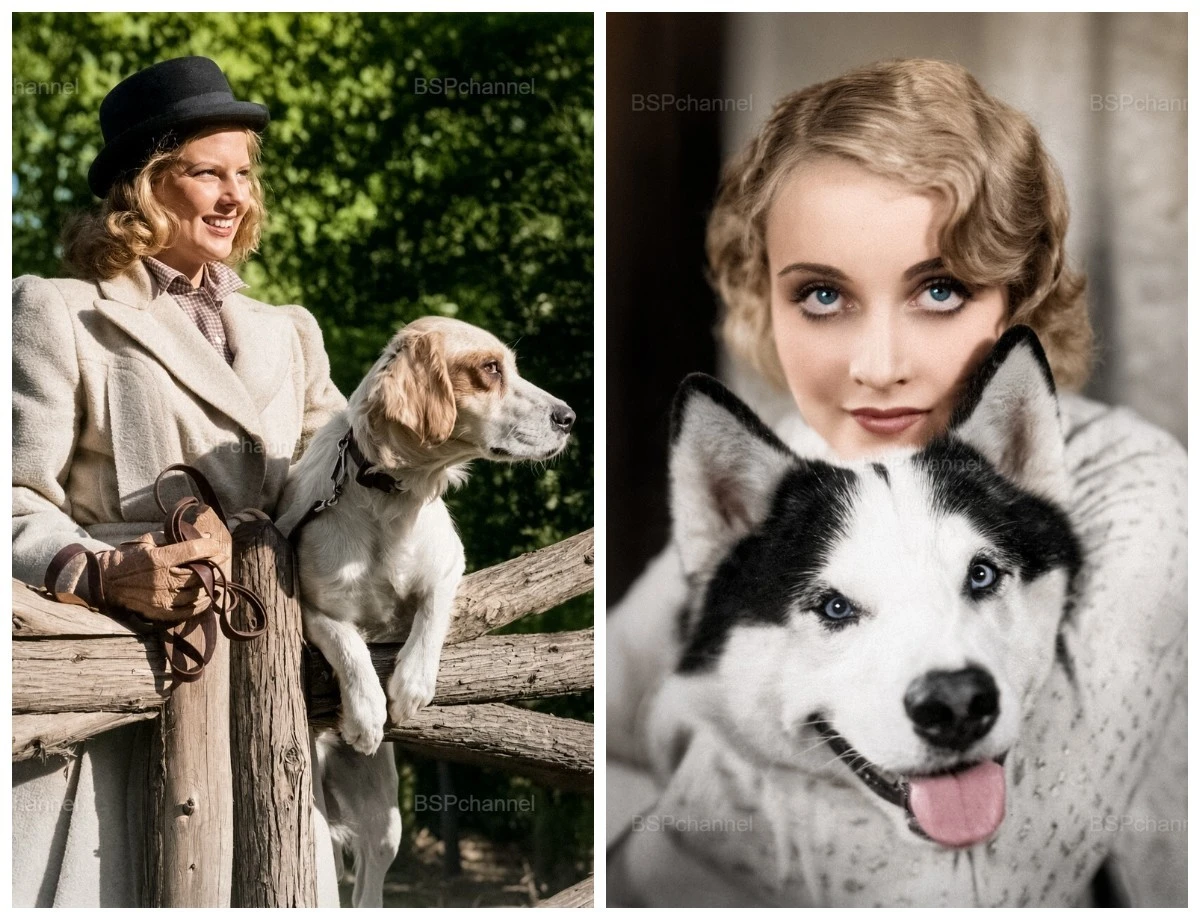
Moldavian singer Olga Sorokina, winner of the 2nd International Youth Song Festival in Sochi, pictured with a friend. Kishinev, Moldavian SSR, 1968. 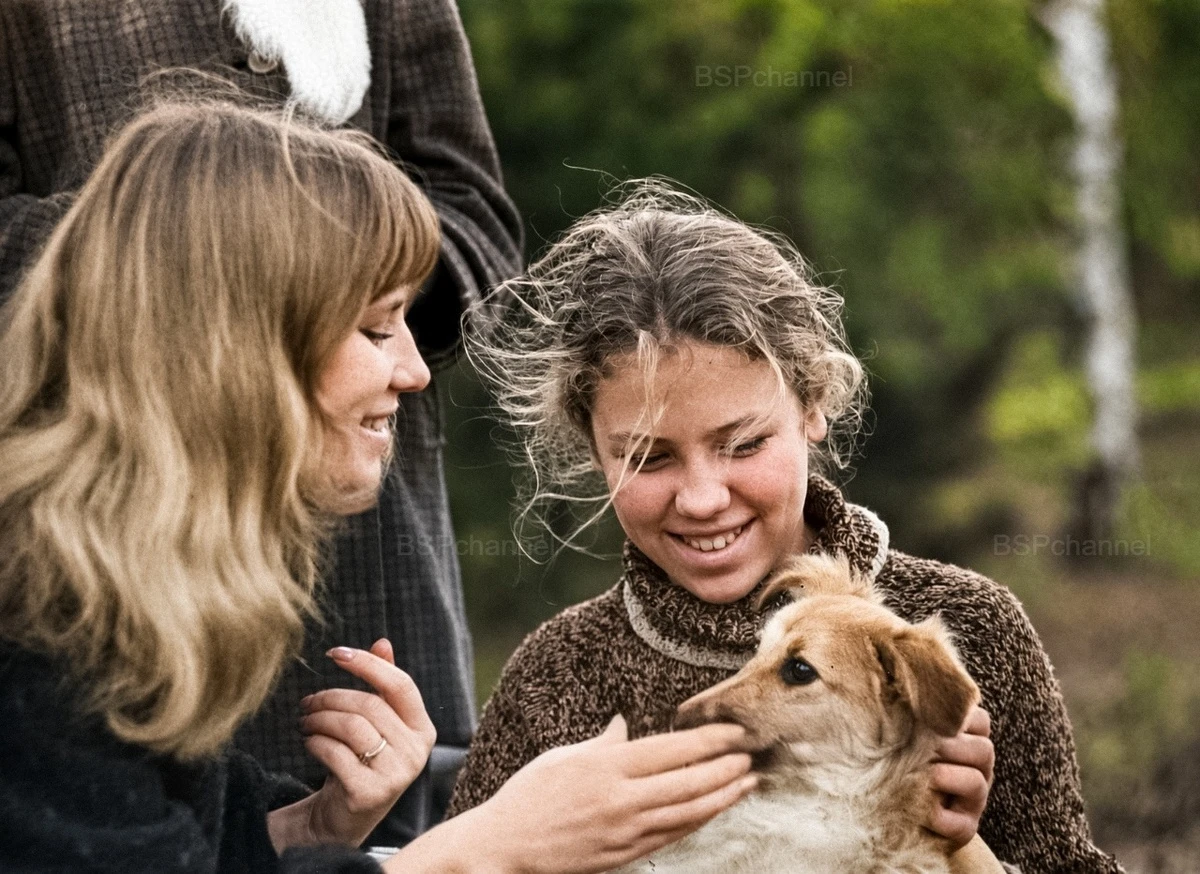
Photo: Alexander Makarov
A dog owner waits while her pup gets a drink at a streetfront "Dog Bar." USA, 1955. 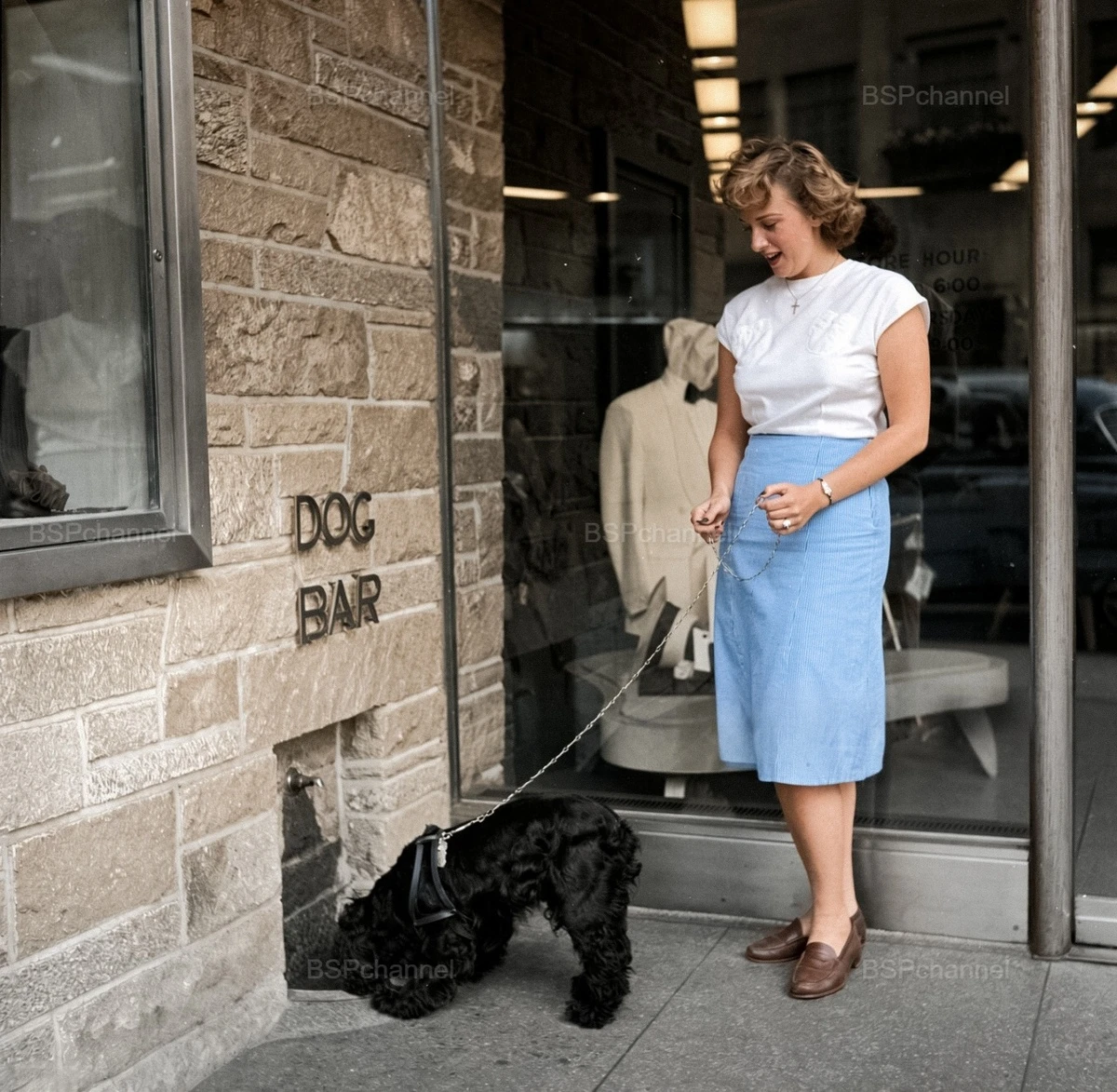
In the mid-20th century, many major department stores, banks, and shops across the US installed low drinking fountains or bowls with running water outside their entrances, marked with "Dog Bar" signs. These setups allowed dog owners to hydrate their pets during walks or shopping trips on hot summer days, giving businesses a welcoming, pet-friendly way to catch the eye of passersby.
A Maltese dog. Moscow, 1968. 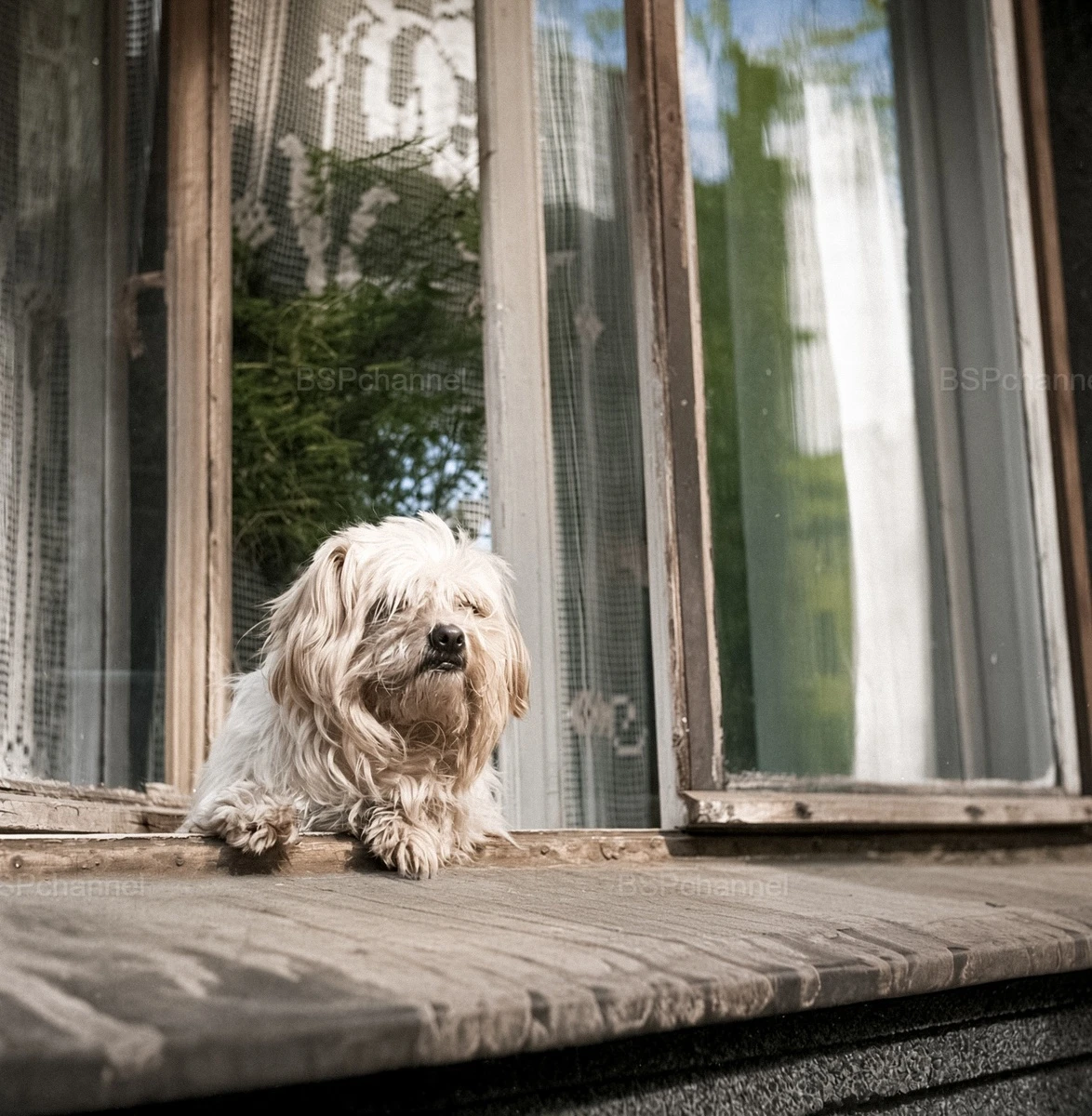
Photo: A. Lobov
U.S. President Franklin D. Roosevelt and his famous Scottish Terrier, Fala, taking a ride in a convertible, 1944. 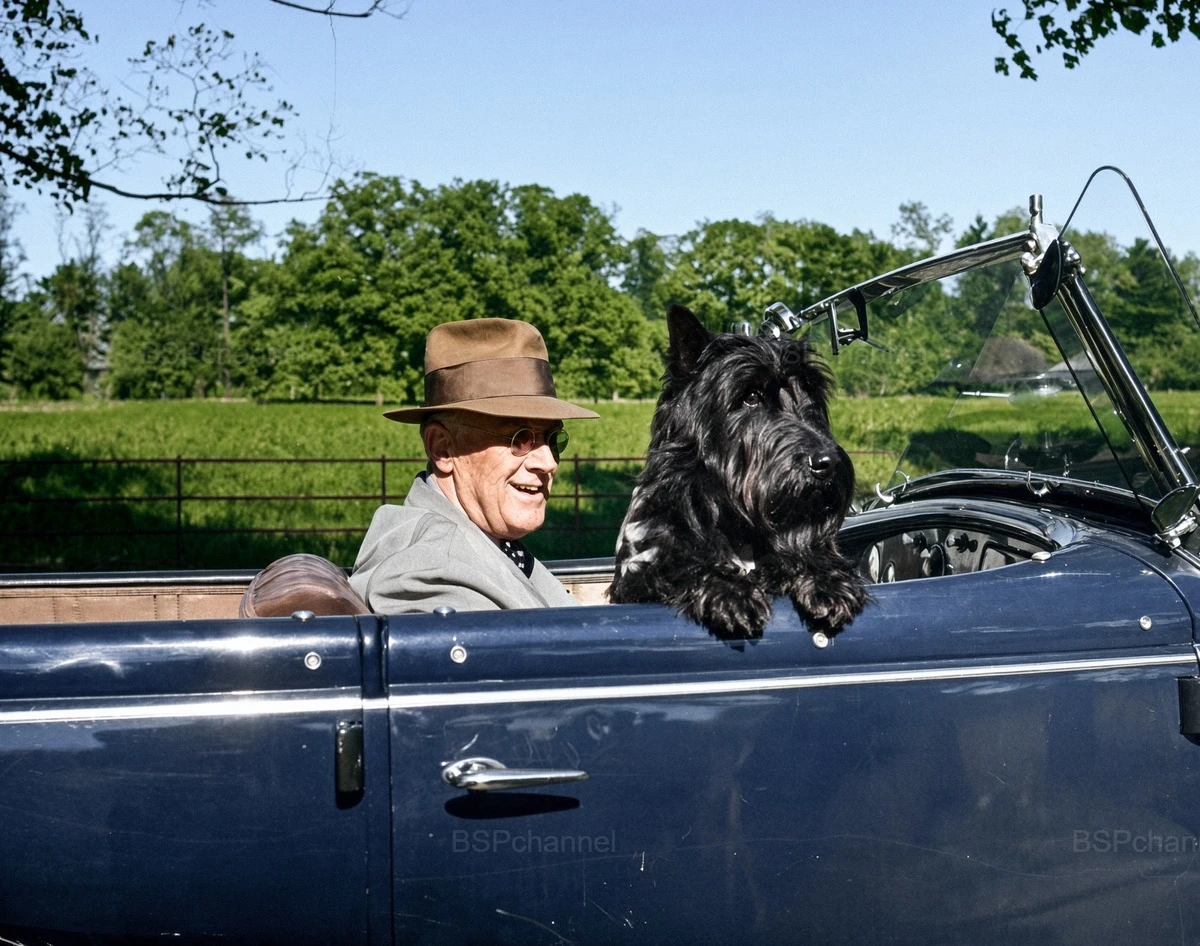
Photo: George Skadding
Fala was the famous black Scottish Terrier belonging to Franklin D. Roosevelt, the 32nd U.S. President. The dog became his constant companion, a fixture of his public image, and arguably the most famous White House pet in history. Born on April 7, 1940, the puppy was given to FDR by his cousin Margaret "Daisy" Suckley and moved into the White House later that year. Originally named Big Boy, Roosevelt renamed him Murray the Outlaw of Falahill (after a Scottish ancestor), which was soon shortened to simply Fala. Fala accompanied Roosevelt on trains, ships, and planes, including to the historic Quebec Conference where the Atlantic Charter was discussed. During the 1944 presidential campaign, political opponents spread a rumor that FDR had accidentally left Fala behind in the Aleutian Islands and dispatched a Navy destroyer at taxpayer expense to retrieve him. In response, Roosevelt delivered his famous, biting "Fala Speech," declaring that while he could take personal attacks, his "little dog's Scottish soul was furious" over the slander. The speech struck a chord and won immense public support. White House staff adored Fala so much that they constantly fed him table scraps, leading to stomach troubles, so FDR eventually had to issue an official executive order forbidding anyone else from feeding him. Fala lived for seven years after Roosevelt's death in 1945. He is buried beside his master in the rose garden at Hyde Park, and a bronze statue of Fala stands alongside FDR at the Roosevelt Memorial in Washington, D.C.
Untitled, 1980s. 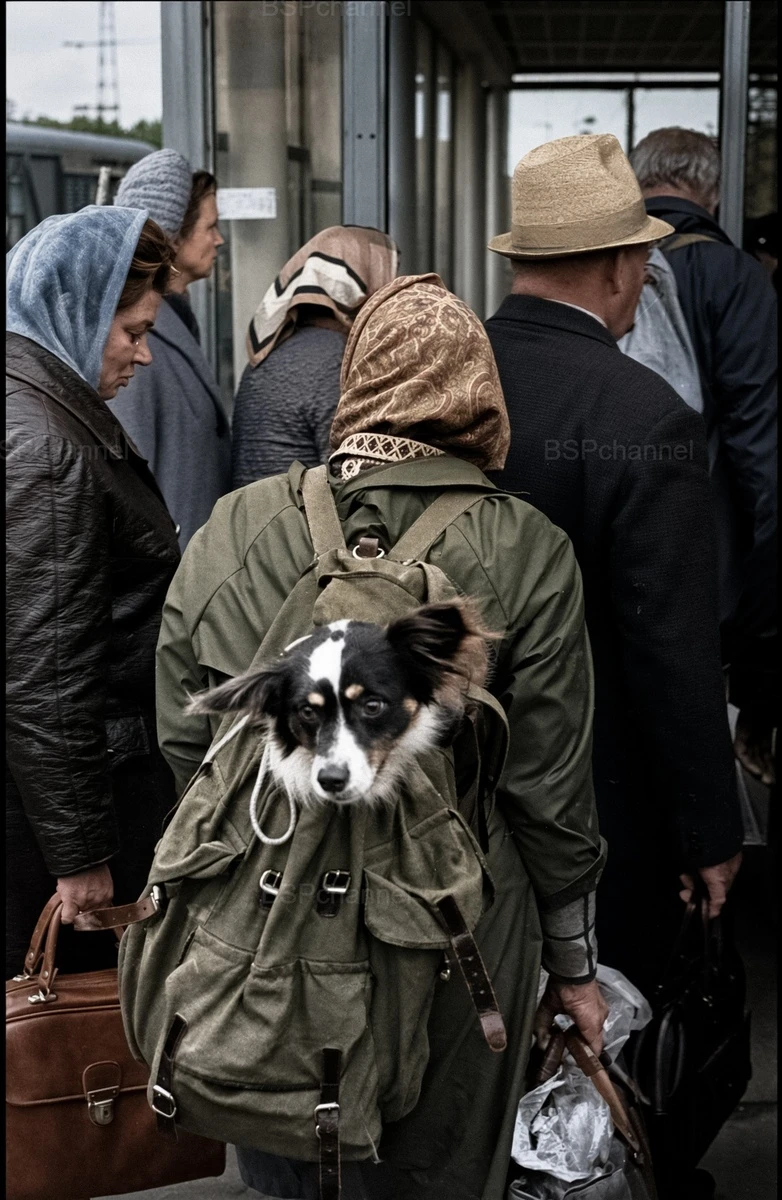
Photo: Vladimir Bogdanov
A young boy holds the leash of a Great Dane standing beside him on a New York City street, 1960. 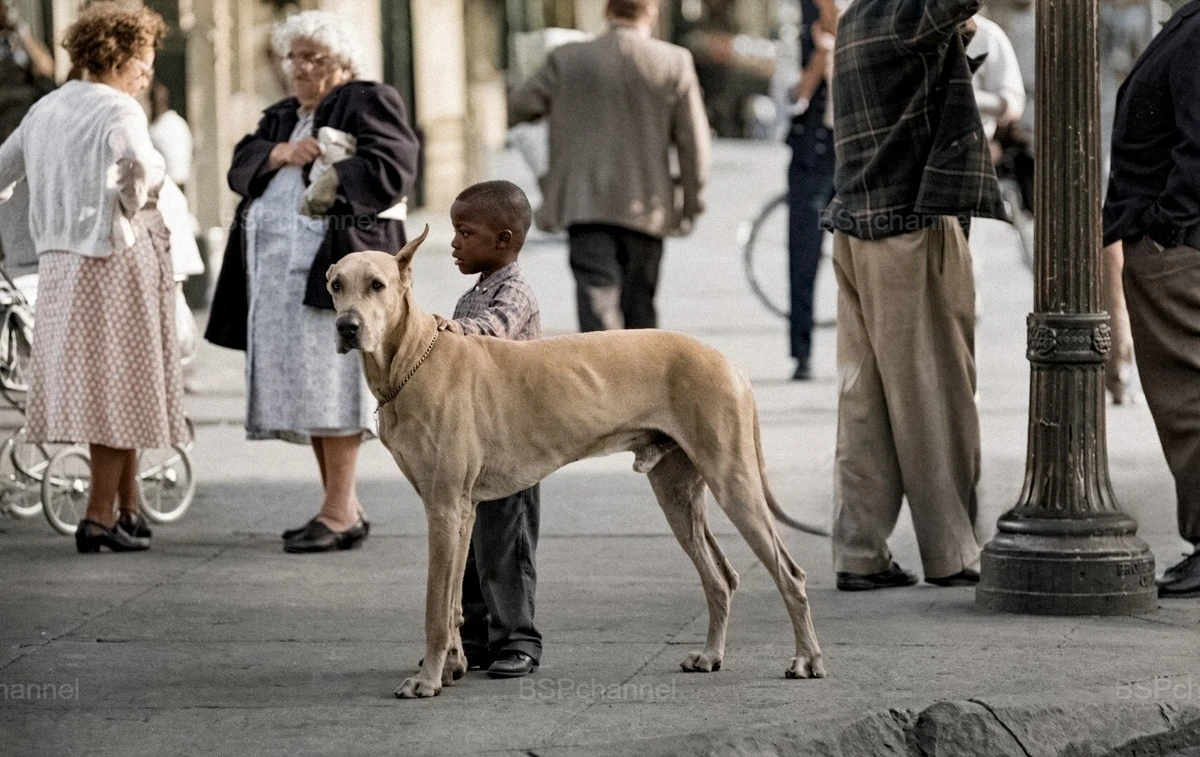
Photo: George S. Zimbel
A boy and his Great Dane. One of the largest breeds in the world (standing up to 35 inches tall at the shoulder and weighing up to 175 lbs), the photo features a fawn-colored Dane. Often called "gentle giants," they are known for their calm, affectionate nature and patience with children.
Actress Carole Lombard with her dog Basko, 1929. 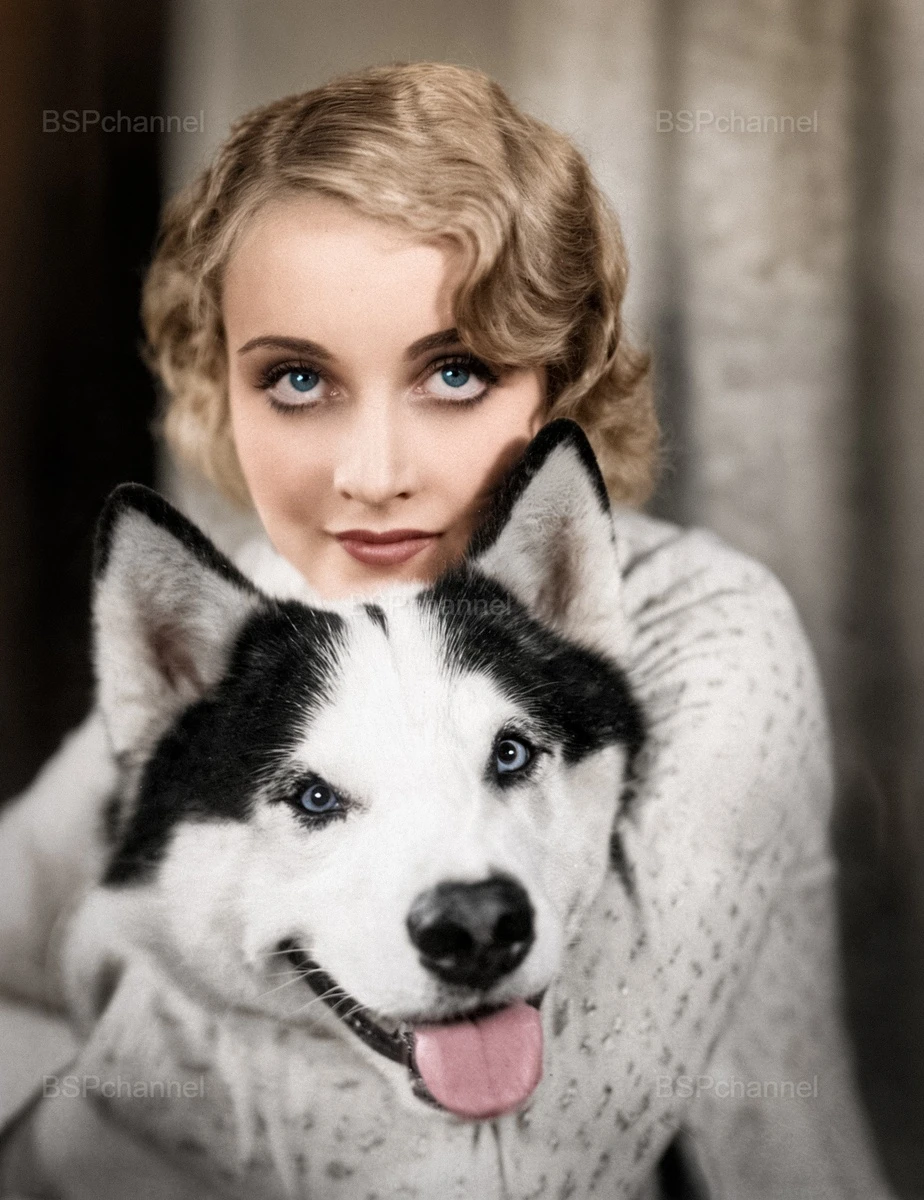
Photo: William E. Thomas
Studio press releases from the era gave conflicting accounts of Basko, describing him as both an Alaskan Husky and a purebred Alaskan Malamute, though dog experts and Lombard's biographers identify him as a Malamute. Lombard was a lifelong dog lover: Basko lived with her at her family home on North Wilton Place in Los Angeles in the late 1920s, and throughout the 1930s she owned Cocker Spaniels, a Pekingese named Pushface (who even appeared alongside her in *Love Before Breakfast*), and Dachshunds.
Untitled, 1980s. 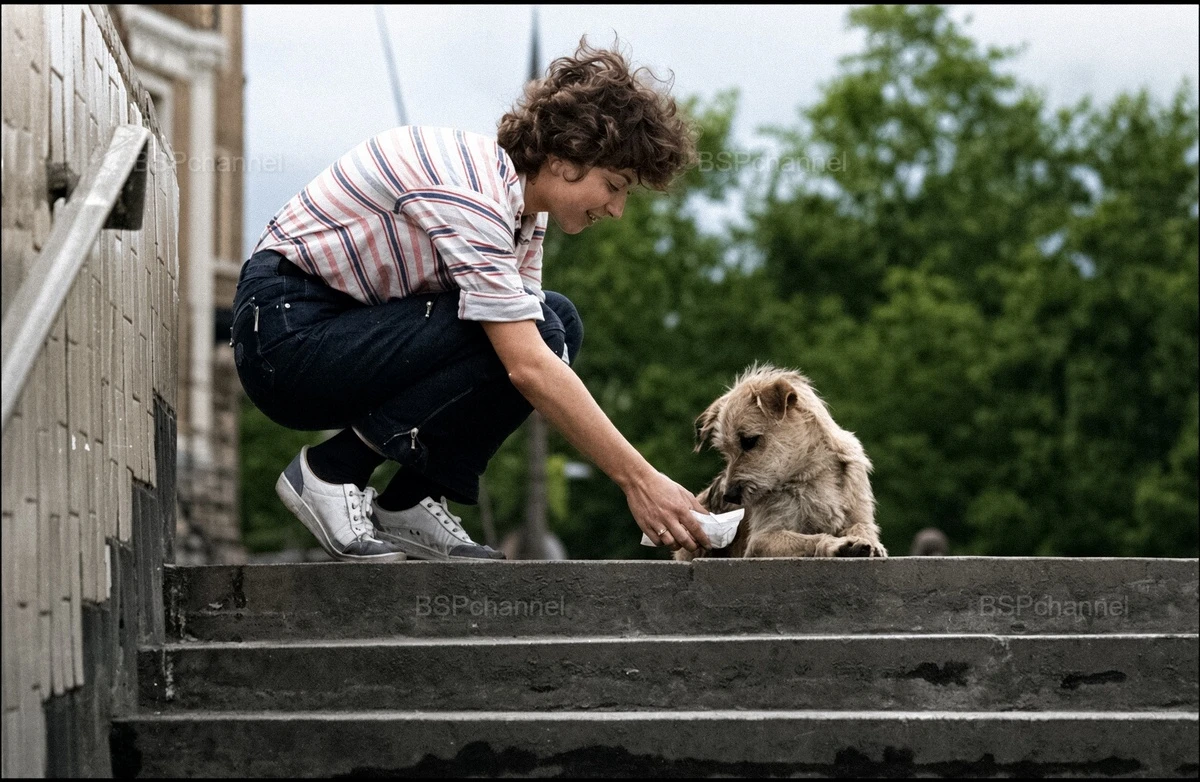
Photo: Vladimir Bogdanov
A young woman with her dog, 1940. 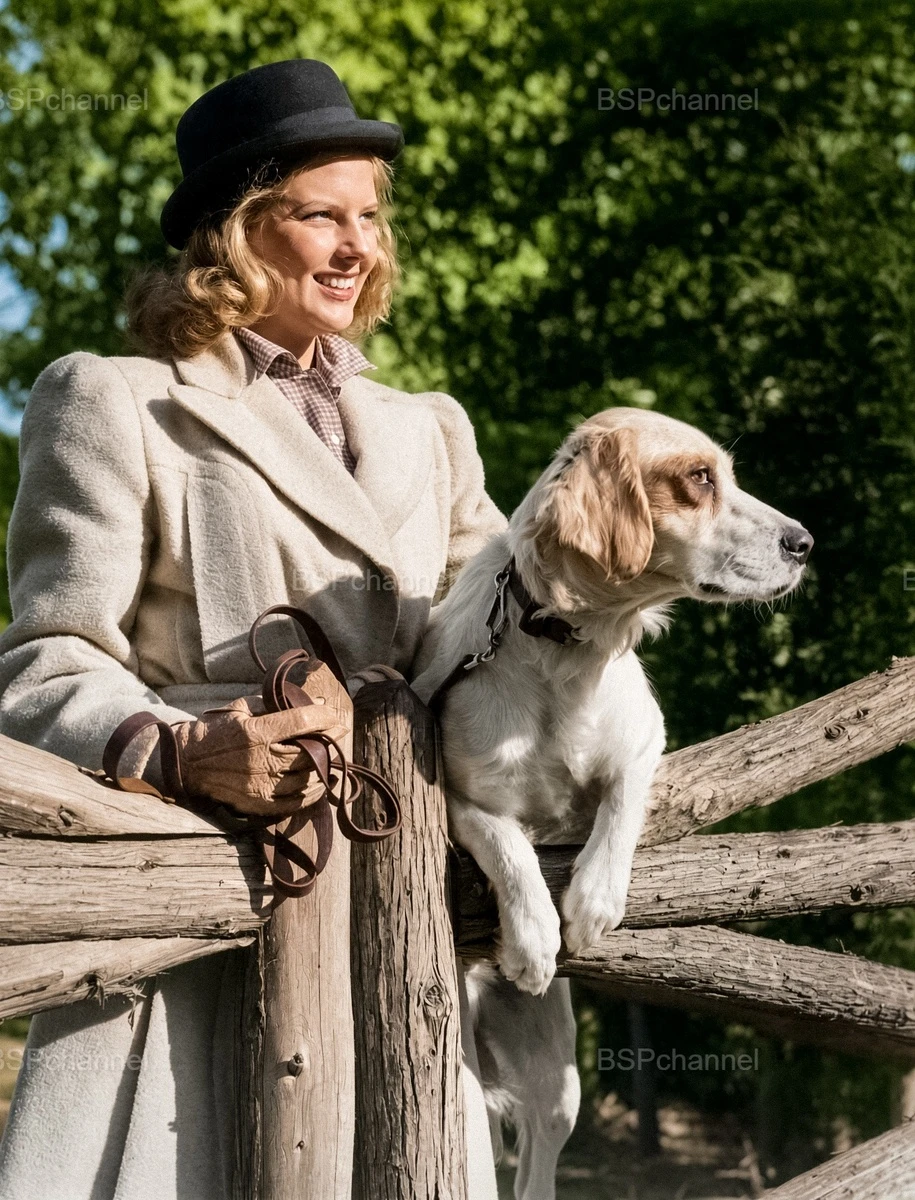
Veterok and Ugolyok, the dogs launched into space aboard the Cosmos 110 biosatellite, pictured in the laboratory of the Institute of Biomedical Problems of the USSR Ministry of Health, 1966. 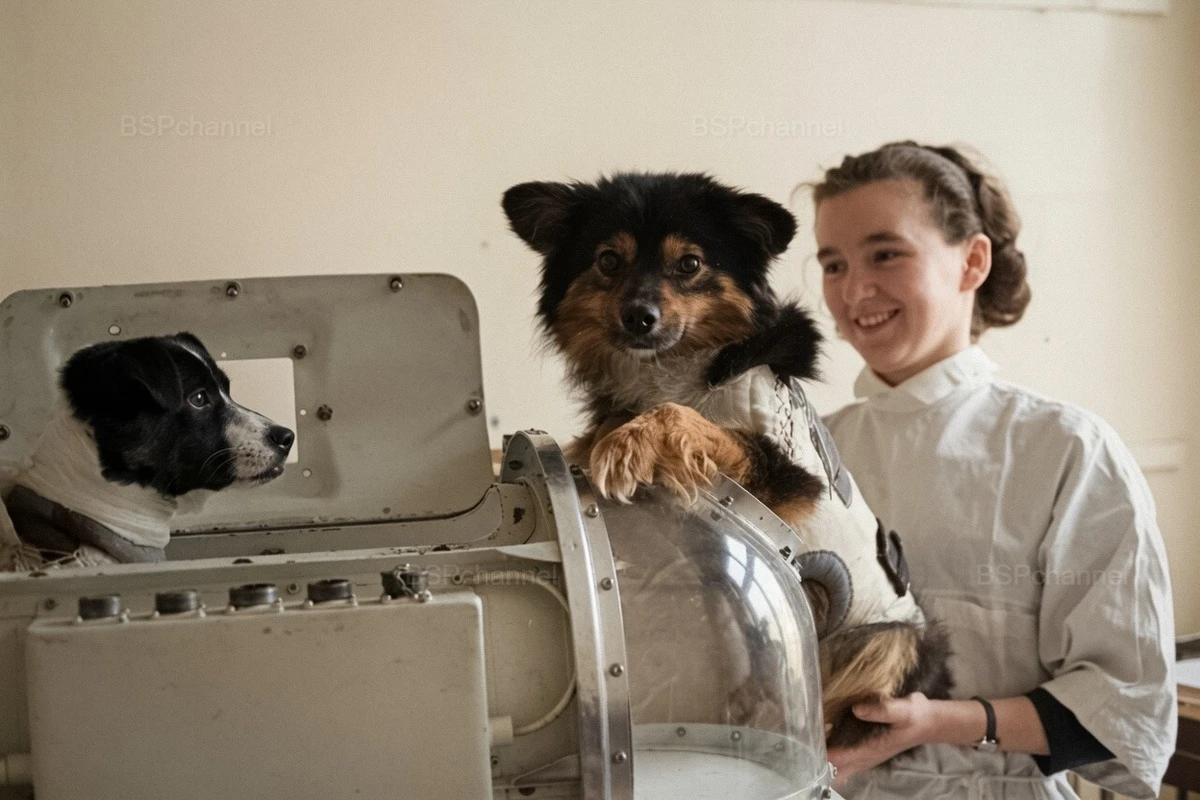
Photo: Lev Polikashin
Veterok (Breezy) and Ugolyok (Ember) were two stray dogs who spent 22 days in orbit aboard the Cosmos 110 biosatellite in February–March 1966, setting a spaceflight duration record for dogs that remains unbroken to this day. The experiment was designed at the Institute of Biomedical Problems (IBMP) under the direction of Academician Vasily Parin and future doctor-cosmonaut Boris Yegorov. Out of more than a hundred strays, two males were selected: the reddish-white Veterok (the primary test subject) and the dark-coated Ugolyok (the control subject, originally named Sneshok, or Snowball, before launch). To prevent injury and protect onboard sensors within the cramped cabin, their tails were docked, and they were fitted into tailored nylon support suits. Homogenized food was delivered directly to their stomachs via a surgical fistula, while catheters monitored vital signs and administered medication. Immediately upon landing, the dogs were flown back to the IBMP laboratory in Moscow. Due to prolonged immobility and weightlessness, they suffered severe muscle atrophy, extreme thirst, pressure sores, hair loss, and significant bone calcium loss. Thanks to intensive care from institute staff, both dogs made a full recovery, went on to sire healthy litters, and lived out their old age at the institute facility (Veterok lived another 12 years after the mission).
A young girl poses with her puppy in Resurrection City, a 3,000-person tent encampment set up on the National Mall as part of the Poor People's Campaign in Washington, D.C., May 1968. 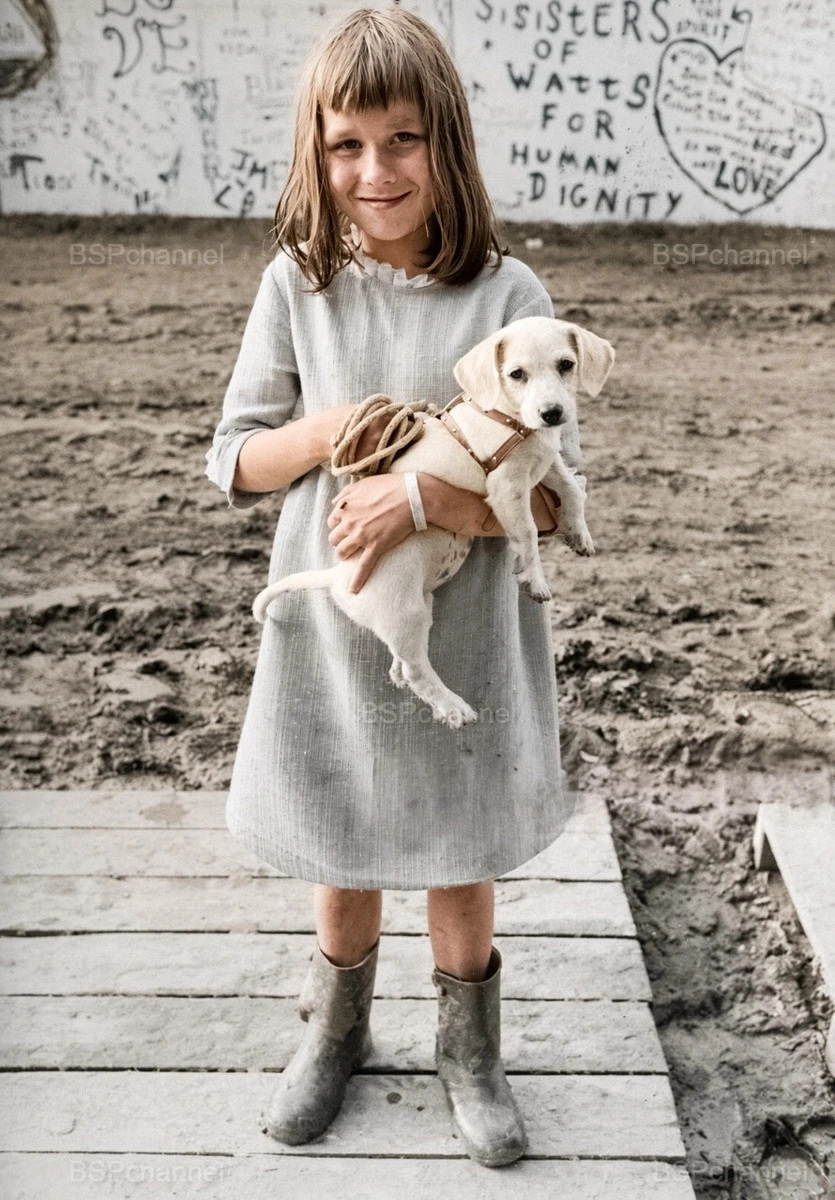
Photo: Jill Freedman
At a border outpost: Sergeant Nikolai Shabanov with his service dog, Grozny, 1966. 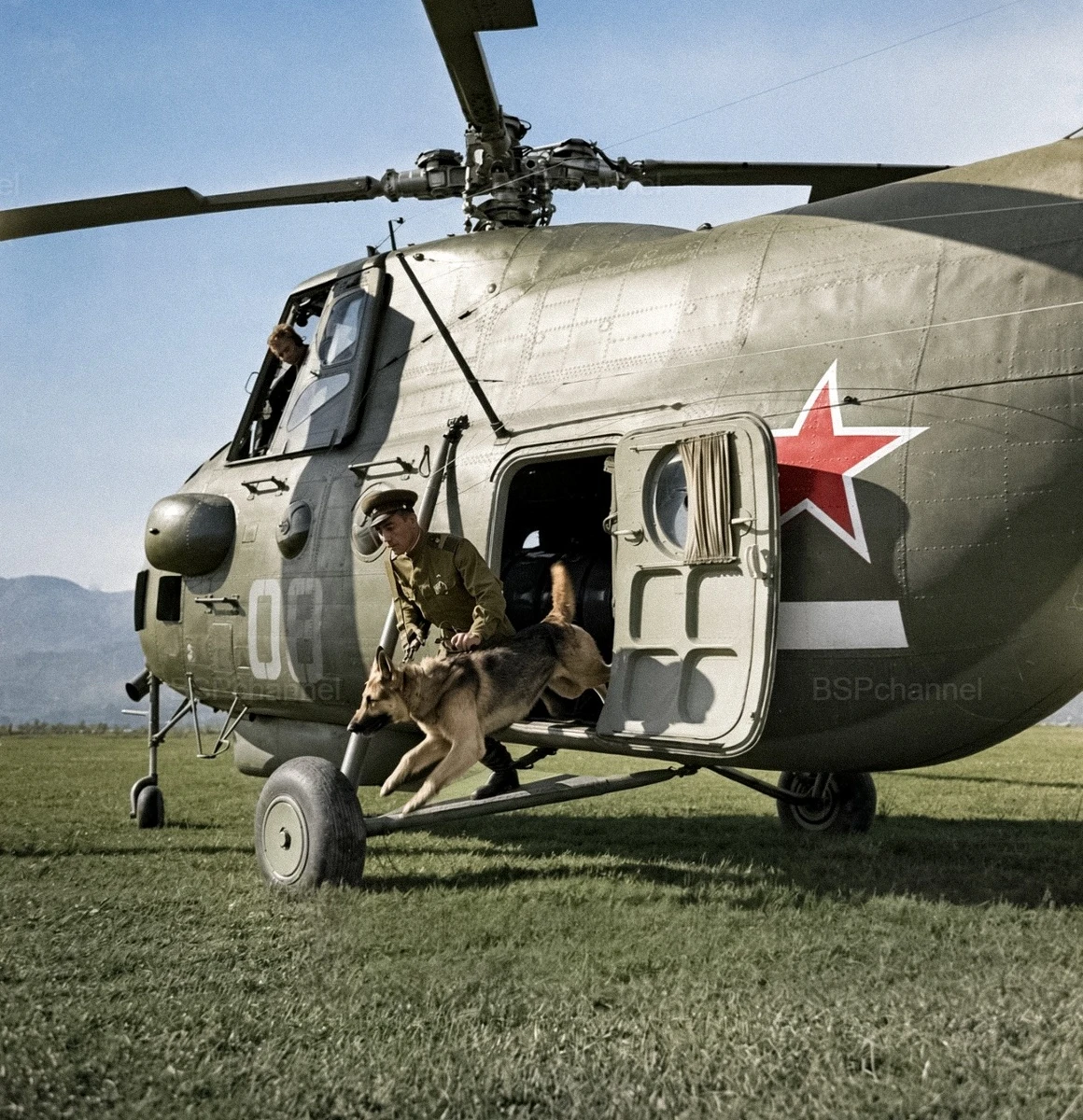
Photo: Eduard Pesov
Border guard service dogs are essential partners to patrol officers, helping scent-track intruders, guard control strips, and detect contraband. A dog can pick up a suspect's trail along a plowed control strip or remote border path and pursue them over long distances. At night and in harsh weather, a dog's keen hearing and sense of smell help alert guards to approaching strangers long before they reach the perimeter. Specially trained dogs also inspect vehicles and cargo at checkpoints to uncover concealed weapons, explosives, or narcotics. Soviet border outposts traditionally relied on East European and German Shepherds for their endurance, steady temperament, and adaptability to any climate, while Belgian Malinois, Labradors, and Spaniels were widely used for detection work at checkpoints.
A man and woman paddle a Klepper T6 folding kayak across a lake with their Fox Terrier. Germany, 1930s. 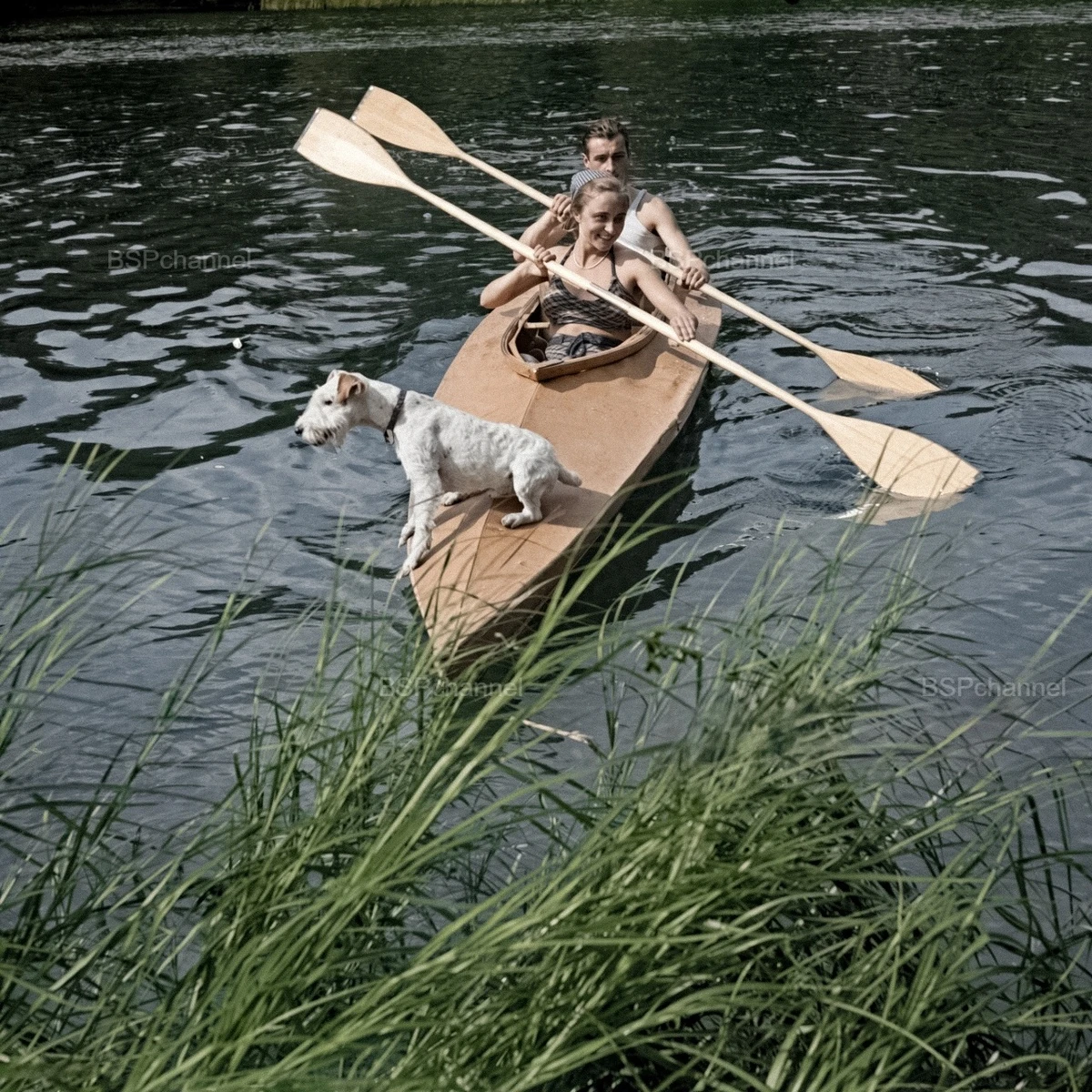
A dog trainer works with the pets of Dmitry Boginov, head coach of the Dynamo Kyiv ice hockey team: Joy the Boxer (right) and Fedka, a three-month-old puppy. Kyiv, 1966. 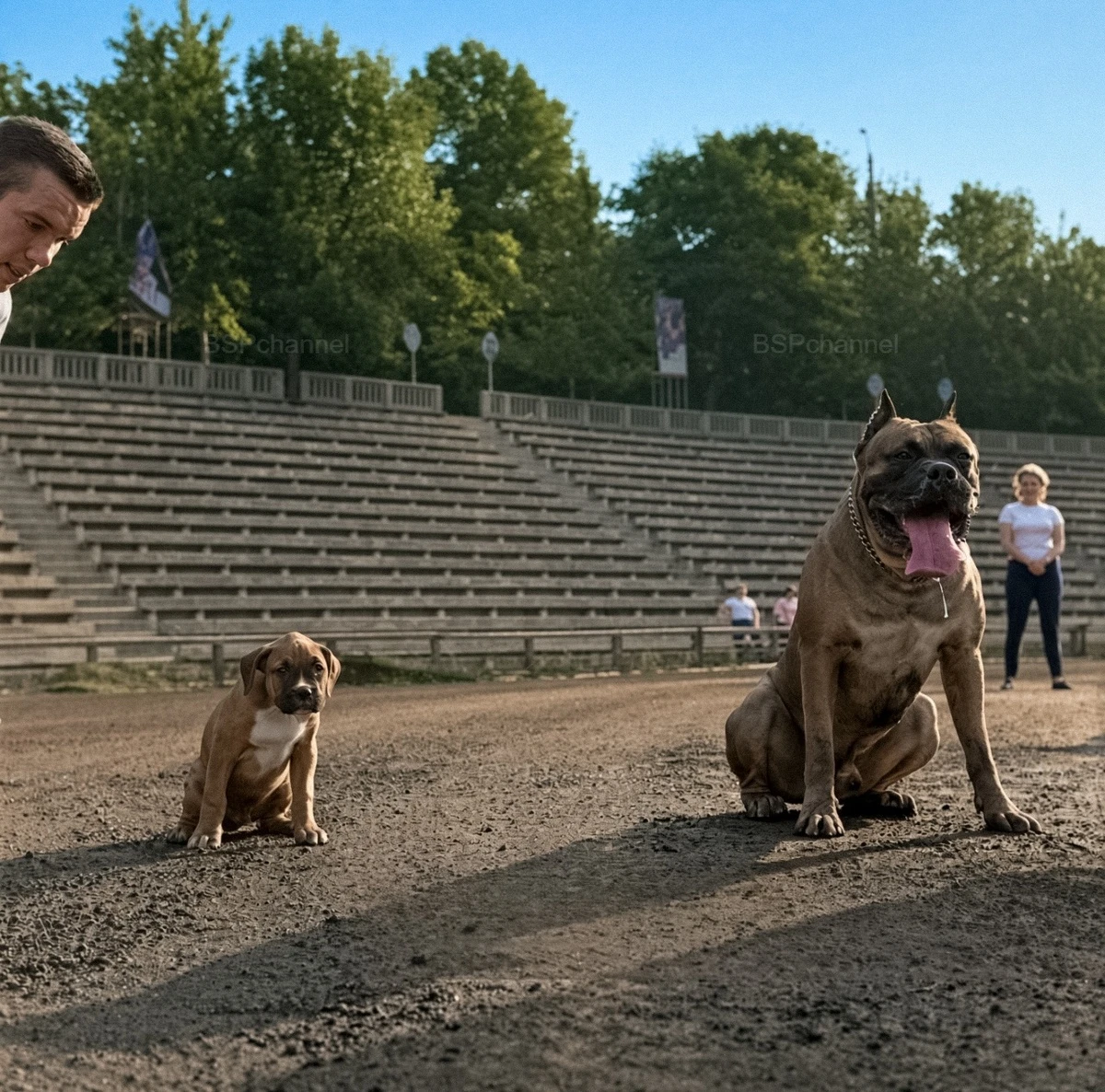
Photo: Yuri Somov
Joy the Boxer was a faithful companion to Dmitry Boginov and frequently appeared alongside the coach and players in sports press photos. Boginov took pet training just as seriously as coaching his athletes, hiring a professional handler to work with both Joy and the young puppy, Fedka. According to hockey players of the era, Joy combined an imposing appearance with fierce loyalty; Boginov would jokingly "consult" the dog on player performance during practice and threaten underperforming players with Joy's approval.
Actress Betty White at home with her dog, Stormy, 1954. 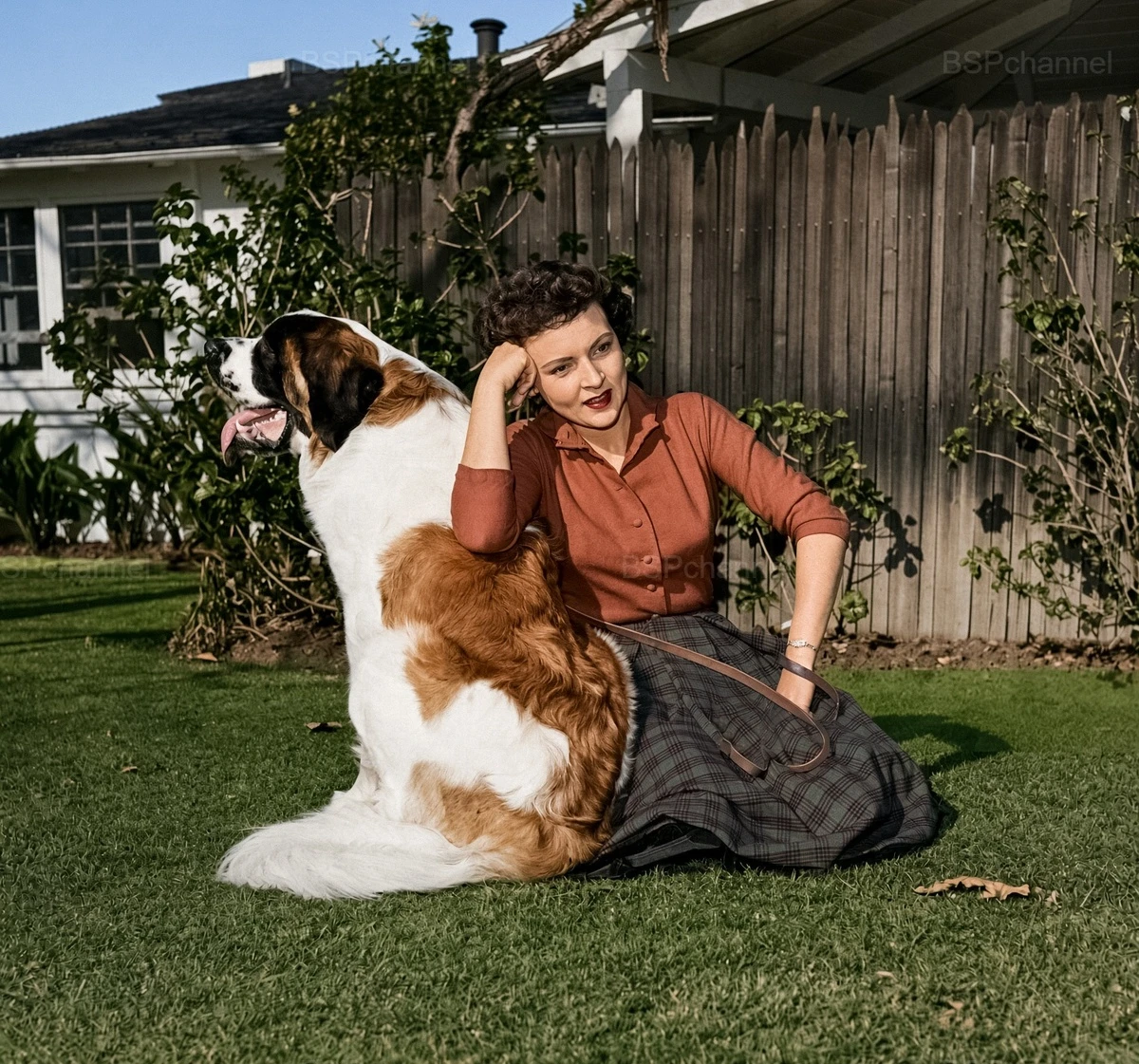
Photo: Herb Ball
Mrs. John V. Bouvier III in riding attire, smoking a cigarette while holding her Spaniel, Bonnet, on a leash at a horse show in Brooklyn, New York, 1935. 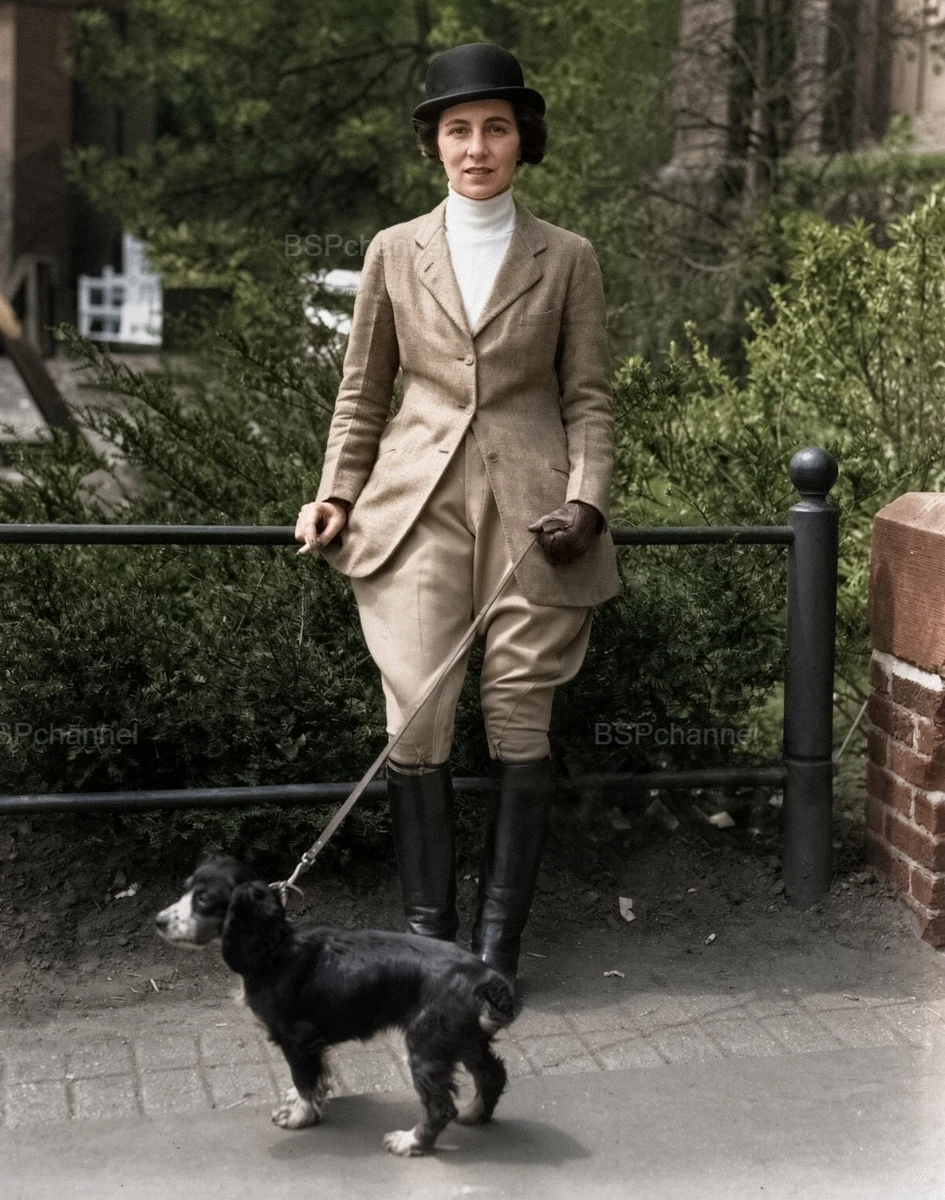
Photo: Bert Morgan
A young girl and her new best friend at the Battersea Dogs & Cats Home. London, 1950s. 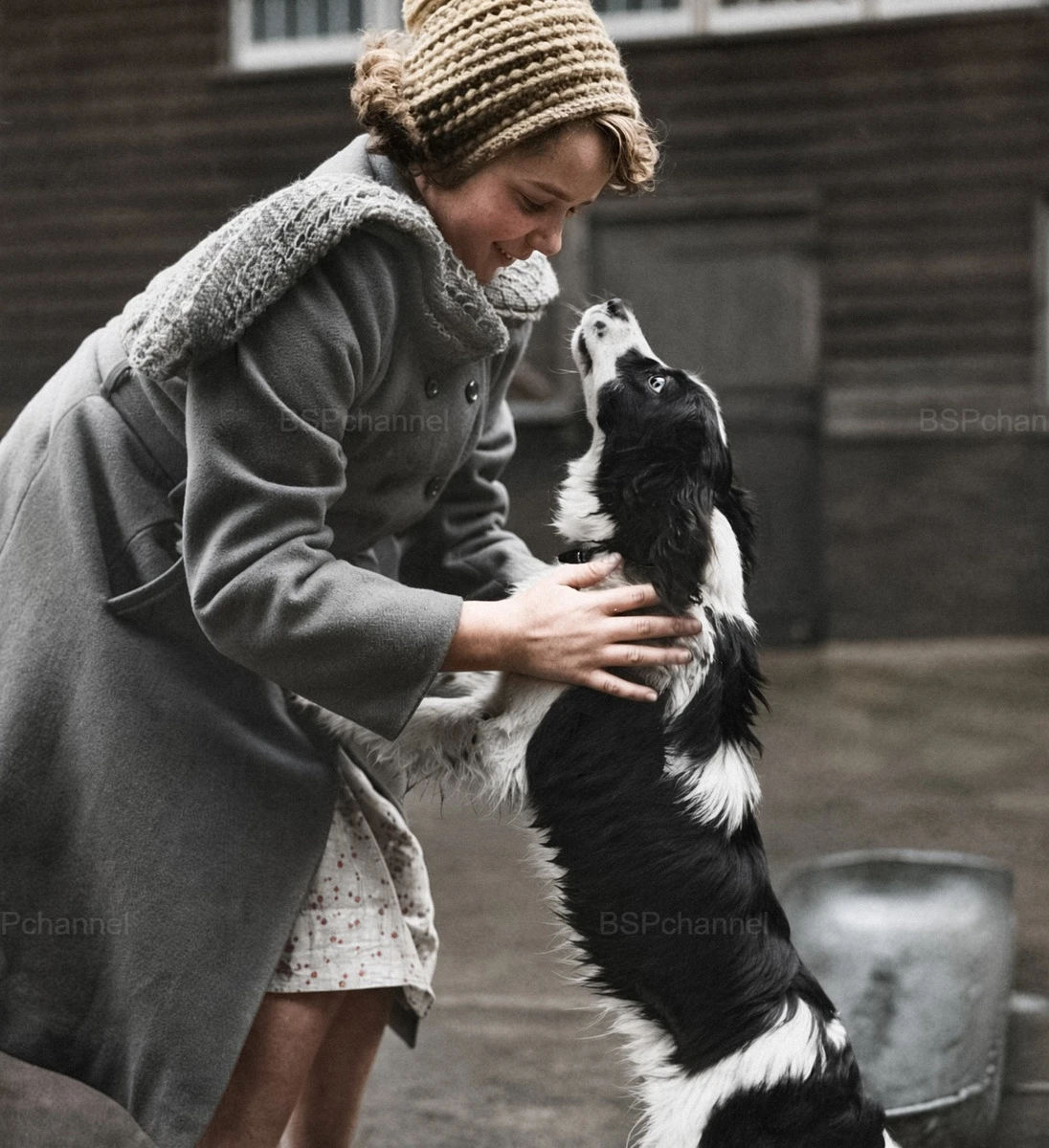
Photo: Erich Auerbach
A boy walking through the countryside with a Rough Collie, 1955. 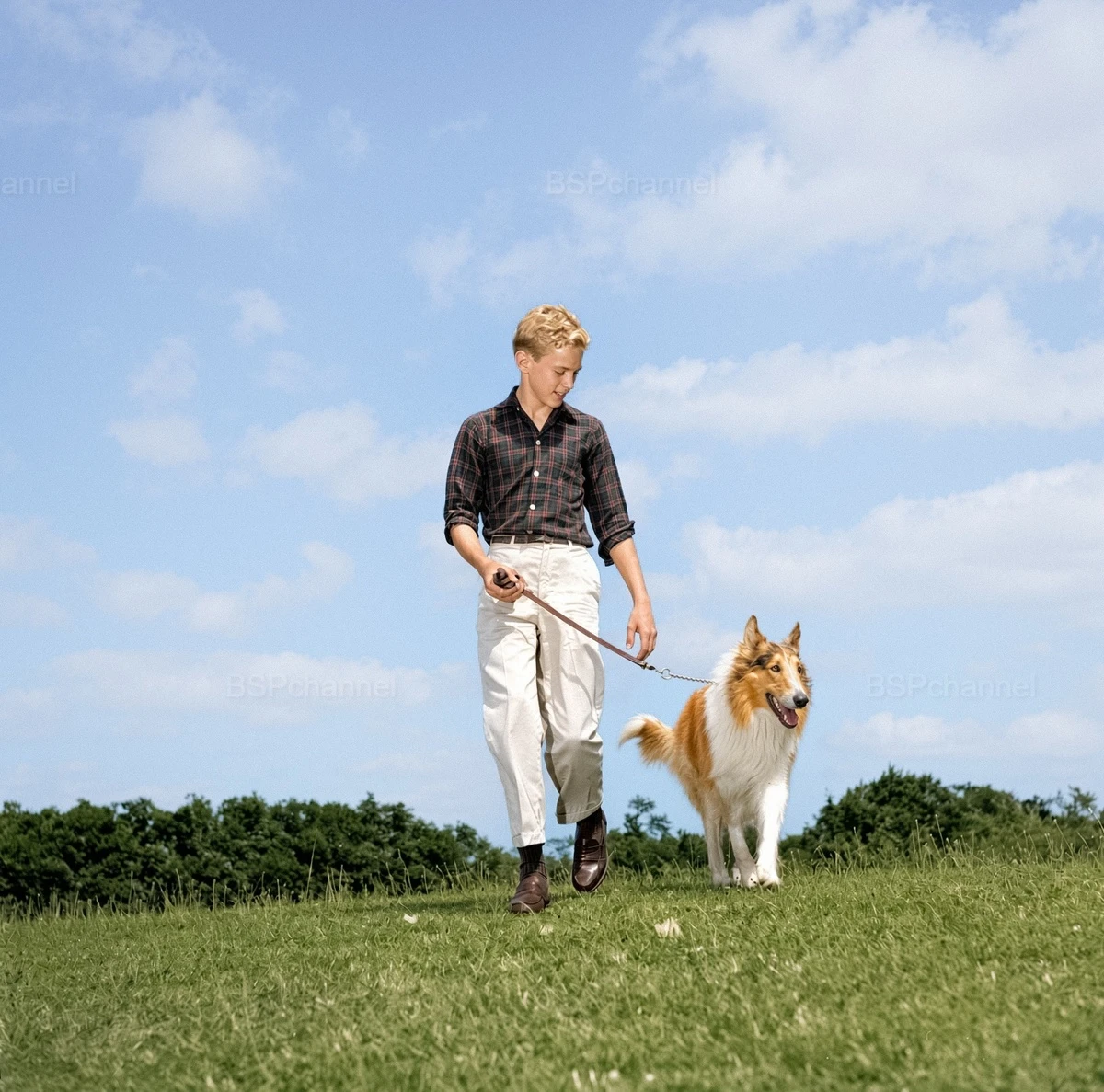
Rudi the Dachshund and Trudy the cat playing hide-and-seek, 1946. 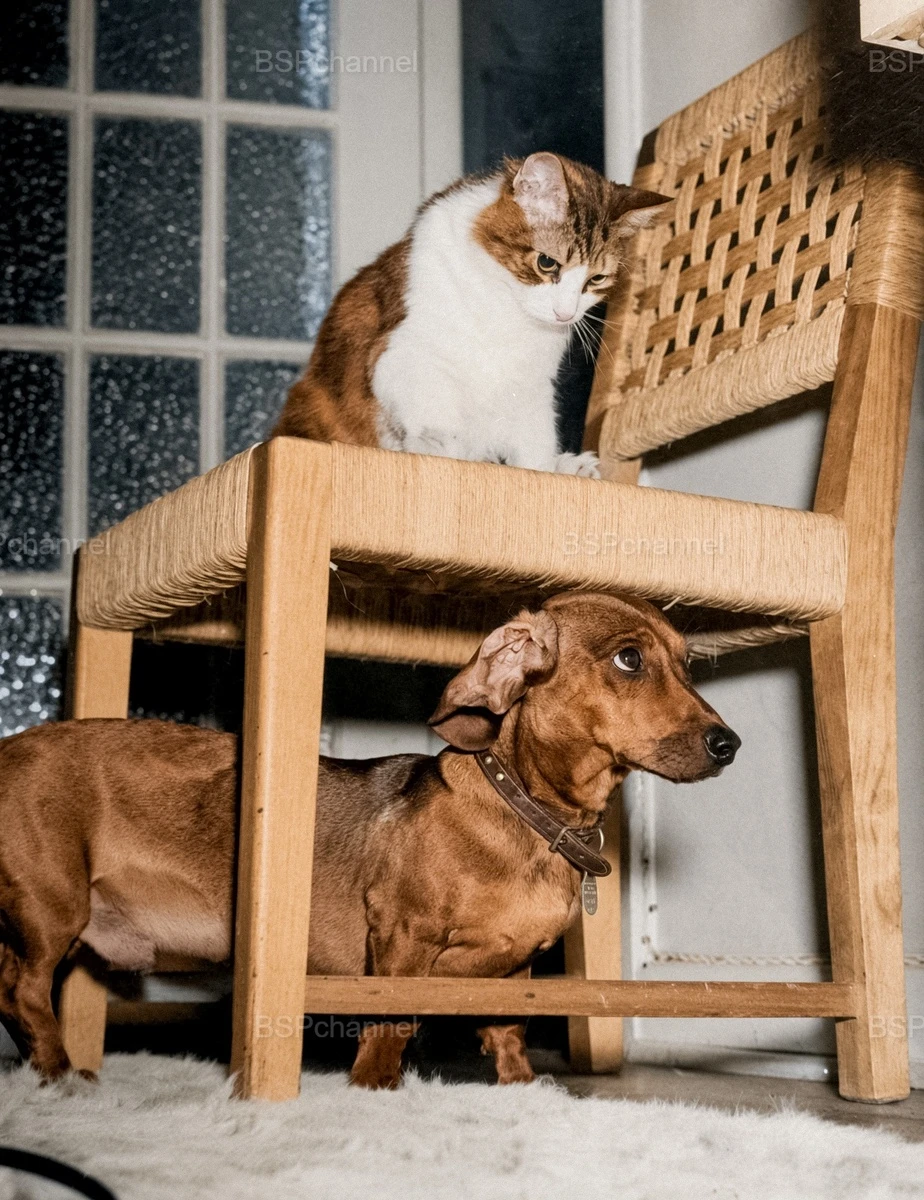
Photo: Frank Scherschel
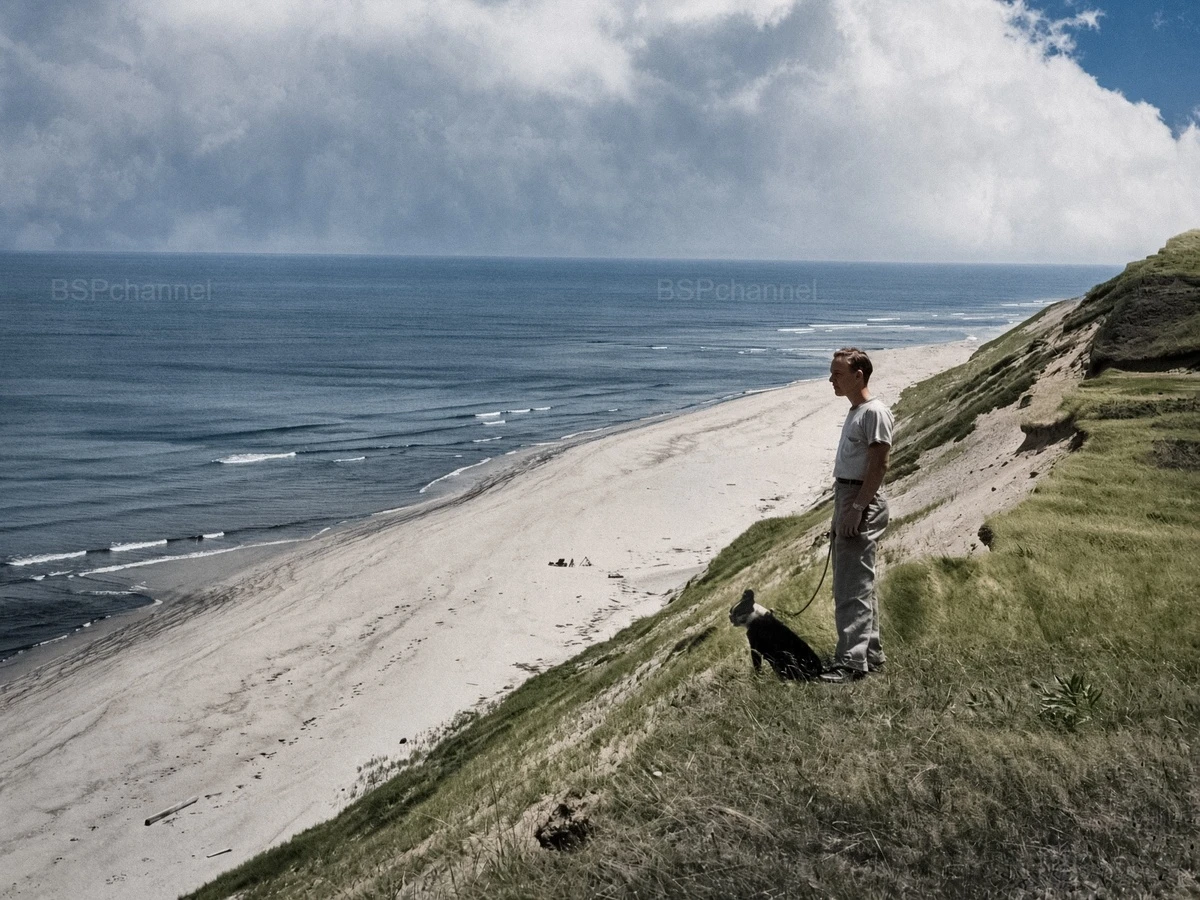
A boy and his dog on the beach, 1945.