This isn’t an abstract illustration, CGI, or an AI-generated rendering—it’s an actual scientific micrograph captured using a scanning electron microscope (SEM). Colored blue is the surface of a human immune cell infected with HIV, while the bright yellow highlights individual virus particles budding off, emerging from the host cell. 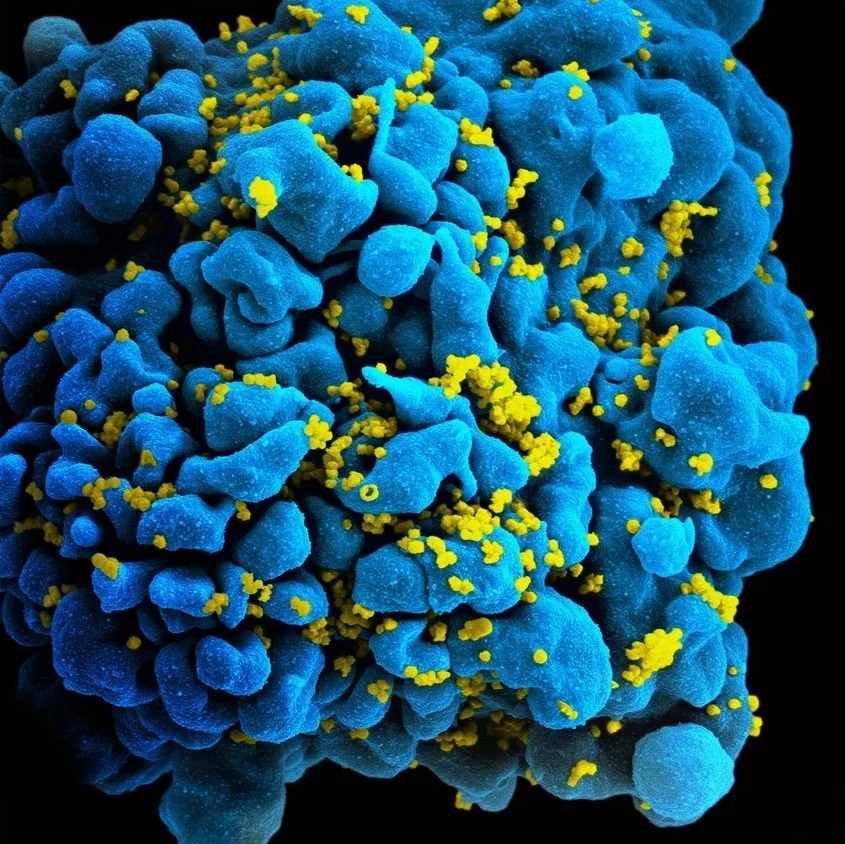
Photo courtesy of the National Institute of Allergy and Infectious Diseases (NIAID)
It is worth noting that electron micrographs are always naturally black and white. Because SEMs use electron beams rather than visible light, color simply doesn't exist at this microscopic scale. The false colors—here, blue and yellow—are added manually during post-processing to help visually distinguish the host cell from the invading viral particles. This is standard global practice in scientific visualization and does not alter the data.
What the Image Shows
The heavily textured blue surface, covered in folds and protrusions, is a CD4⁺ T lymphocyte—one of the key cell types of the human immune system. Known as the "conductors" of the immune response because they coordinate our body's defenses, these cells are the main target of the human immunodeficiency virus (HIV).
The rounded yellow structures scattered across the cell surface, individually and in clusters, are mature and developing virions—individual HIV particles. The average diameter of a single virion is roughly 134 nanometers, about 500 times thinner than a human hair. That is why it is impossible to see the virus even under a powerful optical microscope. 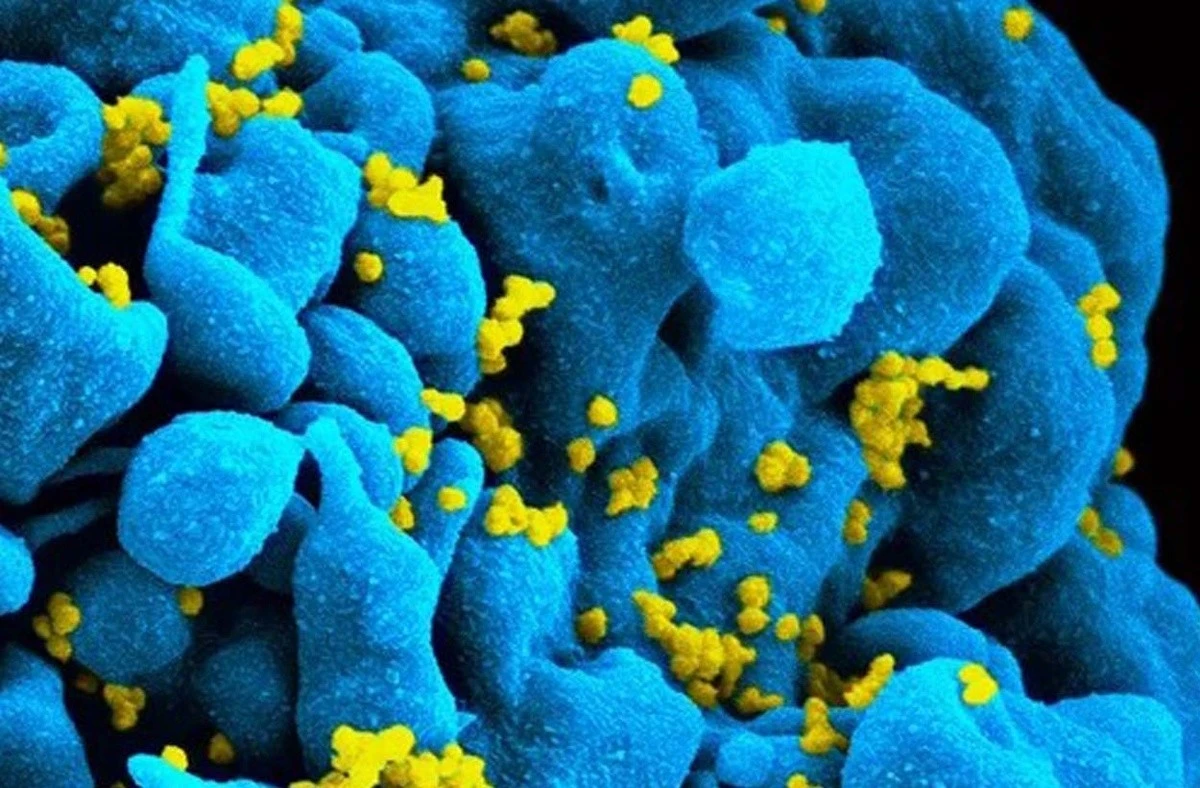
The process captured here is known as budding. After invading the cell, the virus hijacked its genetic machinery, forcing it to produce thousands of viral replicas. Each new copy literally "buds" out through the cell membrane, taking a piece of the host cell's outer envelope to construct its own lipid coating. Once mature, every virion sets off to find another healthy cell to infect and restart the replication cycle. Exhausted by the burden of producing virus particles, the original host cell eventually dies.
40 Years and Dozens of Trials Later, Still No Vaccine
More than 40 years after HIV was first identified, there is still no approved vaccine—unlike for many other dangerous infections. The problem isn't a lack of scientific effort; dozens of clinical trials have been conducted. Rather, it comes down to the fundamental biology of the virus itself, which makes it an exceptionally difficult target.
First, HIV mutates at a staggering rate. The enzyme the virus uses to replicate its genetic material—reverse transcriptase—is notoriously error-prone, making frequent mistakes during copying. As a result, the virus evolves rapidly: the genetic diversity of HIV variants inside a single infected person over a few years can exceed all the flu strains circulating globally in an entire season. A vaccine effective against one strain often becomes useless against another that emerged just a month later. 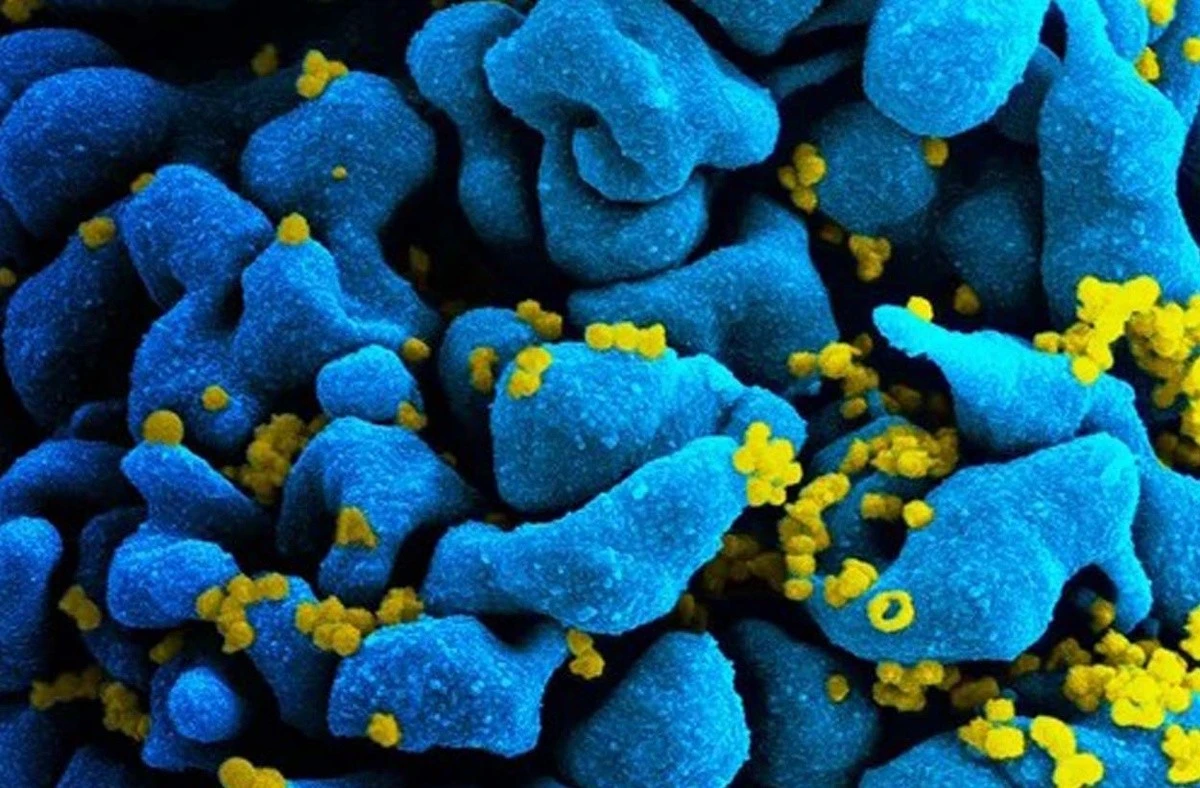
Second, HIV attacks the immune system itself. Most vaccines work by "training" the immune system to recognize and destroy a pathogen ahead of time. But HIV is essentially the only known virus that directly targets and disables the very cells tasked with coordinating the immune response against it. This creates a vicious cycle: the harder the immune system tries to fight off HIV, the more defender cells it exposes to infection.
Third, HIV integrates directly into human DNA shortly after infection, creating a silent backup copy of itself that can remain completely invisible to the immune system and modern medications for years. Even if a vaccine successfully prompted the body to eliminate all actively replicating virus particles, this latent reservoir would almost certainly reactivate one day, resuming viral production—and promptly creating a new, slightly mutated backup copy. Another vicious cycle.
Add your comment
You might be interested in:












Eiffel 65 - Blue (Da Ba Dee) on bagpipes

22-year-old “time capsule” - Corvette C5 put up for sale (7

Nvidia unveiled the charming Blue robot

Scientists repainted cows as zebras and got an unexpected

28 Stunning Historical Photos of Women During World War II

View from the Sky (15 photos)

The cargo ship "Blue Shark", which ran aground

An ordinary maid from a Chilean hotel has become famous

The first black astronaut candidate went into space after

Peak Dad Jokes: The Ultimate Examples of Dad Trolling (32

A young woman from Ireland shows how she changes a tractor

GTA VI mocks radical animal rights activists

How Humanity Reached the Moon (21 Photos)

17 Reasons Every Country Could Use a Little More Japan (18

“Now I’ve Seen It All”: 25 Photos That Will Make You Say

35 Objects That Are Flawlessly Perfect (36 Photos)

15 Tiny Baby Animals That Fit Right in the Palm of Your

Genius and Truly Unique Design Solutions (21 Photos)