"The Crying Boy": How a Budget Print Became Britain's Prime Arson Suspect (7 photos)
In 1985, the Hall family of South Yorkshire lost everything in a house fire. Everything except one item. 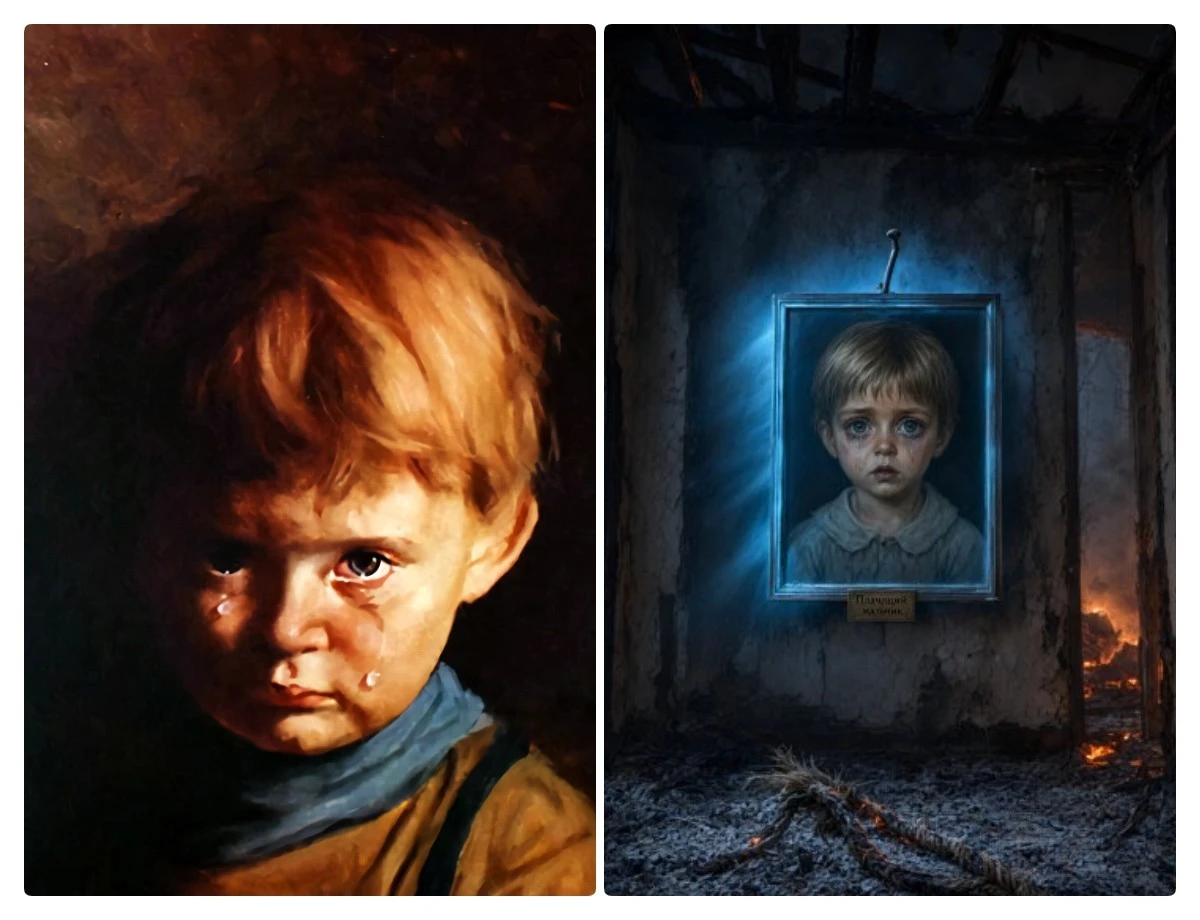
Hanging untouched among the ashes was a cheap print depicting a wide-eyed child with tears streaming down his cheeks. The family brought it to the newsroom of The Sun, claiming the picture was cursed. 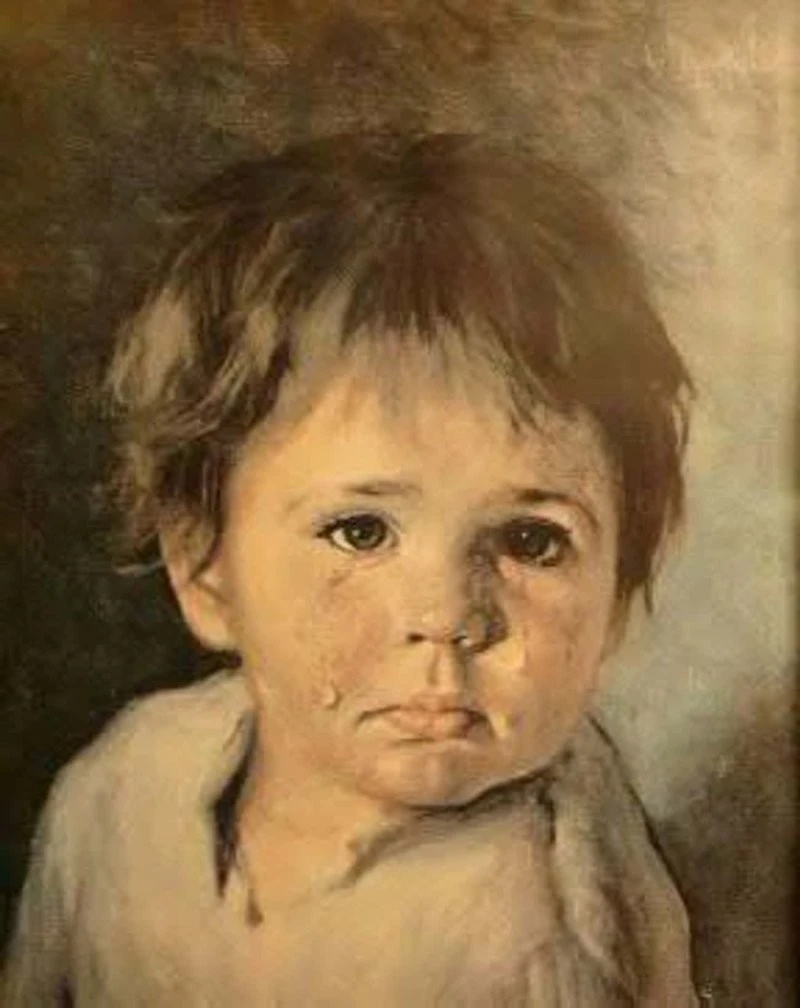
Mass-produced prints like this were a staple of British living rooms throughout the 1970s
Sensing a sensation, the tabloid ran wild with the story. "Blazing Curse of The Crying Boy!" screamed the headline. The article claimed that artist Giovanni Bragolin had painted a series of portraits of orphans whose asylum burned down, leaving their vengeful spirits to torment owners for a century. 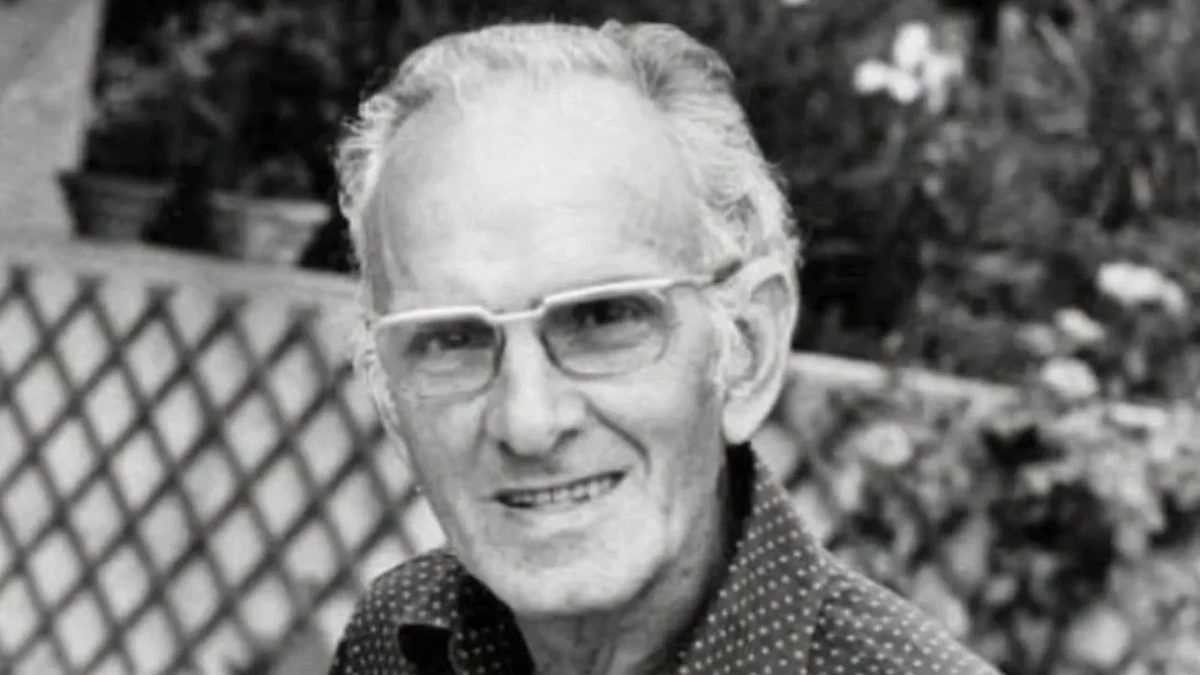
Bruno Amadio, an Italian artist best known by his pseudonym Giovanni Bragolin
Readers flooded the paper with letters. Homes had burned to the ground and loved ones had been injured, yet the painting remained completely unscathed. Just a month later, another fire broke out in Rotherham, destroying a family's home—except for yet another print of "The Crying Boy." The Sun responded by organizing a mass bonfire of the prints, which only fueled the public hysteria. 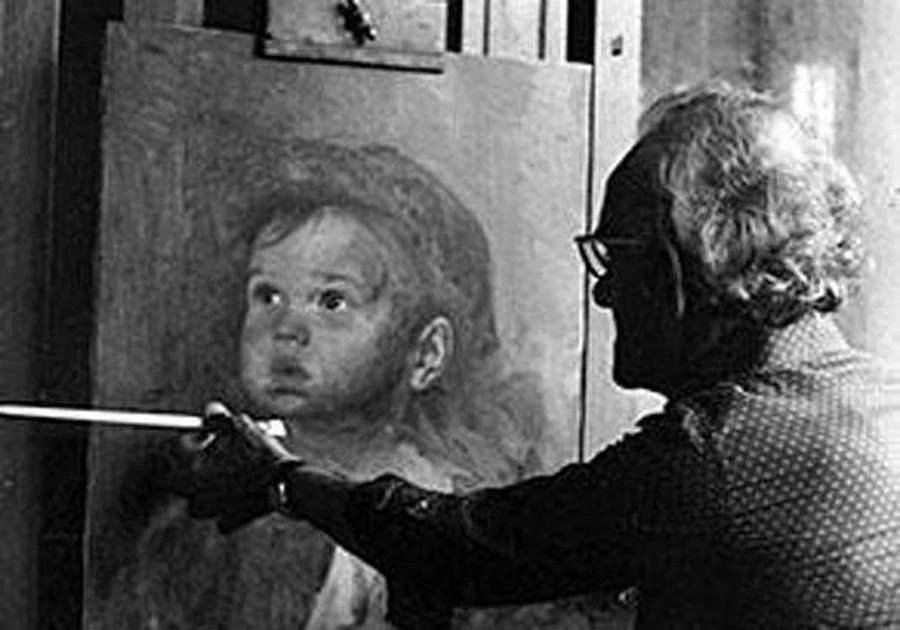
The legend quickly gathered momentum. Supposedly, Bragolin (also referred to as Spanish painter Bruno Amadio) had painted a boy named Don Bonillo, who allegedly set the fire that killed his parents. Fire seemed to follow the child wherever he went, earning him the nickname "El Diablo." According to urban lore, the boy's spirit used the prints to satisfy its insatiable appetite for destruction even after his death. 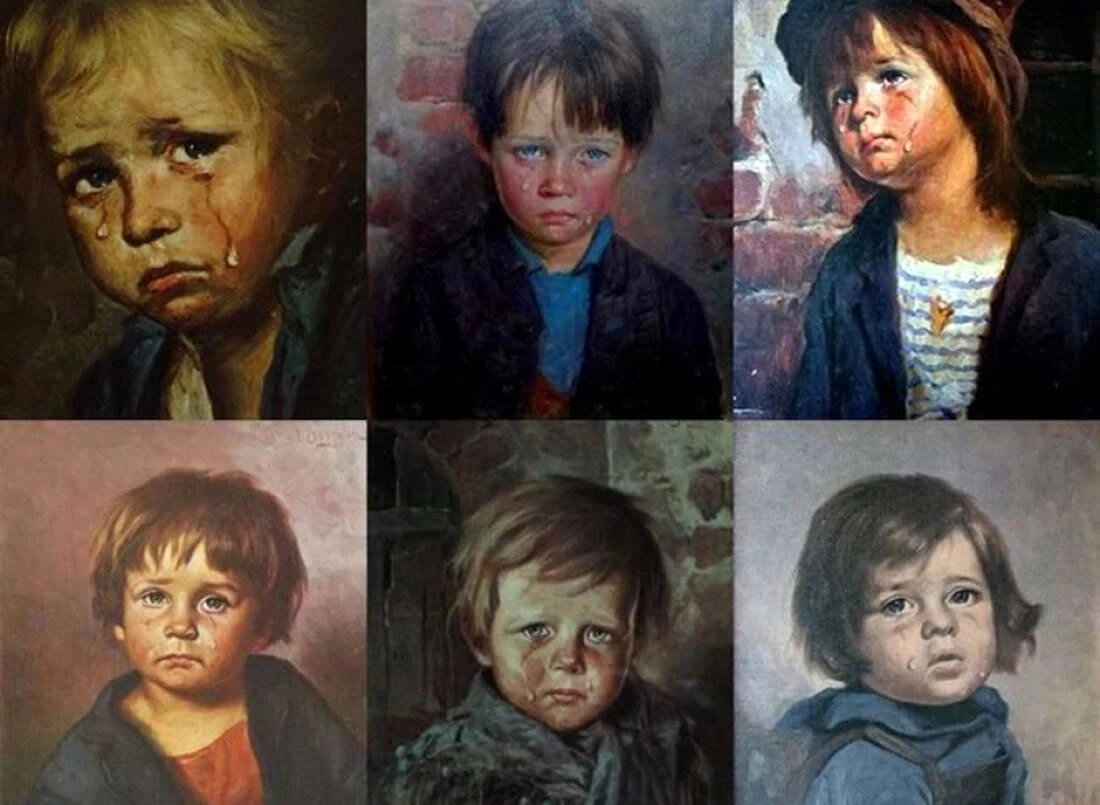
Paintings from the artist's children series
The truth proved far more mundane. In 2010, comedian Steve Punt investigated the phenomenon for BBC Radio 4's Punt PI. The mystery was quickly solved: the prints were treated with a fire-retardant varnish, and the string holding them to the wall burned through first. The picture would fall face down onto the floor, remaining untouched while the room burned around it. 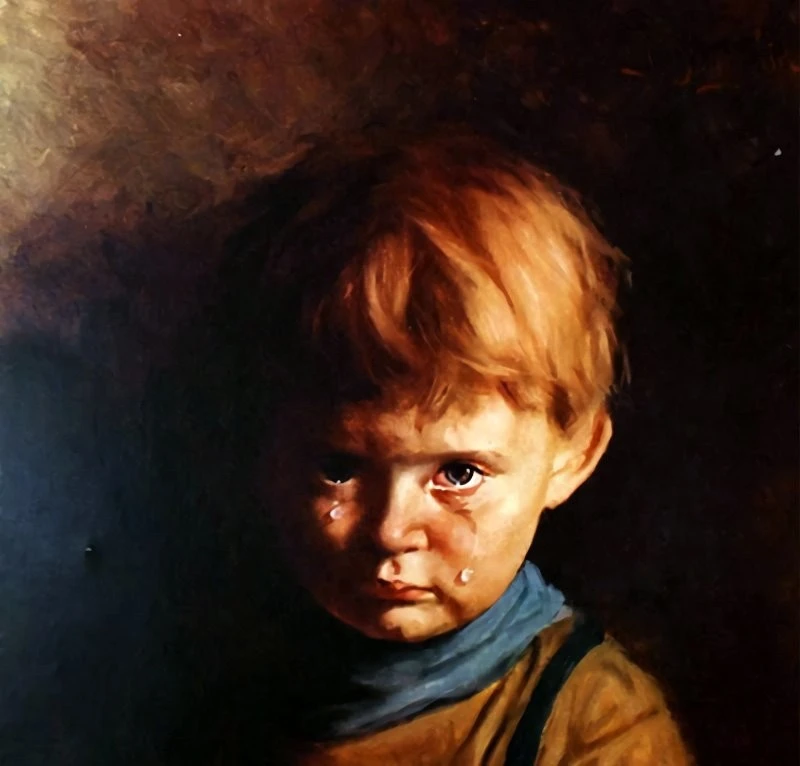
Giovanni Bragolin, The Crying Boy, 1950s
Other prints produced by the same manufacturer demonstrated identical "invincibility." However, because they didn't depict a weeping child, the tabloids paid them no mind. In the end, there was no supernatural curse at play—just fire-retardant varnish, cheap string, and a tabloid's unquenchable thirst for sensational headlines. 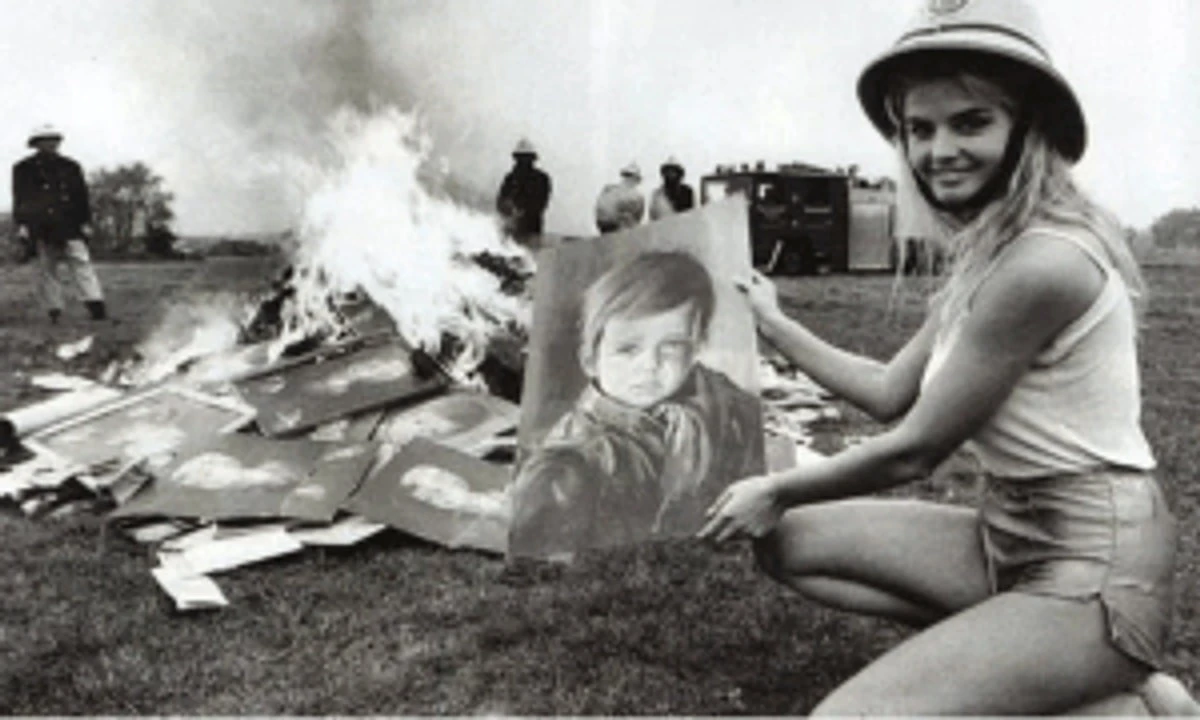
At the height of the hysteria, people burned the prints and paintings