Look up at the red canyon walls of Utah, and you will often see dark streaks running down the rock faces. In many cases, this is desert varnish—a thin coating of clay bonded with manganese and iron oxides. These minerals cement the clay to the surface, creating a layer that eventually becomes visible from afar. 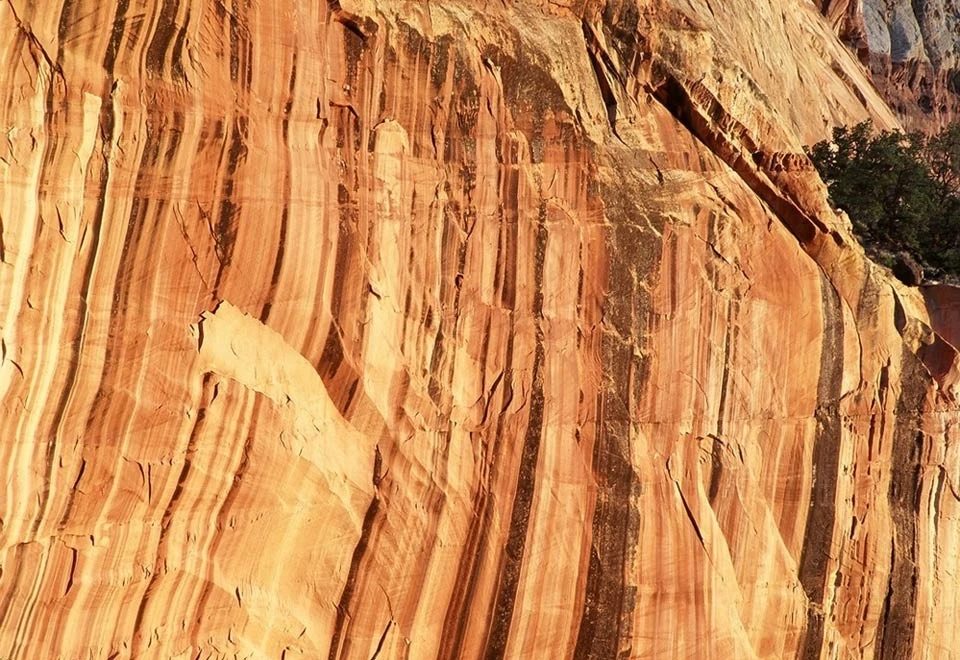
Dark streaks on a cliff face in Capitol Reef National Park. Credit: U.S. National Park Service.
Wind and water carry the dust and minerals that form the coating. Higher manganese concentrations give the patina a near-black sheen, while iron produces a reddish hue. The National Park Service notes that the exact mechanism driving manganese accumulation remains a mystery, though microorganisms may play a key role in the process. 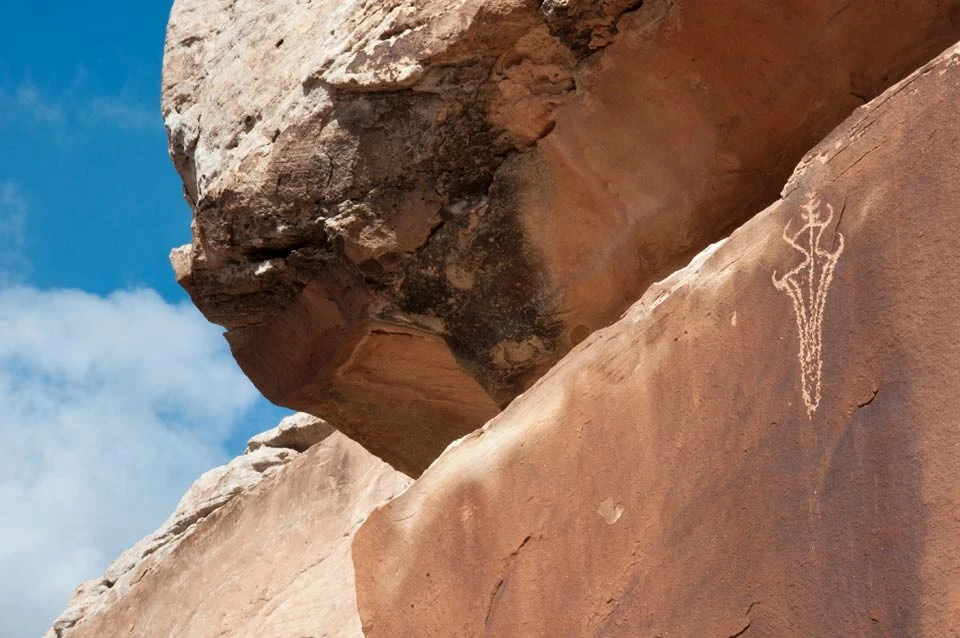
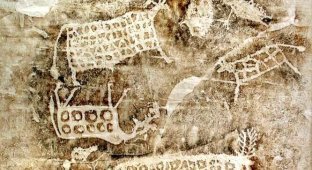
Ancient rock art near Wolfe Ranch stands out where the dark patina was scraped away. Neal Herbert/ NPS.
These dark rock faces served as natural canvases: artists could create imagery simply by chipping away the dark outer layer. The petroglyphs at Wolfe Ranch in Arches National Park owe their sharp visibility to this stark contrast with the lighter rock underneath.
Add your comment
You might be interested in:














Peak Dad Jokes: The Ultimate Examples of Dad Trolling (32

A young woman from Ireland shows how she changes a tractor

GTA VI mocks radical animal rights activists

How Humanity Reached the Moon (21 Photos)

17 Reasons Every Country Could Use a Little More Japan (18

“Now I’ve Seen It All”: 25 Photos That Will Make You Say

35 Objects That Are Flawlessly Perfect (36 Photos)

15 Tiny Baby Animals That Fit Right in the Palm of Your

Genius and Truly Unique Design Solutions (21 Photos)