1922: The Discovery of King Tutankhamun's Tomb (22 Photos)
On November 4, 1922, the tomb of Pharaoh Tutankhamun was discovered in Egypt's Valley of the Kings. It remains the only near-intact royal tomb ever uncovered, reaching modern archaeologists in largely pristine condition despite having been breached twice by ancient grave robbers. The historic find was made by British Egyptologist Howard Carter and his benefactor, amateur archaeologist Lord Carnarvon. Inside, they uncovered a vast array of treasures, along with a solid gold coffin containing the pharaoh's mummified remains. 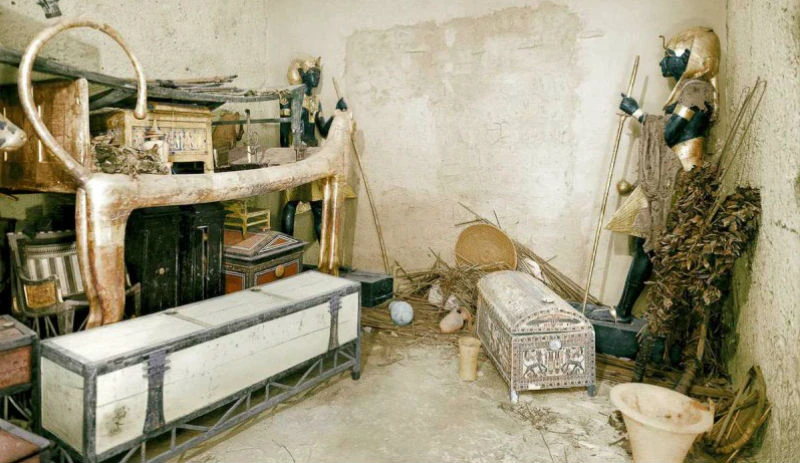
In 1907, Howard Carter was hired by George Herbert, 5th Earl of Carnarvon, to oversee excavations in the Valley of the Kings. Carter had built a solid reputation for his painstaking approach to documenting and preserving artifacts.
Years of searching yielded frustratingly little, straining Carter's relationship with his patron. By 1922, Lord Carnarvon warned him that funding would be cut off after one final season. 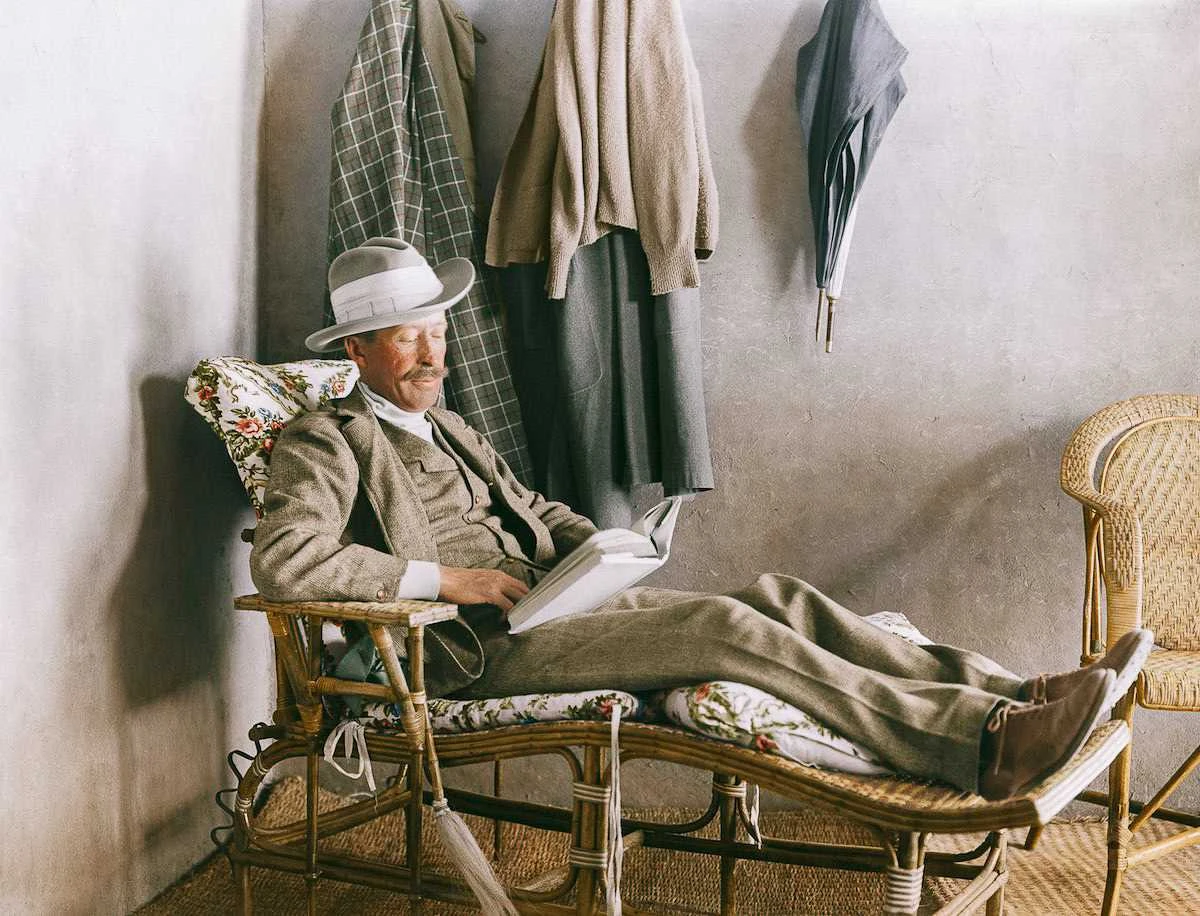
1923: Lord Carnarvon, who financed the excavations, reads on the veranda of Carter's house near the Valley of the Kings.
Desperate for a breakthrough, Carter returned to a site he had previously abandoned. On November 4, 1922, his crew uncovered a step carved into the bedrock. By the end of the following day, an entire flight of stairs had been cleared. Carter immediately sent a cable to Carnarvon, urging him to travel to Egypt at once.
On November 26, Carter and Carnarvon breached a small opening in the corner of a sealed doorway at the bottom of the stairs. Holding a candle, Carter peered into the darkness.
"At first I could see nothing, the hot air escaping from the chamber causing the candle flame to flicker, but presently, as my eyes grew accustomed to the light, details of the room within emerged slowly from the mist, strange animals, statues, and gold—everywhere the glint of gold." — Howard Carter
The team had discovered the burial site of Tutankhamun, the boy king who ruled Egypt from 1332 to roughly 1323 BC. 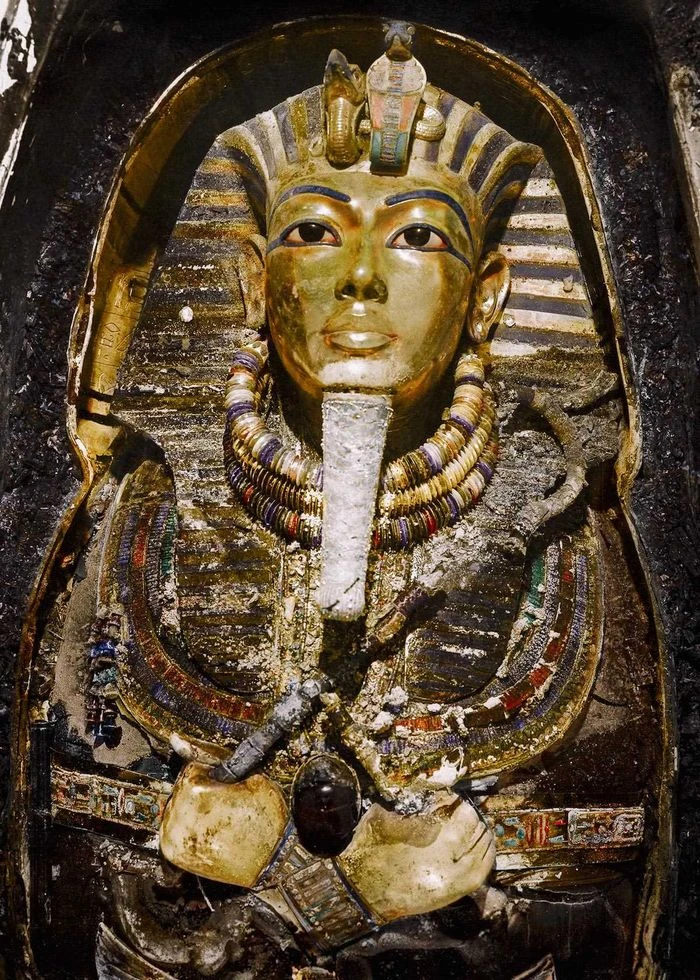
November 1925: The burial mask of King Tutankhamun.
Despite evidence that ancient robbers had broken into the tomb twice, its contents remained largely untouched. The tomb was filled with thousands of priceless artifacts, including the sarcophagus housing Tutankhamun's mummified body. 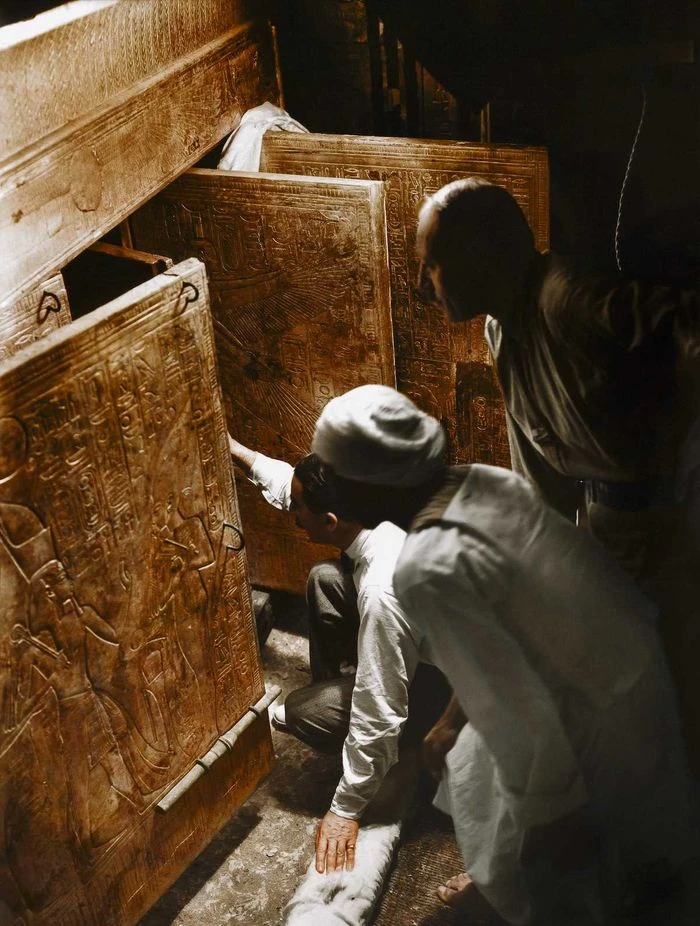
January 4, 1924: Howard Carter, Arthur Callender, and an Egyptian worker open the shrine doors for a first look at Tutankhamun's sarcophagus.
Every item in the tomb was meticulously cataloged and recorded before removal—a process that took nearly eight years to complete. 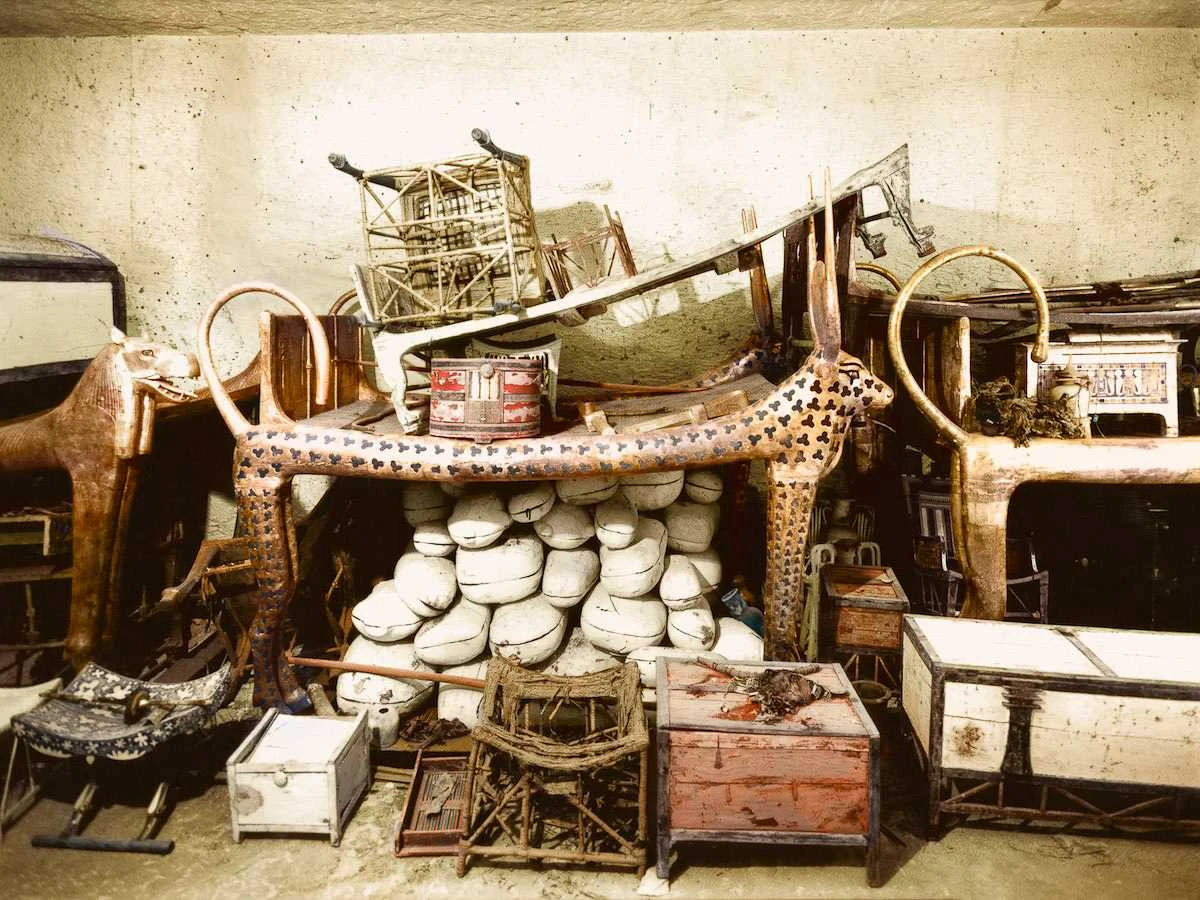
December 1922: A ceremonial couch shaped like the Celestial Cow, surrounded by supplies and grave goods in the tomb's Antechamber.
These historic photographs documenting the discovery of Tutankhamun's tomb were colorized by Dynamichrome for "The Discovery of King Tut" exhibition, which opened in New York on November 21, 2015. 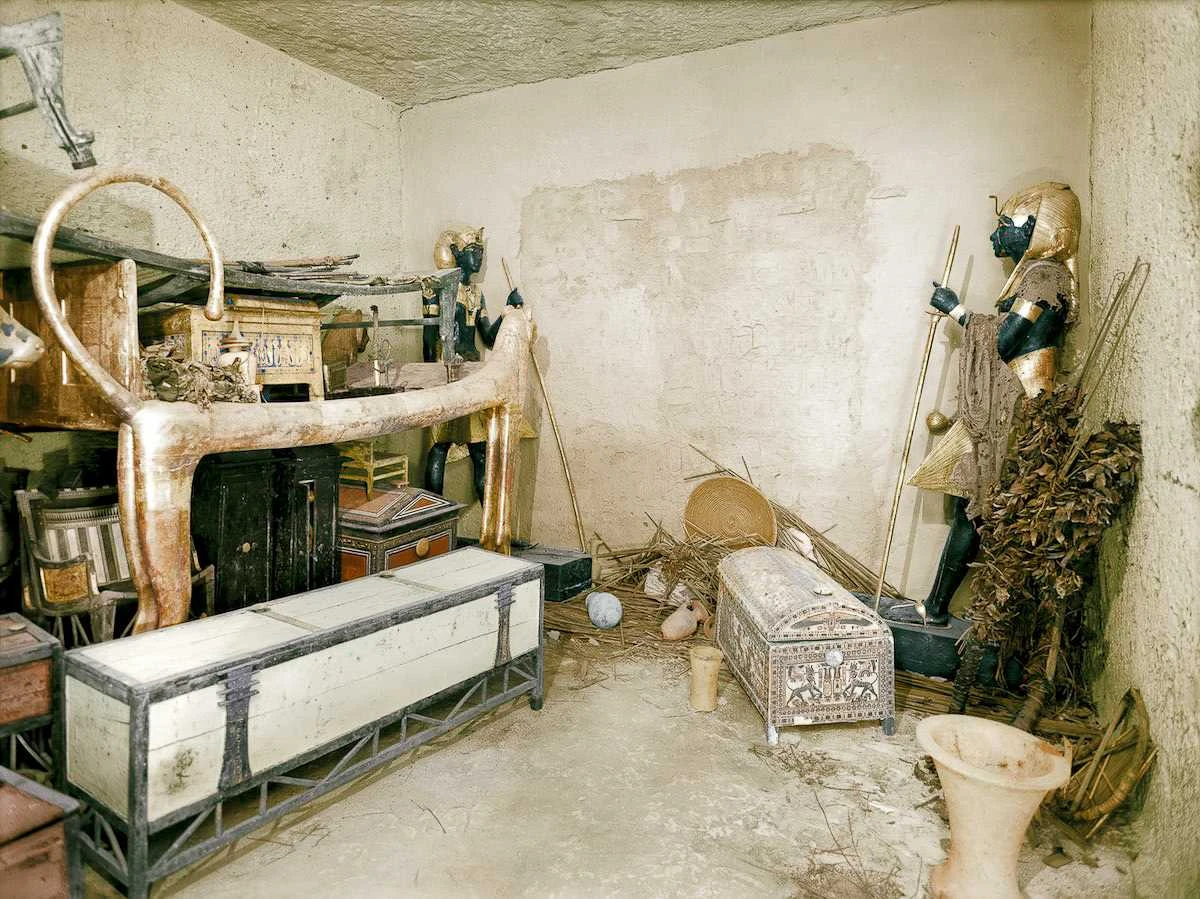
December 1922: A gilded lion couch and other artifacts in the Antechamber. The entrance to the Burial Chamber is guarded by twin black Ka statues. 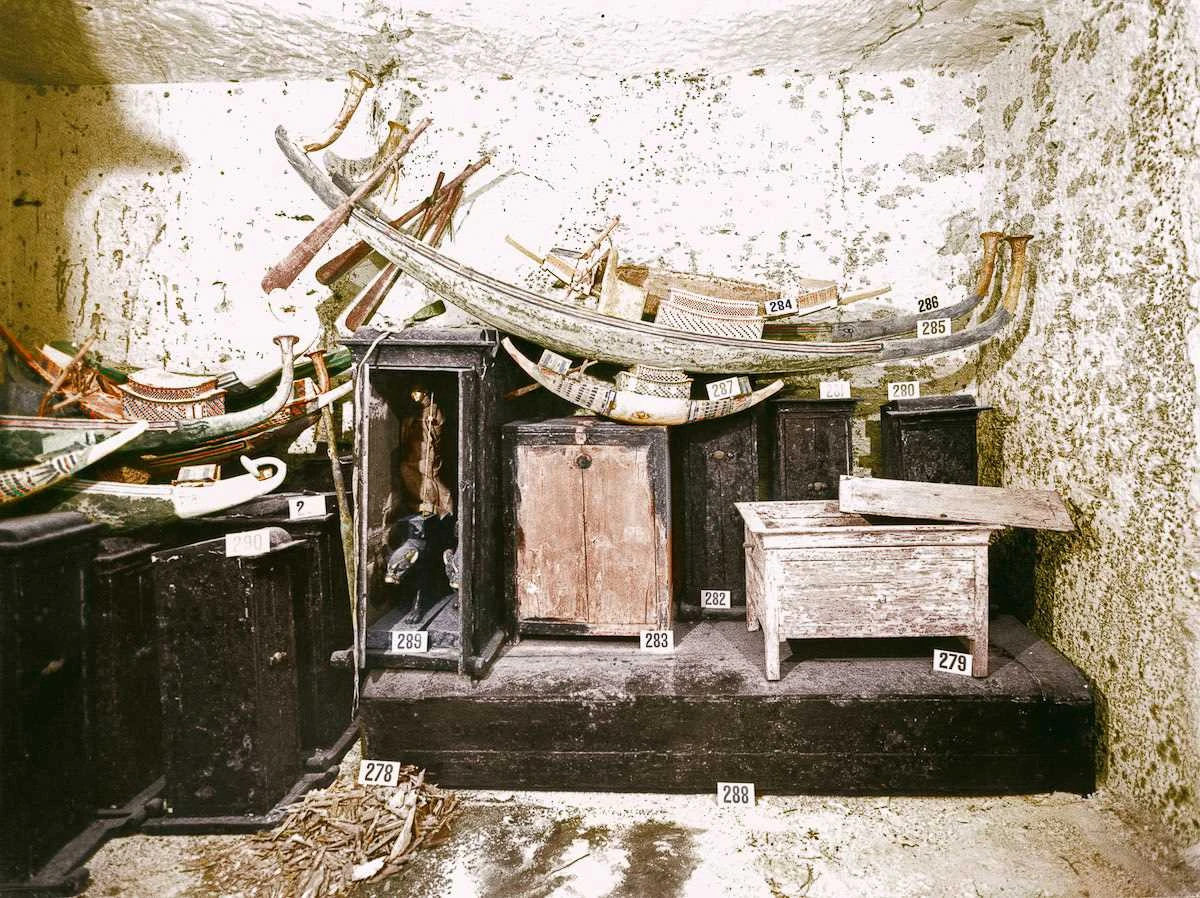
1923: A collection of model boats in the tomb's Treasury. 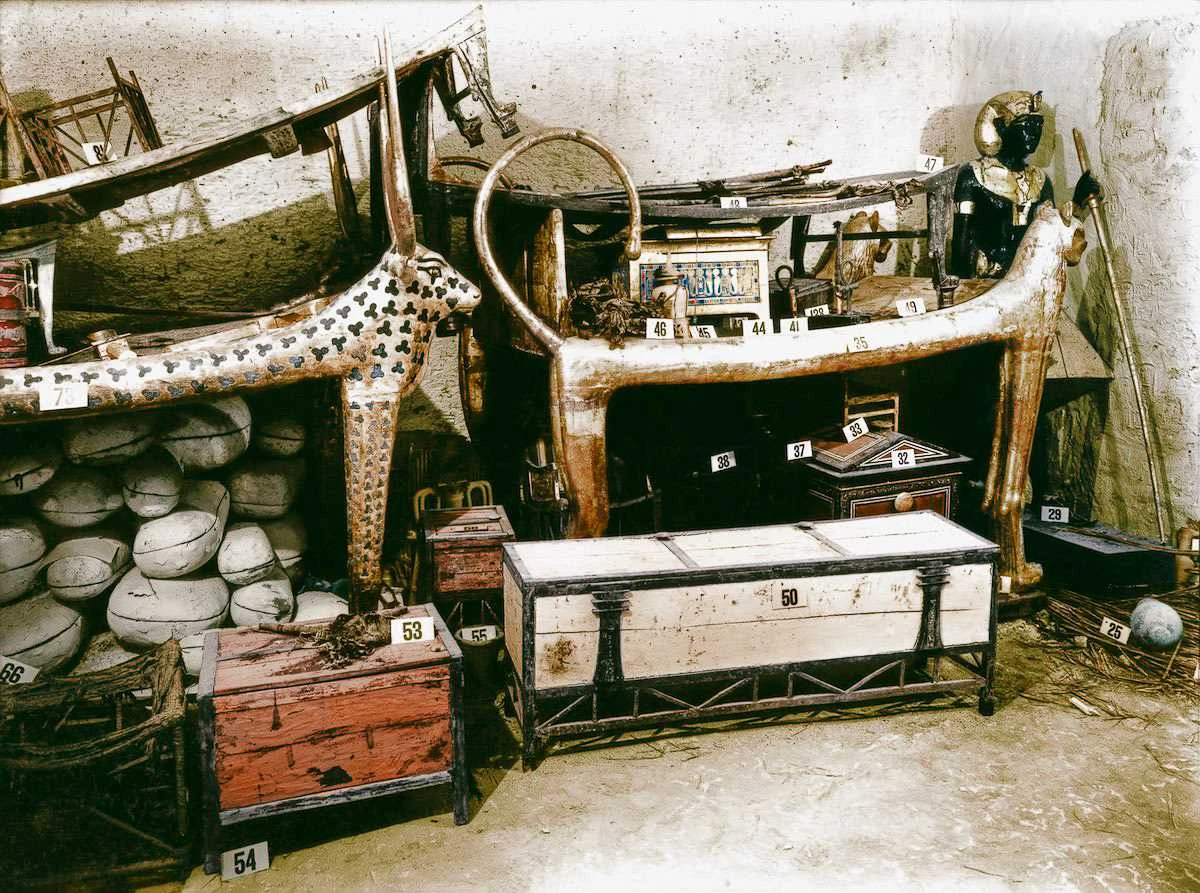
December 1922: The gilded lion couch and an ornate inlaid garment among other objects in the Antechamber. 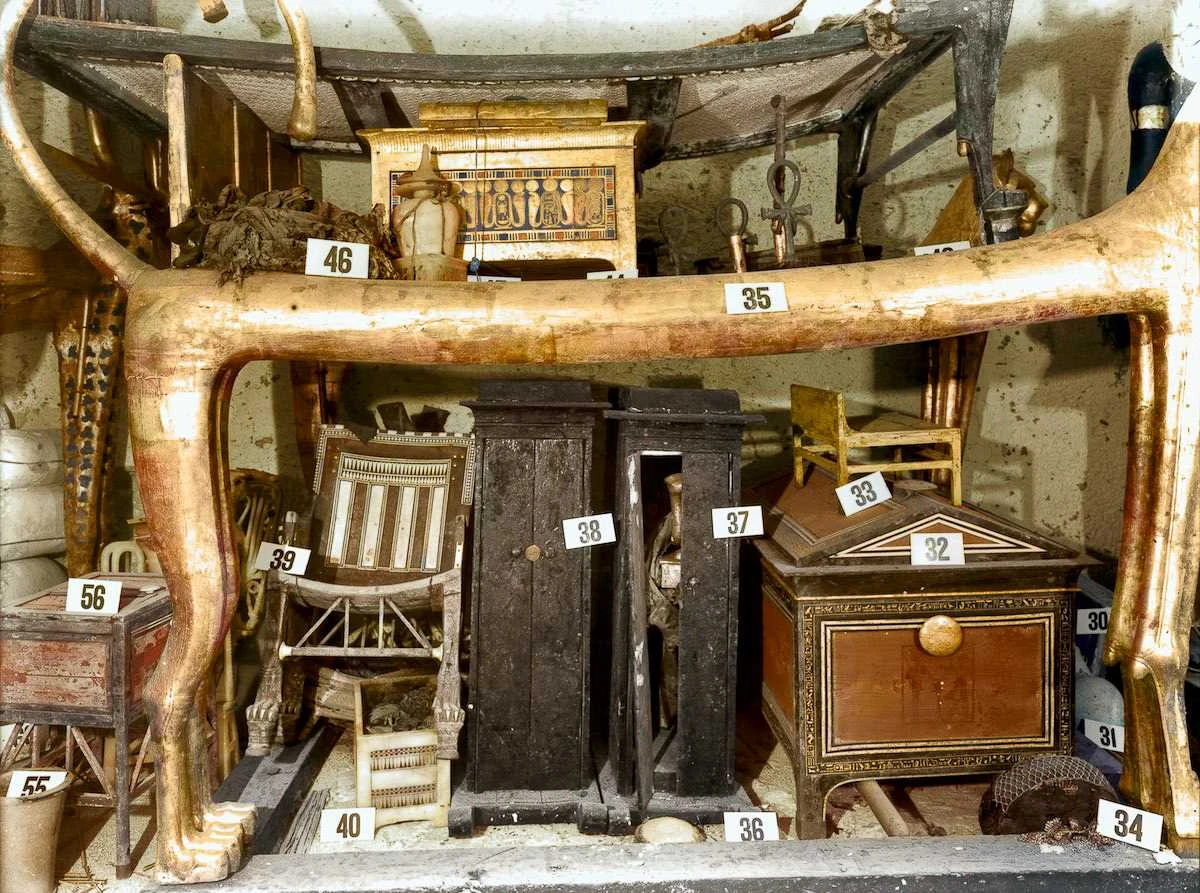
December 1922: Beneath the lion couch in the Antechamber lie several boxes and chests, alongside an ebony and ivory chair used by Tutankhamun in his childhood. 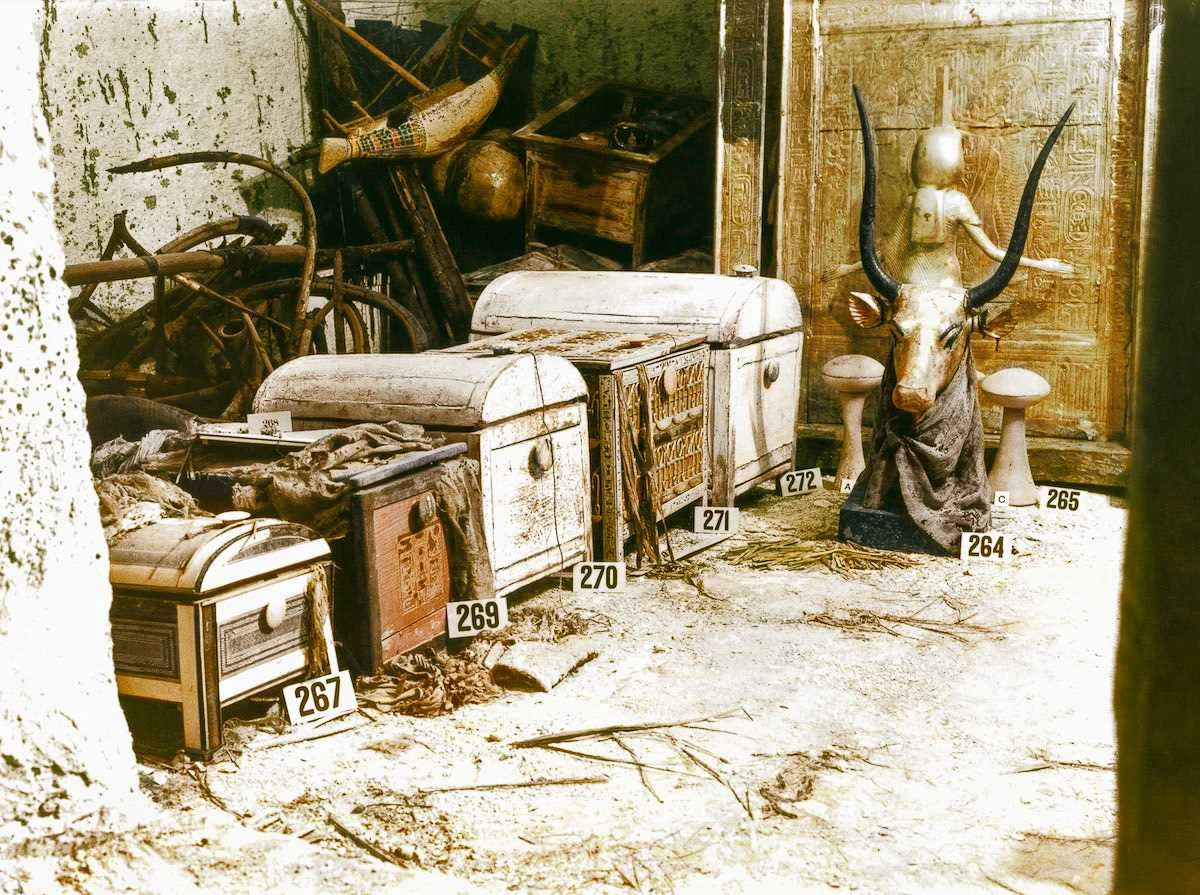
1923: A gilded head of the Celestial Cow Mehet-Weret and storage chests inside the Treasury. 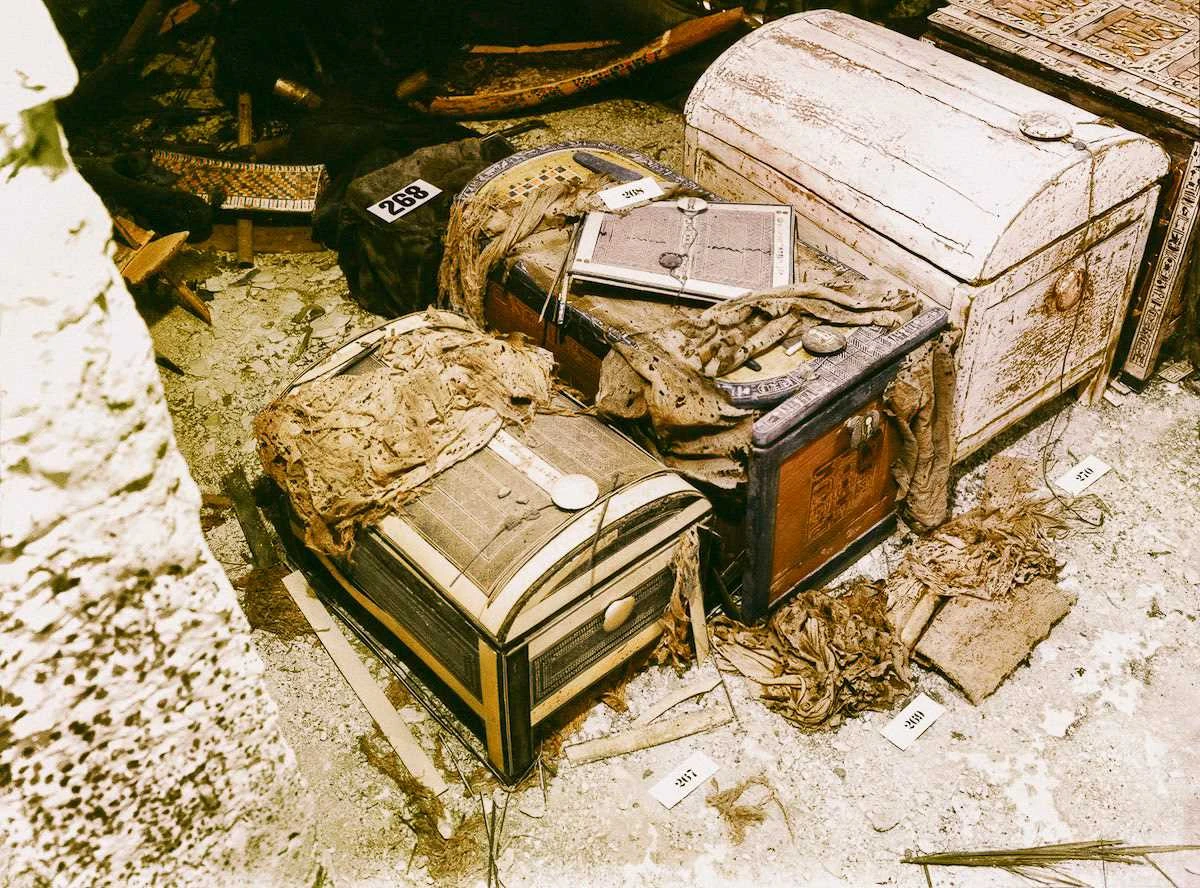
1923: Chests inside the Treasury. 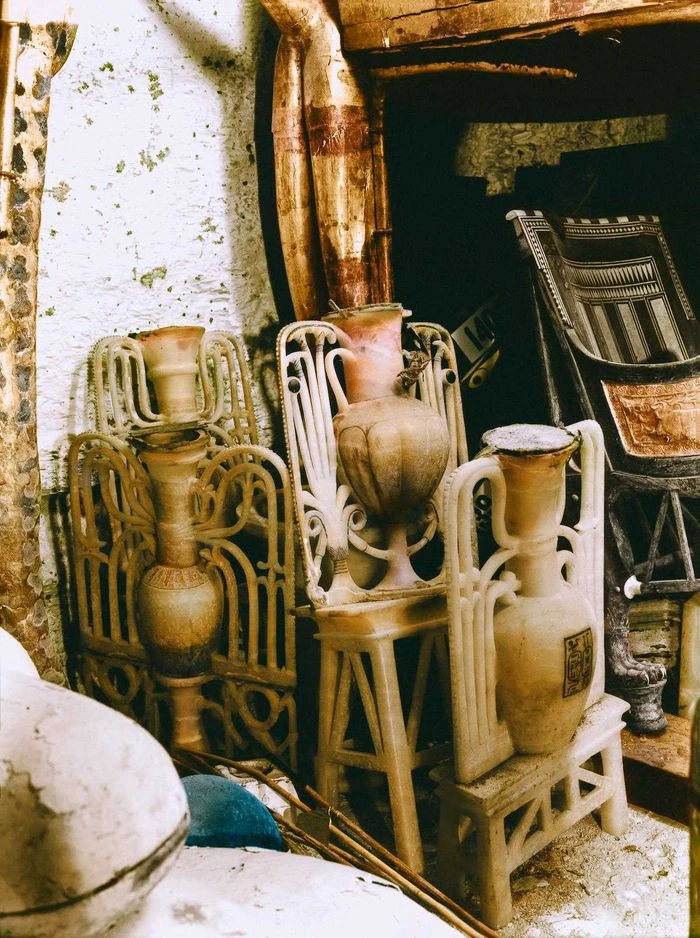
December 1922: Ornate alabaster vases in the Antechamber. 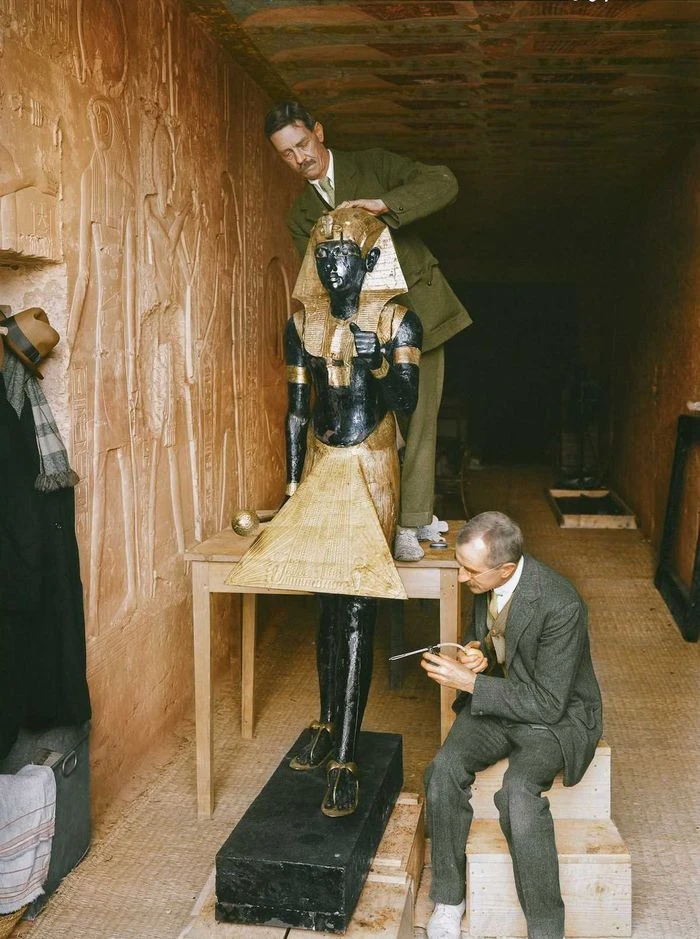
January 1924: Inside a laboratory set up in the tomb of Seti II, conservators Arthur Mace and Alfred Lucas clean one of the Ka statues from the Antechamber. 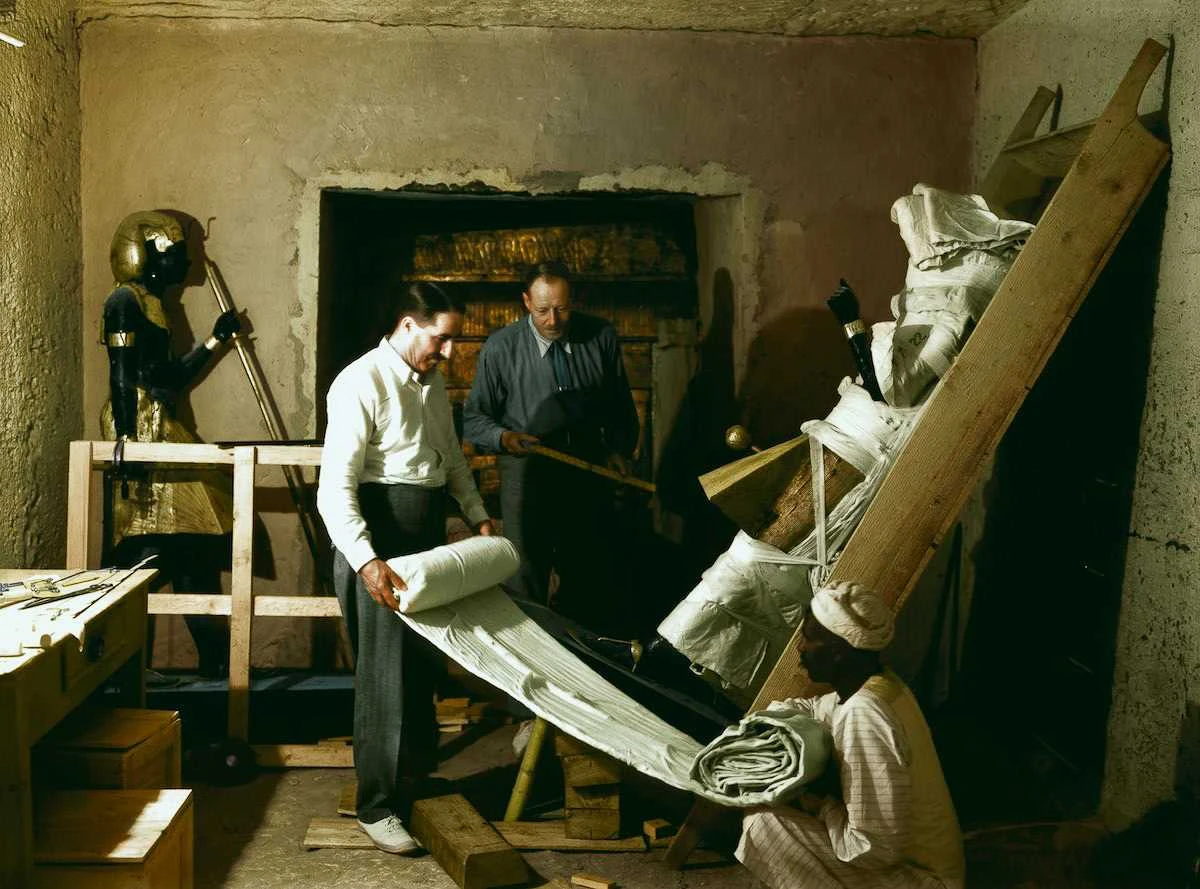
November 29, 1923: Howard Carter, Arthur Callender, and an Egyptian worker wrap one of the Ka statues for transport. 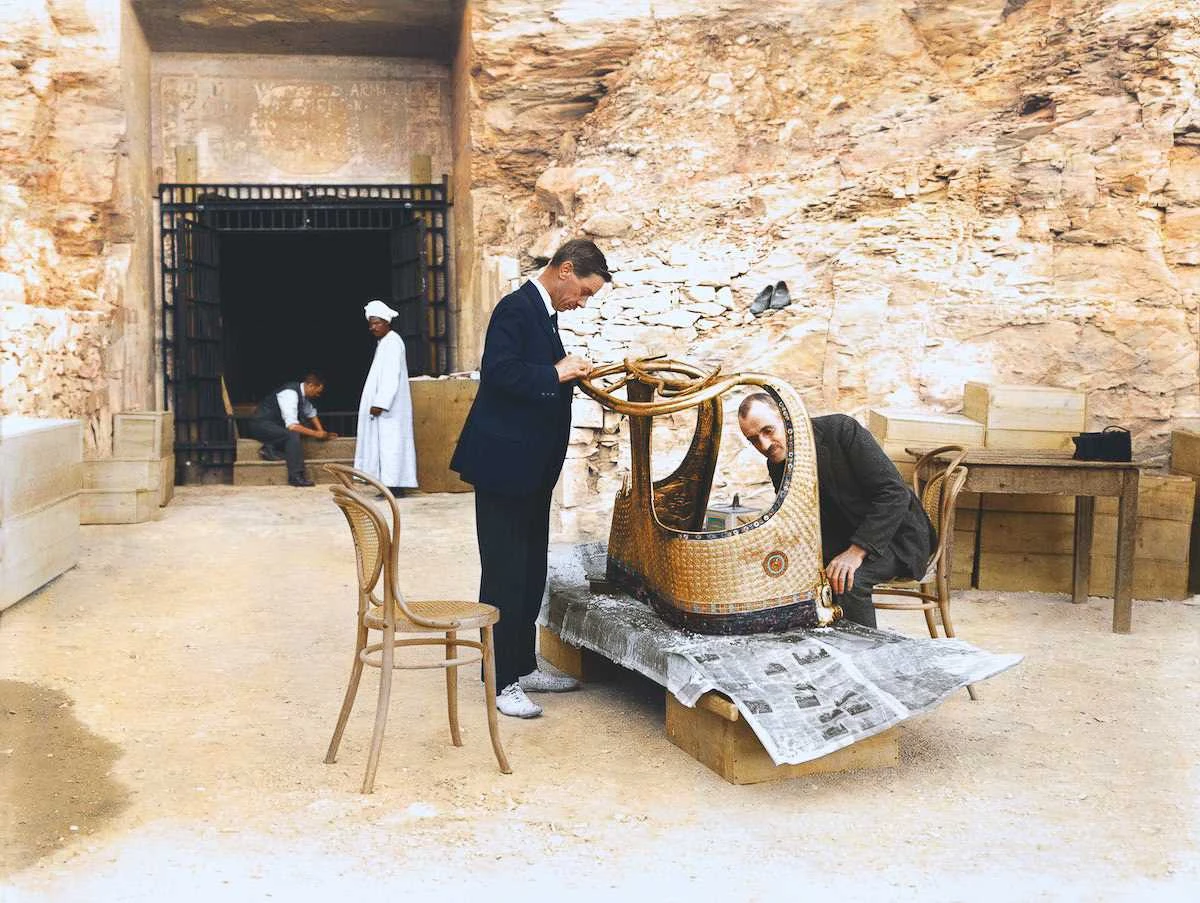
December 1923: Arthur Mace and Alfred Lucas work on a golden chariot outside the laboratory in the tomb of Seti II. 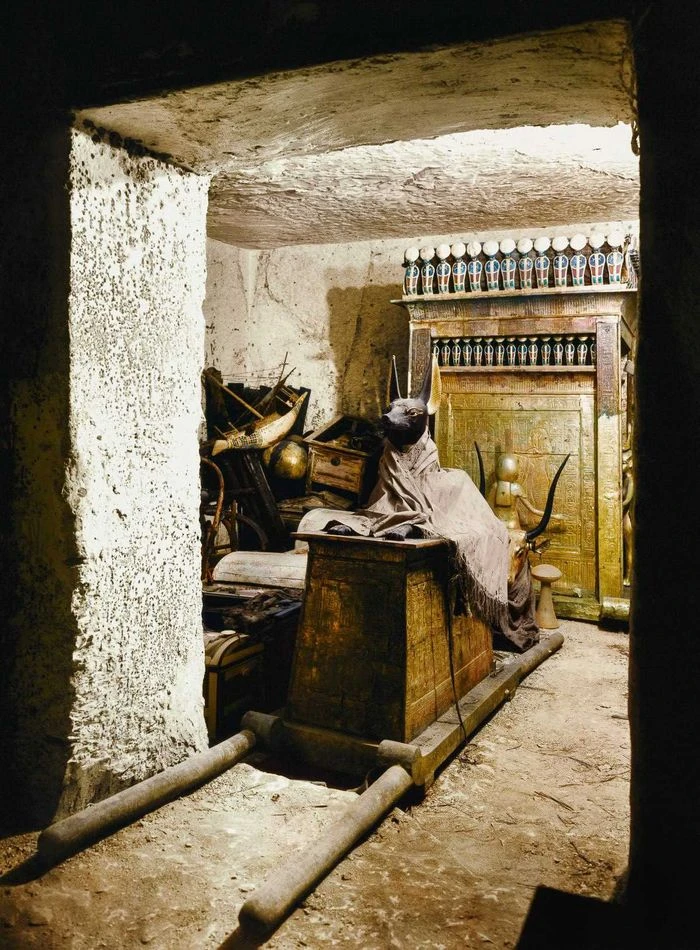
1923: A statue of Anubis on a funerary bier. 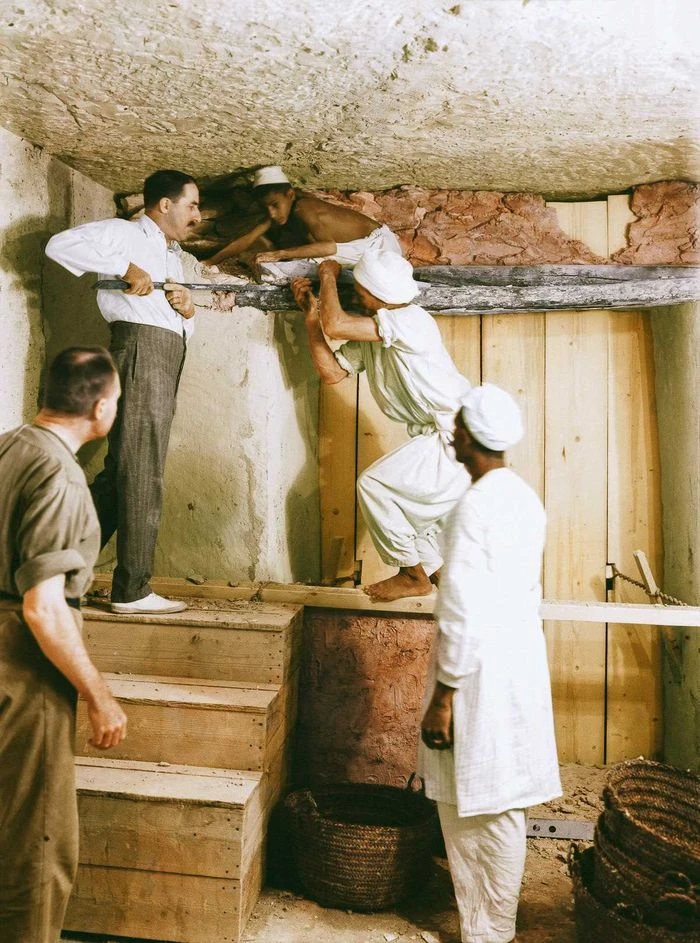
December 2, 1923: Carter, Callender, and two workers remove the partition wall between the Antechamber and the Burial Chamber. 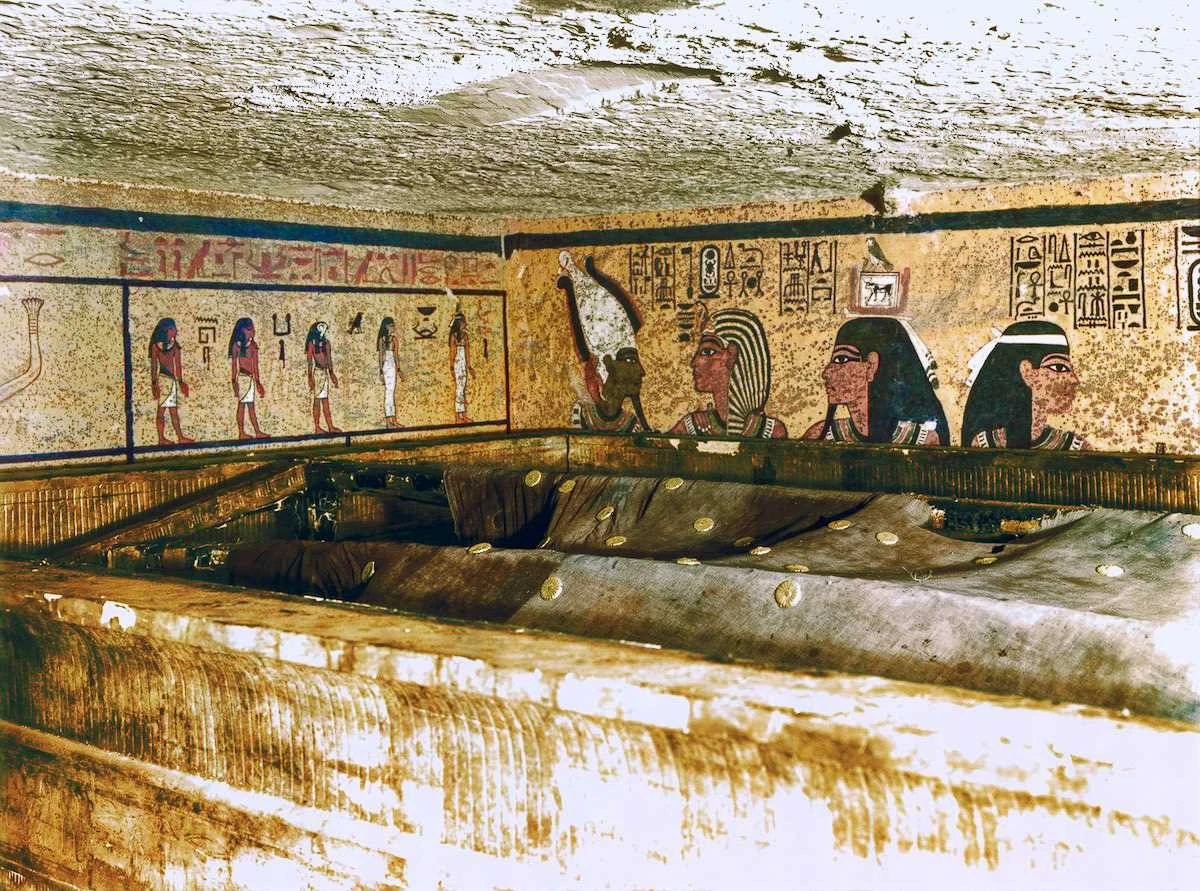
December 1923: Inside the outermost shrine in the Burial Chamber lies a second shrine, covered by a massive linen pall studded with golden rosettes resembling the night sky. 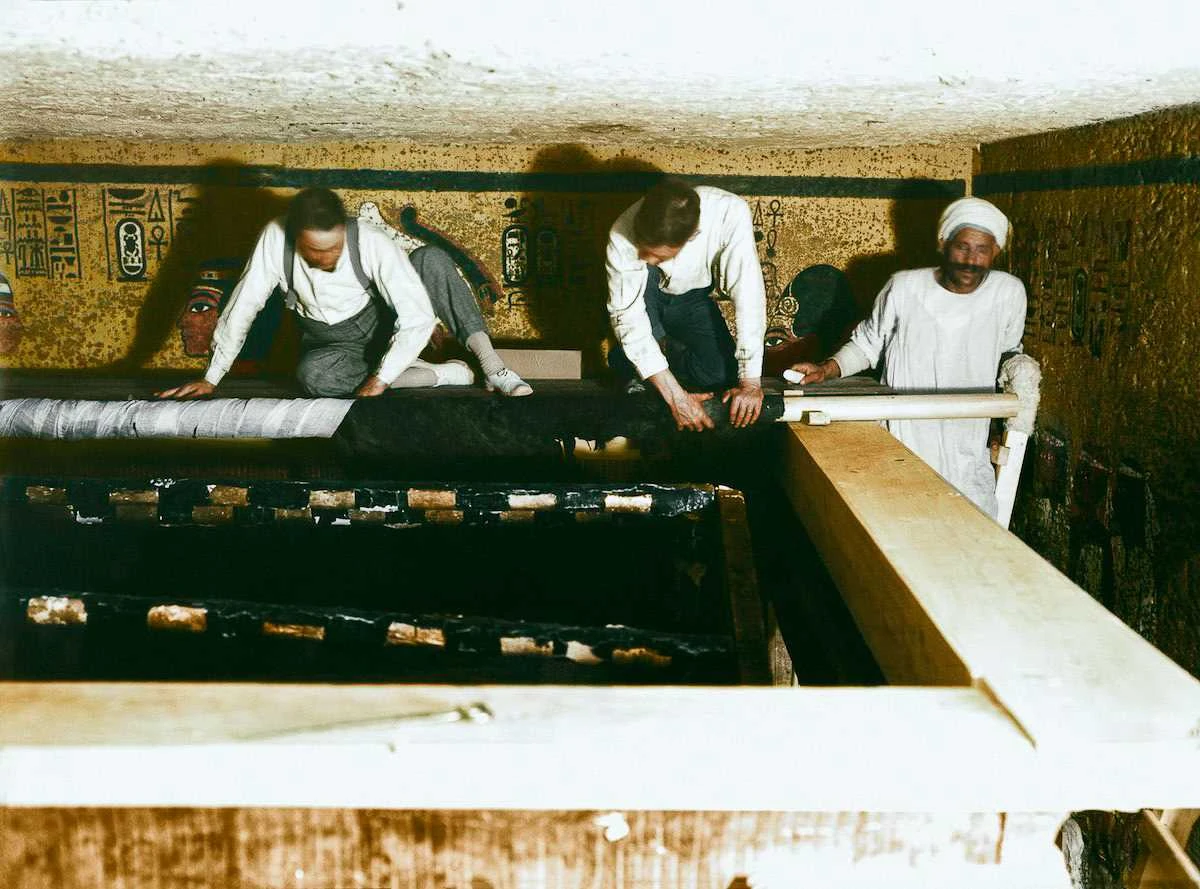
December 30, 1923: Carter, Mace, and an Egyptian worker carefully roll up the linen pall. 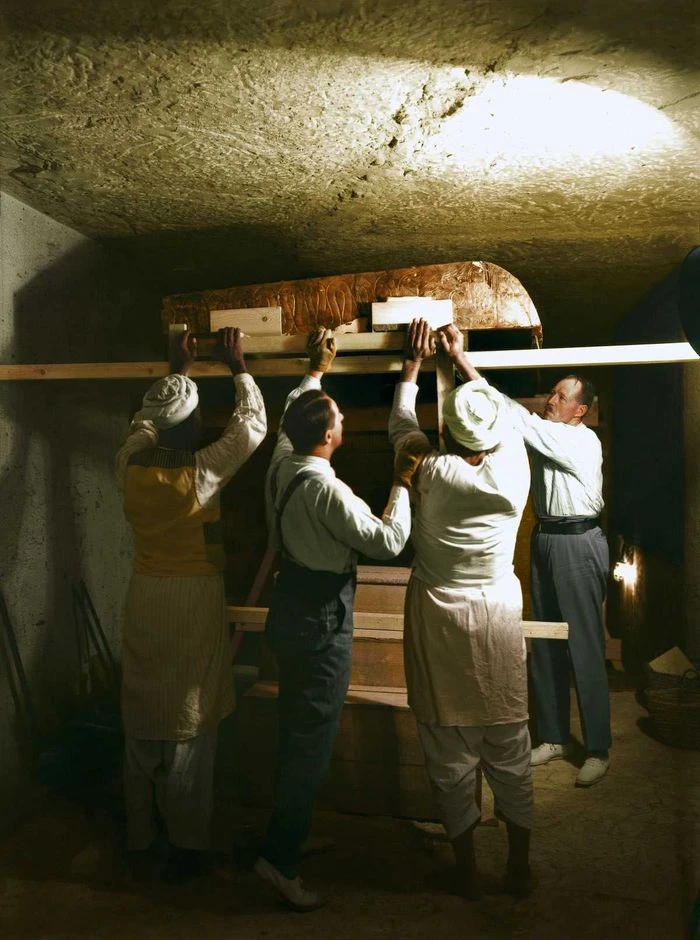
December 1923: Carter, Callender, and two Egyptian workers disassemble one of the golden shrines inside the Burial Chamber. 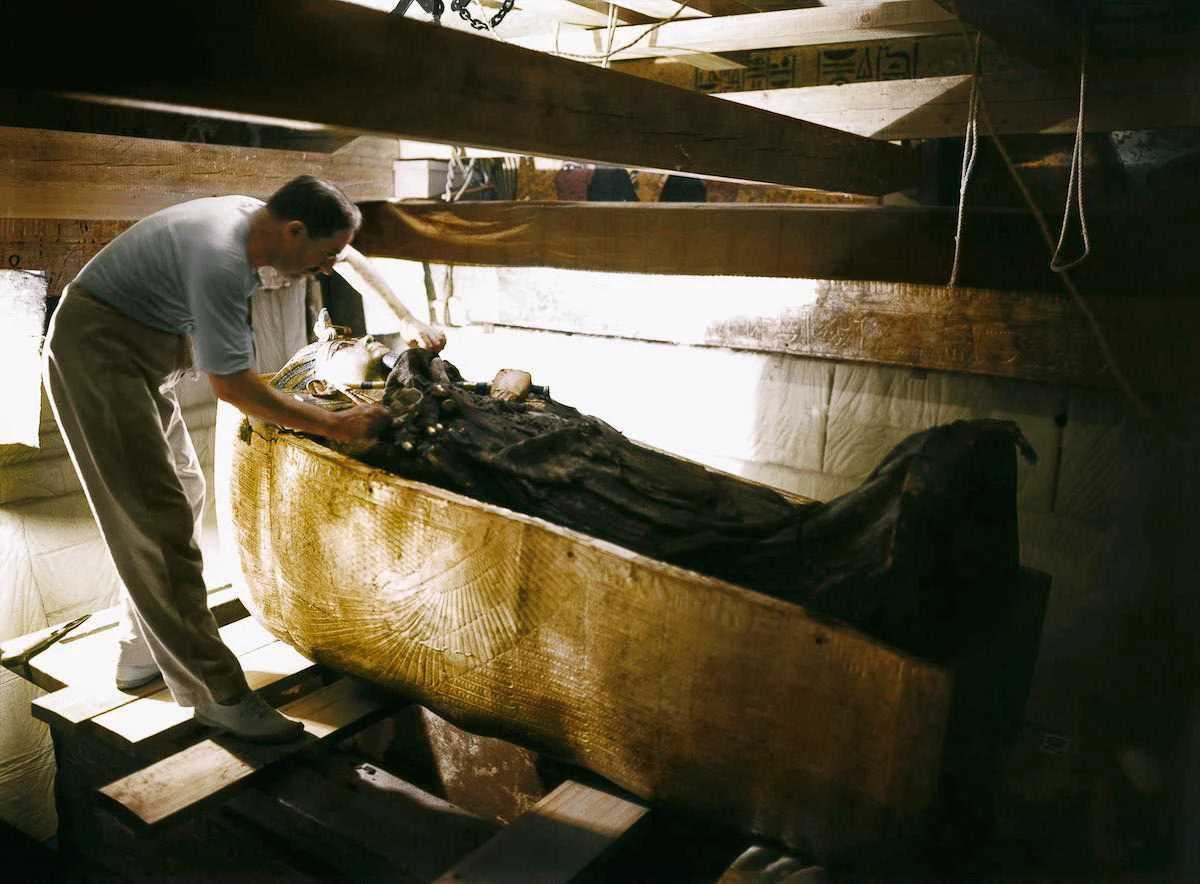
October 1925: Carter examines Tutankhamun's sarcophagus. 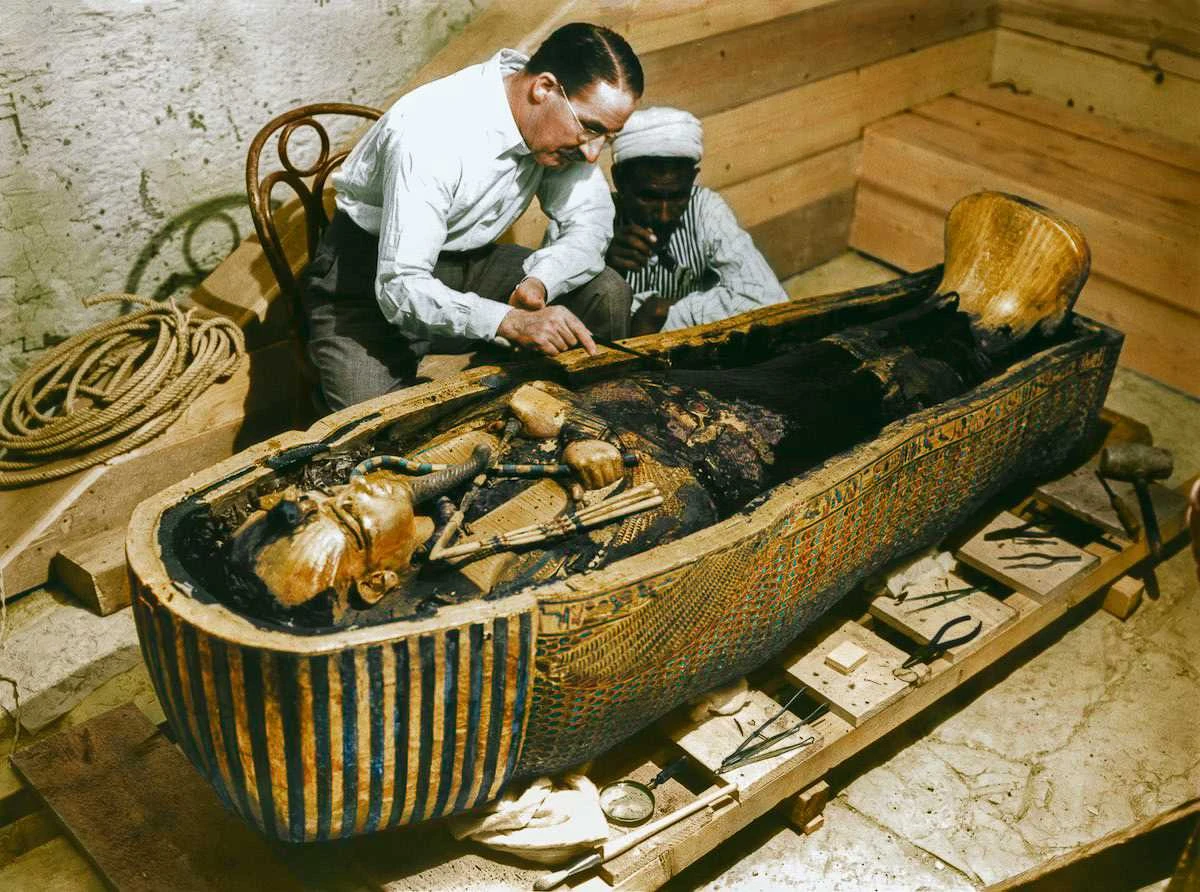
October 1925: Carter and a worker examine the solid gold coffin.