The Mysterious Vapor Cone: What Lies Behind the Prandtl–Glauert Effect? (12 photos)
The sight of a vapor cone enveloping an aircraft as it approaches transonic speeds is truly breathtaking. Known as the Prandtl–Glauert effect, this phenomenon captivates scientists and casual observers alike. But beyond the stunning visual lies a complex piece of physics—one we’ll break down in this article. 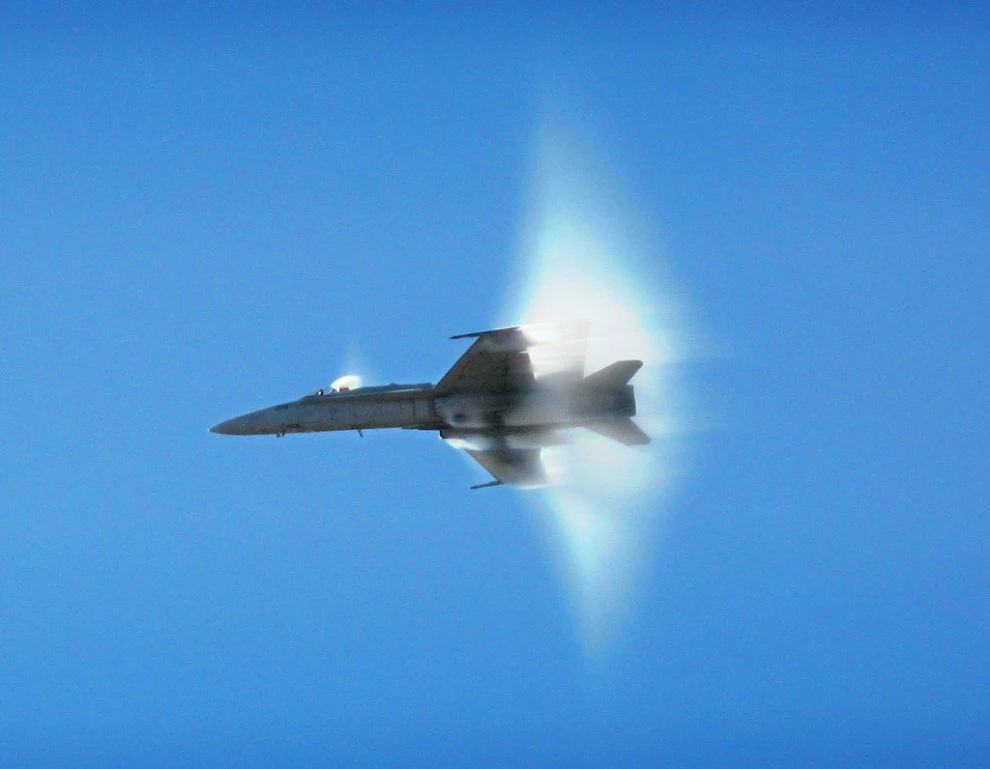
Separating Myth from Reality: When Does the Prandtl–Glauert Effect Actually Occur?
Contrary to popular belief, the Prandtl–Glauert effect doesn't actually happen the exact moment a plane breaks the sound barrier. What's more, it has nothing to do with the famous sonic boom. High-bypass jet engines can produce this effect even at takeoff speeds due to unique aerodynamic conditions rather than supersonic flight. It is crucial to understand that this phenomenon can appear at transonic speeds, which don't necessarily mean the aircraft has gone supersonic. 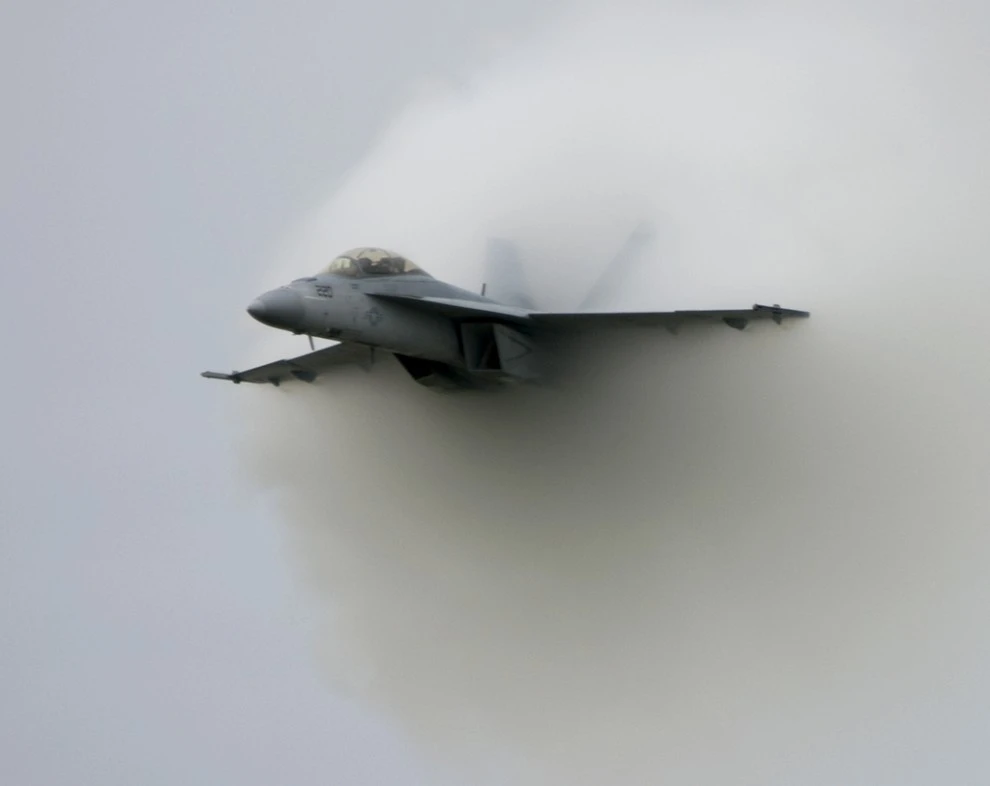
The Physics Behind the Prandtl–Glauert Effect
The effect stems from the aerodynamic forces surrounding an aircraft traveling at high speeds. As the plane pushes forward, it builds up high pressure in front of it and creates a low-pressure zone behind it. As the aircraft passes, surrounding air rushes into this low-pressure area, triggering the formation of the distinctive vapor cone. Air mass inertia plays a crucial role here, driving air from nearby regions to flood into the low-pressure pocket. 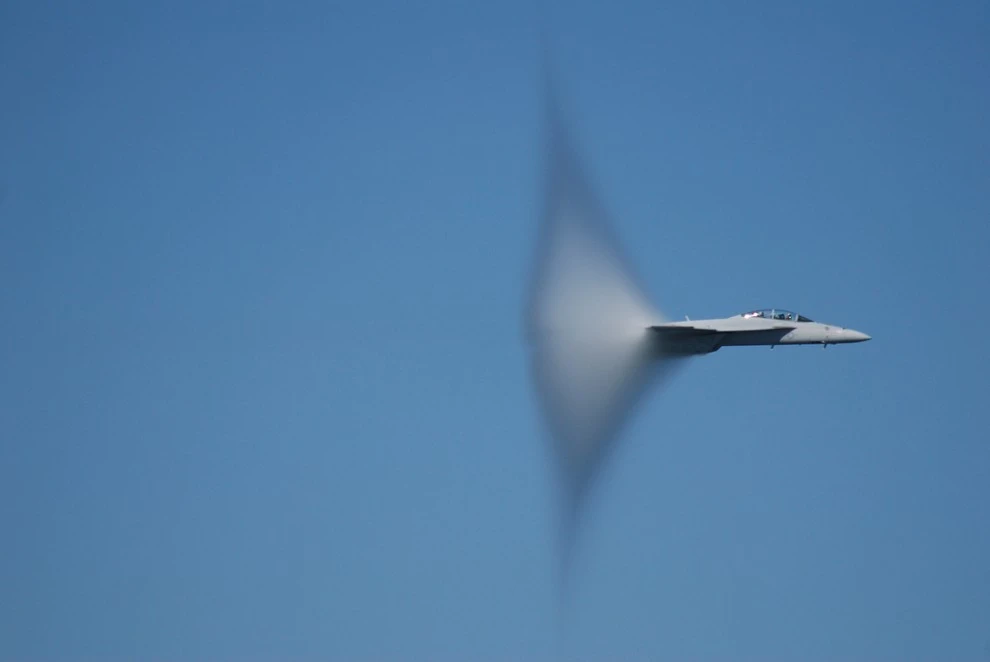
Imagine an object traveling at transonic speed. Transonic speed is distinct from Mach 1—the speed of sound. While the sound barrier is broken at around 1,235 km/h, transonic speeds span a range slightly below and above it, roughly between 965 and 1,448 km/h. As a result, this vapor cloud can form even when an aircraft is flying just below or right at the speed of sound. 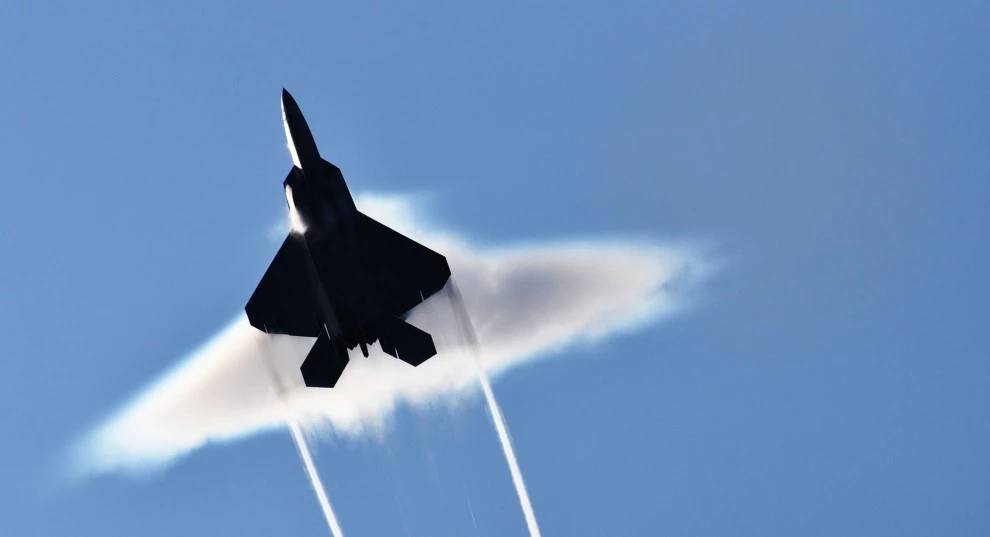
Yet sound remains central to making the vapor cone visible. The conical shape is dictated by the sound source—in this case, the plane—moving relative to the sound waves it generates. Ultimately, the Prandtl–Glauert effect is a direct manifestation of the wave nature of sound. 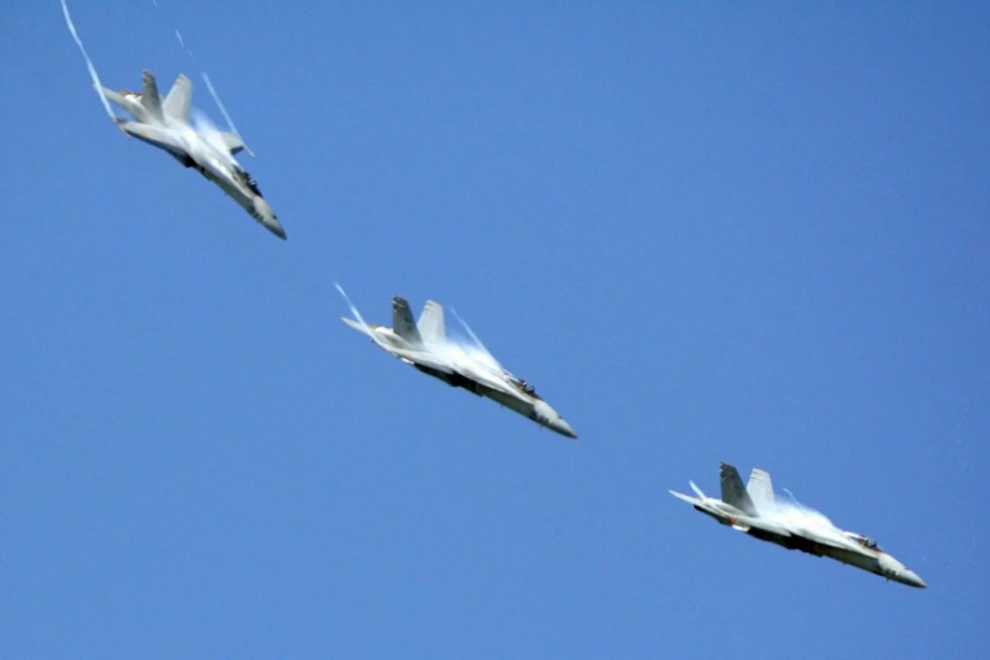
Think of the plane as the source and sound as wave crests radiating outward. These crests form an expanding series of overlapping spheres. As these pressure waves overlap, they outline a cone shape, with its apex pointing directly at the source of the sound—which, for a moment, remains invisible. 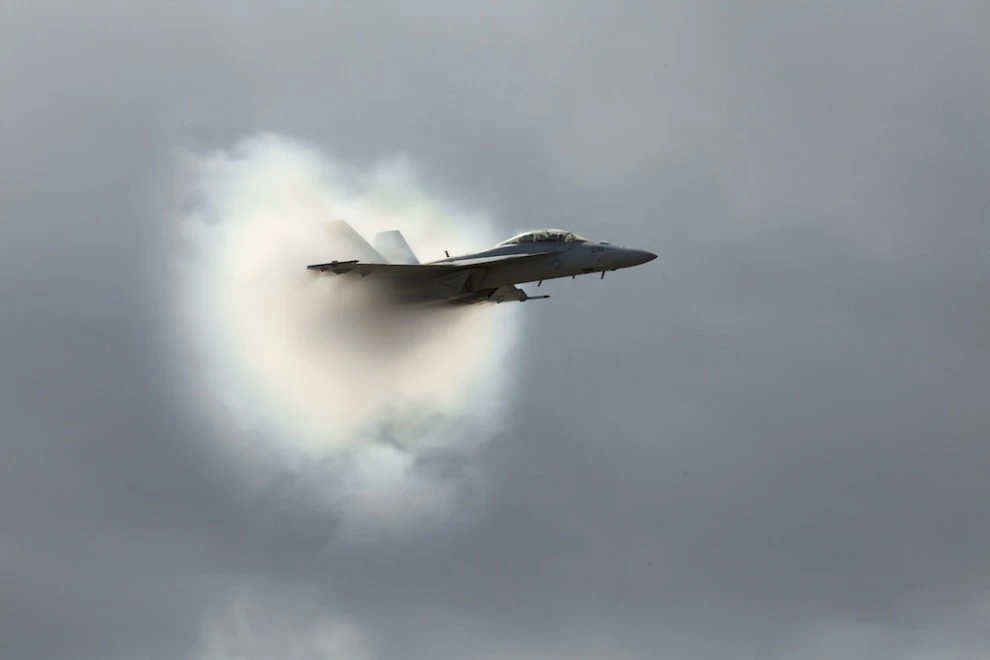
Humidity and Visibility
For the Prandtl–Glauert effect to become visible to the naked eye, one crucial ingredient is required: high atmospheric humidity. When humidity levels are high enough, the drop in pressure causes moisture in the surrounding air to condense into a visible cloud. This phenomenon is most frequently spotted when jets fly over the ocean in warm weather, where heat and abundant moisture create the perfect recipe for a vapor cone. 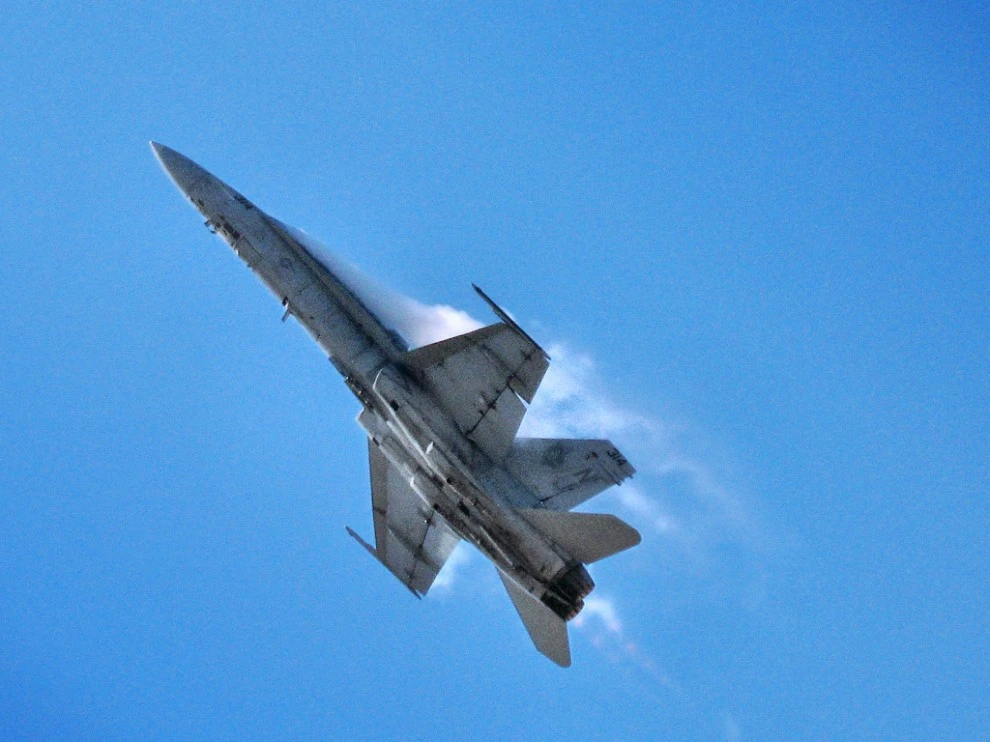
The Wave Dynamics of the Phenomenon
The conical shape we observe is rooted in wave mechanics. Picture an object moving near the speed of sound. The acoustic waves radiating from it bunch up and overlap, forging a cone pattern. This cone essentially visualizes the overlapping pressure waves created as the object travels through the atmosphere. 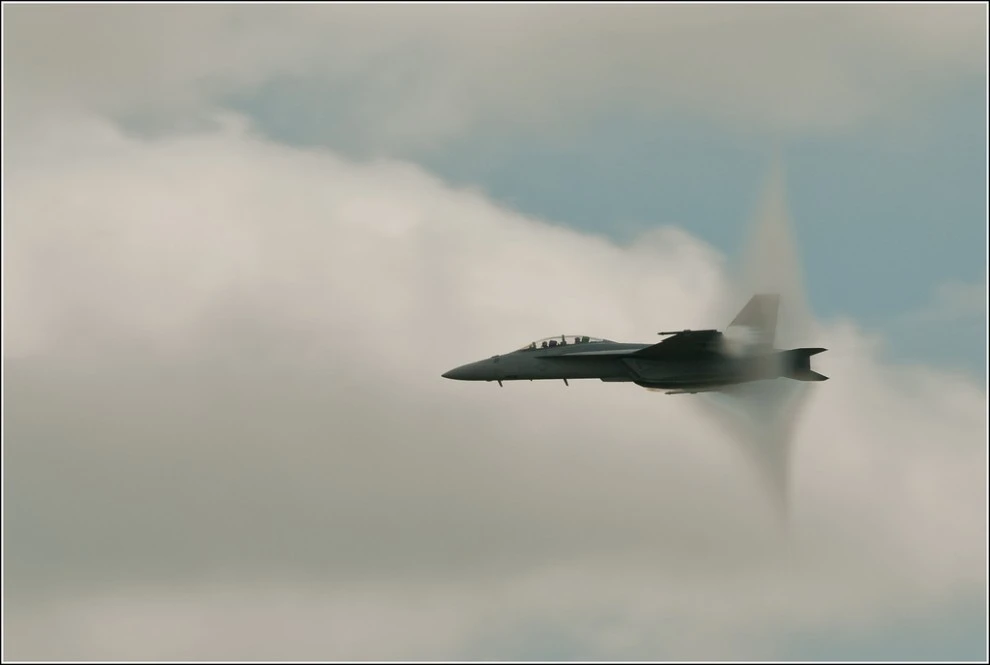
N-Waves and Air Pressure
As an aircraft travels at transonic speeds, the surrounding air pressure forms what aerodynamicists call an N-wave. If we could slow down the pressure pulse passing over us, we would see a leading compression spike that forms the initial upward stroke of the letter "N". 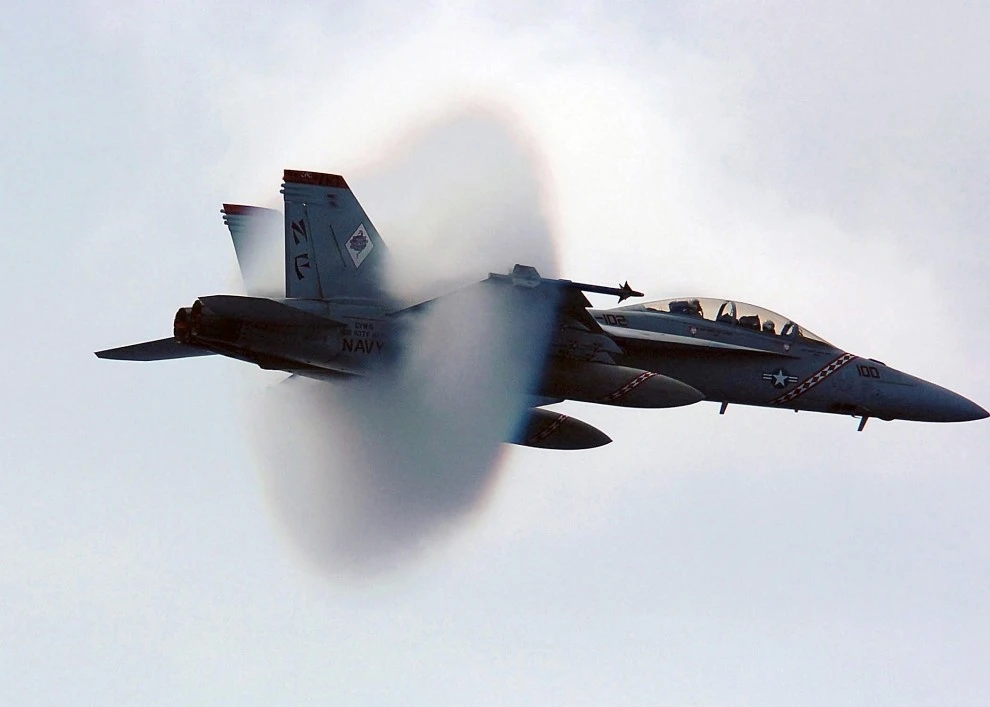
The diagonal segment occurs as pressure drops sharply into an expansion trough, followed by a final return to ambient pressure that completes the "N" shape. This cycle of rapid pressure changes vividly illustrates how atmospheric pressure shapes and reveals the Prandtl–Glauert effect. 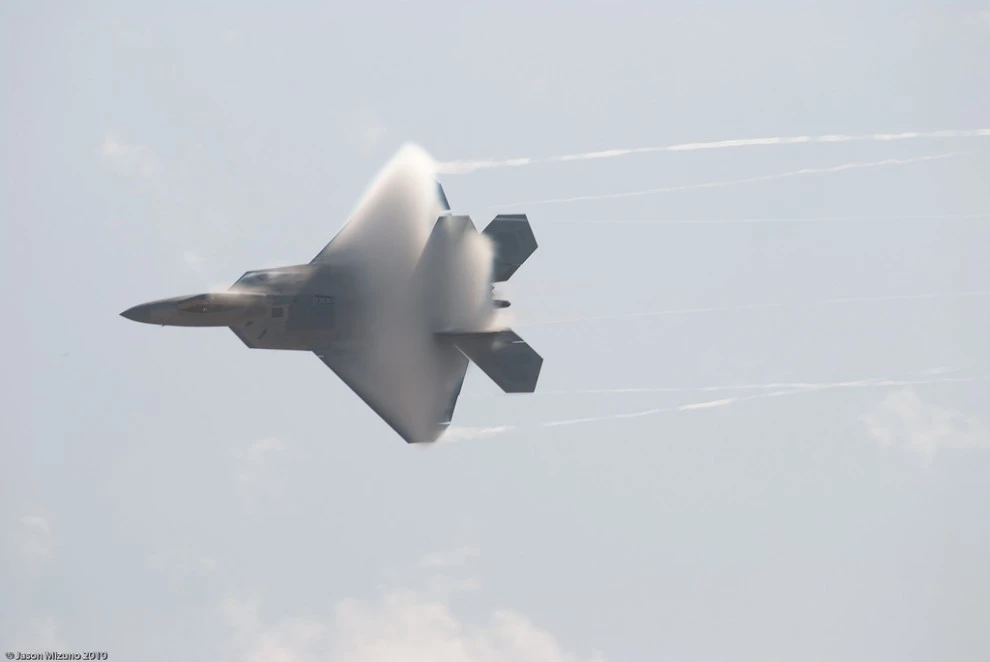
Who Were Prandtl and Glauert?
The phenomenon is named after two pioneering scientists who made groundbreaking contributions to aerodynamics. Ludwig Prandtl (1875–1953) was a German physicist who developed systematic mathematical methods for fluid dynamics. Hermann Glauert (1892–1934) was a British aerodynamicist whose work was equally critical to understanding compressible flow. Together, their theoretical breakthroughs paved the way for what we now know as the Prandtl–Glauert effect. 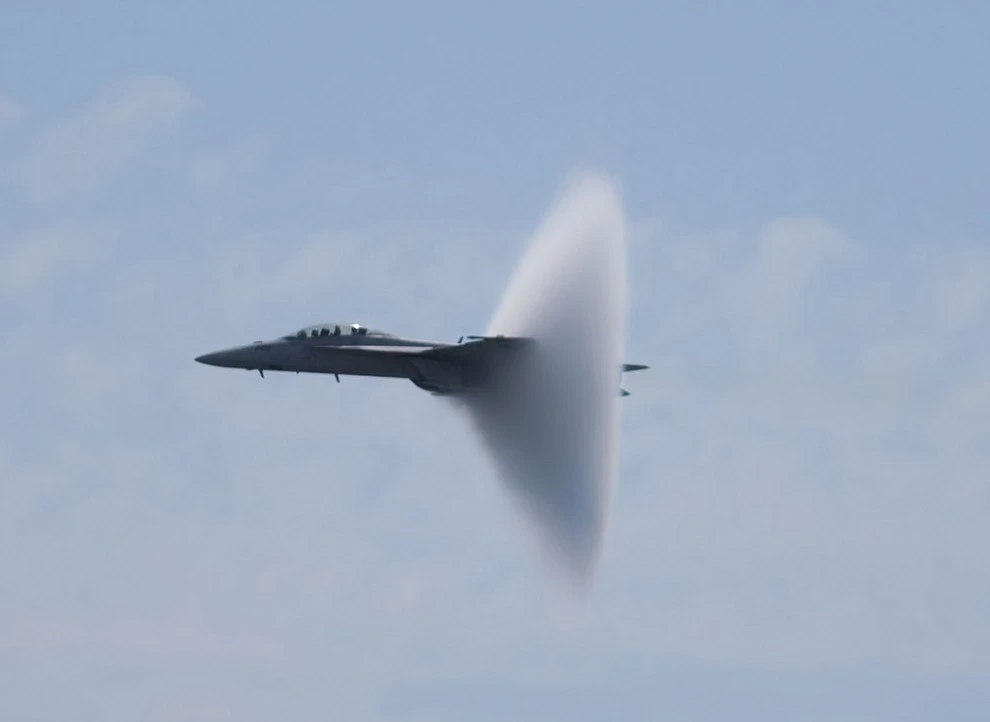
How to See the Prandtl–Glauert Effect in Real Life
Want to catch a glimpse of the Prandtl–Glauert effect yourself? All you need are two things: a bullwhip and a humid day. If you manage to crack the whip with precision—Indiana Jones style—the tip can break the sound barrier, producing a tiny, visible vapor cloud. Just remember to conduct experiments like this outdoors and with proper care! 
From Physics Theory to Everyday Wonder
The Prandtl–Glauert effect is more than just a captivating spectacle; it remains an important concept for understanding high-speed aerodynamics. By studying these shockwave and condensation patterns, engineers design safer, more efficient aircraft. Above all, this stunning phenomenon continues to inspire scientists and aviation enthusiasts alike, proving that physics can be as breathtaking as it is complex.