The Antarctic Ozone Hole Was Massive This Year, But Extent and Depth Tell Different Stories (1 photo)
The 2026 Antarctic ozone hole ranked as the seventh-largest by average area in 48 years of satellite tracking. However, ozone concentrations inside it didn't plunge to record lows, proving that a massive footprint doesn't necessarily mean the deepest depletion. 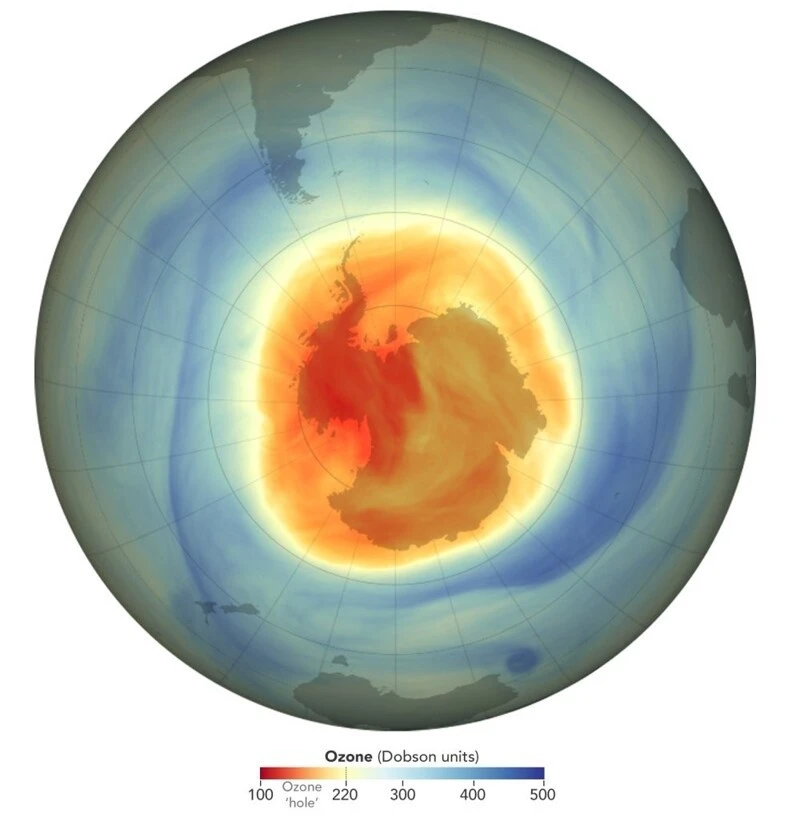
Ozone levels over Antarctica on September 18, 2026. NASA Earth Observatory/Lauren Dauphin, using NASA Ozone Watch data.
Calling it a "hole" is somewhat of a misnomer, as ozone never vanishes completely. The NASA map highlights the region where ozone levels drop below 220 Dobson units. Red and yellow patches mark the most severely depleted areas, while blue regions indicate higher ozone concentrations.
This map captures September 18, the day the hole reached its peak area for 2026. Its seventh-place ranking, however, is based on the average extent measured between September 7 and October 13. A strong Antarctic polar vortex maintained frigid conditions this season, creating ideal circumstances for ozone depletion.