The Atacama Desert Is Blooming So Extensively It Can Be Seen From Space (6 Photos)
Northern Chile’s desert has put on a colorful display this spring. Following a wet winter, long-dormant seeds in the soil awoke. By October, vast stretches of the Atacama turned a vivid purple—a transformation clearly visible even in Landsat satellite imagery. 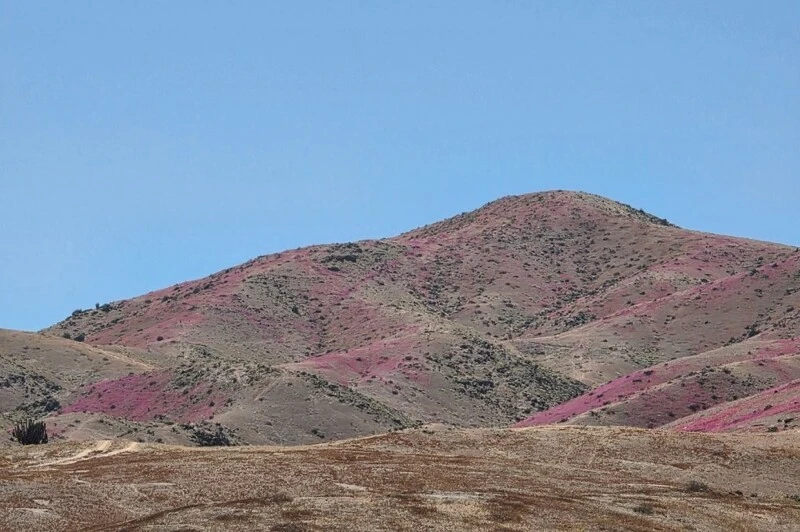
Cistanthe in bloom. Ground photo taken October 24, 2026.
NASA compared satellite images taken on September 14 and October 24, 2026. The first location lies about 30 kilometers southwest of Copiapó. Researchers attribute the purple patches to plants of the genus Cistanthe, though identifying the exact species from a single satellite frame is not possible. 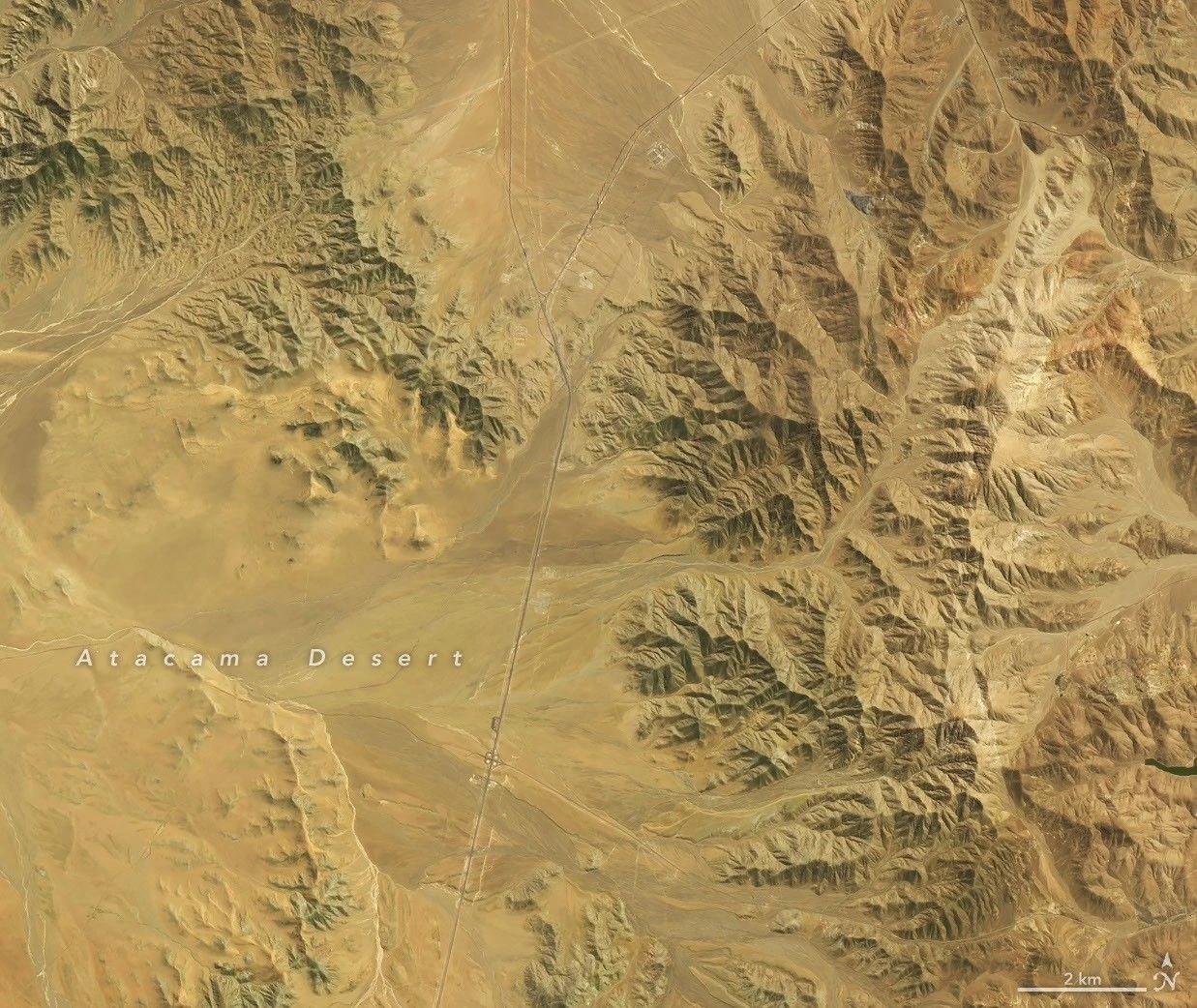
The Copiapó region on September 14, 2026. Landsat 8. 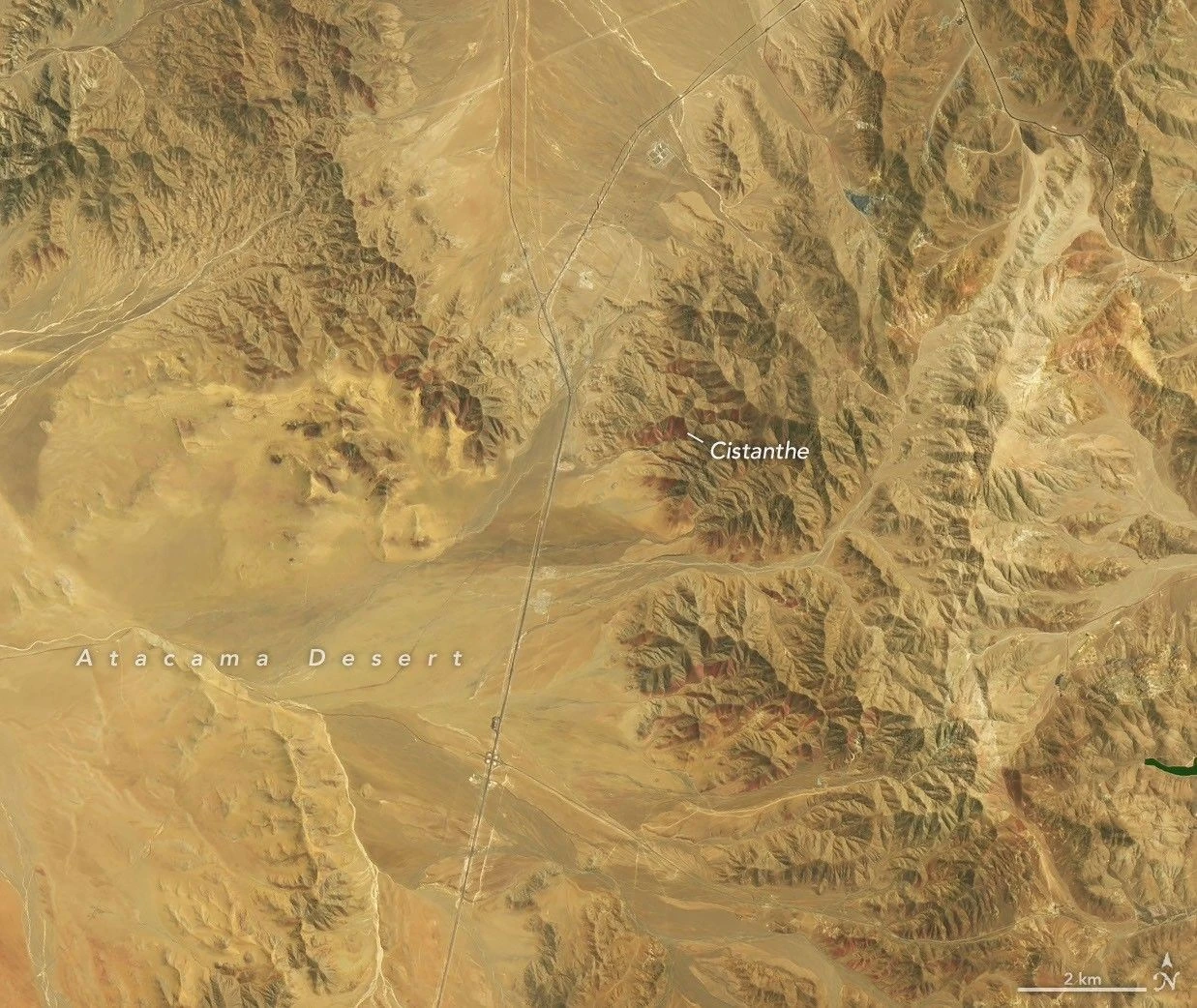
The same location on October 24, 2026. Landsat 9.
Slightly further south, September presented a different scene: white flowers of the genus Nolana covered the hillsides. By October, purple had taken over in many of those same spots. Ground photos help scientists verify what the satellite captures as colorful patches. 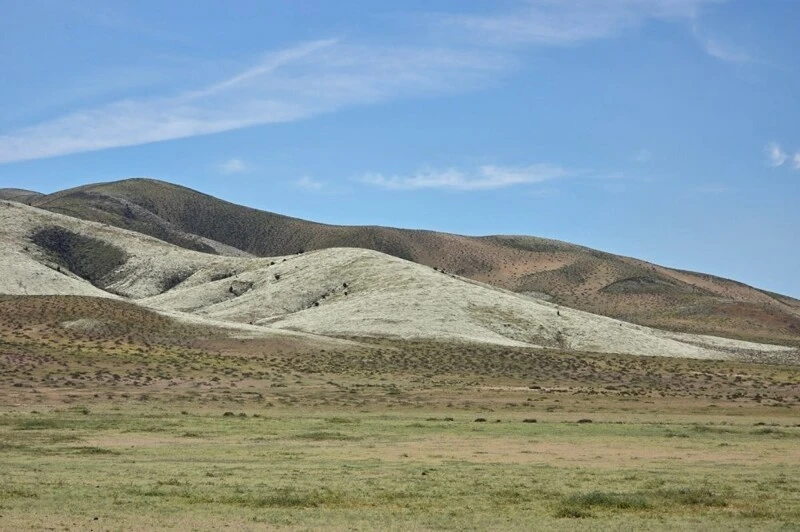
White Nolana carpeting a hillside. Ground photo taken September 24, 2026. 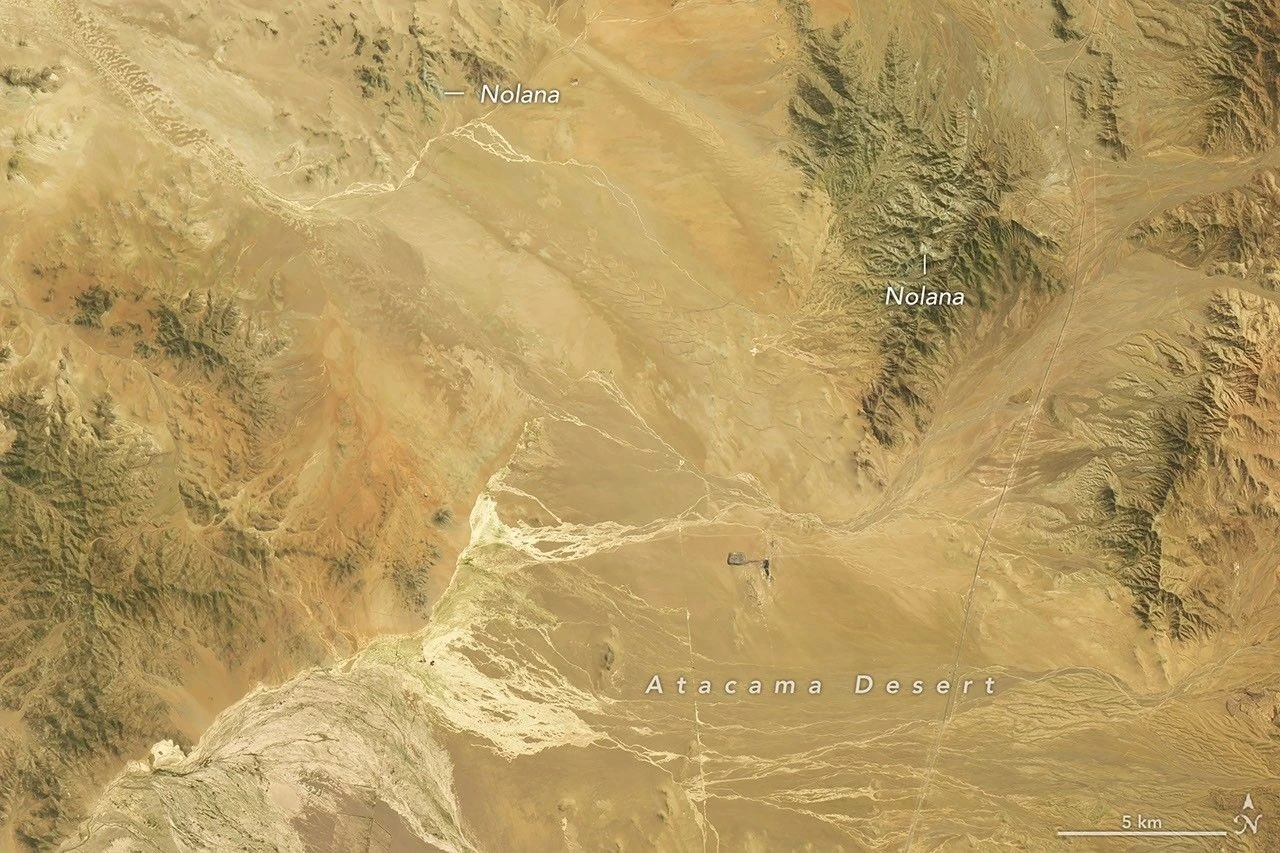
A second location, about 50 km southwest of Copiapó: September 14. 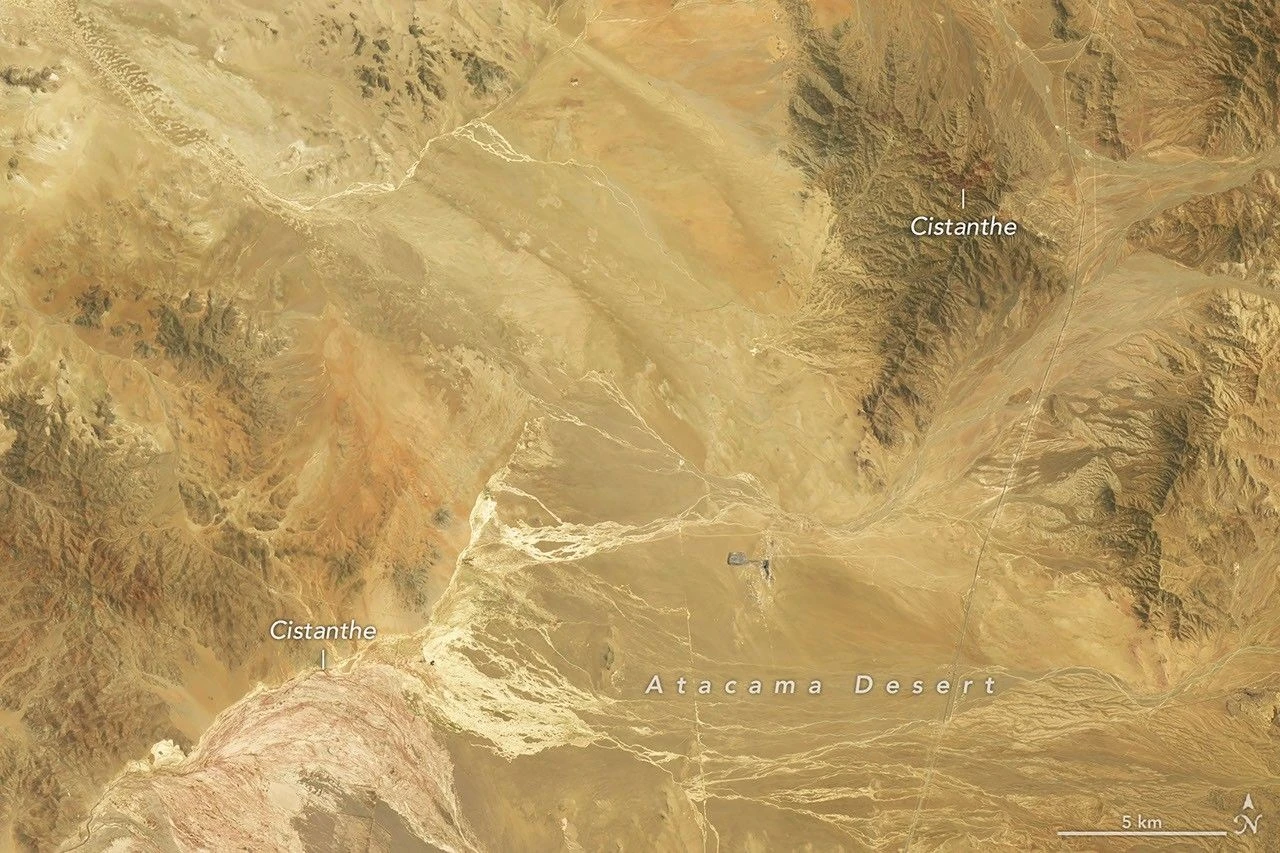
The same second location on October 24: white patches give way to purple.
Researchers attribute the wet winter to a stronger El Niño event and shifting storm tracks. While a blooming desert is a known phenomenon, scientists believe the current bloom could set a record for total area, brightness, and duration during the satellite observation era. However, this data cannot be used to compare it with every bloom throughout Earth's history.
Satellite imagery: NASA Earth Observatory/ Michala Garrison, using USGS Landsat data. Ground photos: Matías Pérez-Evens and Roberto O. Chávez, LabGRS, Institute of Geography, Pontifical Catholic University of Valparaíso.