Euclid Telescope Spots Quasar Dating Back to the Universe's First 630 Million Years (1 Photo)
The faint red dot in this image is quasar J1504+6252. The light captured by the Euclid space telescope left the object just 630 million years after the Big Bang, allowing Euclid to peer 40 million years further back into cosmic history than its previous record discovery. 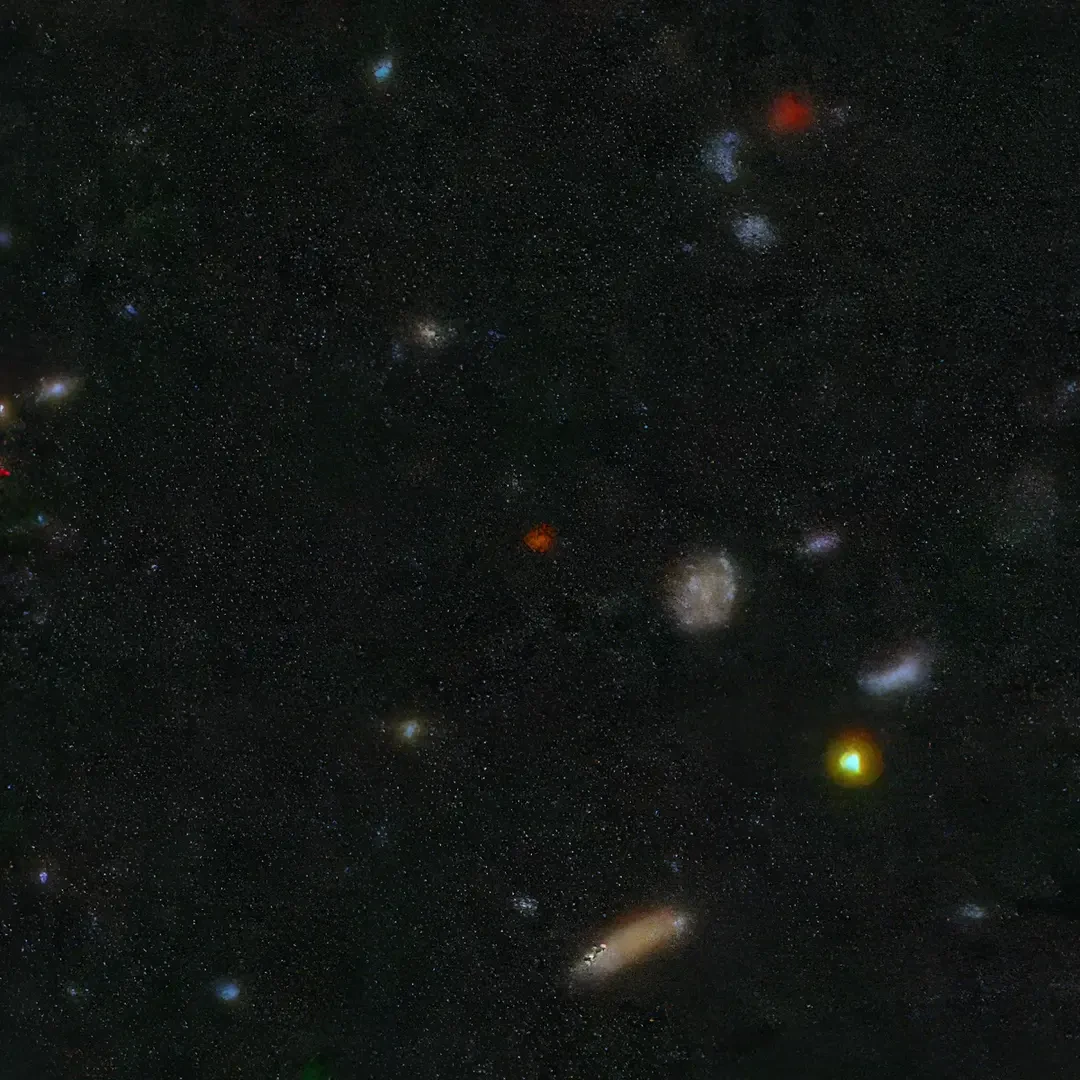
The red dot near the center is quasar J1504+6252. Euclid image: ESA/ Euclid Consortium/ NASA.
A quasar is the extremely bright core of a galaxy powered by matter falling into a central black hole. The black hole at the heart of J1504+6252 is estimated at roughly 360 million solar masses. Initially flagged as a candidate in Euclid's survey data, its discovery was confirmed through follow-up observations by ground-based observatories and space telescopes, including James Webb.
At the stage captured in these images, the black hole is consuming matter at a relatively modest rate. How it managed to attain such immense mass so early in the young universe remains an open question for astronomers.