How Glass Flowers Are Restored: Internal Leaf Cracks and Resin Petals (5 Photos)
Aging is a surprisingly complex process for the glass botanicals in Harvard’s Blaschka collection. Damage isn't limited to delicate protruding petals—sometimes deterioration begins deep within a leaf, hidden beneath its outer coatings. 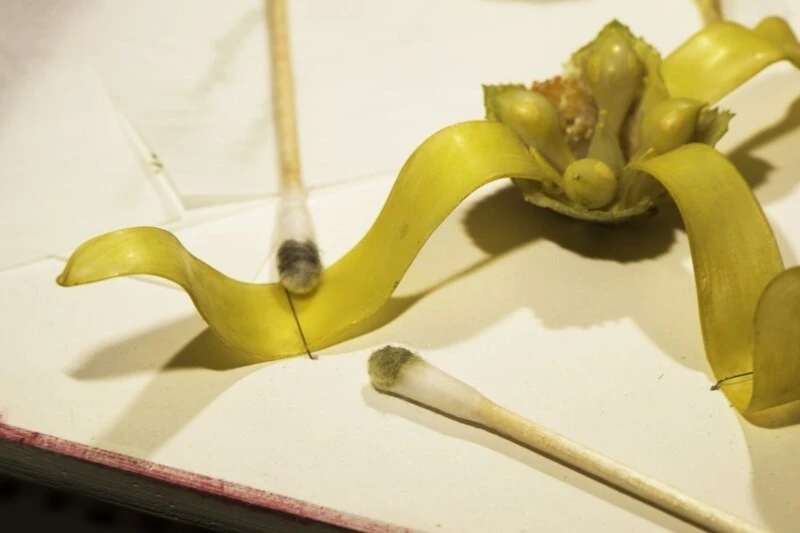
Cleaning the model.
A microscopic museum photo of a tulip tree leaf reveals internal fractures. These formed when organic coatings above and below the glass shrank in dry air, cracking the inner core. Another image shows raised veins lifting off the surface. 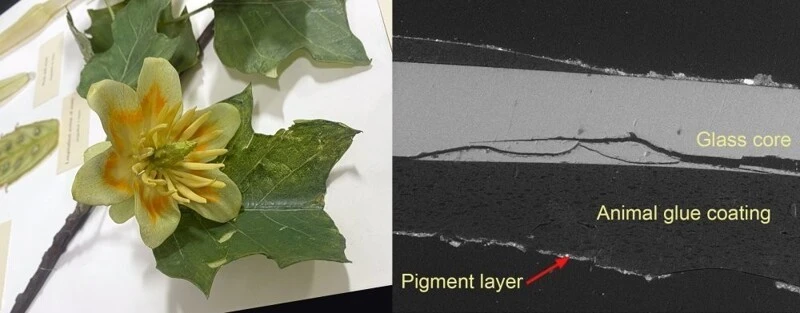
Tulip tree leaf under a microscope. 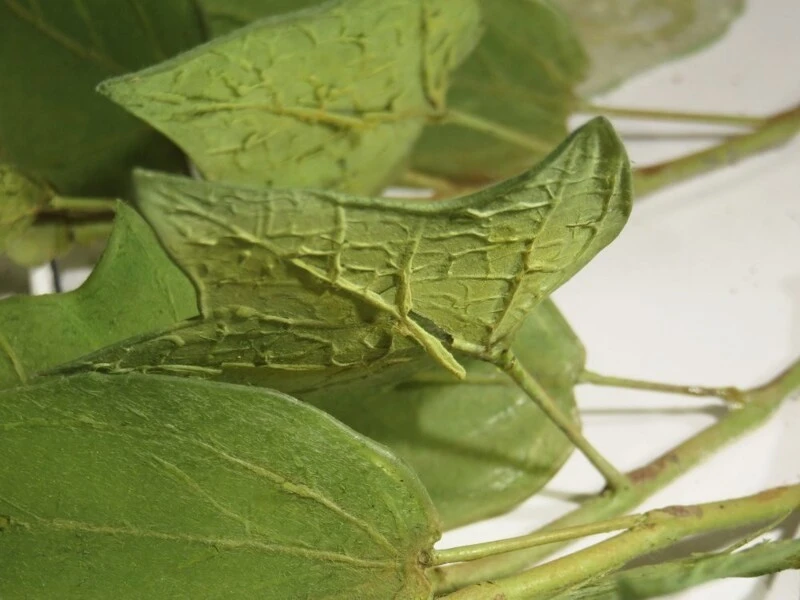
Peeling of raised veins.
Conservators remove dust with soft brushes and gently strip away old coal-soot grime using carefully selected solvents. Wherever possible, yellowed adhesive is replaced with a stable, reversible compound.
For a California poppy model, a missing petal was recreated from tinted acrylic resin. Cast in a thin layer, softened with heat, and cut and shaped by hand, the replacement completes the bloom. A side-by-side comparison shows the flower before and after restoration, alongside the stages of crafting the new piece. 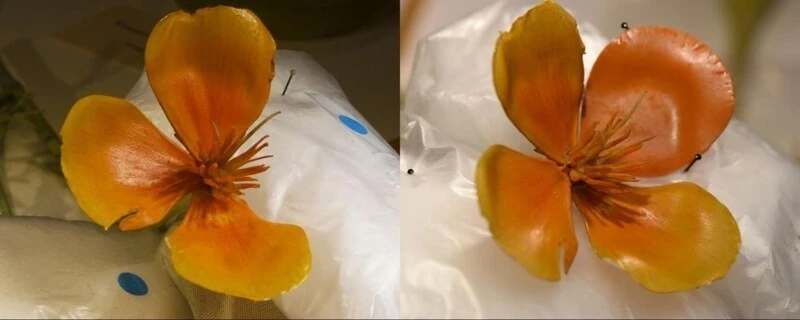
California poppy model before and after restoration. 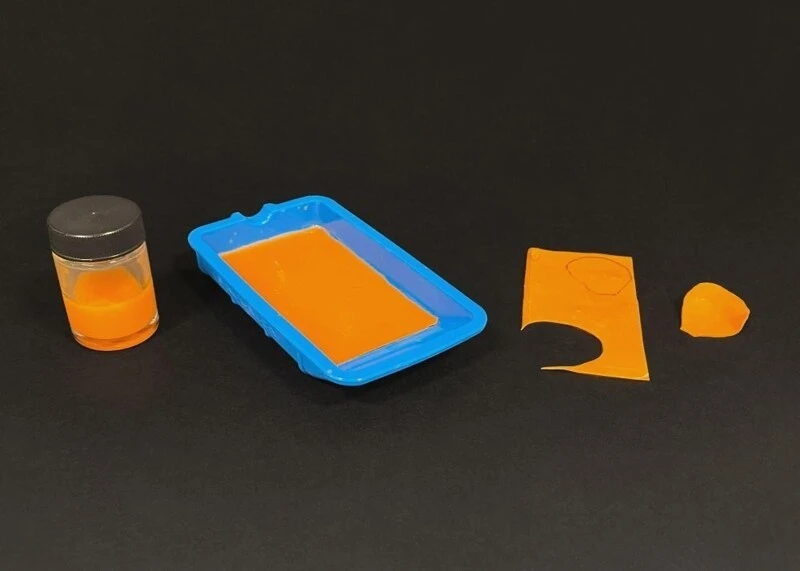
New petal crafted from tinted resin.