Who Bob Hoskins Was Actually Acting With on the Set of 'Who Framed Roger Rabbit' (11 Photos)
Bob Hoskins would take his mark long before Roger Rabbit was ever drawn. To give the actor a line of sight during production of *Who Framed Roger Rabbit* (1988), rubber figures were initially placed in the frame. Once framing was established, they were removed, and the camera kept moving as though Hoskins’ co-star were still right there beside him. 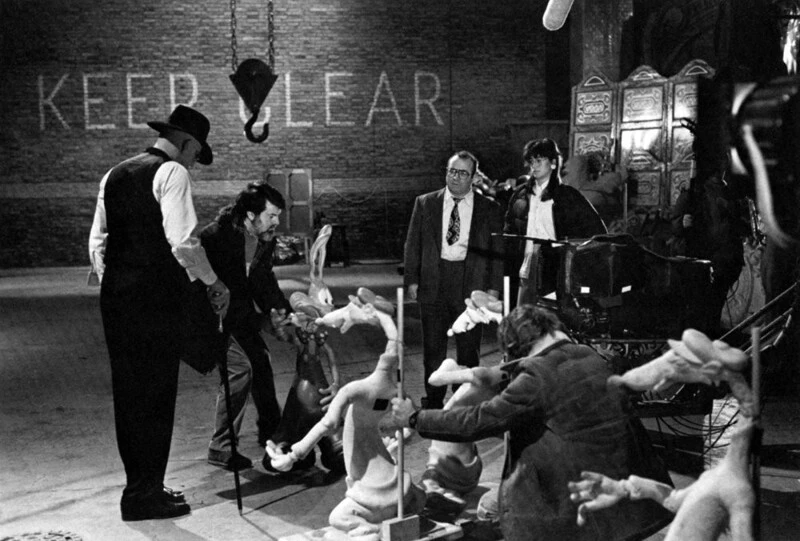
Christopher Lloyd on the left, Bob Hoskins on the right. Director of photography Dean Cundey positions flexible rubber stand-ins used to set lighting and frame the shot. Photo from the American Cinematographer archives.
Director Robert Zemeckis and cinematographer Dean Cundey chose to shoot scenes involving animated characters just as they would with live actors. Life-sized flexible figures of Roger and other characters were brought to the set to set up lighting, check framing, and trace camera moves. During actual takes, Hoskins looked where the rabbit had just been standing, while off-camera, Charles Fleischer—the voice of Roger—fed him his lines. 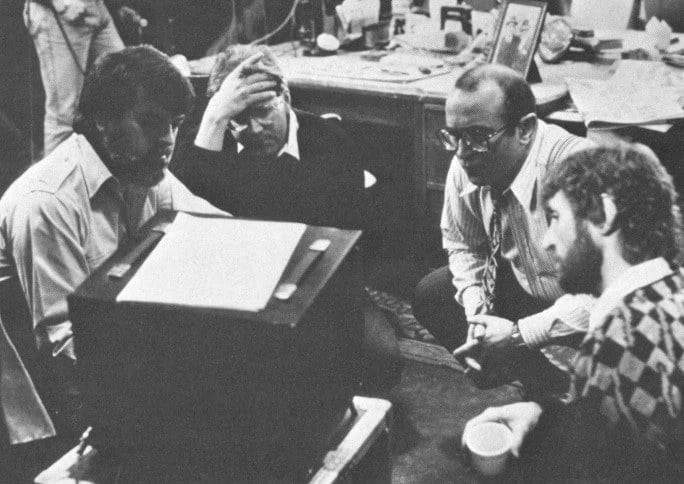
Dean Cundey, Robert Zemeckis, Bob Hoskins, and producer Robert Watts reviewing footage. Photo from the American Cinematographer archives.
Objects that the rabbit grabbed or moved required a completely different setup. Practical props were operated on set using hidden mechanical rigs. Animators later drew the character's hand to match the recorded movement of the object. A single shot could seamlessly combine a real actor, physical props, and an animated character seemingly holding those very props. 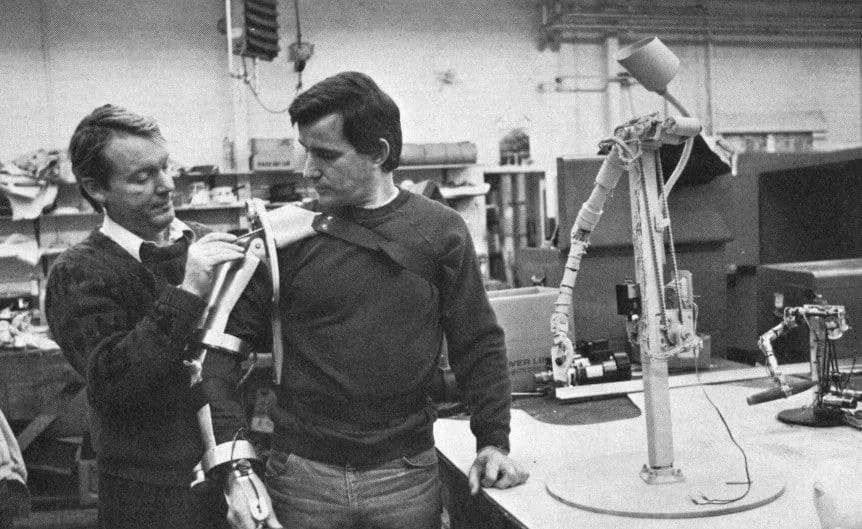
The mechanical rig used to manipulate props intended for Roger. Photo from the American Cinematographer archives. 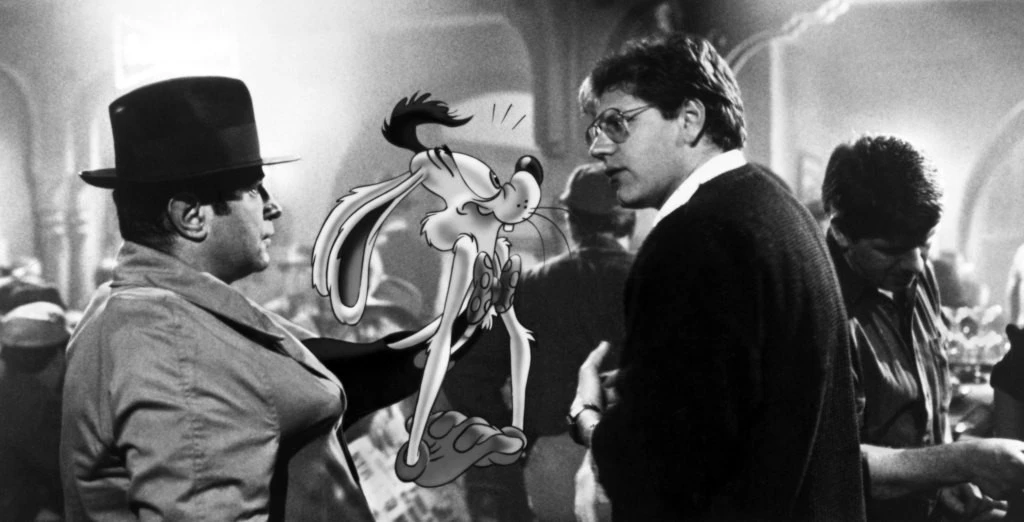
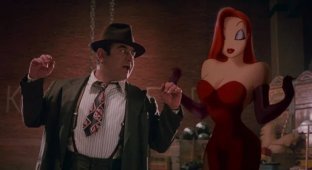
Hoskins and Zemeckis on set. Roger was added directly into this studio promotional photo. Buena Vista/ Everett Collection.
For the chase sequence, two blocks of Spring Street in downtown Los Angeles were transformed into a 1940s streetscape. Signage and facades were updated, vintage cars were brought in, and two red streetcars mimicking the city's historic lines were built. Hoskins drove a small motorized rig resembling a go-kart. Animators later drew Benny the Cab over it and placed Roger in the passenger seat. 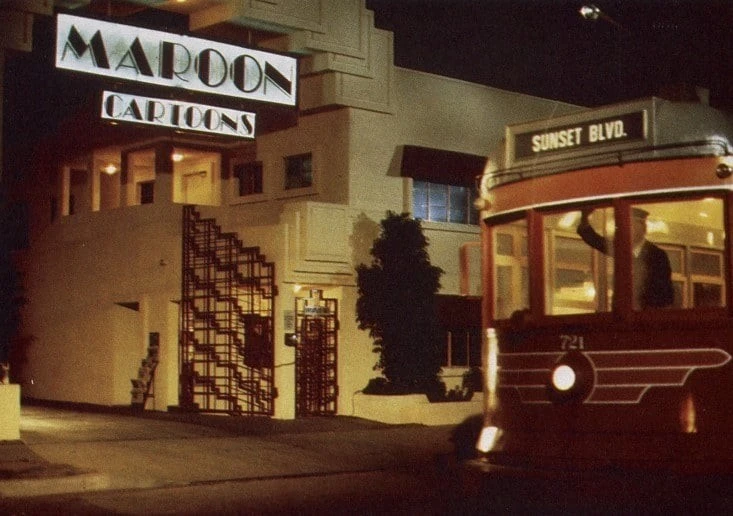
Maroon Cartoons signage and a Red Car streetcar on the movie set. American Cinematographer archives. 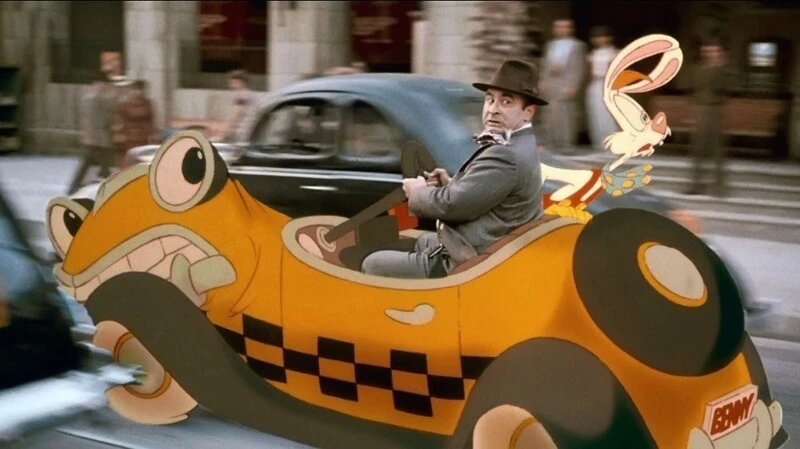
The finished chase shot. Benny the Cab and Roger Rabbit were animated over Hoskins’ actual drive. American Cinematographer archives.
Most of the film was shot in England. To serve as the Acme Factory for the climax, production located a vacant industrial building in London. It was so cold inside that the entire crew had to work in heavy coats. Because the set was progressively destroyed during filming, two camera crews worked in back-to-back shifts practically around the clock. Cundey recalled his crew leaving in the evening while the next crew stayed until 7:00 a.m. Some lighting rigs were turned off only to replace blown bulbs. 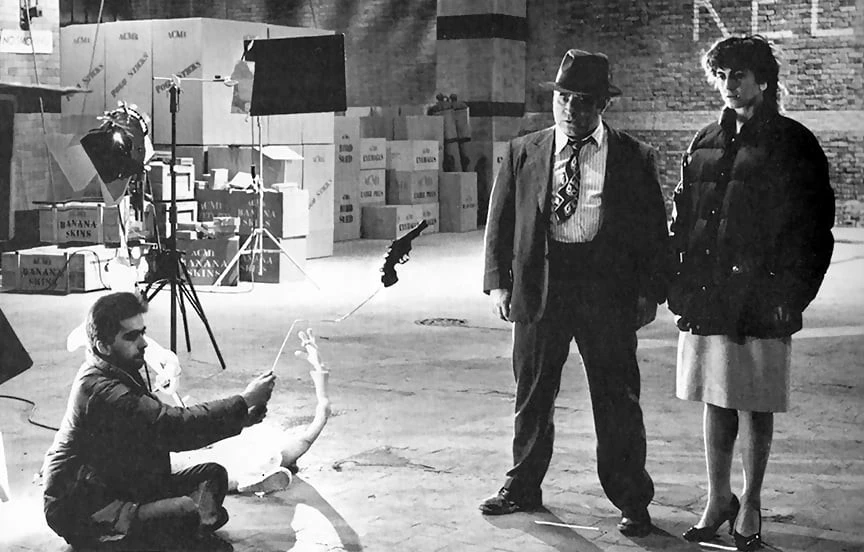
The Acme Factory set. For the film's finale, sets were built inside an abandoned London factory building. Photo from the American Cinematographer archives.
In London, Richard Williams’ animation team received black-and-white photostat prints of every live-action frame. The sheets were mounted on peg bars to ensure exact frame-to-frame alignment. Animators used these prints to refine Roger’s posing, movement, and eye-lines. If Hoskins reached for Roger or the camera shifted angle, both movements were already on film, serving as a precise blueprint for the animators. 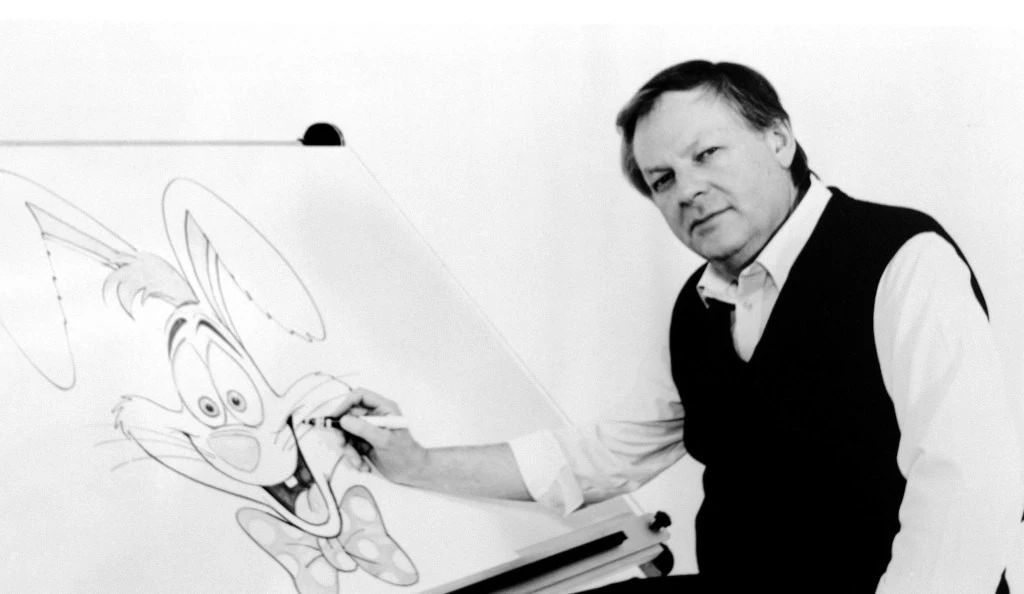
Animation director Richard Williams alongside a sketch of Roger. Buena Vista/ Everett Collection. 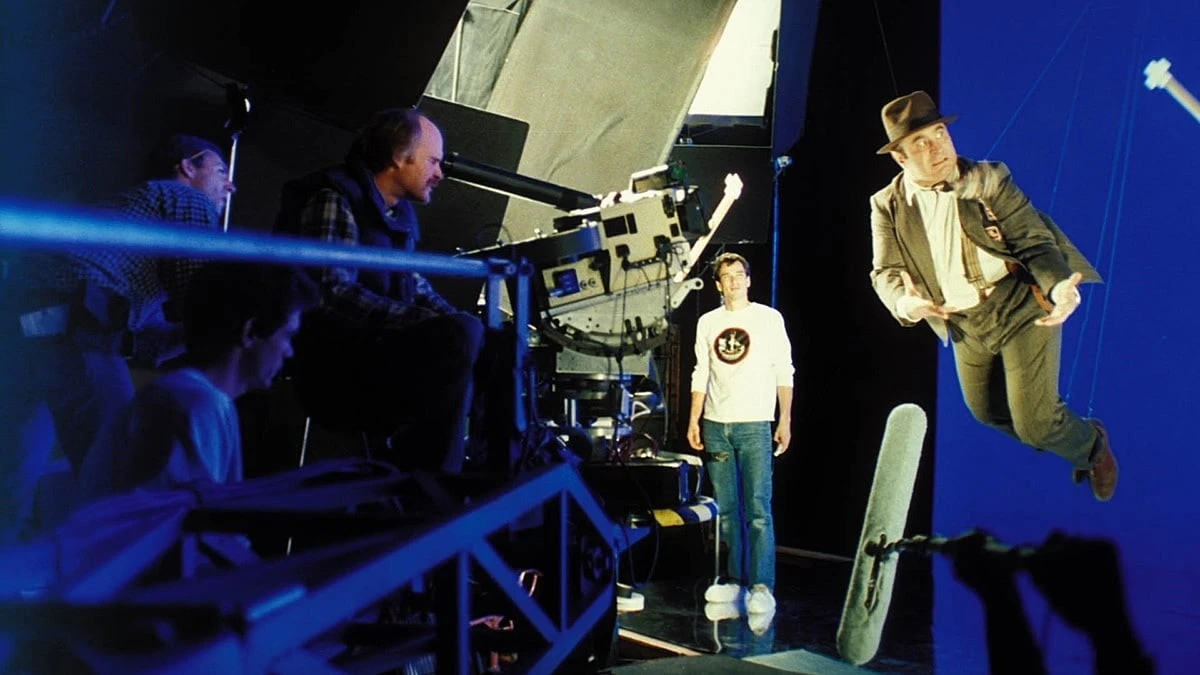
Bob Hoskins during a bluescreen shoot at ILM. This live-action footage served as the foundation for the composite shot. Photo from the American Cinematographer archives.
Finally, at Industrial Light & Magic, the animated elements were composited with the live-action footage. ILM's Ed Jones explained that beyond the characters themselves, shadows and highlights had to be printed on separate passes. Cundey had mapped out the light sources on set, allowing artists to calculate exactly where Roger’s shadow should fall on walls or floors. 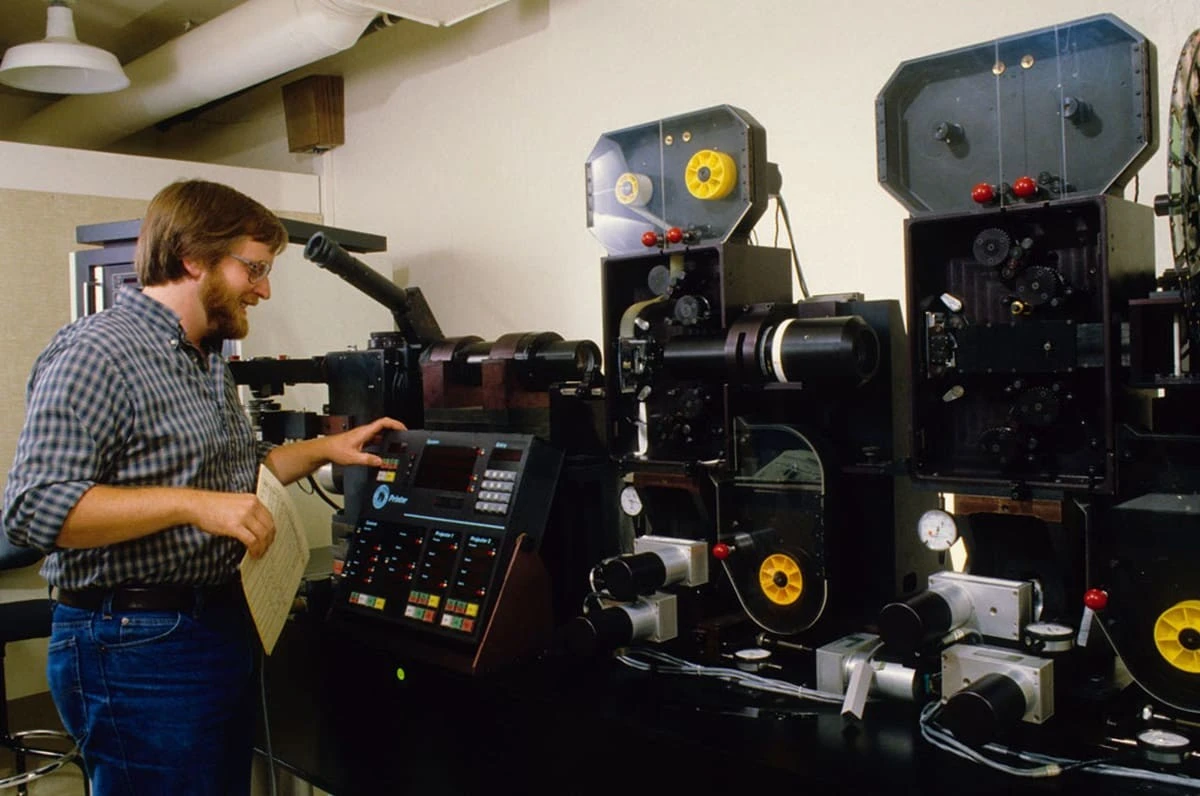
One of Industrial Light & Magic’s optical printers. Equipment like this was used to combine photographic elements on film. Photo from an article featuring Ed Jones. 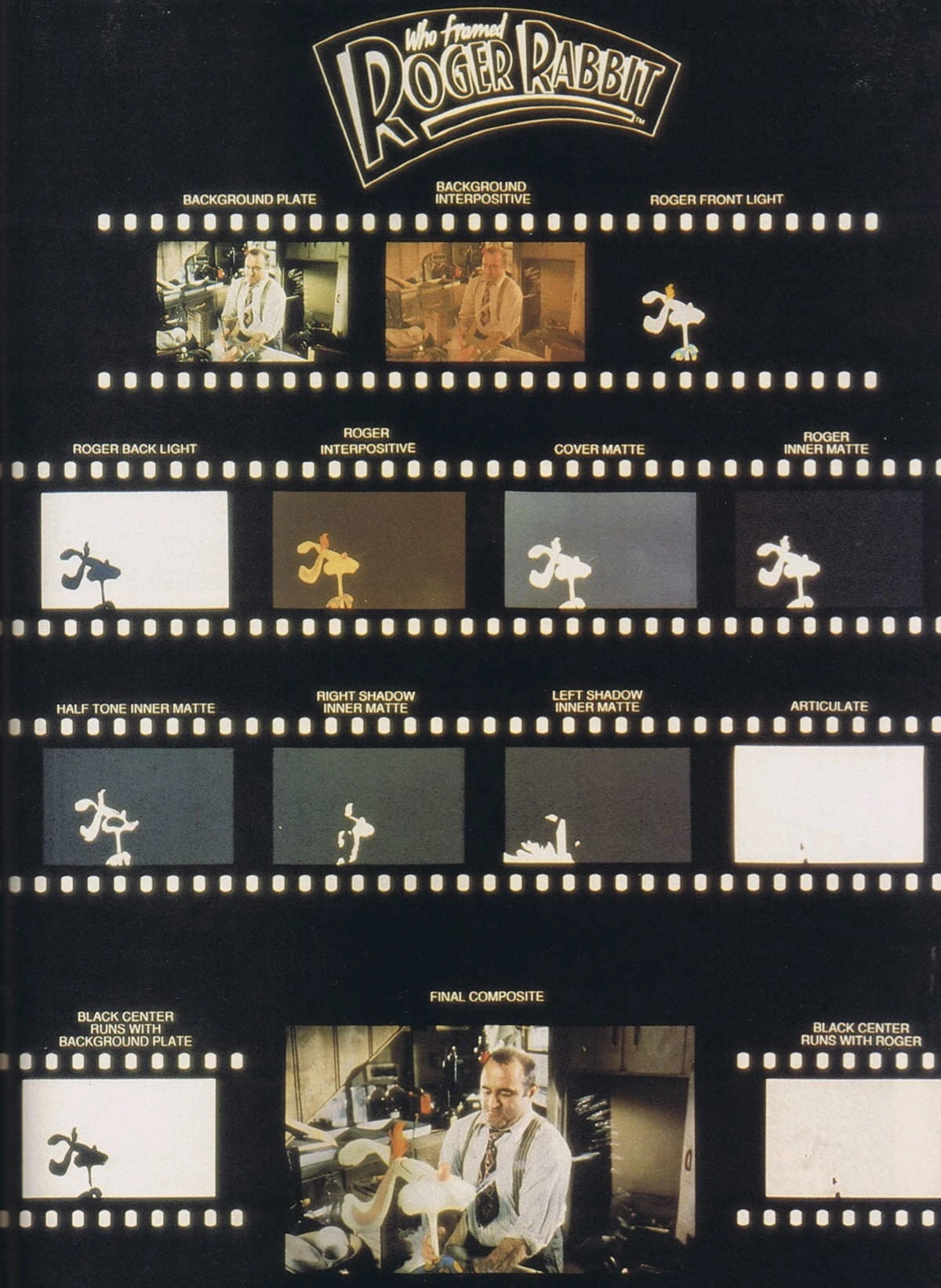
Working mattes and the final shot featured in the October 1989 issue of Starlog magazine. Mattes allowed different elements of the frame to be printed sequentially.