Soul City: Why the Town That Was Supposed to Change America Was Never Built (6 Photos)
Millions of dollars were poured into it—funding roads, utilities, housing, and industrial sites. Yet a decade later, its population barely topped 130. Why did this ambitious experiment collapse when hit by economic and political realities? 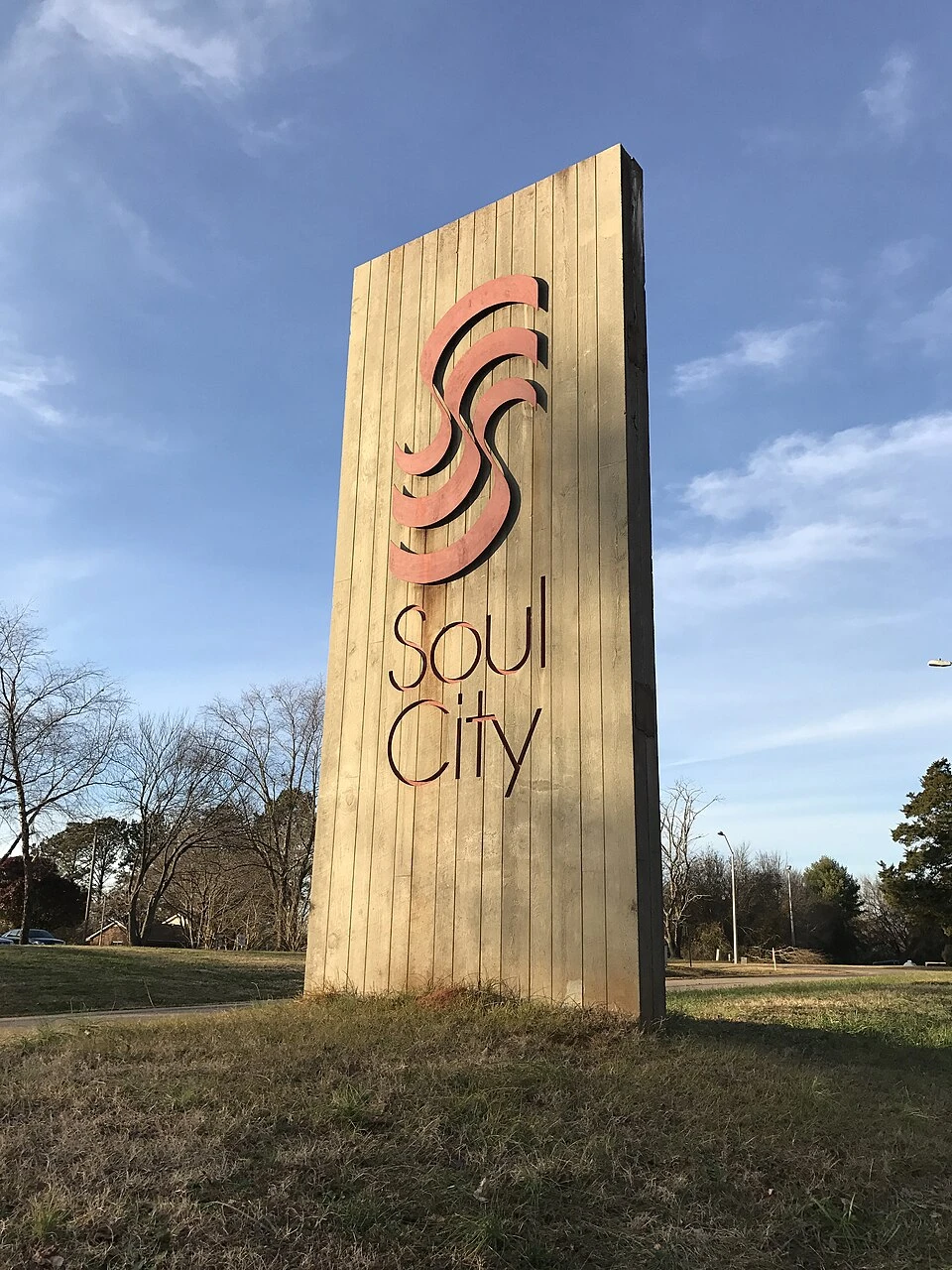
In 1969, a bold project was unveiled in North Carolina: a brand-new city built virtually from scratch.
Soul City was envisioned as a modern, Black-led, multiracial community featuring light industry, tens of thousands of residents, and a self-sustaining economy.
It was meant to be more than just another municipality—it was a social and economic experiment where Black Americans could own land and businesses, run local government, and shape their community's destiny.
This daring vision came from Floyd B. McKissick—a lawyer, World War II veteran, and former head of the Congress of Racial Equality (CORE). 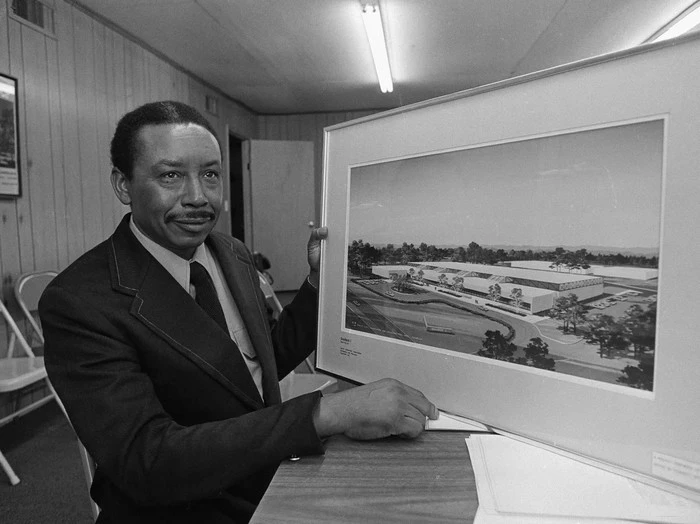
Floyd McKissick poses with architectural sketches for the Soultech industrial park
For McKissick, legal equality alone was never enough. Civil rights on paper did not guarantee access to land, capital, property, or quality jobs. He proposed building a city from the ground up to give Black Americans a solid economic foundation for self-reliance.
Yet Soul City was never intended to be an exclusionary Black enclave. By design, it was open to everyone, though Black entrepreneurs, professionals, and community members were to play the leading role in its development and governance.
A City Built on Former Plantation Land
The site chosen for the new city was Warren County, an impoverished rural area in North Carolina about an hour's drive from the Virginia border. Jobs were scarce and urban infrastructure was nonexistent. Adding to the symbolic weight of the project, part of the land had once been a working plantation. 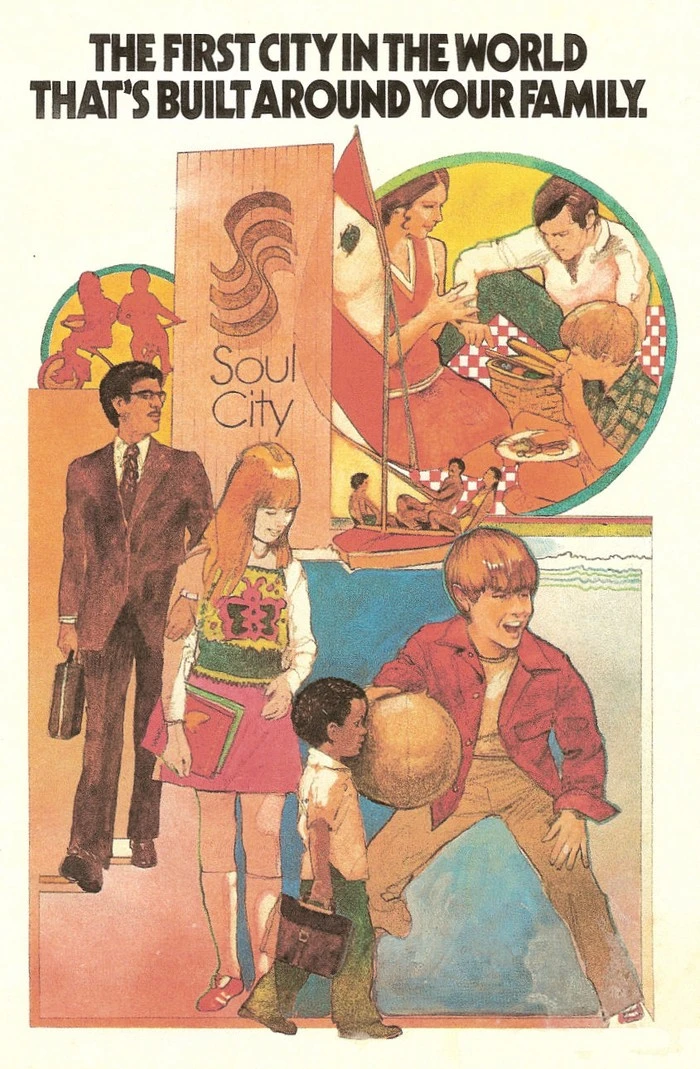
Soul City promotional ad
Developers set aside roughly 3,500 to 3,600 acres for the project. The scope was breathtaking: early projections estimated Soul City would grow to between 35,000 and 50,000 residents by the turn of the 21st century. McKissick himself predicted the population would reach 44,000 by 2004.
The master plan called for residential neighborhoods, industrial sites, schools, healthcare facilities, shops, paved roads, water and sewer lines, parks, and recreational complexes. Marketing materials pitched a forward-looking city free of prejudice, poverty, and urban blight.
McKissick aimed to attract not just local rural residents, but also Black families who had fled to Northern cities during the Great Migration. Soul City was meant to offer them a chance to return to the South—to a community with steady jobs, homeownership, and real political power.
Prominent Black architects and urban planners were brought on board to design the city.
Federal Backing from Washington
Funding for Soul City was partially secured through the federal New Communities Program. It became one of the rare initiatives to gain approval from the Department of Housing and Urban Development (HUD), backed in large part by the Nixon administration.
In 1972, HUD approved a loan guarantee of nearly $14 million. Armed with political and financial support, Soul City moved from blueprints to breaking ground.
Infrastructure Built, But No City to Fill It
Soon, roads were paved, water and sewer lines were laid, and a fire department, health clinic, community pool, tennis courts, and initial housing units were built.
Efforts to establish an industrial foundation also got underway. The Soultech manufacturing plant produced bags and backpacks—including contracts for the U.S. military—employing over 200 people at its peak. However, a permanent economic engine failed to take root. 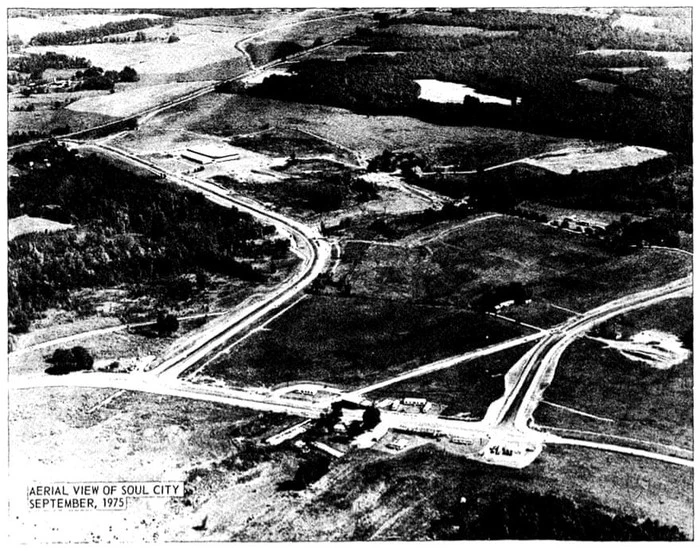
Aerial view of Soul City
The project soon ran into a classic catch-22. People hesitated to move to a town with few job prospects, while corporations were reluctant to open plants in a town with almost no residents. Without businesses, there was no tax base to maintain the newly built infrastructure, creating a vicious cycle.
By the mid-1970s, fewer than 200 people lived in Soul City. A 1977 census recorded just 80 Black and 15 white residents. By the time federal funding was cut off, the population stood at roughly 135, with nearly half residing in mobile homes.
The Wrong Place at the Wrong Time
Soul City struggled with far more than attracting residents and employers; the timing of its launch could hardly have been worse.
The 1973 oil crisis sent fuel, shipping, and construction costs soaring, plunging the U.S. economy into stagflation. Building costs far exceeded initial estimates, while federal grants arrived slowly and carried strict rules that prevented them from being used to lure major employers or private capital. 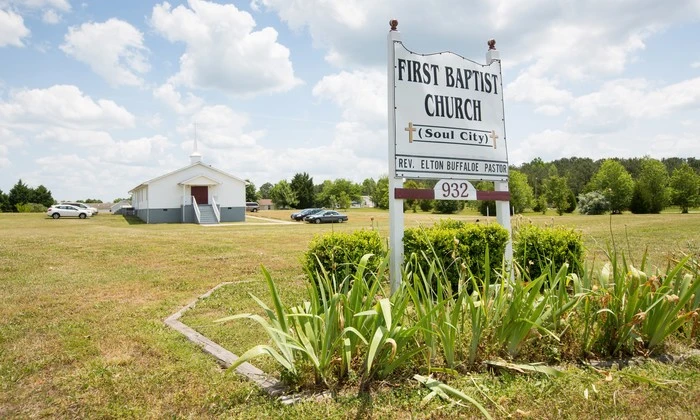
Soul City today: an unfinished monument to grand urban ambitions
Soul City's developers tried to woo major corporations. Companies like General Motors and Perdue Farms scouted the area but ultimately passed. To major employers, a rural county lacking transportation links and a skilled labor pool seemed far too risky.
As a result, while government money helped lay the physical infrastructure, a viable economic ecosystem never materialized around it.
Mired in Controversy
In 1975, a series of investigative news reports alleged financial mismanagement, nepotism, and misspent federal funds by Soul City's leadership.
Critics pointed to transactions between affiliated organizations, the hiring of family members, and inadequate accounting for certain expenses.
Senator Jesse Helms, a conservative North Carolina politician and staunch opponent of civil rights legislation, seized on the news to demand a federal audit, framing Soul City as a wasteful government handout.
Helms publicly branded Soul City "an insult to the overburdened taxpayers of North Carolina and the nation."
An investigation by the General Accounting Office (GAO) did uncover procedural lapses, weak internal controls, and sloppy bookkeeping. However, the audit cleared the project of any major fraud or systemic corruption.
Still, the political damage was done. The probe and surrounding fallout stalled development for nearly a year, giving potential investors another reason to steer clear. For a project already desperate for private capital, it was a devastating blow.
Was Race a Factor in the Failure?
Race cannot be separated from the story of Soul City. The project aimed to build a beacon of Black economic and political self-determination in a region steeped in racial segregation and hostility to civil rights.
Opponents weaponized the town's name and governance model to undermine federal support, painting Soul City either as political favoritism or as a form of reverse segregation—even though the plan had always been explicitly multiracial.
McKissick maintained that the goal was empowerment, not self-segregation. The city was to be open to all, but designed to ensure Black leadership held real authority over economic and community planning.
The project faced very real practical hurdles: overly optimistic forecasts, lack of private backing, soaring costs, funding delays, and operational missteps. These vulnerabilities made Soul City fragile, but racial politics elevated its flaws into a national political firestorm, hastening the end of federal support.
As a Black-led enterprise, Soul City faced intense scrutiny; its missteps were not judged as typical startup growing pains, but as evidence against the viability of Black economic leadership itself.
The End of the Dream
In June 1979, HUD announced it was pulling the plug on Soul City and initiating foreclosure proceedings. Reports at the time estimated the federal government had invested over $19 million into the project, with state and local governments contributing another $8 million.
By 1980, federal backing had completely ceased. The land and assets were acquired by creditors, later to be auctioned off or repurposed. 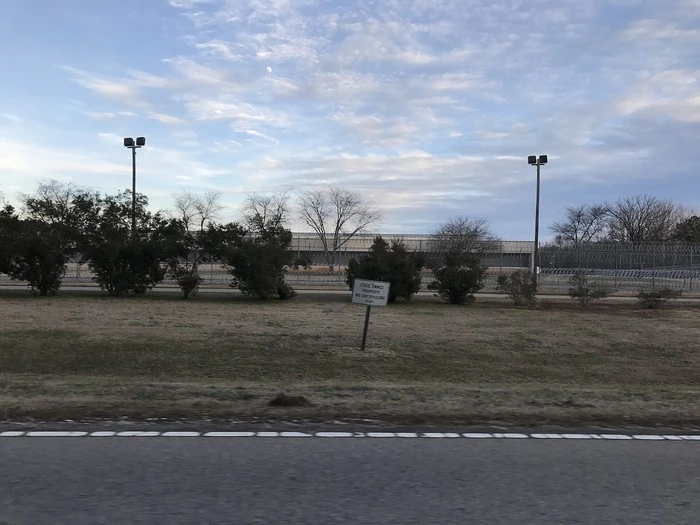
Warren Correctional Institution, built on the former site of Soul City's Soultech industrial park, which was originally designed by architect Harvey Gantt.
Today, all that remains of the original blueprint are a few roads, scattered buildings, utility lines, an industrial facility, and a small residential community. Some structures remain in use, while others have fallen into disrepair.
McKissick lived in Soul City until his death in 1991. His headstone bears the inscription: "Courage and Conviction."
Soul City still exists as a quiet, unfinished hamlet shrunk down to a few streets near Manson, North Carolina. The former Soultech I industrial complex now sits within the grounds of the Warren Correctional Institution.
In a tragic irony, a project conceived as a beacon of Black economic empowerment and self-determination now shares its grounds with a state prison.