Back in 1998, Terry Gilliam took audiences on a mind-bending psychedelic trip to Sin City. Here is an inside look at how Hunter S. Thompson’s dark, drug-fueled odyssey was brought to the screen: "gonzo filmmaking," ultra-wide-angle lenses, a one-eyed cinematographer, and a Japanese Jimi Hendrix. 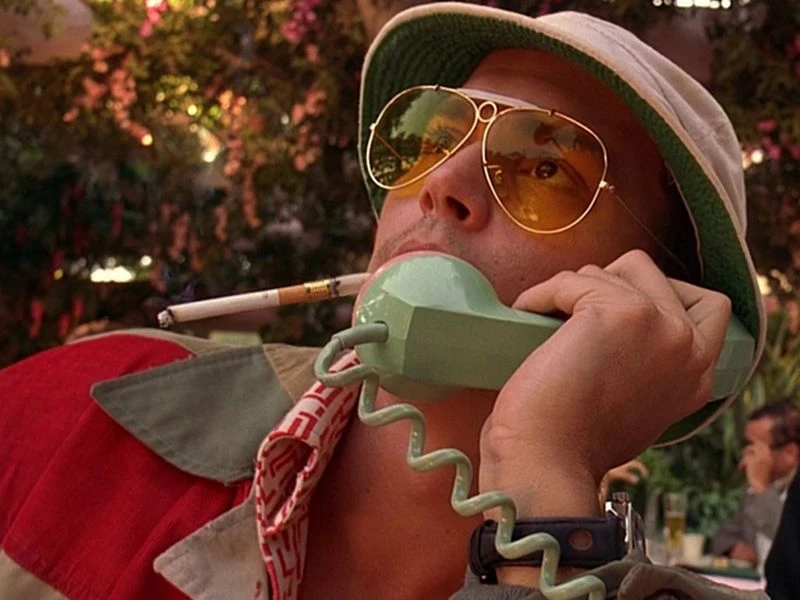
Development and Production: Decades in Limbo, a 10-Day Script, and a Pre-Production Nightmare 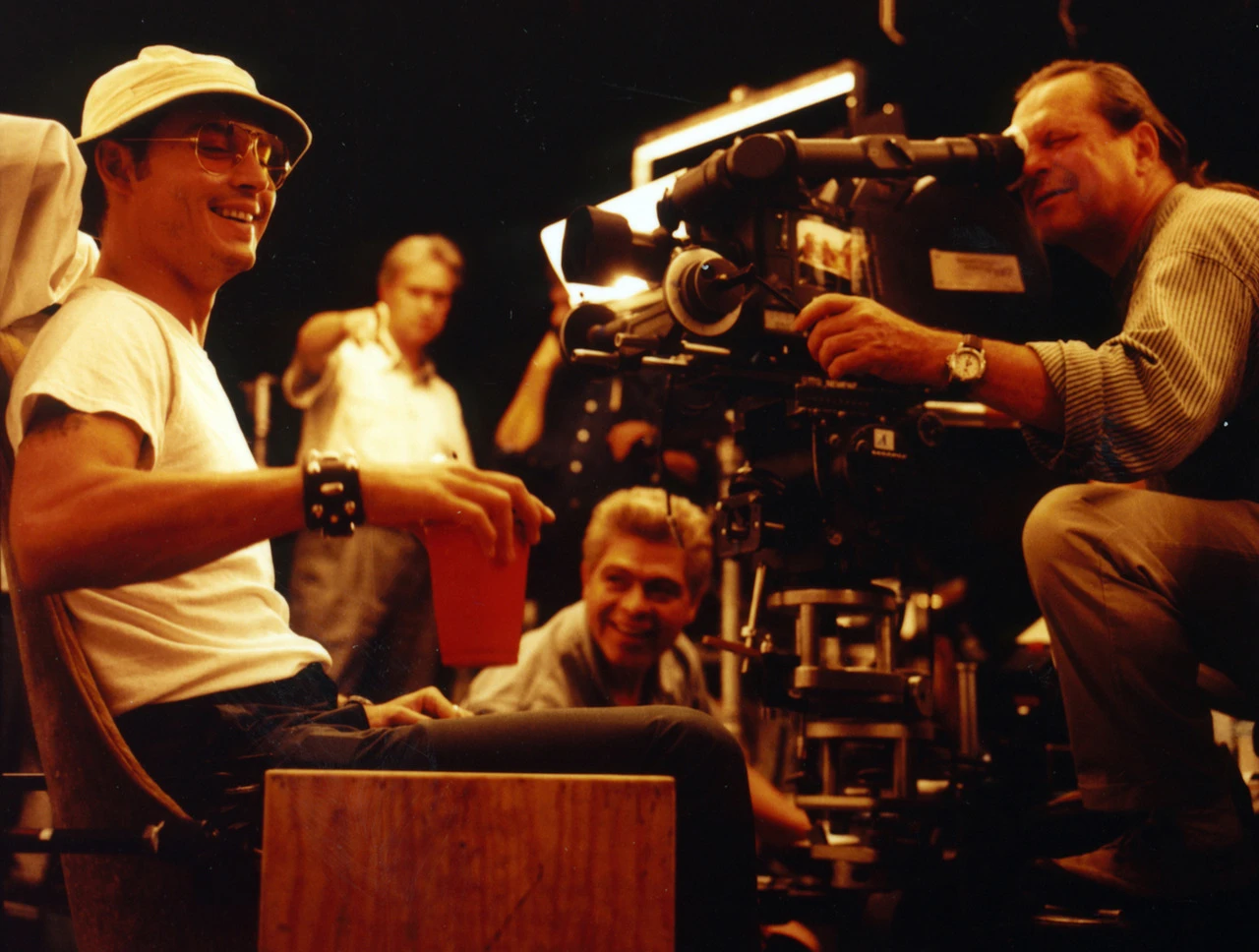
Attempts to adapt Hunter S. Thompson’s novel
Fear and Loathing in Las Vegas
began almost immediately after its publication in the early 1970s. Martin Scorsese and Oliver Stone were among the directors attached at various points, while potential pairings for the lead duo included Jack Nicholson and Marlon Brando, Dan Aykroyd and John Belushi, and John Malkovich and John Cusack. Yet actors aged out of the roles or passed away, leaving the project stuck in development hell. (Notably, 1980 saw the release of
Where the Buffalo Roam
, loosely based on Thompson's work and starring Bill Murray, but it met with a lukewarm reception.) 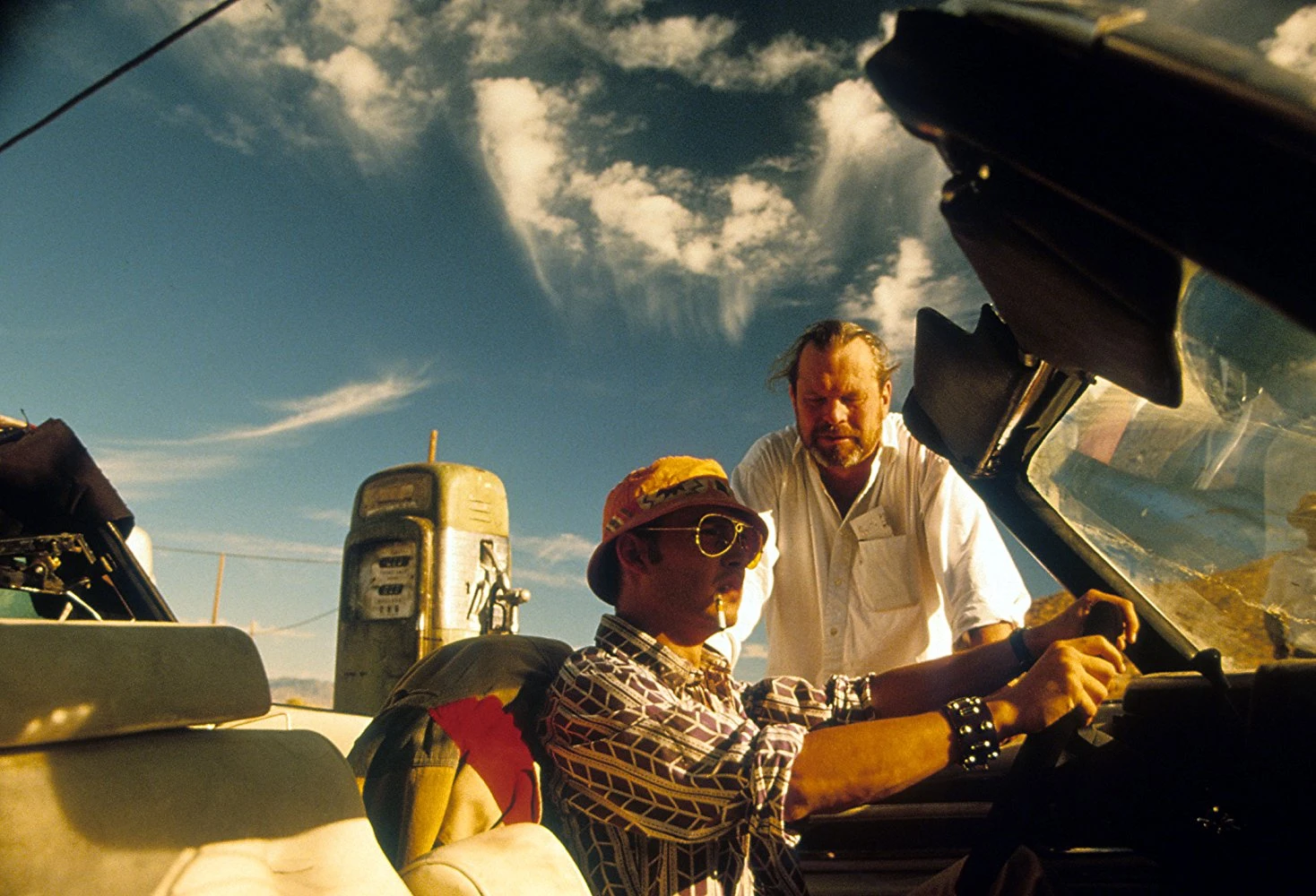
The project finally gained momentum in the early 1990s when Rhino Films took over production and brought on Alex Cox to write and direct. Cox promised to deliver the film quickly on a modest budget. Before long, however, creative differences led to his dismissal, and Terry Gilliam—who had circled the project multiple times over the years—stepped in. Teaming up with screenwriter Tony Grisoni, Gilliam wrote an entirely new screenplay from scratch. Under intense deadline pressure, the pair finished the draft in just ten days.
Gilliam described their creative process:
“We decided we were going to write it quick, on gut instinct. We both felt we knew the book, so we just plunged in, took out what we liked, threw away what we didn't, grabbed dialogue from everywhere, and figured out the structure as we went along.”
Much like the book, the film is divided into two distinct acts, each revolving around drug-soaked misadventures in different hotels. Between them sits a brief intermission—the binge is momentarily interrupted when Johnny Depp's character attempts to flee Las Vegas. The escape fails, dragging him back into another circle of hell where, as Gilliam put it, "the audience completely loses its bearings." 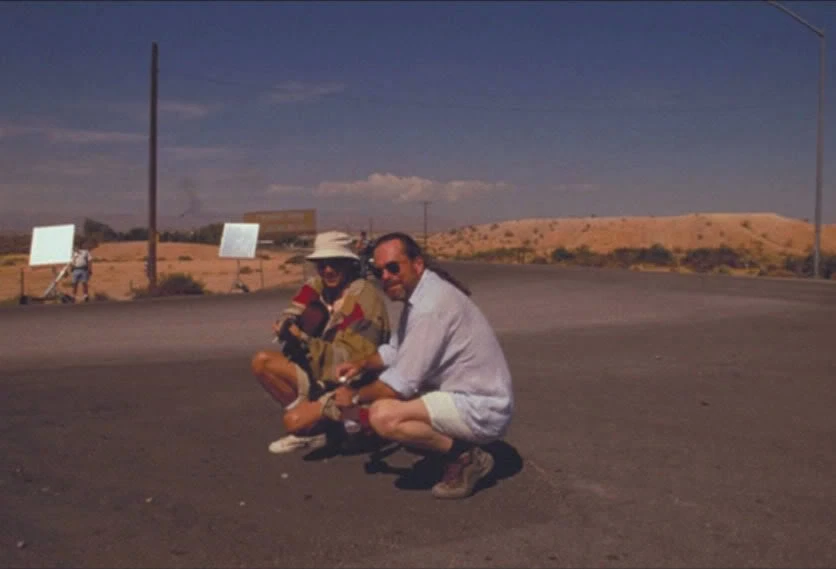
Gilliam has bluntly referred to the pre-production phase as an "absolute nightmare." For a long time, the production relied on handshake deals, with producers threatening to shut the project down and pushing for budget cuts even as mounting technical demands dictated otherwise. Ultimately, the budget grew from $7 million to $19 million. The original 48-day shooting schedule stretched to 56 days between August and October 1997. Known for his efficiency and preference for wrapping scenes in two or three takes, Gilliam noted that this shoot demanded an "exceptionally pragmatic" approach. He later described the frantic pace:
“Any hesitation was fatal. No reshoots, no going back. It was gonzo filmmaking to match Hunter’s gonzo journalism.”
Casting: Gaining 40 Pounds and Living with Hunter S. Thompson 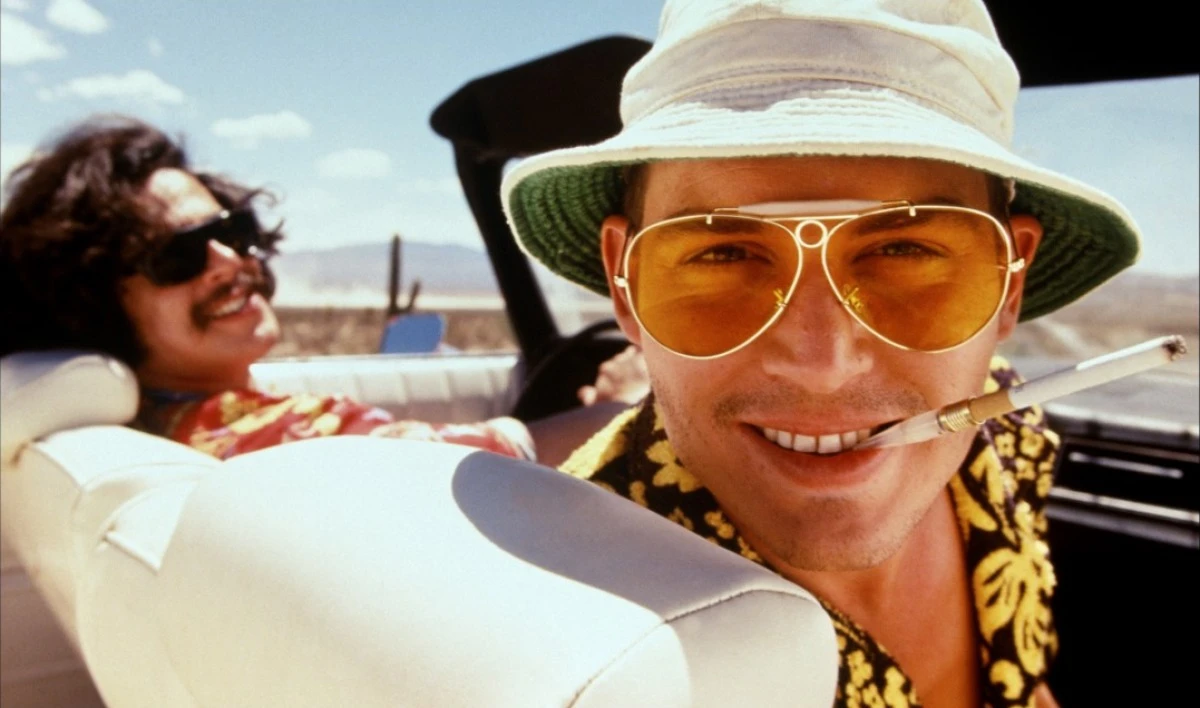
Johnny Depp and Benicio del Toro joined the project while Cox was still attached, and both threw themselves into preparation with obsessive dedication. Del Toro was cast as Dr. Gonzo, a character based on Thompson’s longtime friend and attorney, Oscar Zeta Acosta. To embody the role, the actor immersed himself in Acosta’s life story and packed on a staggering 40 pounds (18 kg) in just nine weeks.
Depp played Raoul Duke, Thompson’s thinly veiled alter ego. To, in his own words, "steal his soul," Depp moved into the author's basement for four months, meticulously studying his mannerisms, gait, habits, and speech patterns. Capturing Thompson's unique vocal cadence proved to be one of the toughest challenges. 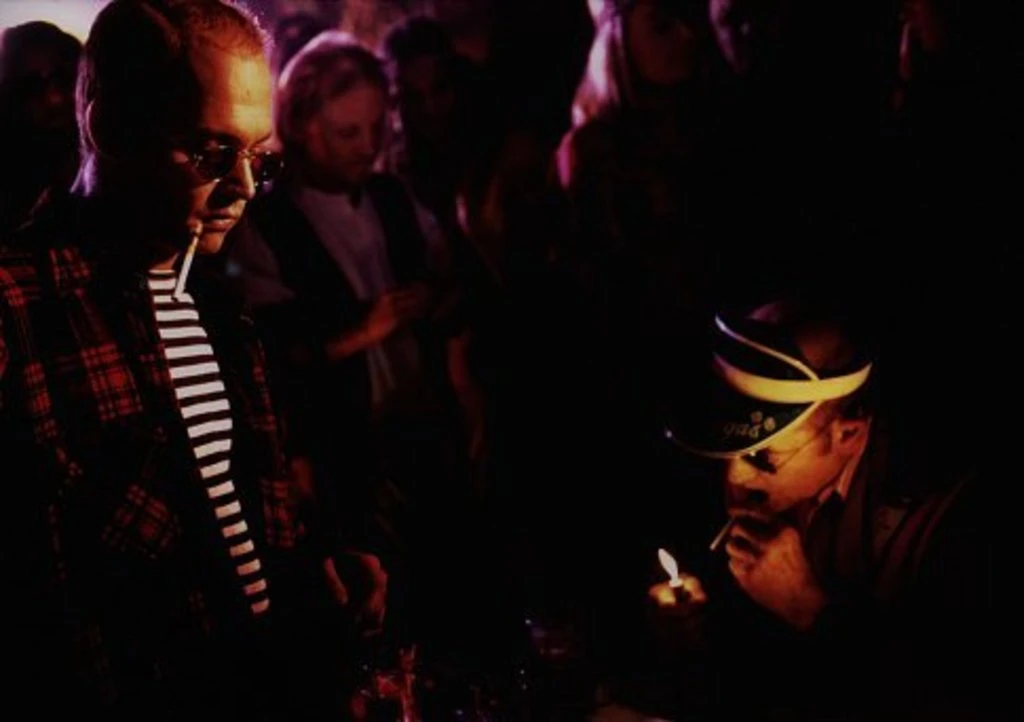
To master the dialogue, Depp borrowed a trick from Marlon Brando—who had recently starred in Depp’s directorial debut,
The Brave
, and was infamous for refusing to memorize lines. Depp wore an earpiece on set, feeding him pre-recorded audio of his lines and Thompson’s voice to maintain the rhythm.
This painstaking commitment won over the writer himself: Thompson later declared that he couldn't imagine anyone other than Depp playing Duke. As a mark of respect and initiation, Thompson personally shaved the actor’s head before cameras started rolling.
Locations and Set Design: Las Vegas, Harsh Deserts, and Soundstages 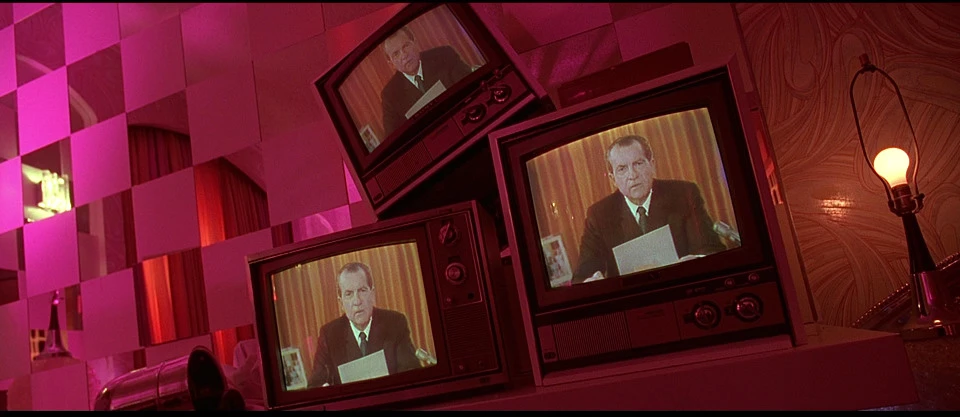
While the story is set almost entirely in Las Vegas, shooting in the real locations described by Thompson proved remarkably difficult.
First, the entertainment capital had changed beyond recognition over the preceding quarter-century. As Gilliam observed:
“There was really only one block left in Vegas that still felt like the seventies: North Fremont Street, way out on the fringes, where the vintage motels and neon signs still hung on.”
Compounding the problem, most major casino resorts refused to grant access, wary of how their establishments would be portrayed. Only the Stardust and The Riviera opened their doors to the crew. Even then, filming was restricted to a punishing window between 2:00 AM and 6:00 AM.
As a result, many interiors had to be built from scratch on Warner Bros. soundstages, including the film’s most unhinged venue: the Bazooka Circus, a stand-in for the real Circus Circus. The production designers drew heavily on genuine casino aesthetics without having to exaggerate much. For instance, the garish, nauseating floral carpets were inspired by designs Gilliam had seen firsthand in Las Vegas casinos back in the 1960s. 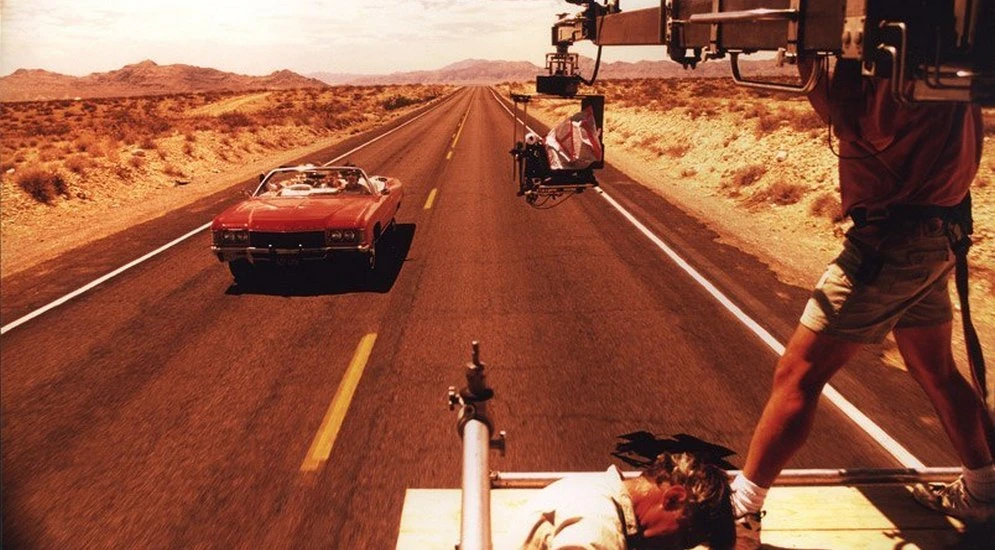
Beyond Las Vegas, filming took place across California, the Arizona and Nevada deserts, and Red Rock Canyon. Gilliam noted that the desert and driving scenes were among the most grueling, expensive, and physically punishing, plagued by relentless dust storms. To make matters worse, the crew used giant fans to whip up additional clouds of sand.
Johnny Depp recalled the grueling experience in an interview:
“It was wild—the sheer concept of letting tons of sand blast straight down your throat for miles on end. But it simplifies things: you’re not acting, you’re just desperately trying to cover your mouth because your lungs are choked with this awful dust.”
Visual Style: Painterly Influences, Dutch Angles, and Retro Aesthetics 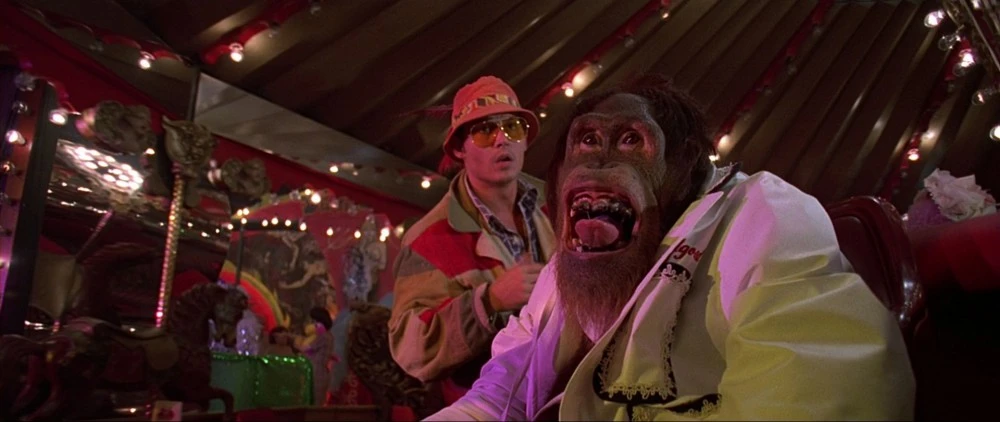
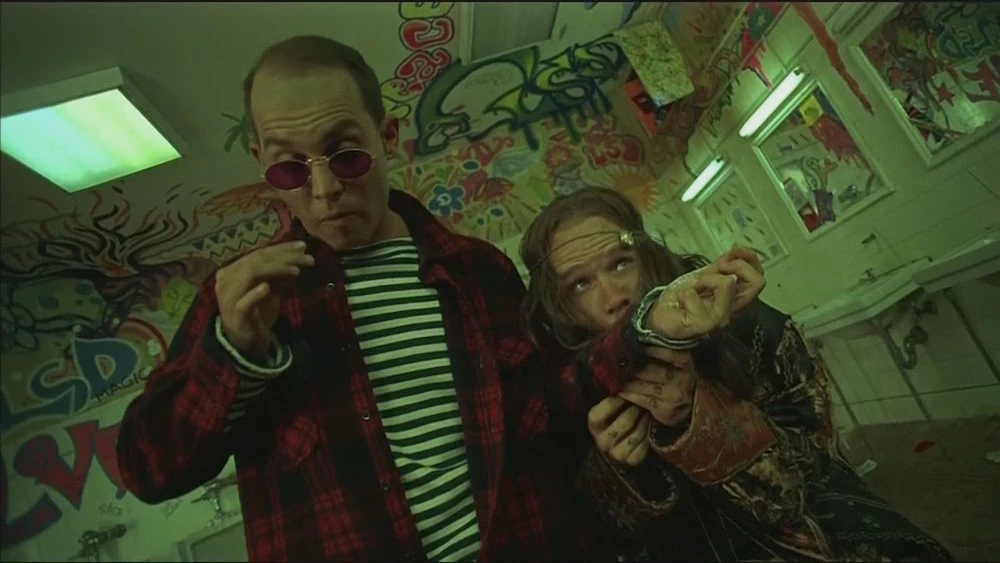
Cinematographer Nicola Pecorini had only one feature film under his belt as director of photography, but he brought years of experience as Vittorio Storaro’s camera operator and a seasoned Steadicam specialist. Pecorini campaigned aggressively for the job, and Gilliam relented, won over by his sheer passion—even though the director was taken aback to learn Pecorini had only one eye. The gamble paid off: Pecorini became Gilliam’s trusted long-term collaborator, later shooting projects like
The Man Who Killed Don Quixote
. 
Fear and Loathing in Las Vegas
showcases Gilliam’s signature visual hallmarks at their most extreme. He relied heavily on ultra-wide-angle lenses (primarily 14mm and 16mm), which warp perspective and character proportions to generate what Gilliam calls an "overall sense of unease and tension." He also made extensive use of Dutch angles to keep the viewer feeling off-balance and disoriented.
Gilliam discovered an intriguing dynamic with this technique:
“We used tilted horizons so relentlessly in the first half that when things get truly terrifying and we finally level the camera out, it feels even more unsettling.” The combination of extreme wide angles and canted framing effectively translated the sensory overload of an acid trip to the screen. 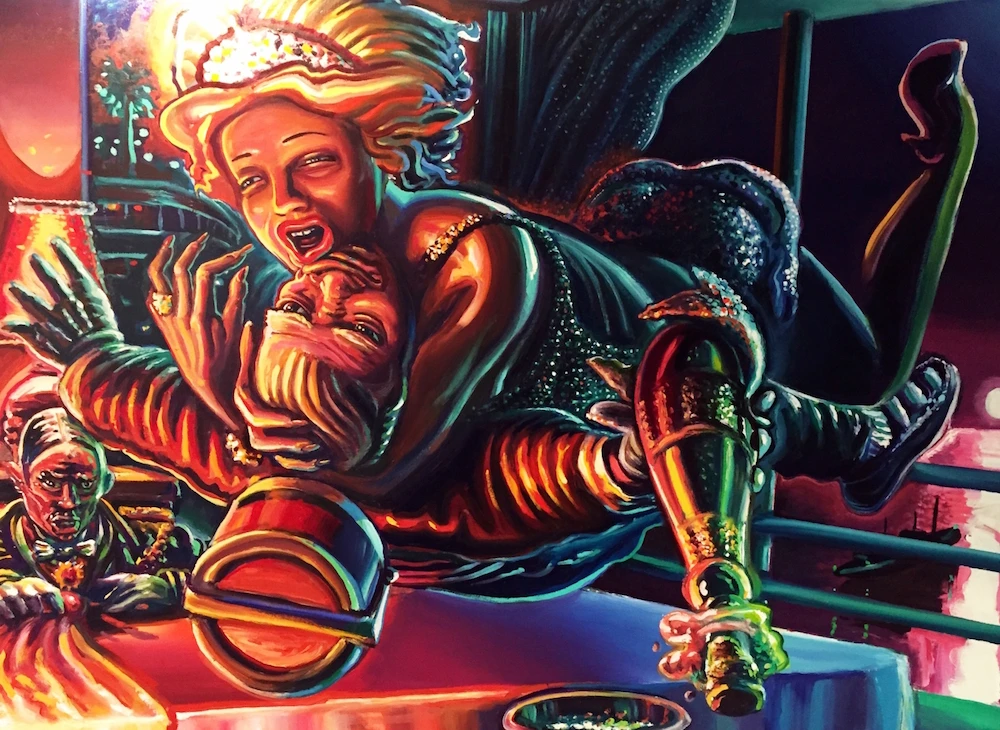
Robert Yarber’s painting “Royal Indiscretion”
The filmmakers cited the paintings of American artist Robert Yarber as their primary visual touchstone. Gilliam explained the impact of Yarber’s work:
“Fluorescent neon hues against pitch black, bizarre, hallucinatory figures—and all of it set inside anonymous hotel rooms.”
Ralph Steadman’s iconic illustrations for the original book had already defined the visual language of the story in the public imagination. Gilliam initially toyed with translating Steadman's style directly to the screen, but quickly realized it was impossible:
“Those drawings capture the manic energy of the book brilliantly, but you can’t simply translate them into a three-dimensional cinematic world. So I deliberately tried to put them out of my mind.”
Even so, select frames pay direct homage to Steadman's art, most notably the introduction of the hitchhiker. 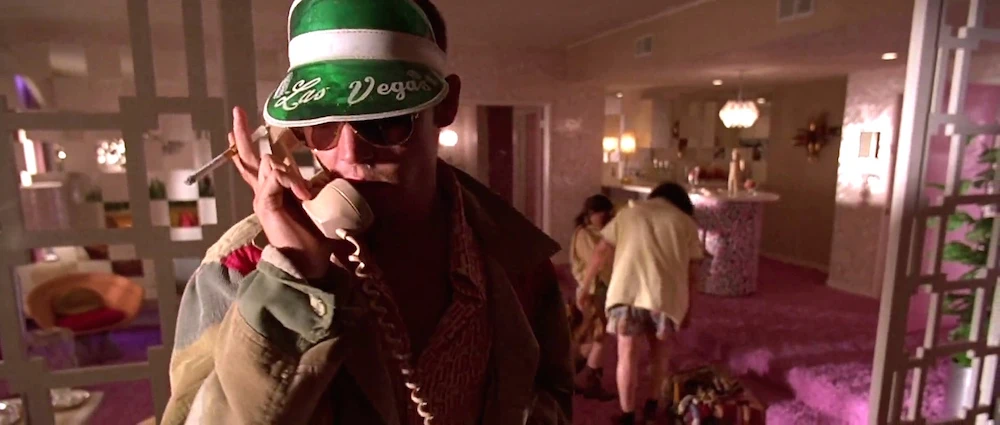
Despite the rushed schedule and "gonzo" approach, the production was meticulously designed. Gilliam emphasized the storytelling role of the wardrobe:
“The costumes were designed to reflect everything happening in America at the time; every social and political movement was represented. We spent hours dissecting the political meaning behind specific colors and textures.”
A prime example is the district attorneys' convention, where the attendees are bathed in a sea of red, white, and blue.
Elsewhere, color serves a visceral, emotional function. In the Mint Hotel suite, a sickening clash of plum and sickly green was chosen specifically to evoke claustrophobia and nausea. Each new venue was given an increasingly jarring color scheme, reinforcing the central concept: "Every casino they enter becomes the next circle of hell." 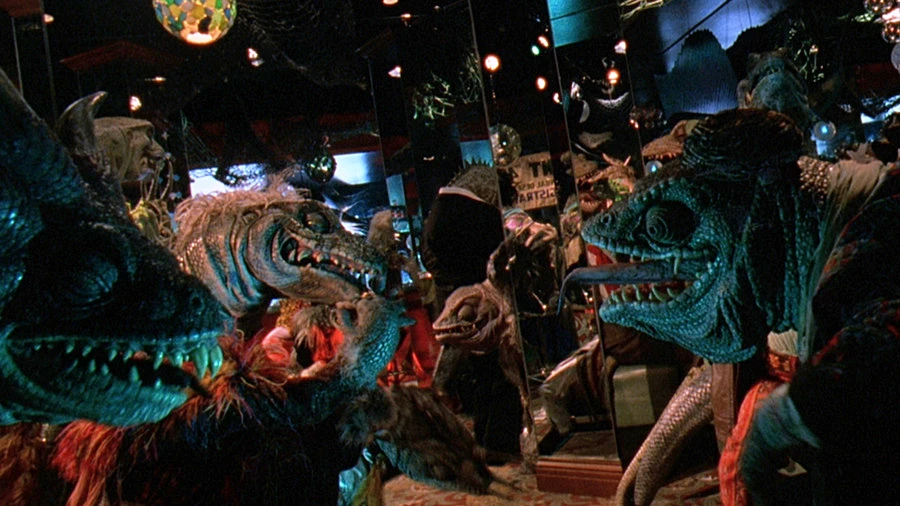
Among the film's most memorable visual set pieces is the hotel lounge sequence, where Duke hallucinates the patrons turning into giant, copulating lizards. Gilliam originally envisioned creatures that looked like living Francis Bacon paintings, but the concept proved too expensive. The scene called for more than twenty lizard heads, yet the budget covered only seven. The crew improvised: they set up a clever array of mirrors and shuffled the same heads across different costumes from shot to shot to create the illusion of a crowded room. 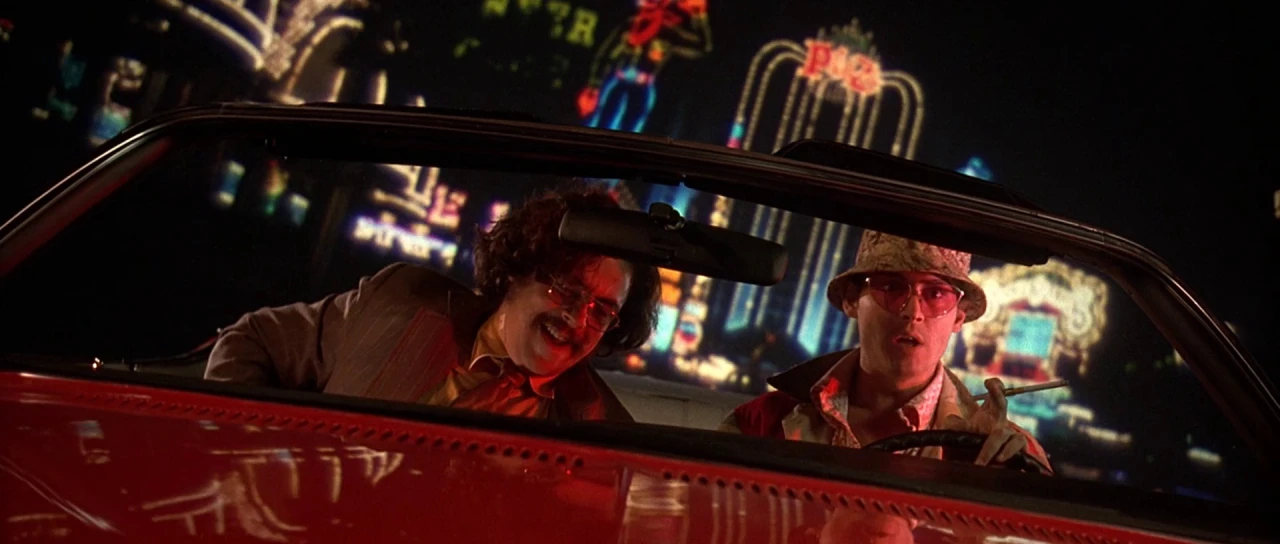
Rear projection in several driving sequences lent the film a deliberate vintage flair. Rather than shooting fresh background plates, the production used vintage driving footage sourced from the late-1970s TV series
Vega$
.
The Soundtrack: Psychedelia, Sonic Experiments, and a Japanese Jimi Hendrix
Thompson’s novel came with its own explicit musical cues, which posed creative and logistical hurdles for Gilliam. The Rolling Stones’ "Sympathy for the Devil" serves as the book’s spiritual anthem, but the production could not use it: it didn't fit the scene’s rhythm, and licensing it would have eaten up half the entire music budget. It was ultimately replaced by "Combination of the Two" by Big Brother and the Holding Company featuring Janis Joplin.
The Stones still made the cut with another hit, "Jumpin' Jack Flash." Overall, the soundtrack leans heavily on late-1960s and early-1970s rock and psychedelic staples, featuring tracks by The Yardbirds, Jefferson Airplane, and The Youngbloods.
Gilliam also incorporated artists synonymous with Las Vegas lounge culture, adding Tom Jones and Debbie Reynolds to the mix. His guiding philosophy was simple: “The more chaotic and depraved the scene becomes, the more reassuring the music should sound.”
Originally, the film was only supposed to feature five or six licensed songs, with composer Ray Cooper writing a full original score. As the concept evolved, Cooper instead created a handful of unconventional musical cues. He layered disparate melodies and brought in Japanese guitar virtuoso Tomoyasu Hotei, who, in Gilliam’s words, delivered an "inspired, uncanny channeling" of Jimi Hendrix. The resulting eclectic blend perfectly matches the film's chaotic energy and the characters' relentless binge—best exemplified by the iconic "White Rabbit" bathtub sequence.
Add your comment
You might be interested in:


Actor John Goodman has changed beyond recognition (2 photos)
Notice how Keanu Reeves wears a watch in John Wick.

20 famous actors - in his youth and now (41 photos)

Famous people who are difficult to recognize in their old
30 behind-the-scenes photos from the set of popular films
John Travolta made an entire airport out of his house (7

Australian man bans vegans from his restaurant
30 photos with the main cat weapon - claws (31 photos)
John Cena fulfilled the dream of a fan battling cancer
The Serial Killer Who Thought 'No Body, No Crime' Would
'Jaws': Behind the Scenes (10 Photos)
200 Watches Hurled from a Third-Floor Window (3 Photos)
Lucy Lawless Never Planned on Becoming Xena (9 Photos)
Executioners: How They Lived, What They Earned, and Why
Winona Ryder Turns 55: The Actress's Best Photos (11 Photos)

French Shopkeeper Turns into a Meme After Trying to Defend

Rescuing a Chubby Raccoon (3 Photos)
Turns Out Ostriches Love Bald People (7 Photos + Video)
