Fragments of History: Rare and Captivating Vintage Photos of Europe (21 Photos)
Take a look at this collection of 20 unique colorized photographs that capture the authentic spirit of a bygone era in vivid detail. 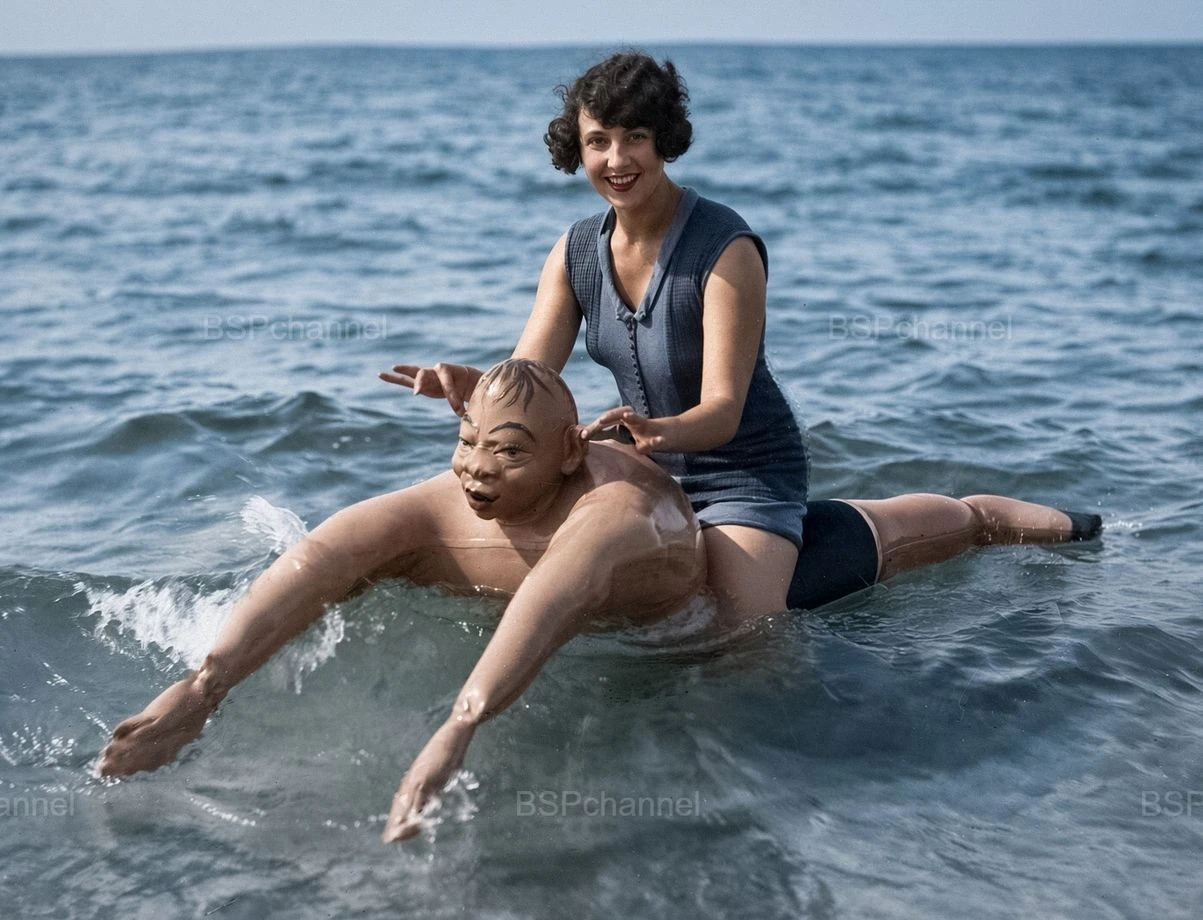
Boys admiring a motorcycle. Brandenburg, outskirts of Berlin, 1930s. 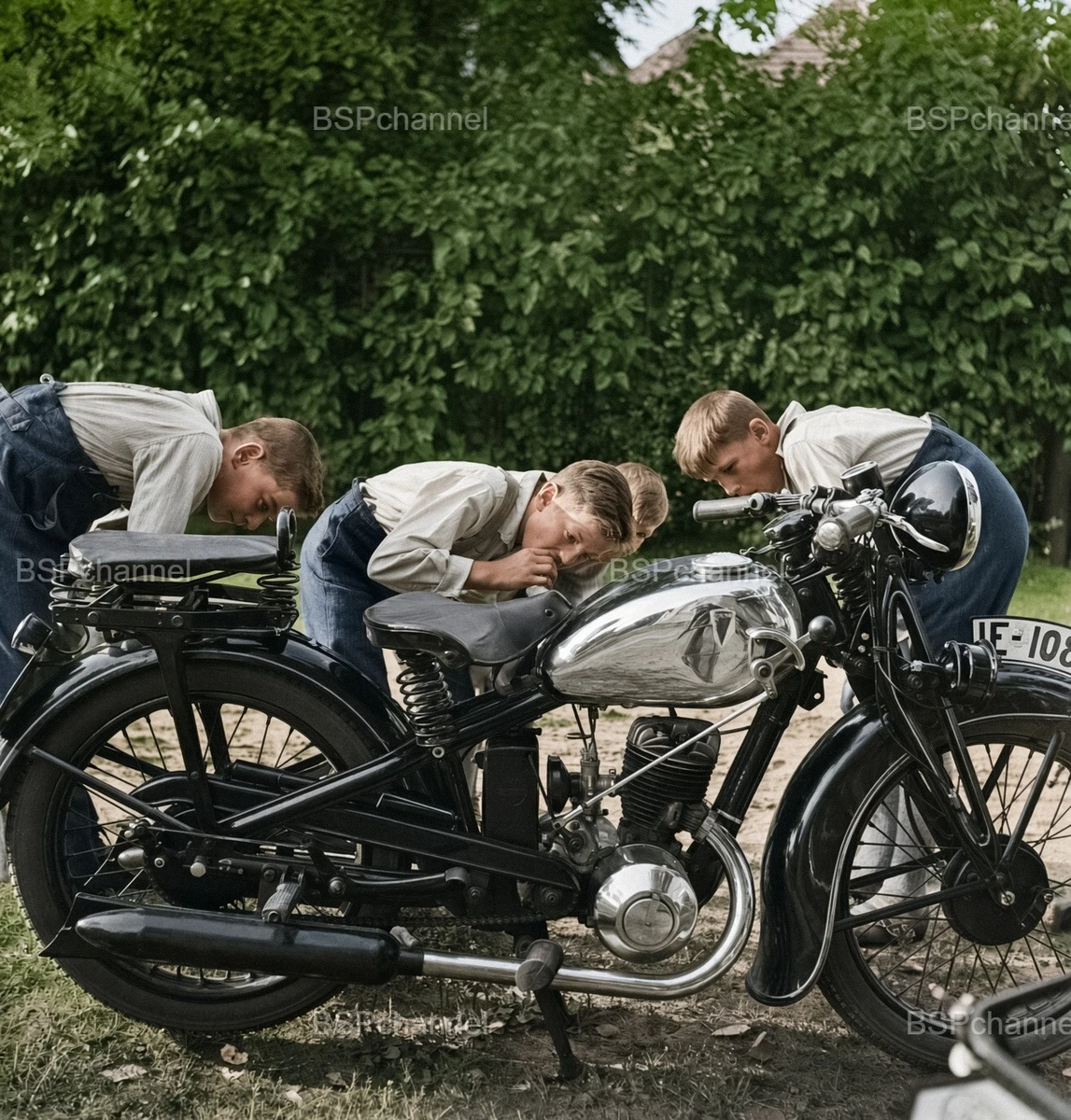
Photo by Roman Vishniac
Taken during the Weimar Republic era, shortly before the Nazis seized power. During these years, motorcycles from iconic brands like BMW, DKW, and NSU were turning into symbols of technological progress, speed, and personal freedom in Germany, captivating the imagination of young boys.
A skipper's wife and daughter manually hauling a heavily loaded hay barge along a canal. Amsterdam, 1940s. 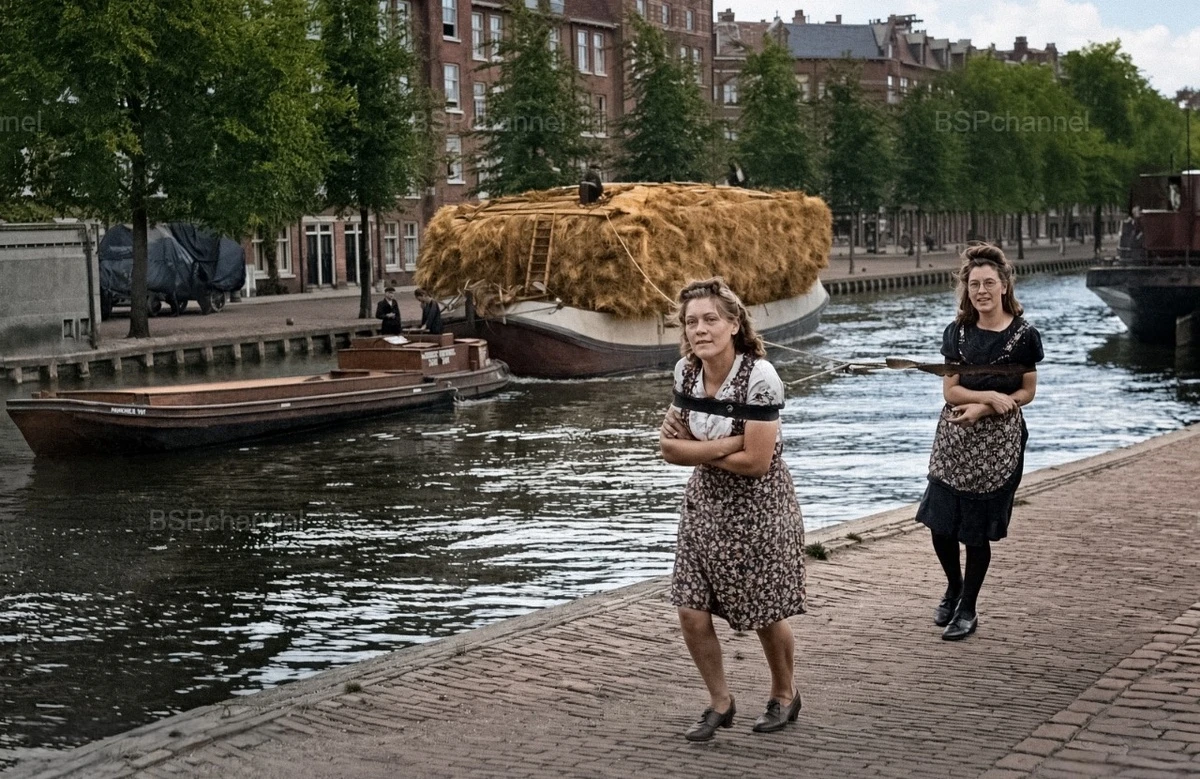
Photo by J. D. Noske
During the 1940s, the Netherlands faced severe shortages of fuel—coal, diesel, and gasoline—as well as draft horses, which were requisitioned for military use. As a result, canal boat skippers had to rely on sheer human muscle to haul cargo barges along waterways. In traditional Dutch inland shipping, a barge served as both a family home and a workplace. While the captain held the helm at the stern, women and children often walked the towpath in harnesses, physically pulling the vessel along.
Tuileries Garden. Paris, circa 1960. 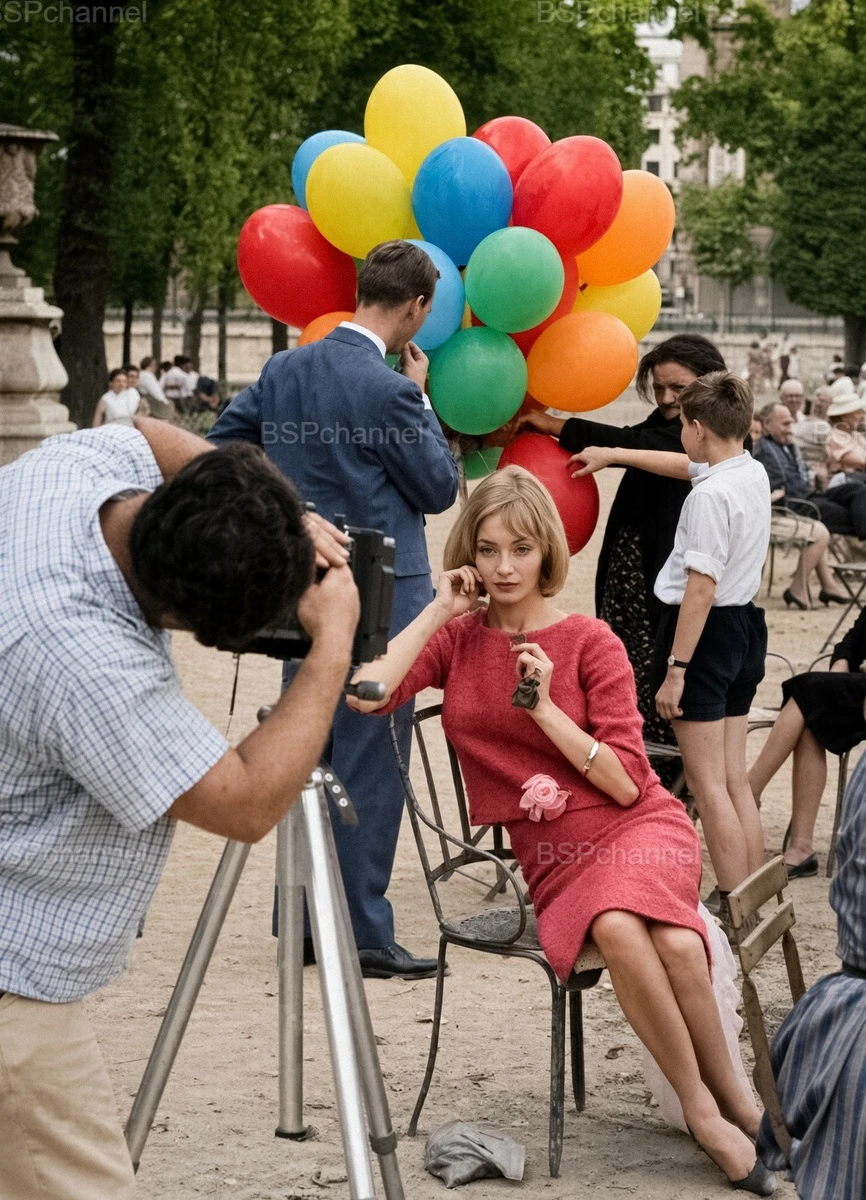
Photo by Nico Jesse
The Tuileries Garden is the oldest and most celebrated public park in central Paris, nestled between the Louvre Museum and the Place de la Concorde.
Exiled King Farouk of Egypt. Capri, Italy, 1953. 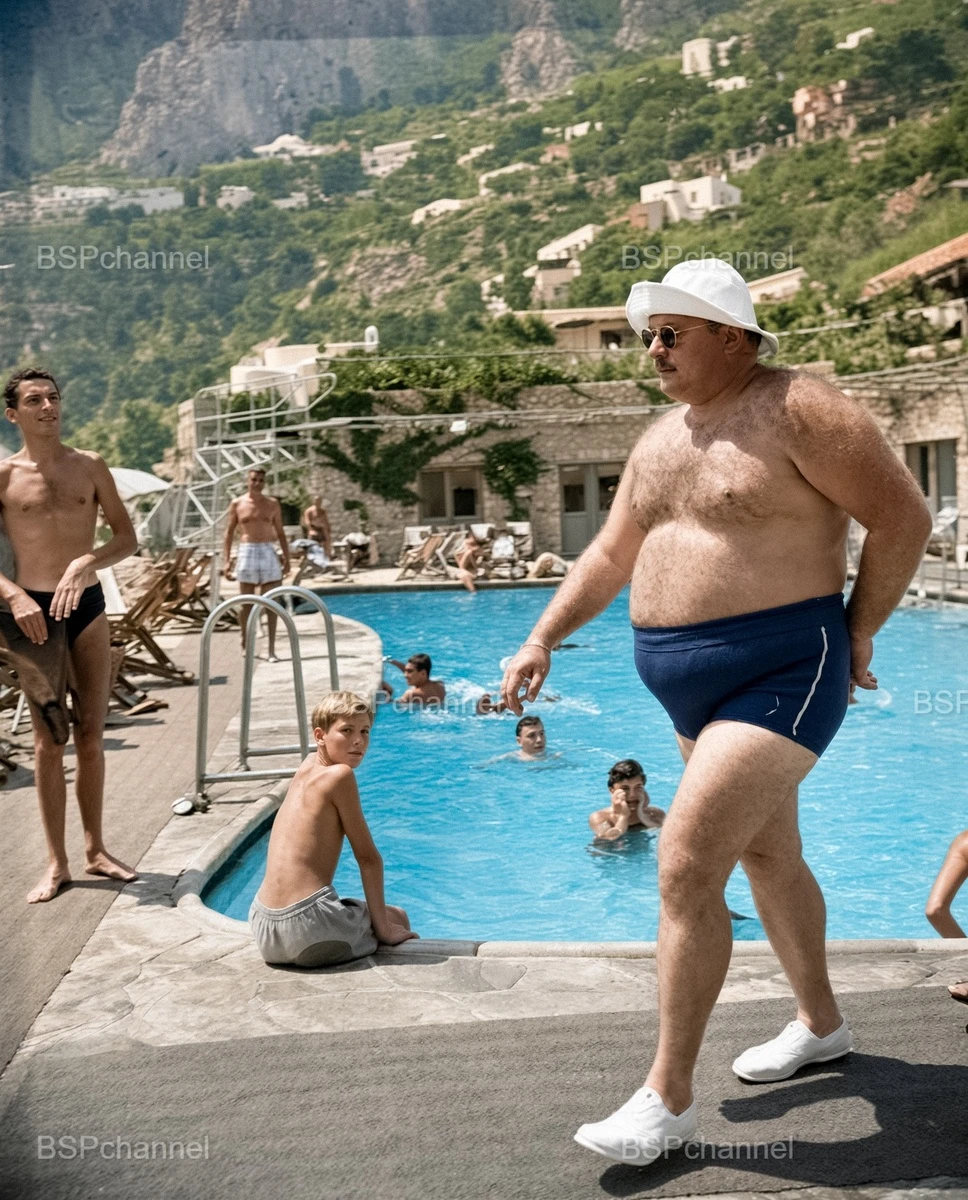
In July 1952, Egypt experienced a revolution led by the Free Officers Movement under Gamal Abdel Nasser. King Farouk I abdicated in favor of his six-month-old son, Ahmed Fuad II, and sailed into exile aboard the royal yacht *El Mahrousa*, eventually settling in Italy. On the island of Capri, the ousted monarch led a lavish, hedonistic lifestyle that constantly drew the lenses of Italian and international photojournalists. He frequented top luxury hotels like the Grand Hotel Quisisana, spending his days at cafes in the famous Piazzetta and aboard private yachts. By 1953, the 33-year-old Farouk had gained significant weight due to overindulgence. Photos from Capri typically show him in his signature dark sunglasses, light summer suits, or short-sleeved shirts, often flanked by bodyguards, photographers, or socialite companions.
A demonstration in East Berlin, 1950s. 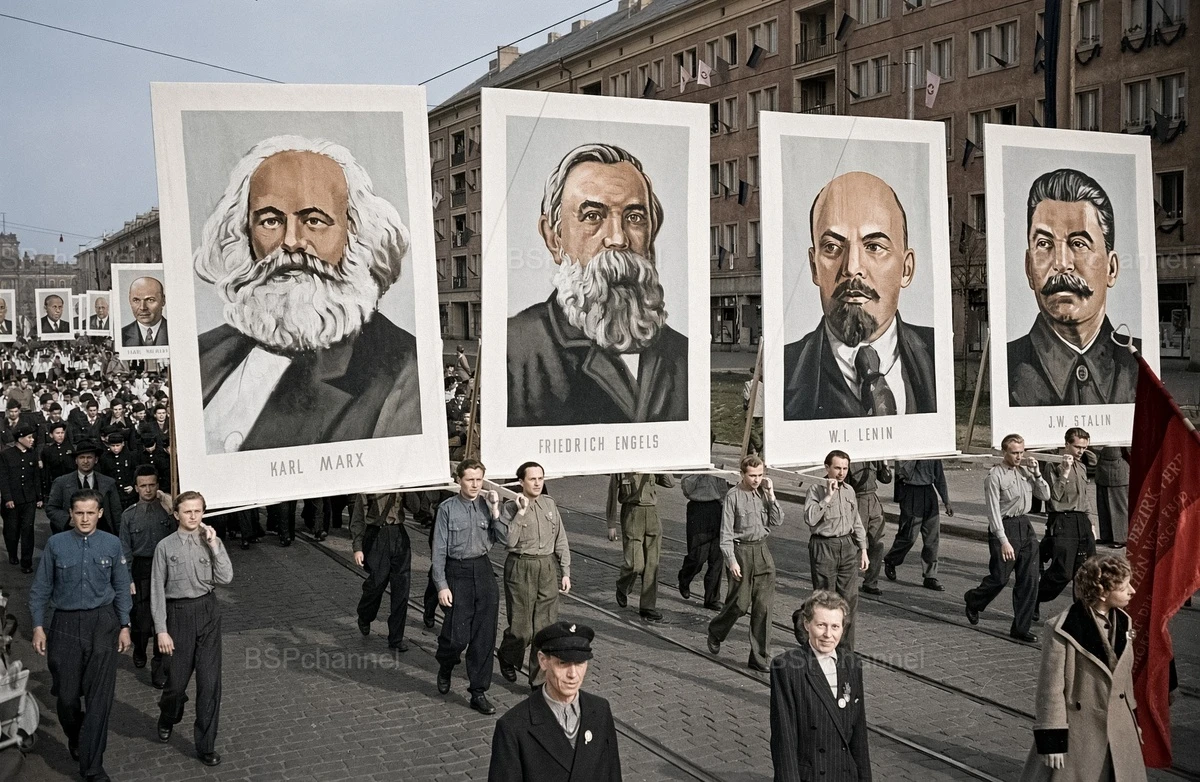
Following the establishment of the GDR in October 1949 and up until Stalin's death in March 1953 (and extending through the 20th Congress of the CPSU in 1956), this "four-portrait" standard was a mandatory feature of all official parades held by the ruling SED (Socialist Unity Party of Germany). Such rallies in East Berlin traditionally took place on Marx-Engels-Platz (formerly Palace Square, where the Berlin Palace was demolished in 1950), Alexanderplatz, or along the grand boulevard of Stalinallee (now Karl-Marx-Allee).
GDR, 1960s. 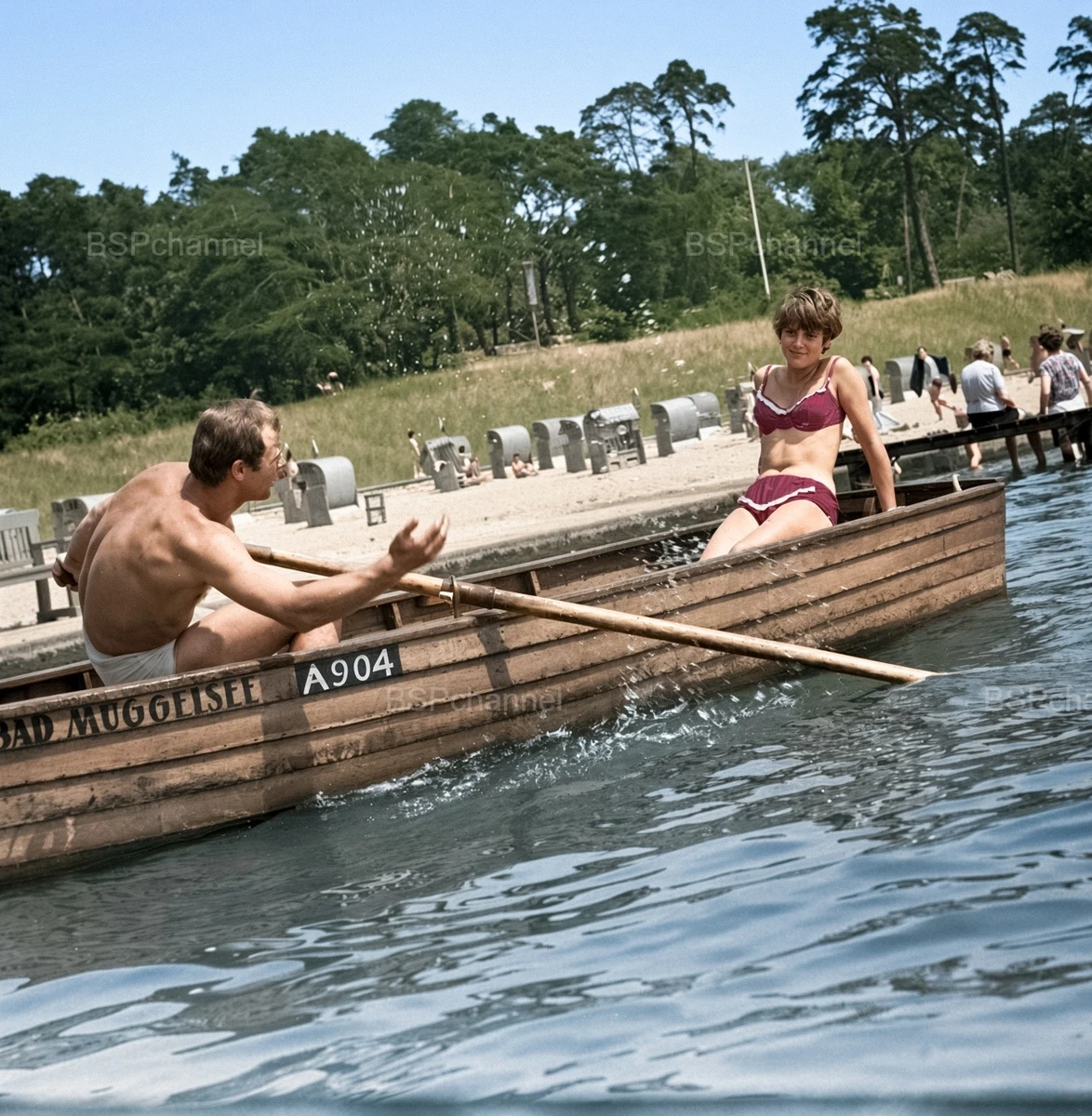
Two American tourists. Rome, Italy, 1951. 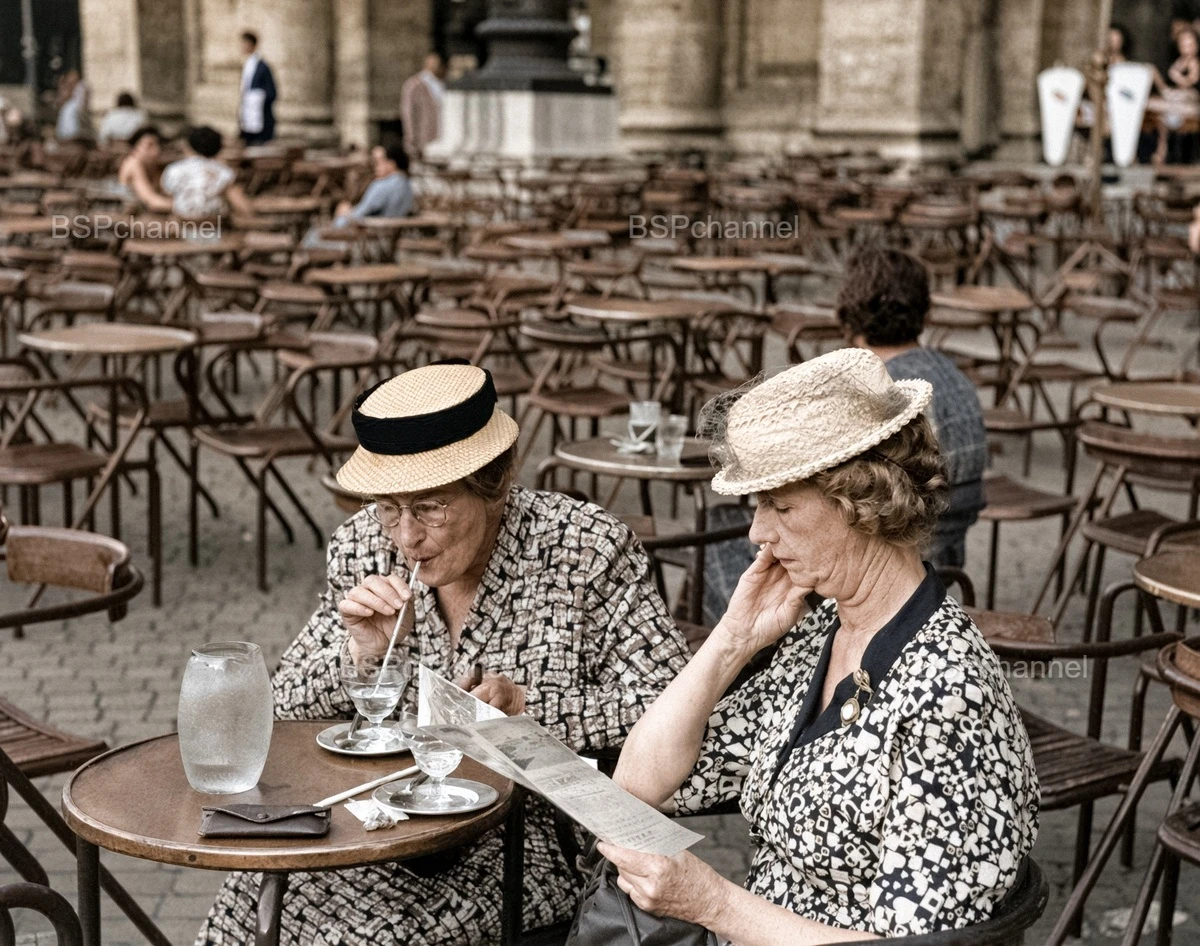
Photo by Ruth Orkin
A mother teaching her daughter to crochet in the Museum Garden. Budapest, September 1, 1959. 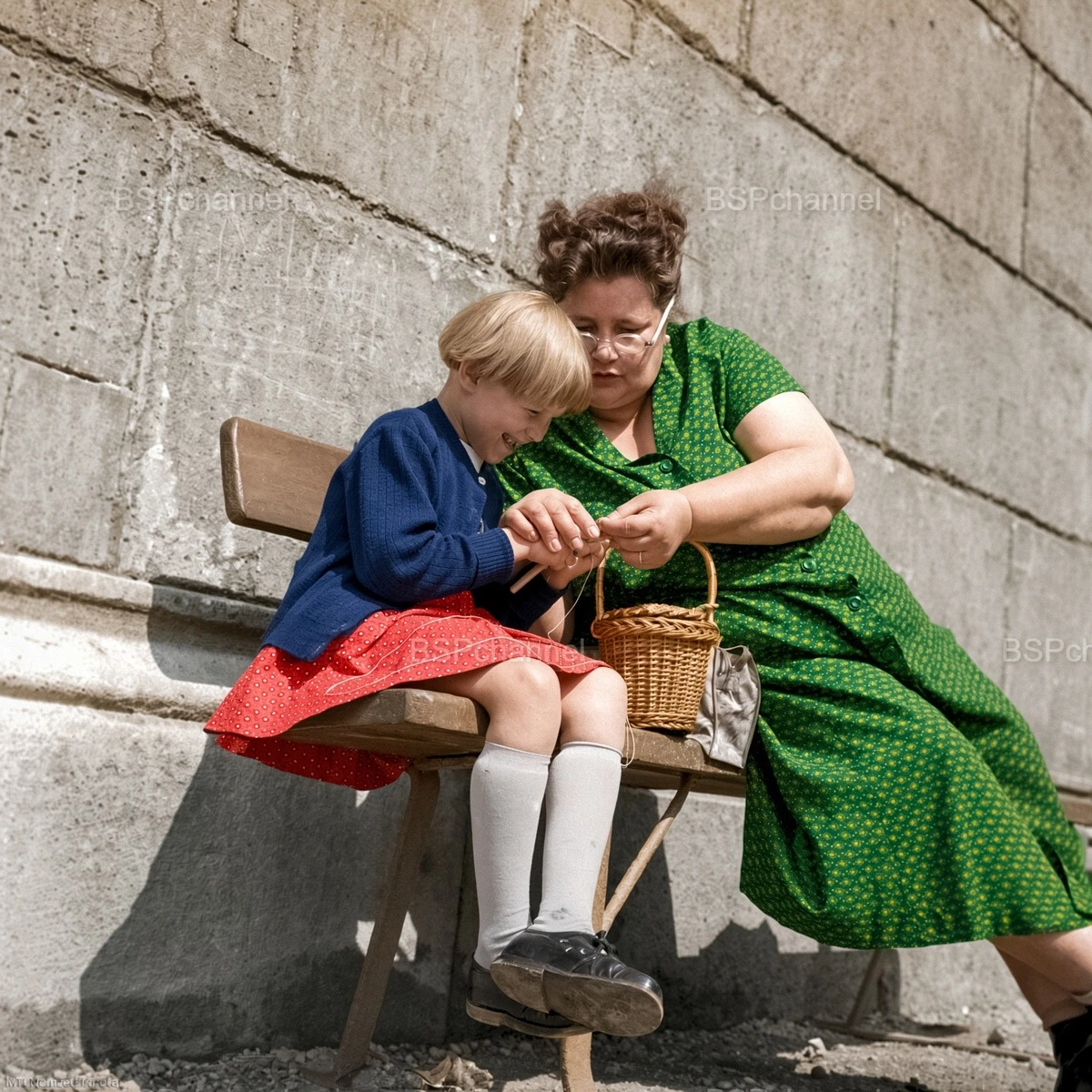
Photo by Rudolf Járai
A fisherman and his young sons mending nets on the sandy shores of Nazaré. Portugal, 1950s. 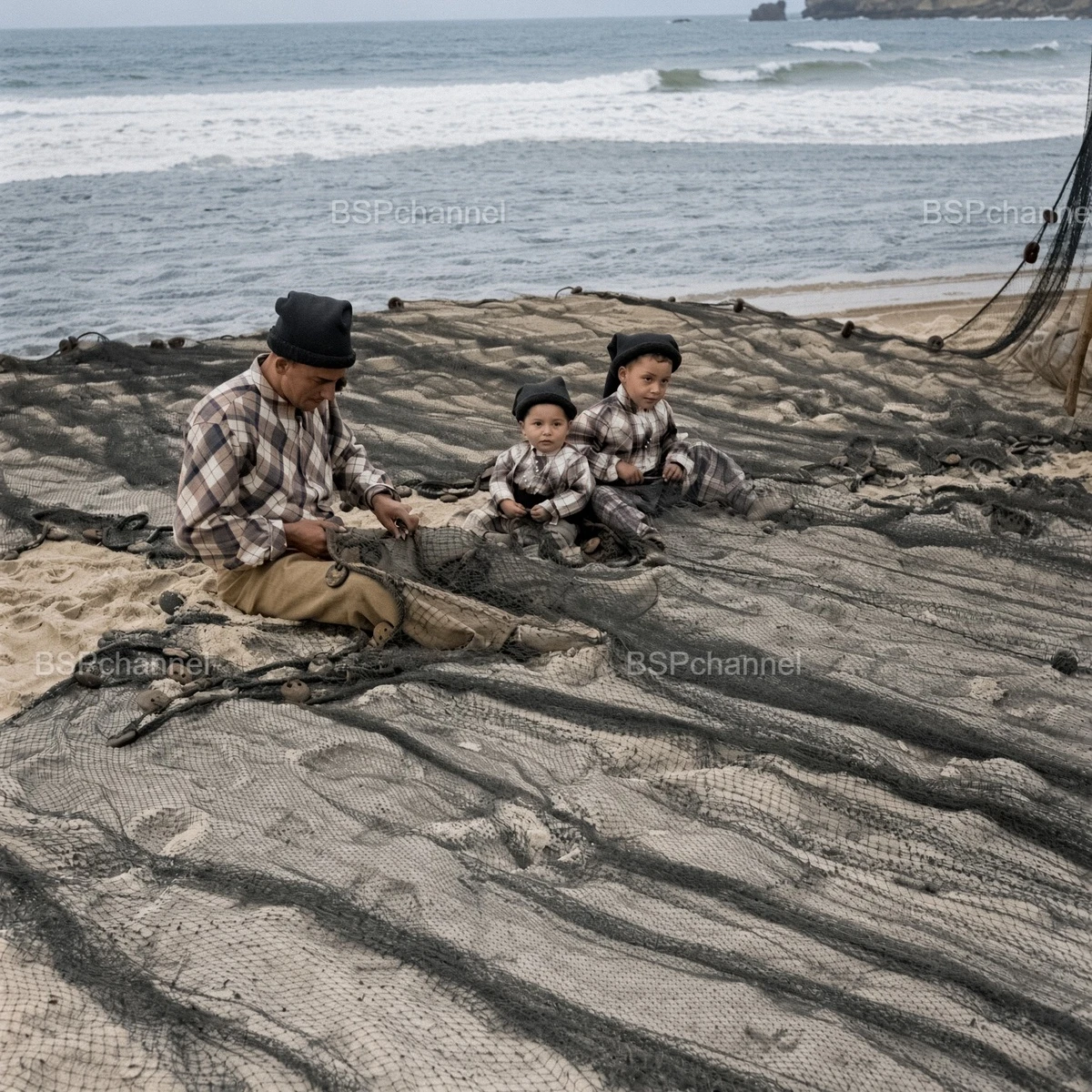
Mending nets on the beach was an essential daily chore. A torn net meant lost catches, so upon returning from the sea, fishermen would spend hours sitting on the sand untangling and stitching their gear with wooden shuttles before heading back out into the ocean. In Nazaré, fishing was a family and community affair. Young boys helped their fathers on shore from an early age, mastering the art of weaving and repairing nets long before taking to the sea in traditional sharp-prowed wooden boats.
A flower vendor, Zagreb, 1965. 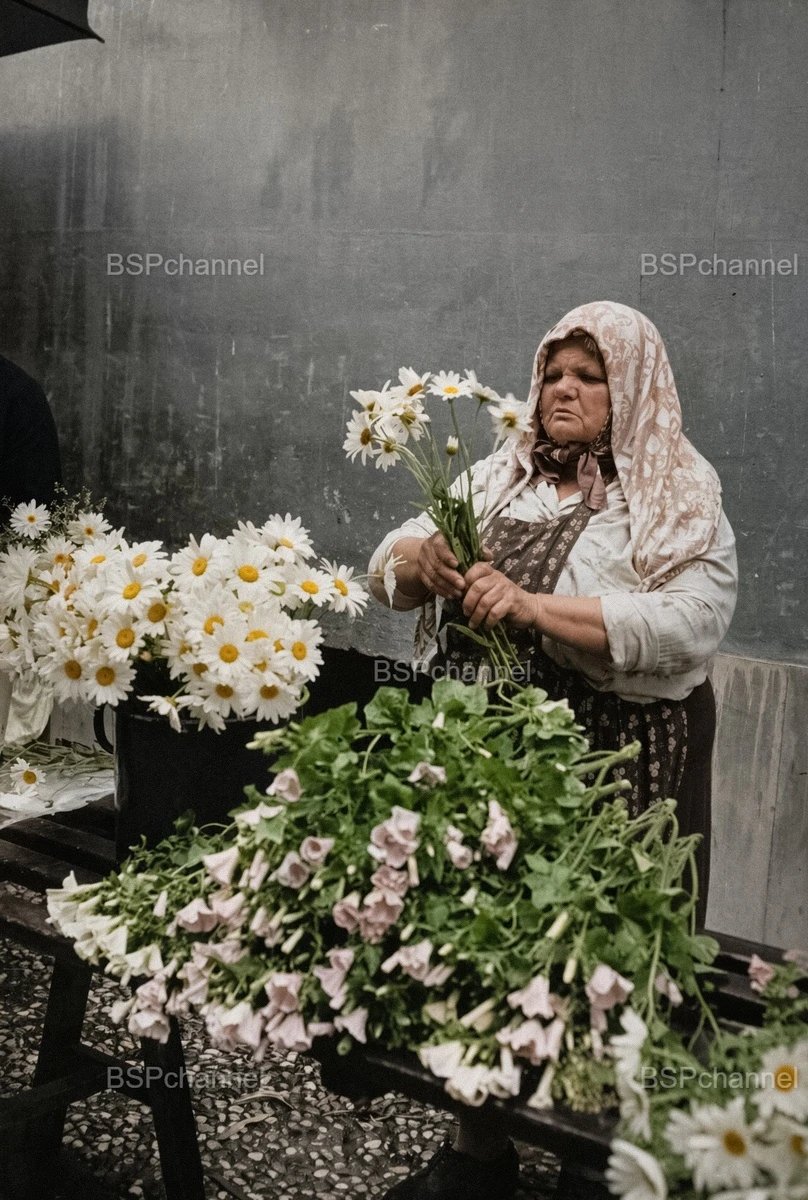
Photo by Henri Cartier-Bresson
Hungarian silent film actress Lucy Doraine enjoying the waves in the Baltic Sea, 1926. 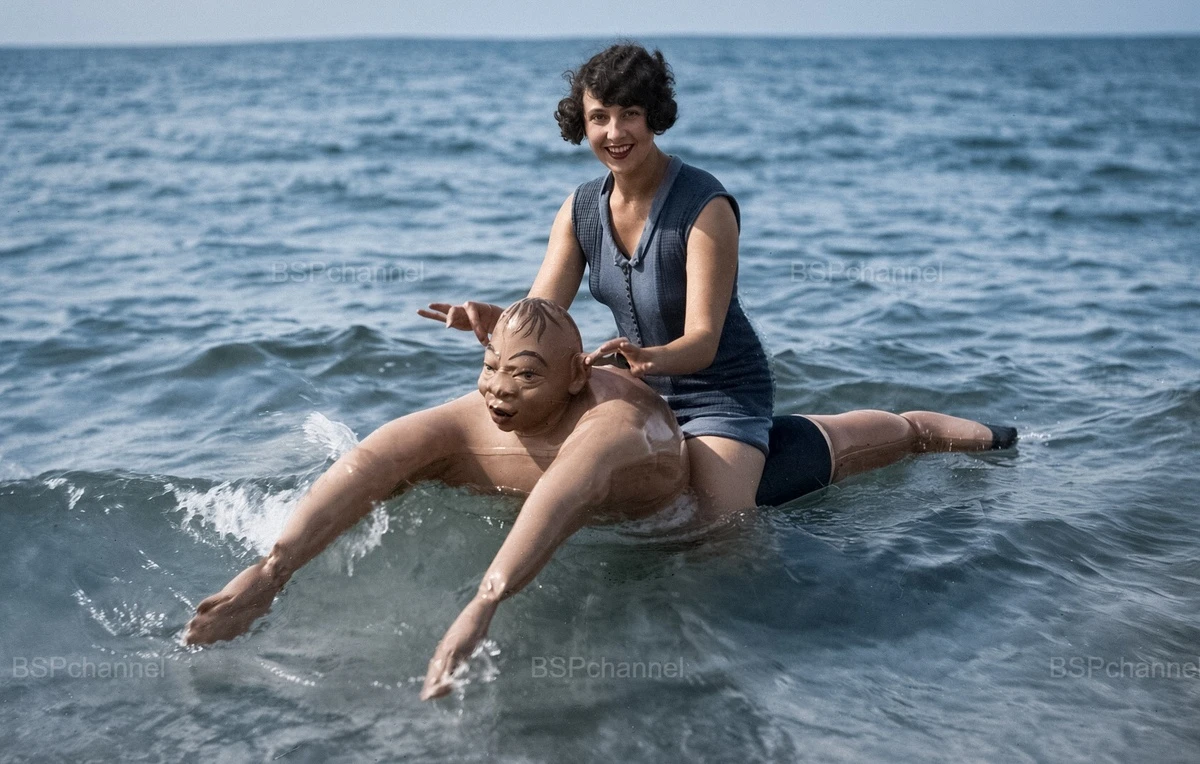
Lucy Doraine (born Ilona Kovács; 1898–1989) was a popular Hungarian silent film star who achieved fame in the 1920s starring in Austrian and German productions. Between 1918 and 1931, she appeared in over 20 films and was the first wife of celebrated director Michael Curtiz.
Monsieur Beauvoir with his pet falcon. Paris, 1950. 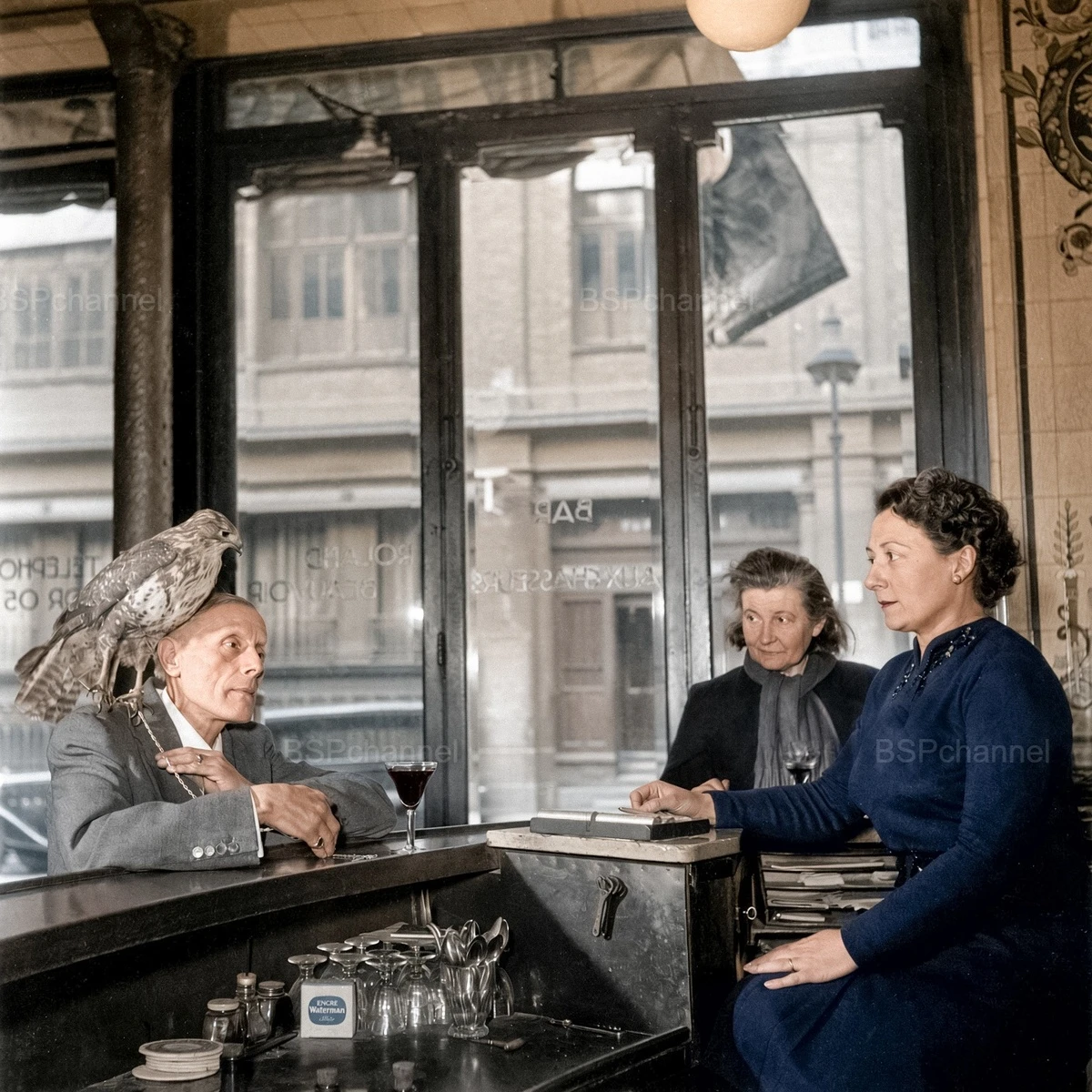
Photo by Robert Doisneau
Captured here is an elderly Parisian—Monsieur Beauvoir—strolling through the city with a pet falcon perched on his arm or shoulder. Photographer Robert Doisneau was fond of discovering eccentric, distinctive street figures who stood out from the tempo of city life, creating images that were poetic and slightly surreal.
Rural life in France, 1931–1934. 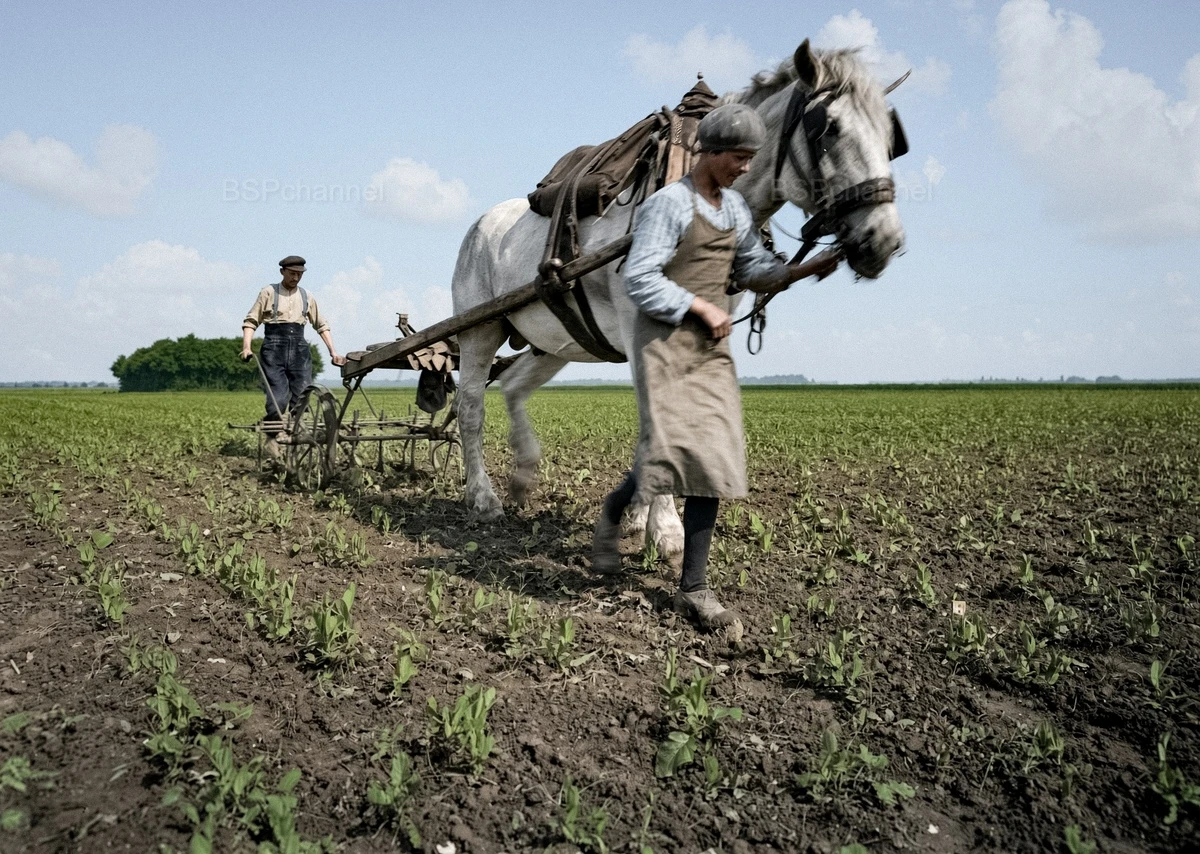
Photo by François Kollar
In 1931, the publishing house Horizons de France commissioned François Kollar to travel across the nation to document the lives and labor of French workers, artisans, and farmers. Over four years, he took thousands of photographs across every region of France—from Brittany and Normandy to Provence and Ariège.
A young man demonstrating his riding skills on a Csepel motorcycle in the Buda Hills—a promotional shot for the MOGÜRT Motor Vehicle Foreign Trade Company. Budapest, May 6, 1955. 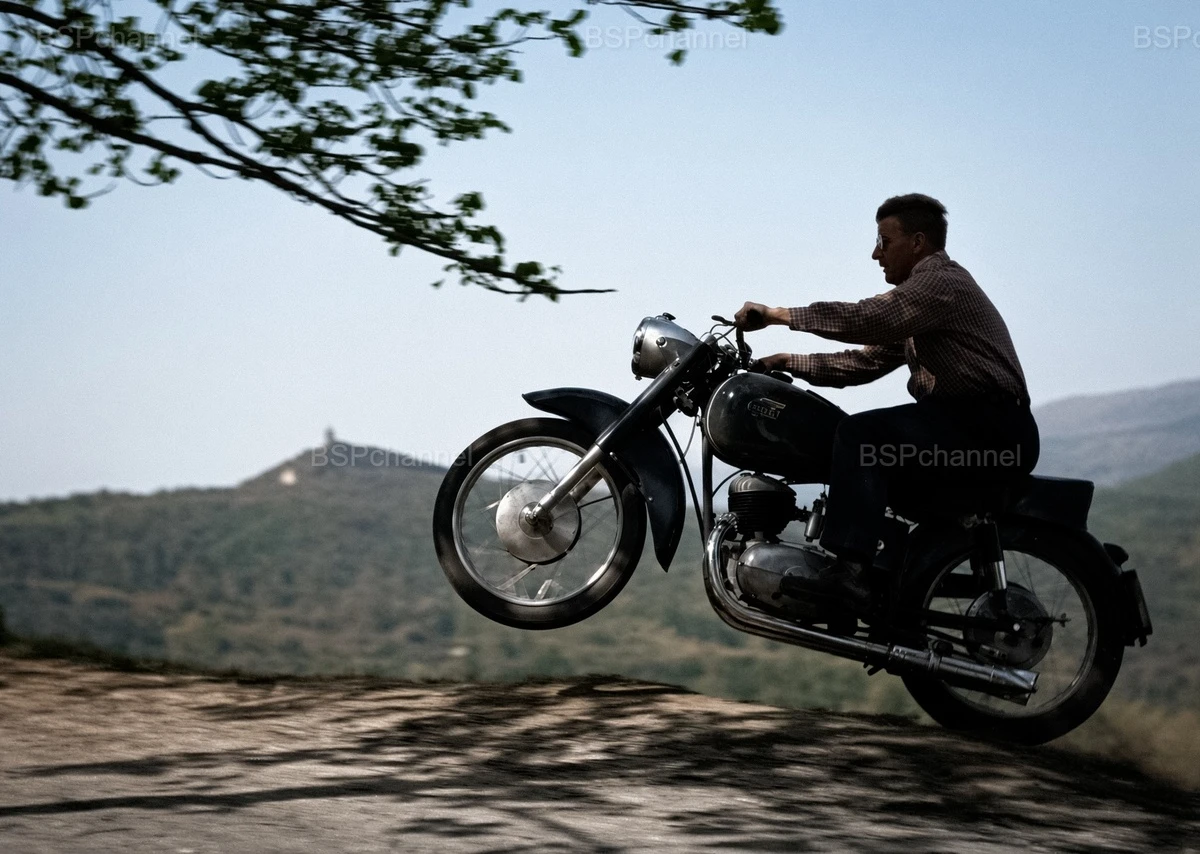
Photo by Rudolf Járai
The Buda Hills are a scenic, low mountain range in western Budapest, acting as the Hungarian capital's "green lungs" and a popular spot for outdoor leisure. The range's highest peak is Nagy-Kopasz (559 m), while János Hill (527 m) marks the highest point within city limits. Csepel was a legendary Hungarian motorcycle brand manufactured from the 1930s through the mid-1950s at the industrial giant on Csepel Island in Budapest. In 1956, the plant rebranded its 250cc models under the famed Pannonia badge, which were exported in large quantities to the Soviet Union.
A street vendor selling apples. Bucharest, 1946. 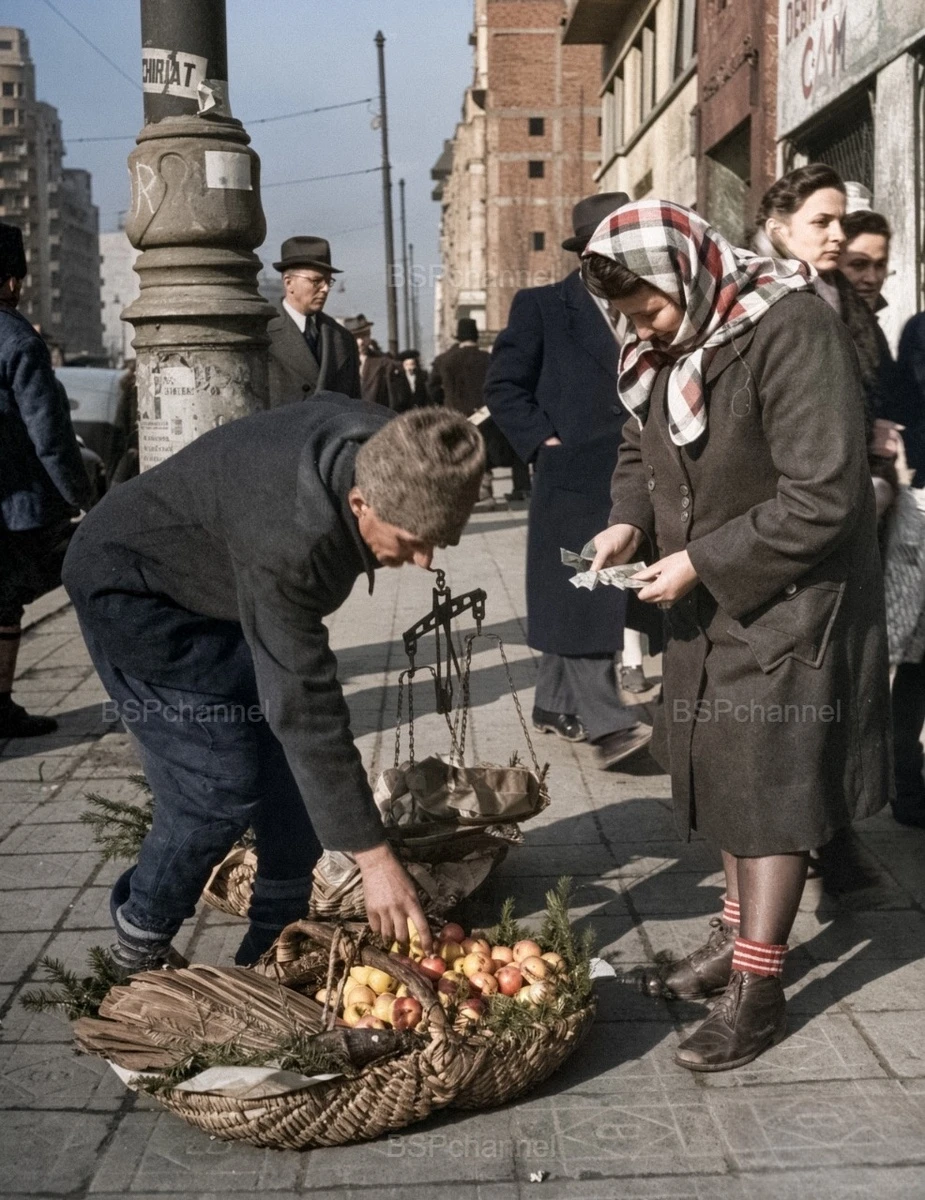
Winter visitors, The Hague, 1956. 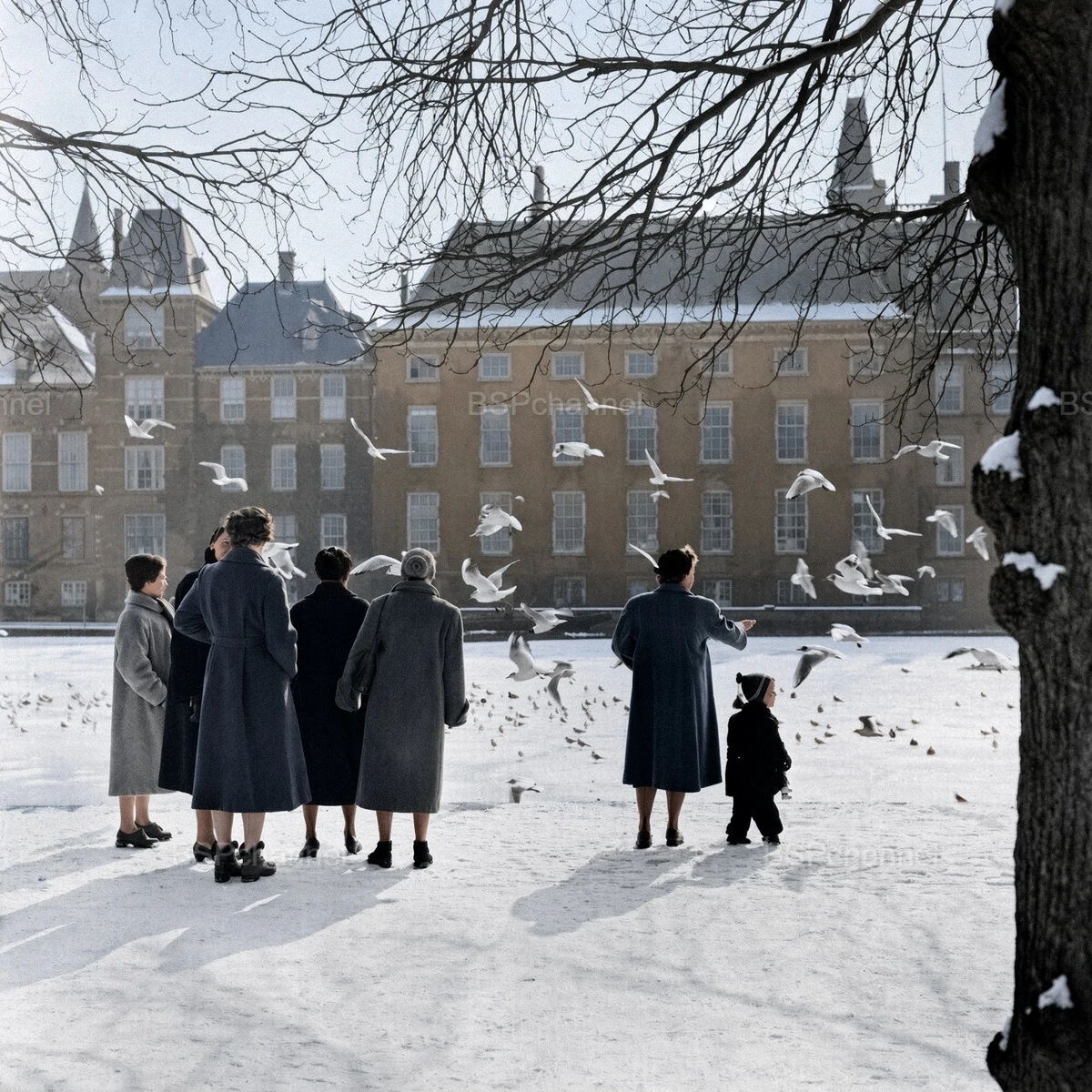
Photo by Ed van Wijk
Lisbon, Portugal, 1906. 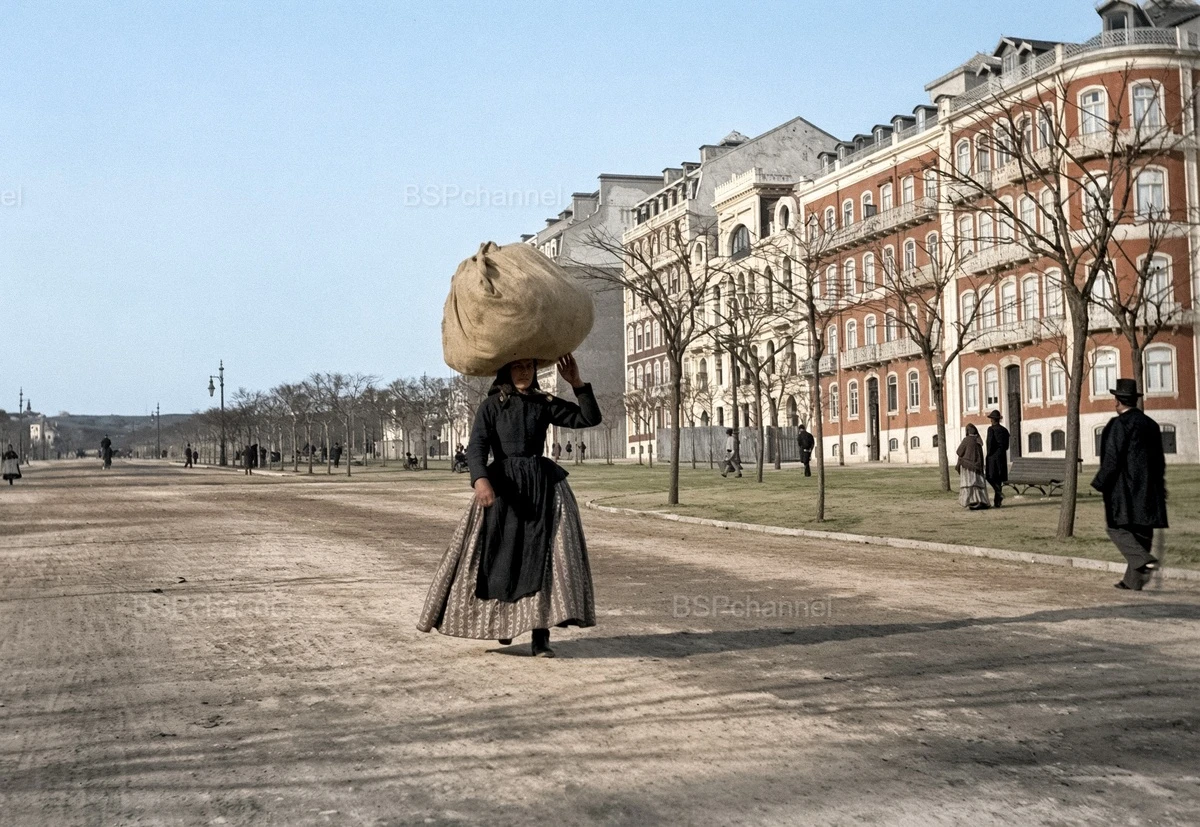
A woman balances a massive bundle of laundry on her head, steadying it with one hand. In early 20th-century Portugal, washerwomen and fishwives traditionally carried heavy baskets and sacks on their heads—a skill practiced from childhood using a specialized cloth ring for balance.
Short dress. Paris, 1969. 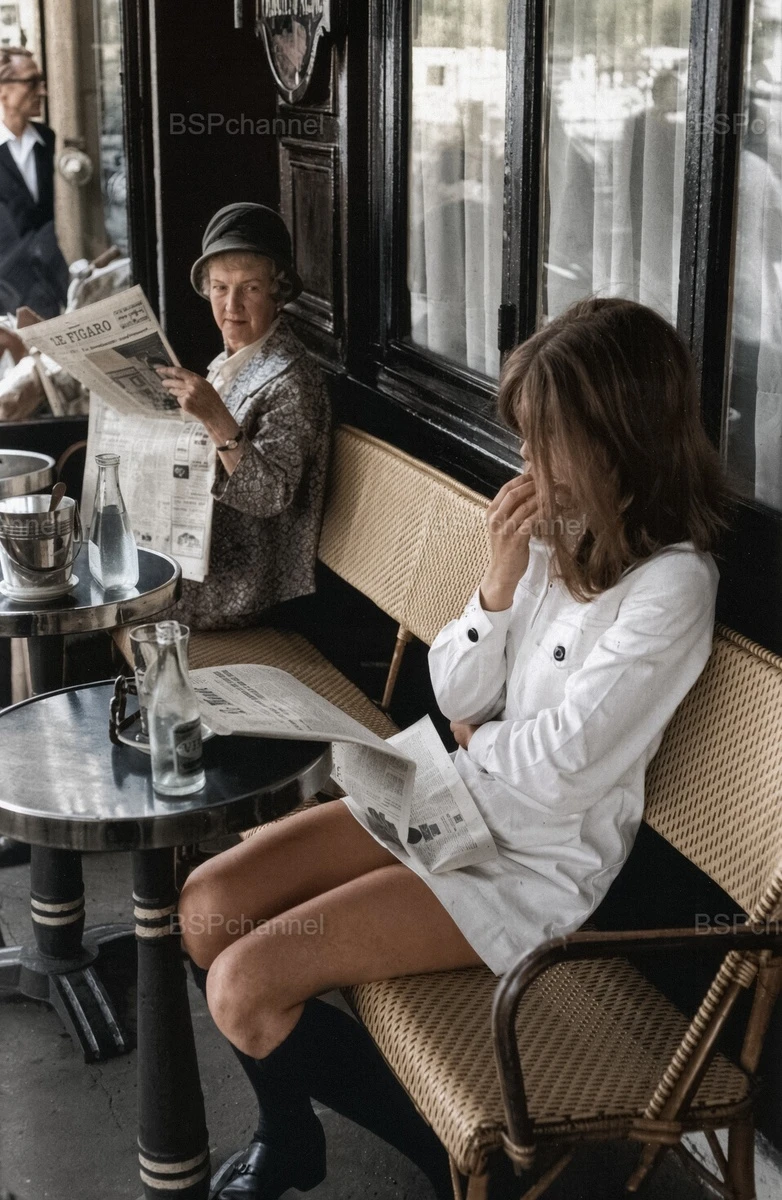
Photo by Henri Cartier-Bresson
By 1969, miniskirts and short dresses—popularized by Mary Quant and André Courrèges—had become the defining symbol of youth freedom and liberation following the May 1968 student protests in Paris.
An August Sunday, Milan, 1949. 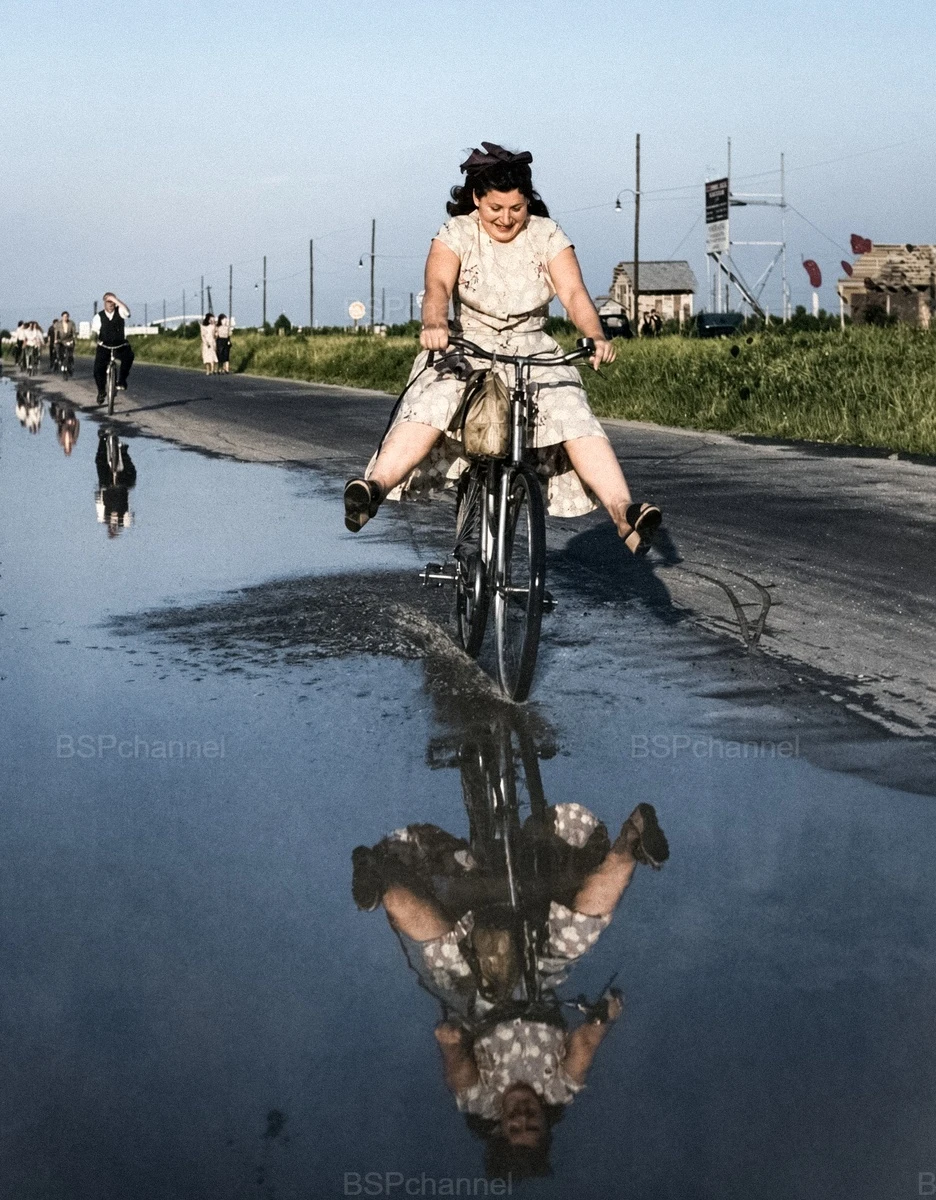
Photo by Mario De Biasi
Shadow and Reflection. Hendaye, France, 1927. 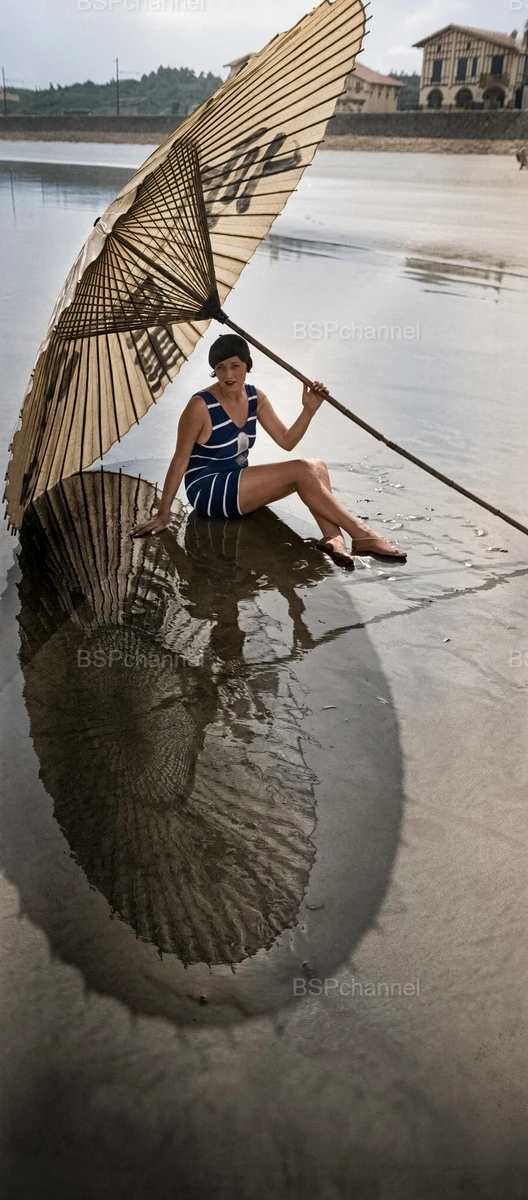
Photo by Jacques Henri Lartigue
Hendaye is France's southwesternmost coastal town and resort, nestled in the French Basque Country right on the Spanish border. Located on the Bay of Biscay at the mouth of the Bidasoa River, it sits directly across from the Spanish towns of Irun and Hondarribia.