In April 1943, off the coast of the Spanish town of Huelva, local fishermen pulled a body from the sea dressed in the uniform of a British Royal Marine officer. That single corpse ended up saving tens of thousands of Allied and Red Army soldiers. 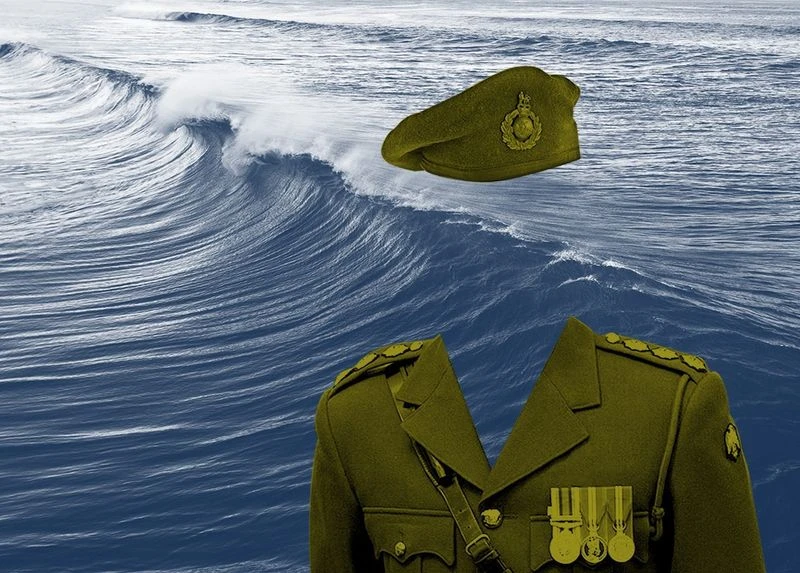
Inside the uniform pockets were an identity card for a Major William Martin, personal letters from his father and fiancée, a photograph of his sweetheart, two London theater tickets, a £79 bank overdraft notice, a wallet, a pack of cigarettes, keys, and a jeweler’s receipt for an engagement ring. 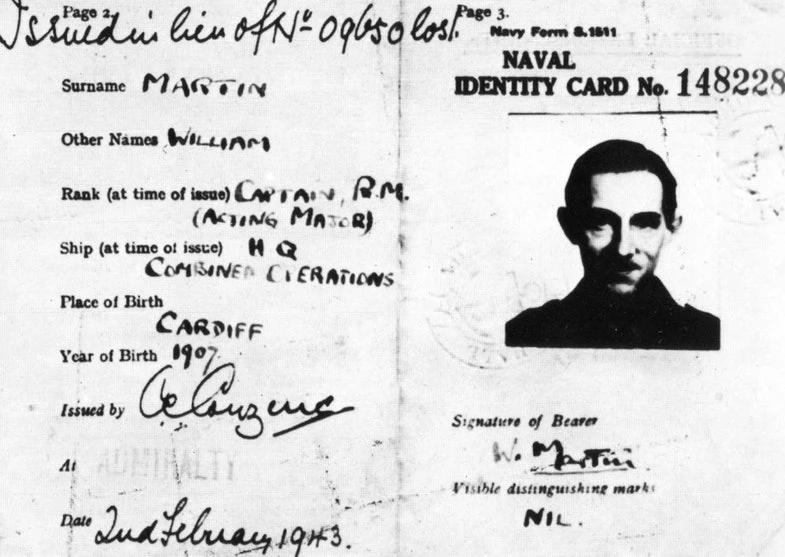
Major Martin's official identity card
Spanish authorities presumed the officer had drowned after a plane carrying him to the British territory of Gibraltar went down offshore.
Chained to the corpse was a small briefcase.
"Most Secret — By Hand Only"
After being alerted by its local consul, the British government urgently requested the return of the unopened briefcase. It was eventually dispatched to London via diplomatic pouch, but not before German intelligence agents managed to copy every document inside. Spain was officially neutral during World War II, but its regime sympathized with Hitler, and Spanish volunteers were actively fighting on the Eastern Front against the Soviet Union. 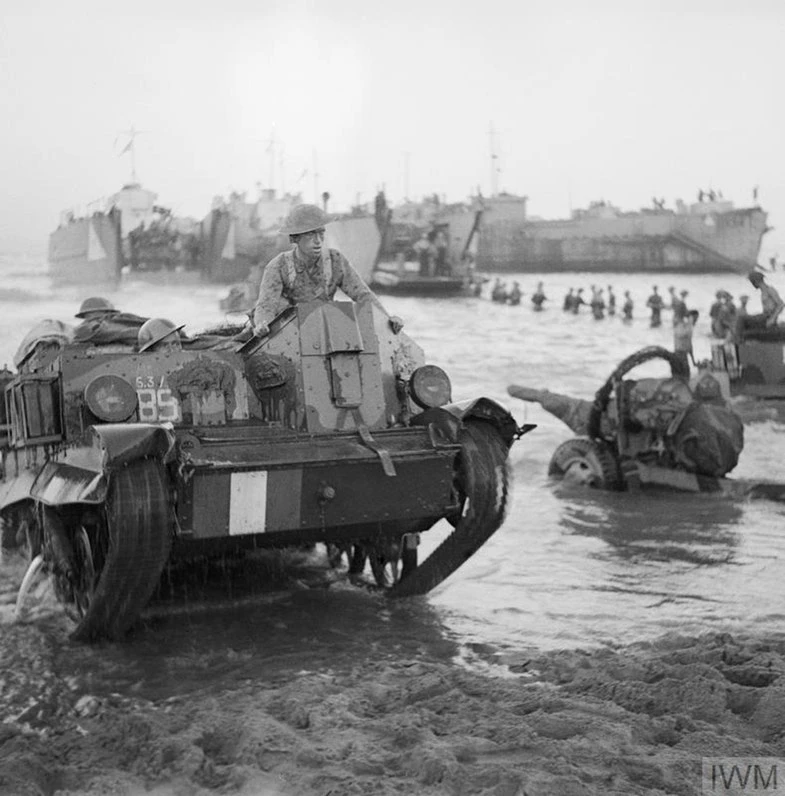
British troops landing on Sicily, July 1943
Among the papers in the briefcase was a letter from General Archibald Nye, Vice Chief of the Imperial General Staff, to the commander of Anglo-American forces in North Africa, indicating that the Western Allies intended to invade Southern Europe through Greece. Another letter to the Commander-in-Chief of the Mediterranean Fleet saw Lord Mountbatten hinting at an upcoming amphibious assault while cracking a clumsy joke about sardines.
Excerpt from the operational order:
"A dead body, dressed in the field uniform of a Major of the Royal Marines and wearing a life jacket, will be transported to the coast of Spain by submarine along with a briefcase and an inflatable rubber dinghy. The body, fully prepared for launch, will be enclosed in an airtight container marked: 'Handle with Care — Optical Instruments — Special Shipment'."
The Greatest Deception Operation of World War II
Hitler had previously been convinced that the Allies intended to land on the Italian island of Sicily. The intelligence planted on Major Martin changed his mind completely. Seven infantry and three Panzer divisions were hastily transferred to Greece, while the German garrison on Sardinia was bolstered to 10,000 troops.
When Anglo-American forces launched their invasion of Sicily in July 1943, the German High Command dismissed it as a feint, even redeploying 21 combat aircraft from Sicily to reinforce Sardinia. By the time the German General Staff realized their mistake, it was too late. The depleted garrison of 65,000 German soldiers proved no match for the 400,000-strong Allied invasion force. 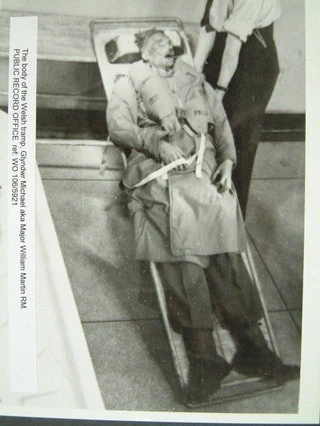
The body of Glyndwr Michael dressed as "Major William Martin" prior to dispatch to the Spanish coast.
Excerpt from the operational order:
"Should it be necessary to cancel the operation, the code words 'Cancel Mincemeat' will be issued. In this event, the body and container are to be sunk in deep water. As the container may be positively buoyant, it must either be weighted or flooded with water. If flooded, care must be taken to ensure the body remains inside. The briefcase is to be handed over to the Head of Intelligence in Gibraltar with instructions to burn it unopened (unless this can be done earlier). The rubber dinghy is also to be delivered to the Head of Intelligence for destruction."
Operation Mincemeat
British intelligence codenamed the deception "Operation Mincemeat." In reality, Major William Martin never existed. His role was played by the corpse of Glyndwr Michael, a 30-year-old homeless man who had died in London. Having found a suitable body with no visible injuries and no surviving relatives, MI6 kept it in cold storage for three months prior to the operation.
Planners chose a surname commonly found among Royal Marine officers. To solidify his cover, The Times even listed Major Martin among recent military casualties before the mission began. Used uniform items, receipts, unpaid bills, and personal letters from loved ones gave the cover identity a convincingly human touch. 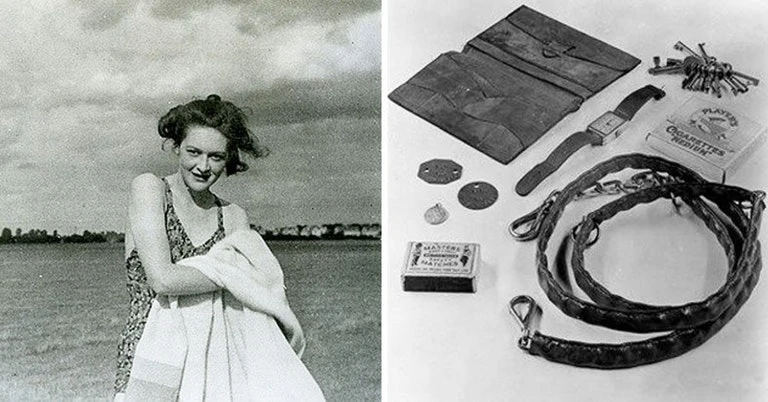
The photograph of the "fiancée" found in Major Martin's wallet. In reality, it was MI5 staff member Jean Leslie.
The trickiest tasks were dressing the frozen corpse in boots and obtaining an ID photo. In the end, a lookalike intelligence officer posed for the identity card picture, while the dead man's feet were thawed using an electric heater so the boots would fit.
The Royal Navy's Hydrographer calculated currents, tides, and weather conditions to pinpoint the precise drop location. Huelva was selected specifically because a particularly active German intelligence agent operated there. Submarine HMS *Seraph* delivered "Major Martin" to the designated area, keeping the body preserved in a canister of dry ice until release. 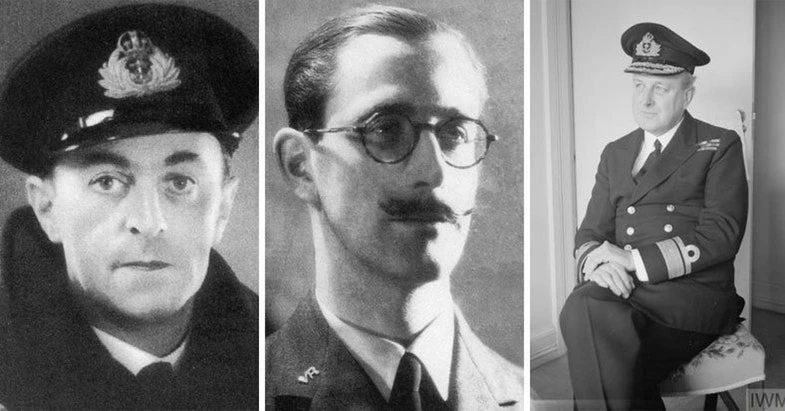
The masterminds behind Operation Mincemeat. Left: Naval Intelligence officers Ewen Montagu and Charles Cholmondeley (Photo: historybuff.com). Right: Rear Admiral John Godfrey (Photo: Imperial War Museum).
Back in 1939, Rear Admiral John Godfrey had circulated a memo outlining deception techniques, including planting false documents on a drowned corpse. That idea is widely believed to have been drafted by Godfrey's assistant, Lieutenant Commander Ian Fleming—the future creator of James Bond.
Impact on the War
British historians widely regard Operation Mincemeat as the single most successful military deception of World War II.
Sicily was secured 52 days earlier than originally scheduled.
Allied forces lost 1,500 troops and 12 ships during the invasion—far below the expected casualties of 10,000 men and 300 vessels.
Following the invasion of Sicily, King Victor Emmanuel III dismissed Prime Minister Benito Mussolini, prompting the new Italian government to open secret peace negotiations.
The German military lost all trust in captured British intelligence. On several subsequent occasions, genuine secret documents were dismissed as deliberate plants.
Anticipating an Allied landing in Greece, Hitler halted the offensive at Kursk and diverted key forces to the Balkans. As a result, the Wehrmacht permanently surrendered the strategic initiative on the Eastern Front, while the Allied advance through Italy continuously diverted German resources away from fighting the Red Army.
Add your comment
You might be interested in:










Spanish is easy, right?

Gray in the beard, a devil in the ribs (acting wild in

Techno music played on classical instruments

A sea breeze at sunset

A Chevrolet lost its rear axle while the driver was

In China, a unique method for clearing fallen leaves has

A cat falls in love with its owner’s new cactus

In Ecuador, a boy rides a llama to school every day

In the U.S., a drone delivered food to a monkey
