The Story of Manfred Fritz Bajorat, the Sailor Found Mummified Aboard a Ghost Yacht (15 photos)
In 2016, news of an eerie and chilling discovery swept the globe. On a yacht drifting 60 miles off the coast of Barobo in the Philippines, the mummified remains of German sailor Manfred Fritz Bajorat were found.
Speculation immediately arose that he had gone missing as far back as 2009—supposedly unseen by anyone since—and that his vessel had been drifting with his body for years. The bizarre appearance of the mummified remains quickly captured public attention, made all the more poignant by the sailor's posture: slumped over the radio set, as if frozen mid-gesture while desperately trying to send a final distress call. 
In early March 2016, two Filipino fishermen spotted a white yacht drifting aimlessly. As they approached, they noticed its broken mast and that the vessel was sitting dangerously low in the water, clearly indicating it had been drifting at sea for an extended period. 
The partially submerged yacht was found with a broken mast.
Boarding the vessel, the young fishermen found chaotic disarray on deck and below. Inside the cabin, they came upon the mummified body of the yacht's 59-year-old German owner and skipper, Manfred Fritz Bajorat, whose identity was confirmed by documents left on board. 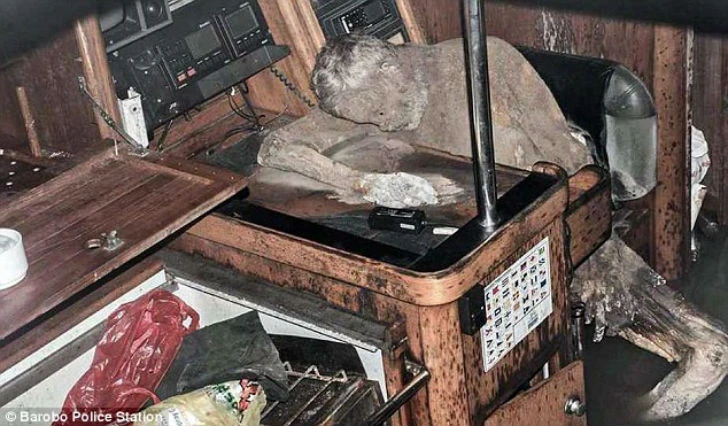
The mummified body of the skipper, found by fishermen beside his radio equipment.
Death had apparently overtaken the captain mid-mayday call. The combined effects of salty air, dry winds, and intense heat had naturally mummified his body. Nearby lay a final letter written to his wife, Claudia, who had died of cancer in 2010. 
The skipper's wife, Claudia, who succumbed to cancer. The couple had sailed the globe together until divorcing two years before her death. Manfred's final written words were addressed to her.
Bajorat had spent the previous two decades living at sea, joined on his round-the-world journey by his wife until their divorce two years before her passing. His letter to her ended with these heartbreaking words:
"For thirty years, we walked the same path side by side. But the dark forces were stronger than the will to live. Now you are gone. May your soul rest in peace. Yours, Manfred."
Manfred Bajorat was a 39-year-old corporate consultant when he realized he was tired of his dull life in Germany's Ruhr region. The white-collar worker decided to train as a sailor. He started out on amateur crews in the Aegean and Mediterranean before tackling the Indian Ocean. The decision to buy a yacht of his own came after a trip to Martinique with his wife; he later even listed Fort-de-France, the island's capital, as his birthplace on Facebook. 
German adventurer Manfred Fritz Bajorat, skipper and owner of the 40-foot yacht Sayo.
The couple were thrilled with their purchase of the striking 40-foot yacht, which they named Sayo. Bajorat poured part of his savings into the boat, and over the next twenty years of sailing the oceans and filling in new locations on a world map with marker pens, he never regretted a single penny. Claudia jokingly referred to the vessel as "the blonde"—both for its gleaming white hull and its high maintenance costs, teasingly warning that Sayo would bleed them dry. 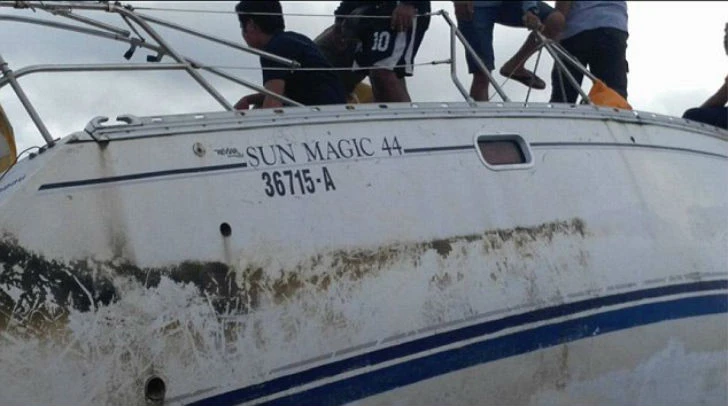
The yacht as it appeared when discovered off the coast of the Philippines.
The Pacific, the Atlantic, the Caribbean, Indonesia, Mallorca, the Mediterranean, and the Baltic. Eleven years into his travels, Manfred even had his captain's certificate updated with his new nickname, "Tiger Shark." Tiger sharks are solitary creatures—an advantage that helps them detect low-frequency vibrations and locate prey even in murky waters. Yet Manfred lacked that keen instinct himself: he failed to notice when Claudia grew weary of life at sea and decided to step ashore for good. 
Family photo albums were recovered on board. This picture shows Manfred with his wife, presumably their daughter, and friends enjoying a picnic.
When the 40-foot yacht washed up off the Philippine coast with its mast snapped, it was partially flooded—likely having weathered a storm after the skipper had already died. 
The yacht was discovered off the coast of Barobo.
Water stood ankle-deep on the cabin floor. Damp clothes and ruined books were strewn everywhere, yet kitchen towels and the family photo album remained surprisingly untouched by the sea spray and dry, tropical wind. 
Food supplies found aboard the yacht. 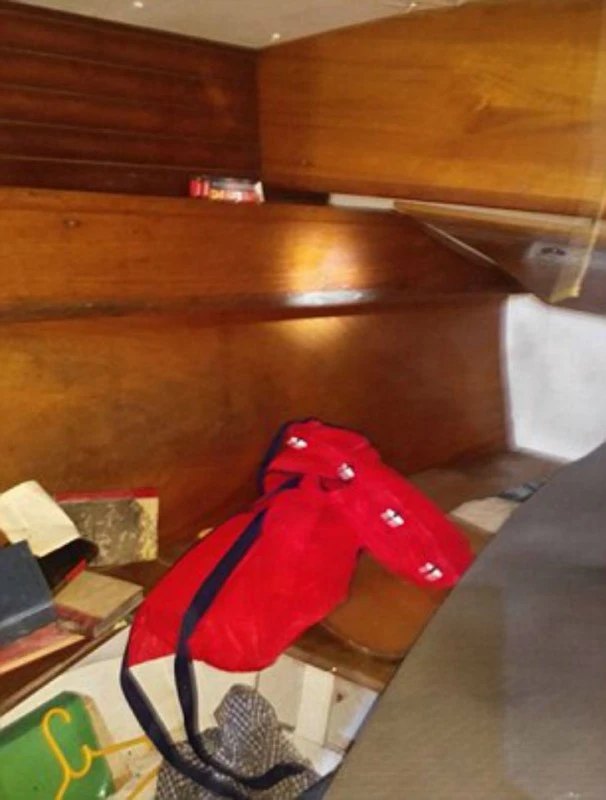
Chaotic disarray covered the deck and flooded the cabin.
Investigators found no evidence of anyone else having been on board, nor did they find any weapons or potential murder tools. Foul play was quickly ruled out. 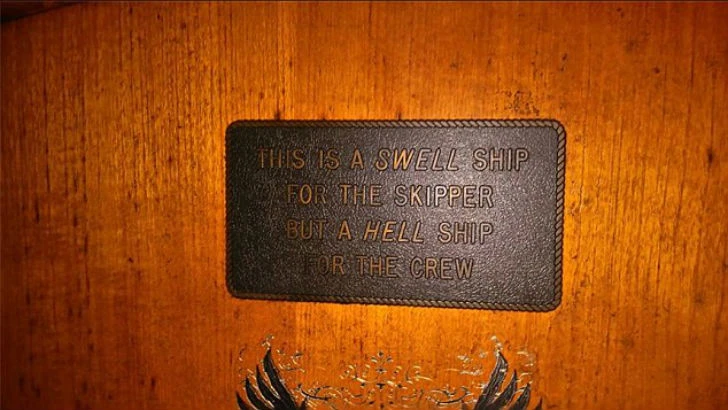
"A fine vessel for a skipper, but a damn terrible place for a crew."
Following an autopsy, Philippine police officials confirmed there was no evidence of a criminal background to the case.
"The sitting posture suggests that death was sudden, likely caused by a heart attack," noted Cologne-based forensic pathologist Dr. Mark Benecke. 
Photos from the family album recovered aboard the drifting yacht.
Early rumors claimed the corpse had been drifting across the sea for seven long years, but that turned out to be pure myth. An autopsy conducted by Philippine authorities revealed that the sailor had not died in 2009, but roughly a week before his body was discovered, suffering an acute myocardial infarction. 
Manfred, presumably with his daughter.
The ghost ship myth was further debunked by paperwork showing that Bajorat had cleared maritime authorities as recently as 2013. Additionally, a friend reported having spoken with him about a year prior to the discovery. 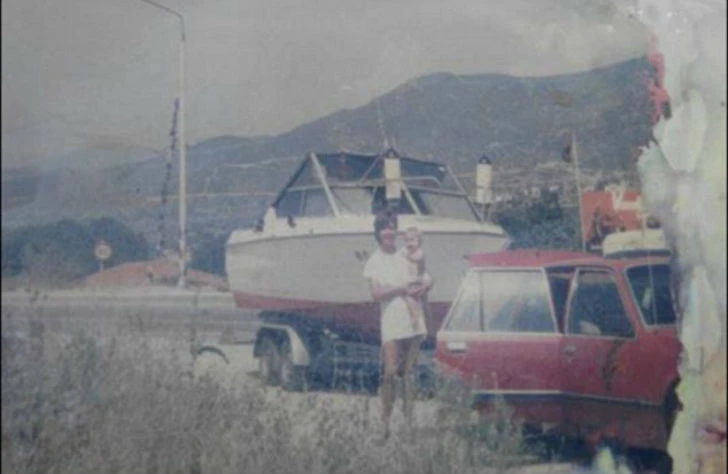
Possibly the skipper's wife, Claudia, holding their daughter.
How then did the body end up in such an extraordinary state of preservation in just days? Experts explained that intense heat, dry ocean winds, and salty air created the perfect environment for rapid mummification. While full mummification usually takes 6 to 12 months—or 3 to 5 months in rare circumstances—signs of partial mummification can appear in as little as 1 to 2 weeks under extreme environmental conditions. 
Natural mummification occurs when a body is exposed to an environment that inhibits decay. Extremely cold climates offer a well-known example of this—such as Ötzi the Iceman—while dry, hot, and salty conditions can produce similar preservation.