200 Watches Hurled from a Third-Floor Window (3 Photos)
In 1981, Kikuo Ibe, a young head design engineer at Casio, tripped while walking down a hallway at the company’s Tokyo headquarters. The pocket watch his father had given him as a graduation gift slipped from his fingers and hit the hard tile floor with a sharp clatter. The case cracked, the hands snapped off, and the delicate gears scattered across the floor. In a split second, a cherished keepsake was ruined. 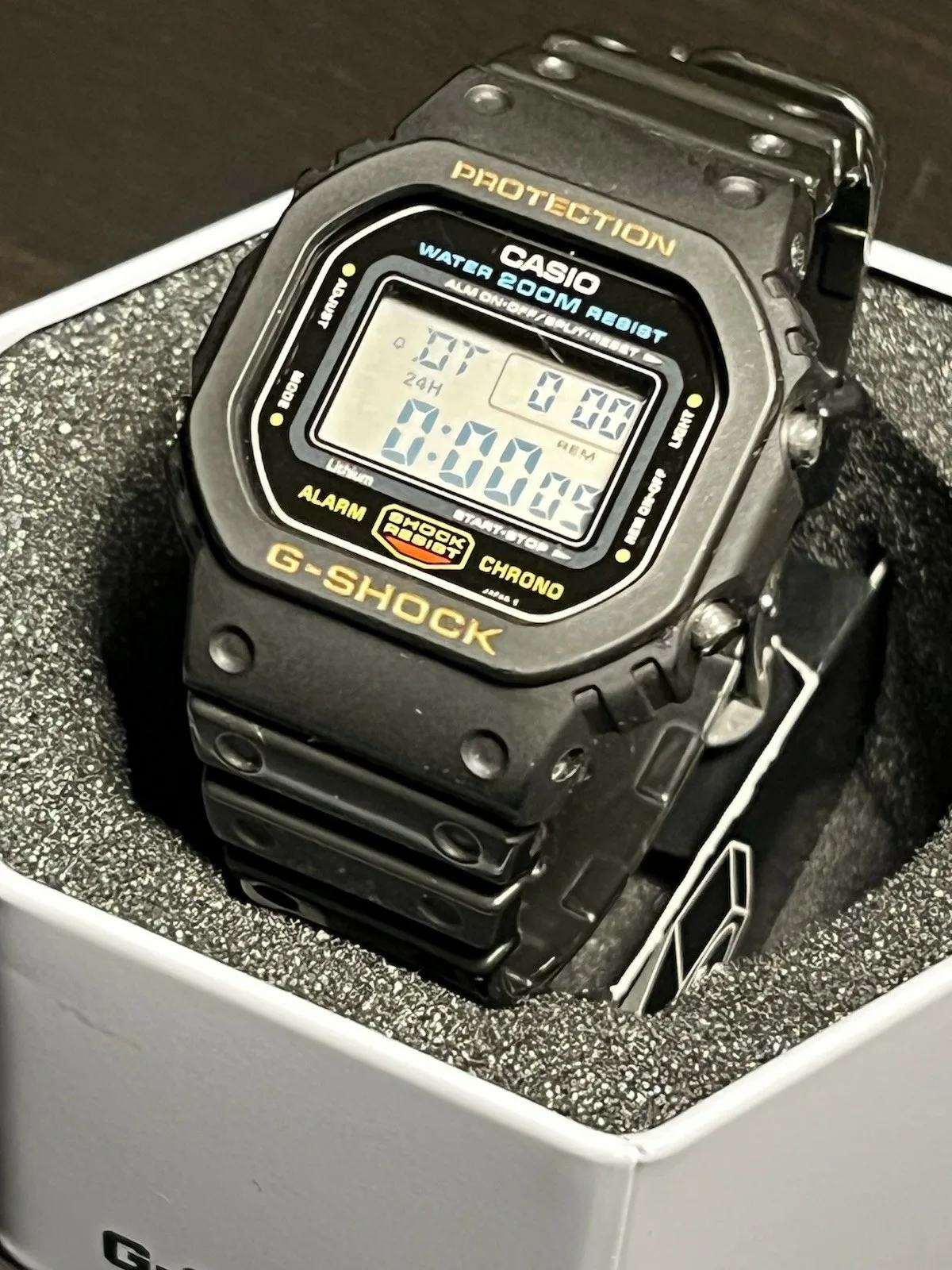
Back in the early 1980s, wristwatches were treated as fragile pieces of jewelry. Men carefully took them off before working under the hood or playing sports. A careless knock against a doorframe often meant an expensive repair bill. But Ibe took the destruction of his father's gift as a personal challenge. He made up his mind to build a watch that could survive a fall onto hard ground.
He assembled a three-person team dubbed "Team Tough." Together, they rallied around Ibe’s "Triple 10" philosophy: the watch had to withstand a 10-meter drop onto concrete, handle 10 bars of water pressure, and run for at least 10 years on a single battery.
Rather than relying on theoretical calculations, the team took a ruthless, hands-on approach. A third-floor restroom window at Casio's R&D center overlooked an asphalt courtyard, providing a drop of exactly 10 meters. Ibe headed upstairs himself to throw prototypes out the window. He wrapped the quartz modules in thick layers of rubber, but the delicate components still shattered on impact. By the end of 1982, more than 200 prototypes had been smashed on the pavement below, and the design had ballooned to the size of a grapefruit. Dead-ended and exhausted, Ibe was on the verge of resigning.
The breakthrough came one weekend in a city park. Sitting on a bench, Ibe noticed some neighborhood children bouncing a solid rubber ball. With every hard slam against the ground, the outer skin absorbed the force while the very center remained virtually untouched. It was a stroke of genius: the movement didn't need to be armored—it needed to float. 
Back at his workbench, Ibe devised a floating module system. The electronic movement was suspended inside a hollow steel core, supported only at a few points by shock-absorbing polymer cushions. The entire case was then wrapped in a chunky, faceted polyurethane bezel that protruded well past the crystal. The result was an armored cocoon in which the movement floated in mid-air.
In April 1983, the Casio G-Shock DW-5000C hit the shelves. In the United States, the newcomer was put through its paces on live television: hockey players used it as a puck for slapshots, and a heavy fire truck drove right over it. Through it all, the LCD display never missed a beat.
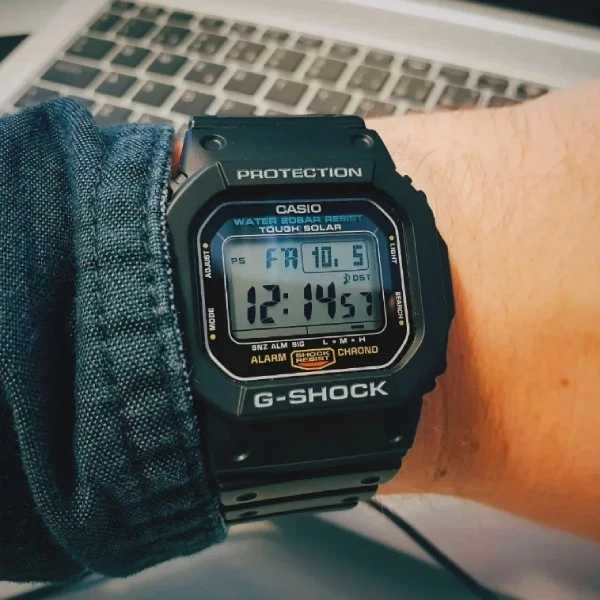
I bought my first G-Shock 5600 about twelve years ago for hunting trips and wrenching in the garage. Over the years, it has survived drops from stepladders onto concrete, deep bogs, and grinding grit. The strap has long since weathered its share of scratches, but the glass remains crystal clear, and I've only had to replace the battery once.
To date, the G-Shock family has sold more than 140 million units worldwide, earning a permanent spot on the wrists of military operators, first responders, and polar explorers. As for Kikuo Ibe, he still wears his original 1983 model—a testament to where relentless engineering obsession can lead.