Chinese bullfighting with bare hands (9 photos)
In China, there's a unique institution, or rather an academy, where they teach... bullfighting! It's truly an academy, and it's over 700 years old. However, it seems we're the last generation to have experienced it. 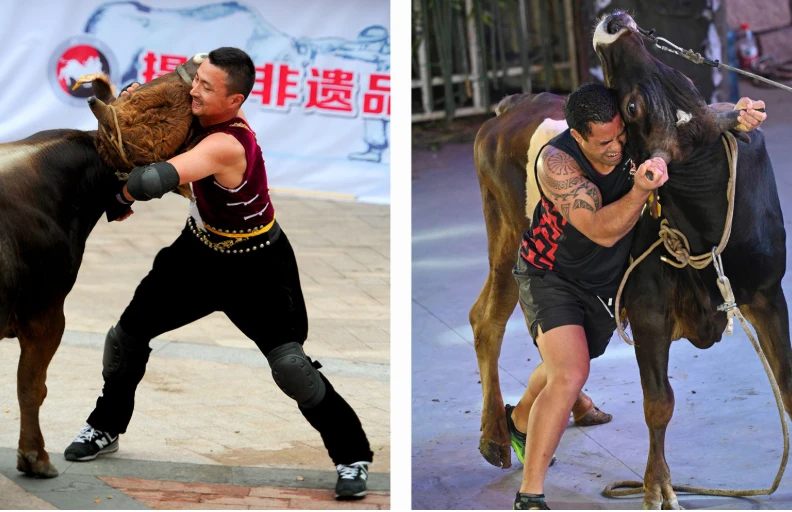
The Subtle Science of Bullfighting 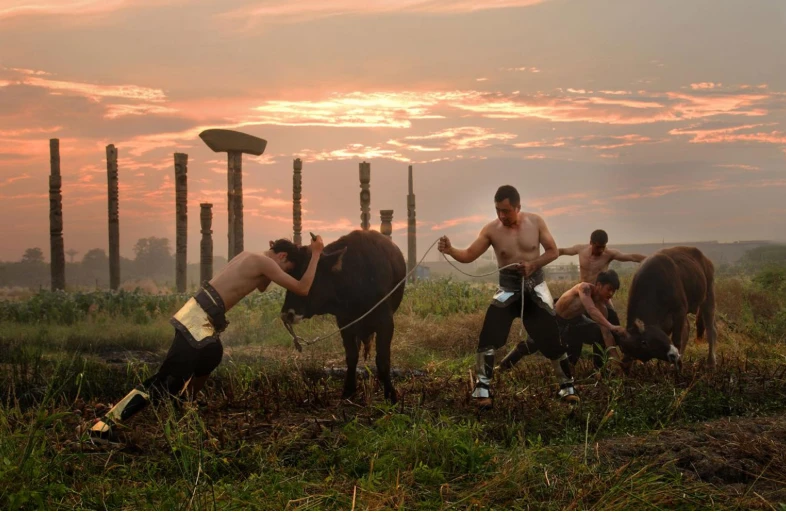
The student grows, but the bull grows faster. There's your motivation to keep up the good work.
In Jiaxing, there are families from the Hui tribe, who have been practicing martial arts for generations and hold guannu fights during the Eid al-Adha holiday. Yes, they are a Muslim minority. And the tribe believes that the tradition of bullfighting originates from Eid al-Adha, intertwined with the region's long history of herding. The rules of the fight are simple: if the wrestler knocks the bull to the ground, he wins. If the timer runs out and the bull is still standing, the bull wins. 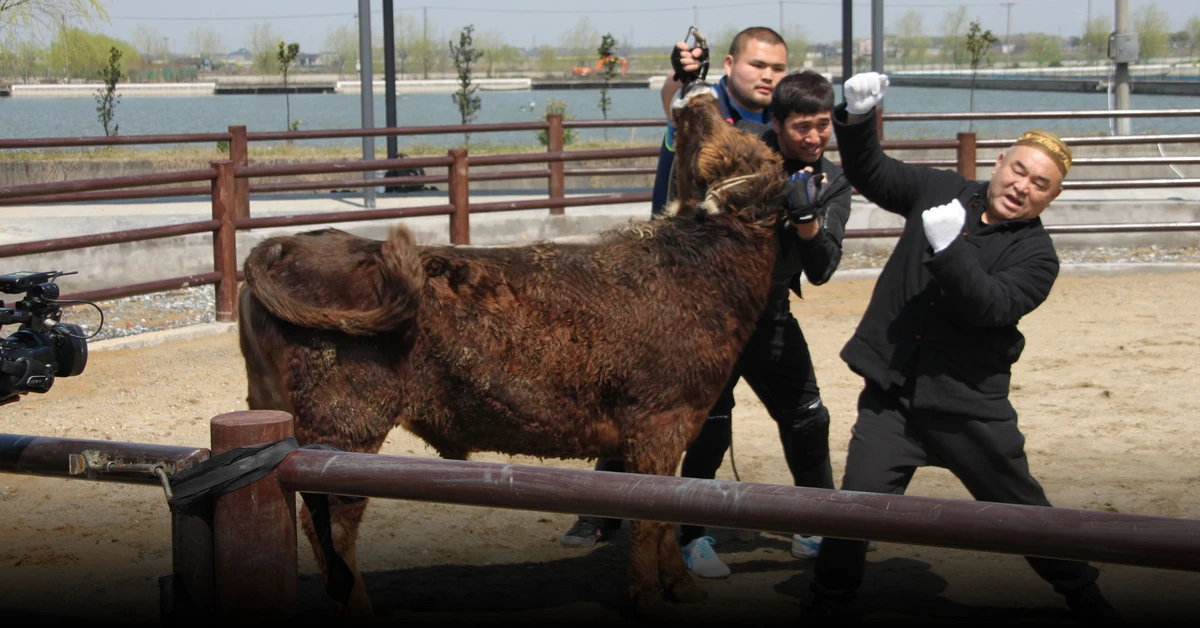
You can recognize a master teacher by his white gloves. The bull is weak, just for training.
Before fighting a real bull, students at China's last bull-wrestling academy must wrestle a carved wooden head bolted to the courtyard wall. They are shown how to properly grab the bull's neck, balance, and avoid being gored. They must twist the bull's neck more than 90 degrees. And they mustn't go head-on. They must walk around the bull in a circle. Training on a wooden bull can take several months. If you haven't been gored by a wooden cow, you're ready to train on bulls under a trainer's guidance. Just to get used to their speed and stability. 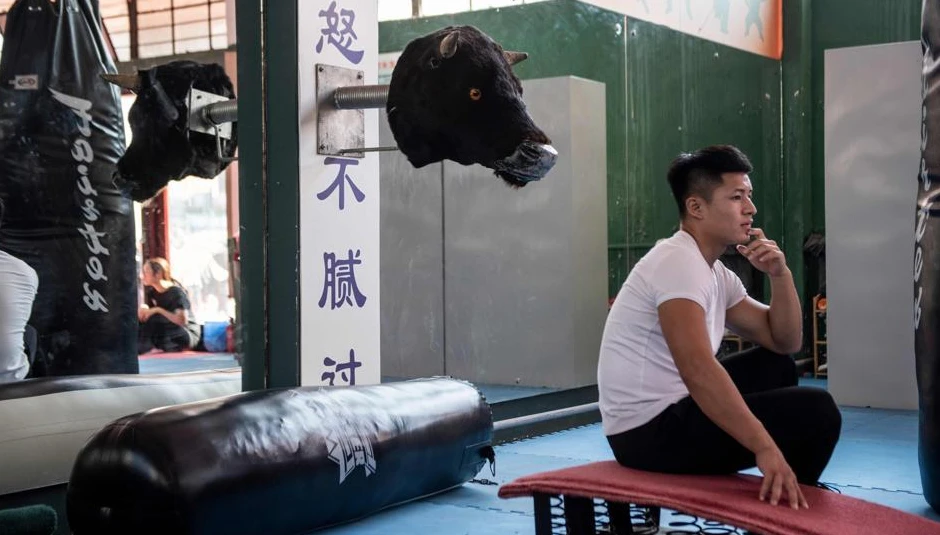
Here's a training head for beginners in the Academy gym.
A real opponent is a huge 500-kilogram bull. That's why they usually choose those with athletic experience – they simply have better reflexes and a lower risk of injury. Matches are usually held in the spring. Although the location varies, sometimes it's an arena, sometimes just an open field. There's always a referee who comments on the proceedings, just like in a wrestling or boxing match.
How everyone fell in love with bullfighting 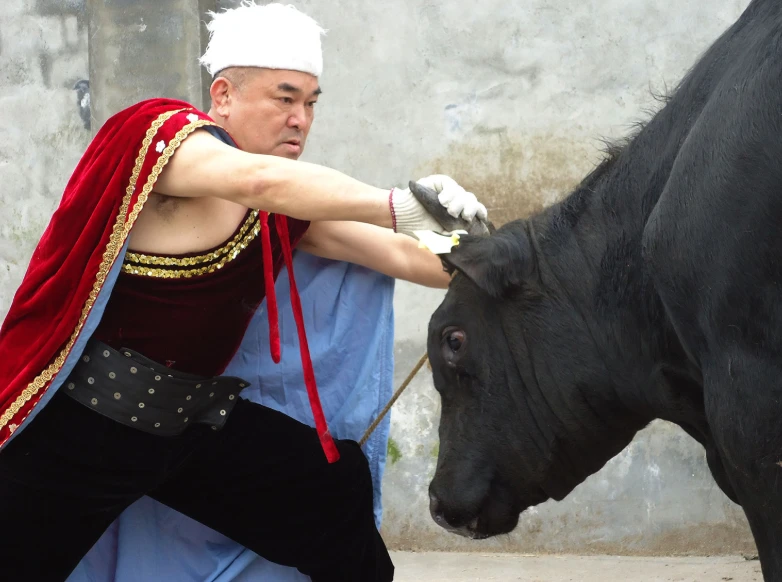
Yes, this guy is 70. Envy him. Look how healthy bullfighting is (ha, this is actually a file photo of him).
The art of bullfighting is called guannu. It was quietly and peacefully passed down within the tribe and didn't attract many tourists. Until 1982, when the oldest bullfighting master, Han Haihuan, brought it to the attention of the entire country by organizing a match at the Second National Traditional Games for Ethnic Minorities. Everyone loved this "Chinese bullfight" (but without the pikes!) so much that everyone asked – when will there be more performances like this? In 2011, it was added to the national list of intangible cultural heritage. And the bullfighting academy is its last stronghold. 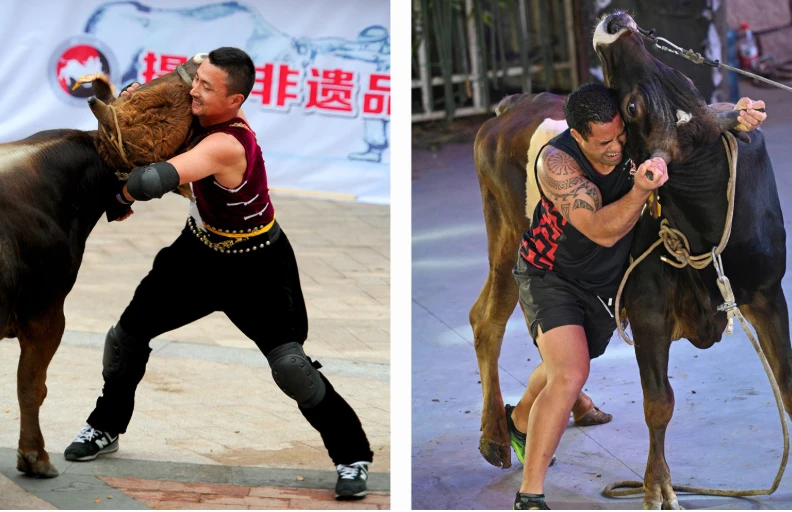
Bullfighting as a National Sport in 2016
The problem is that few can afford to devote themselves to this sport professionally. Therefore, now that the masters have become quite old, they often invite strongmen and athletes from other countries simply to take a bullfighting course and compete with the animal for their own enjoyment. The problem is that the proceeds from bullfighting shows don't allow them to recruit many students and pay them stipends. This is because Jiaxing is overshadowed by major cities like Shanghai and Hangzhou, and typically ranks mid-table among the region's tourist attractions. There's no constant influx of new faces seeking tickets.
The bull is also being trained at this time. 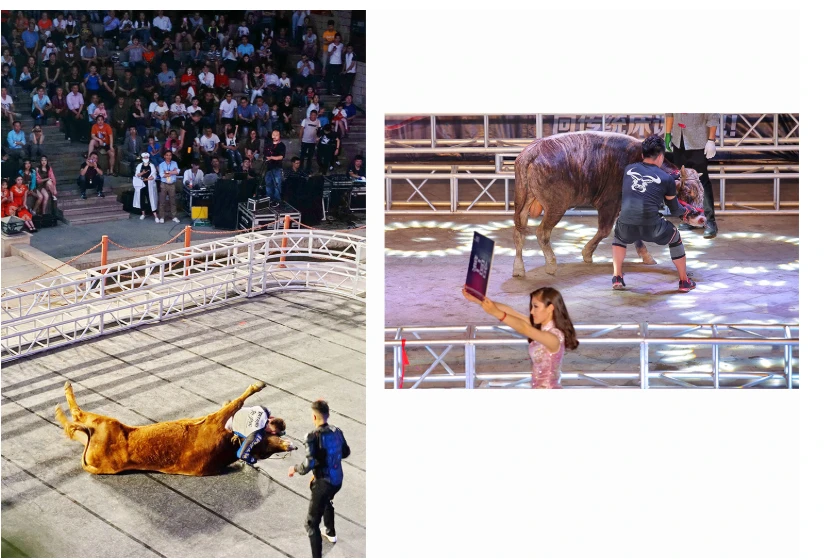
The bulls even have a ring girl. I protest, why isn't she wearing horns, like a cow?!
In fact, the bulls at the guan nu are surprisingly well-behaved. Instead of urging the bull on, like in a bullfight, with the risk of it running into the stands, here the bull is trained to tolerate noise and not be frightened by strangers. So it stays on the field and doesn't run to the edge. And while the students are training and the bull is being trained, they all need to be very well fed. Because the bull is the pride of the academy. Who would admire a skinny, underfed bull? Here, the bull is fed to the brim so that it grows in weight and muscle. The bull reaches its maximum weight and strength at five years old. 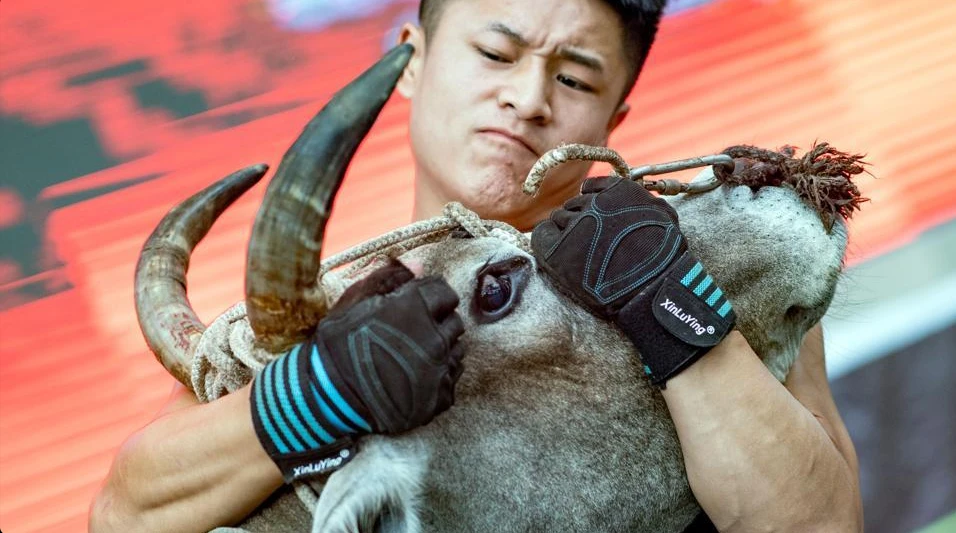
What a juicy shot! The bull is thinking: What am I even doing here?!
In short, it's a very expensive sport, more expensive than golf, for example. And it's difficult to scale this hobby to school clubs. Every club can't afford to feed a bull at a school. That's why the academy hasn't produced any new masters in a long time. And the eldest is already 71 years old. When he dies, it's unclear who will train the assembled students (and the bulls); he has no replacement. 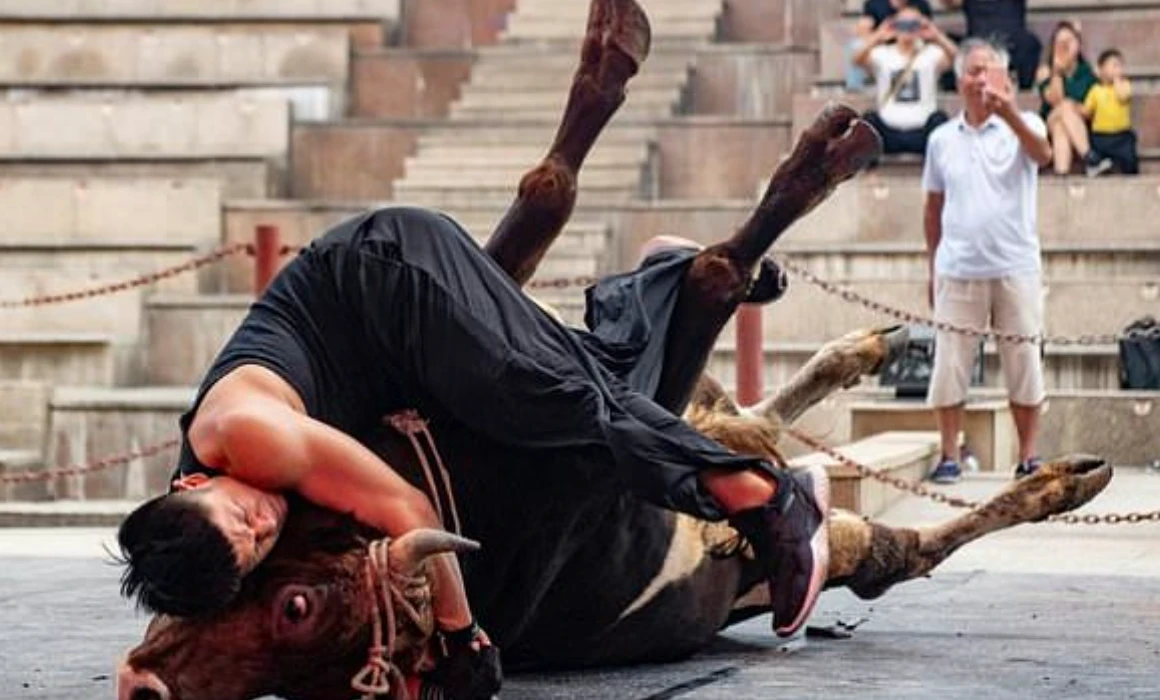
A beautiful victory! But the stands are almost empty...
And this makes me very sad, because right before our eyes, the rather original and kinder culture of fighting animals than, say, bullfighting is fading away.