Dog owners often wonder how their pets actually see the world. Human and canine eyes are built quite differently, meaning what we see is a world away from what they perceive.
British veterinarian Rhian Rochford set out to reveal how our four-legged companions view their surroundings. To demonstrate this, she created a series of images showcasing popular tourist spots across the UK—offering a side-by-side comparison between human and canine perspectives. 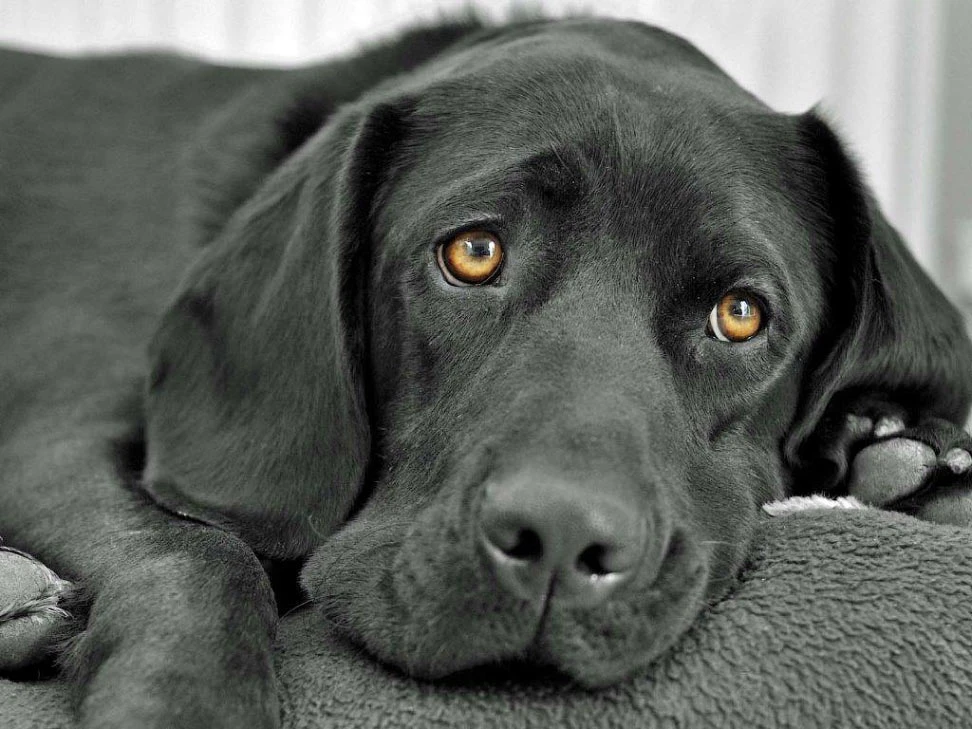
"Dogs have dichromatic vision, which means they only perceive blue and yellow," Rochford explains. "Humans, on the other hand, see the world in blue, yellow, and red. Where we see red, dogs see dark brown; green appears beige to them, and purple looks blue." 
How humans and dogs see Brighton Pier in Brighton, England
A dog's eyes are set at a 20-degree angle. While this significantly expands their peripheral vision, it also means their binocular vision—and ability to focus straight ahead—is less developed. 
How a dog sees the Cotswolds
"It's also worth noting that dogs naturally have blurrier vision—their visual acuity is about eight times lower than ours," says Rochford. "They are also less sensitive to light variations, making them half as capable of distinguishing changes in brightness." 
Human eyes contain photoreceptors that process light as well as color-sensitive photoreceptors called cones. While humans have three types of cone cells, dogs have only two—accounting for the stark difference in how they perceive color. 

How humans and dogs see the village of Portmeirion in Wales
According to Rochford, the unique placement of a dog's eyes gives them superior peripheral vision, allowing them to spot movement outside their direct line of sight far better than humans can. On the downside, she notes that dogs lack strong three-dimensional perception, making it harder for them to judge depth, volume, and distance accurately. 
How humans and dogs see Glenfinnan, the iconic concrete arch railway viaduct in Scotland 
How humans and dogs see the Peak District National Park
Despite these visual limitations, dogs don't suffer much from having weaker eyesight. In day-to-day life, they rely far more heavily on their sense of smell. Scientists estimate that a dog's olfactory sense is 10,000 to 100,000 times sharper than ours, which is why even elderly dogs who lose their sight can continue to navigate the world with ease.
Add your comment
You might be interested in:














Margaret Hamilton Dies at 90: The Story of the Moon

"What Is This Thing?": 20+ Bizarre Objects That

25 Incredibly Beautiful and Rare Stones (26 Photos)

13 "Healthy" Habits You Should Actually Quit (14

16 Fascinating and Surprising Facts About Life in Sweden

Cassini Spacecraft Reveals Saturn’s Rings (10 Photos)
30 Everyday Details That Will Change How You See the World

Hypnotic and Oddly Satisfying GIFs That Show How Food Is

Behind-the-Scenes Feuds: Hollywood's Most Famous On-Set
