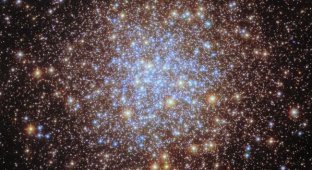
Breathtaking photos of giant star clusters in the Milky Way (6 photos)
Far, far from Earth, in the depths of the silent cosmic darkness, lie amazing treasures—star clusters. These mesmerizing structures not only offer aesthetic pleasure to the observer but also reveal secrets about the birth of galaxies, their evolution, and the distant future. 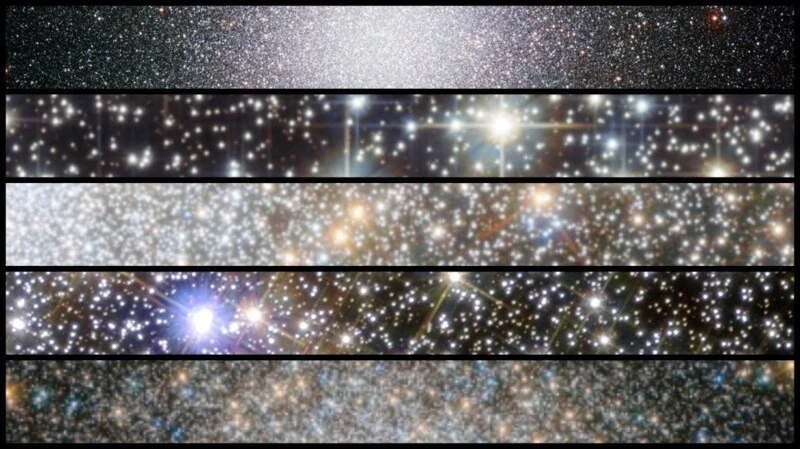
Star clusters are groups of stars with a common origin and are gravitationally bound together. Astronomers distinguish two main types: open clusters, consisting of hundreds or thousands of relatively young stars, and globular clusters—extremely dense spherical formations of hundreds of thousands of ancient stars.
It is known for certain that at least 40% of all globular clusters in the Milky Way came into our galaxy as a result of cosmic catastrophes—collisions with smaller galaxies or their complete absorption. Some of these objects are literally the remains of entire galaxies (albeit dwarf ones), whose cores survived gravitational disruption. Globular clusters offer a glimpse into the very distant past, into the historical era when our galaxy was in its early stages of development.
Interestingly, the Sagittarius Dwarf Galaxy, approximately 70,000 light-years from Earth, is currently being disrupted by the tidal forces of the Milky Way. This process, which has been ongoing for hundreds of millions of years, will leave behind only a globular cluster, which will become part of our galaxy.
So, I invite you to admire the five most massive star clusters in the Milky Way and learn a lot about them.
Omega Centauri (NGC 5139) 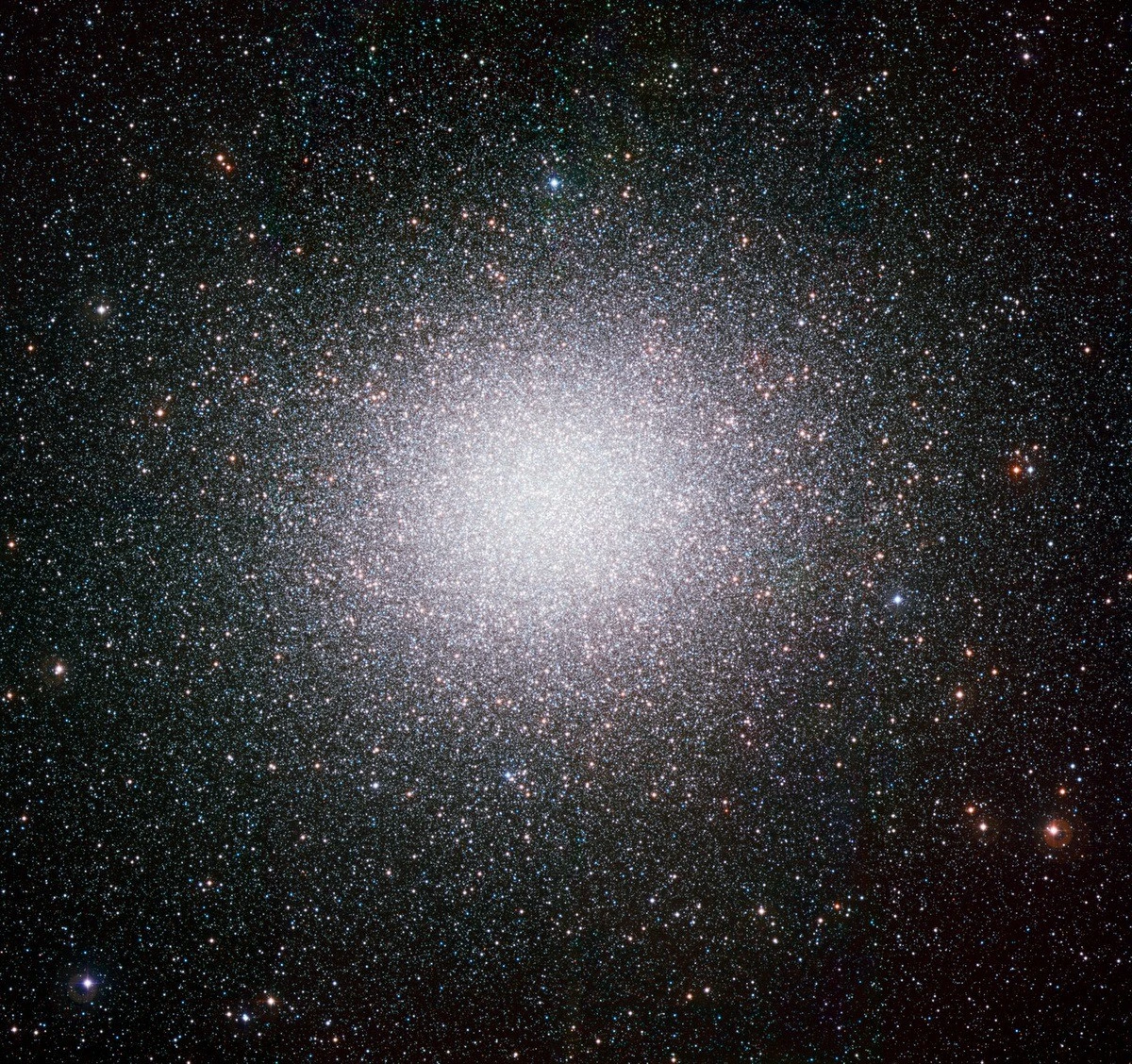
Distance from Earth: ~15,800 light years;
Diameter: 150 light years;
Mass: four million solar masses.
Omega Centauri is a colossus among globular clusters. It contains over 10 million stars, making it the most massive in the Milky Way. The stellar density at the center of the cluster is 10,000 times greater than that of the surrounding solar system! The cluster's age is estimated at 12 billion years.
The main mystery of Omega Centauri, which remains unexplained, is that the cluster contains stars of different generations. One of the most convincing hypotheses suggests that this cluster is the product of a secondary absorption event (the Milky Way swallowed a galaxy that had previously swallowed another).
M 13 (NGC 6205): The Great Hercules Cluster 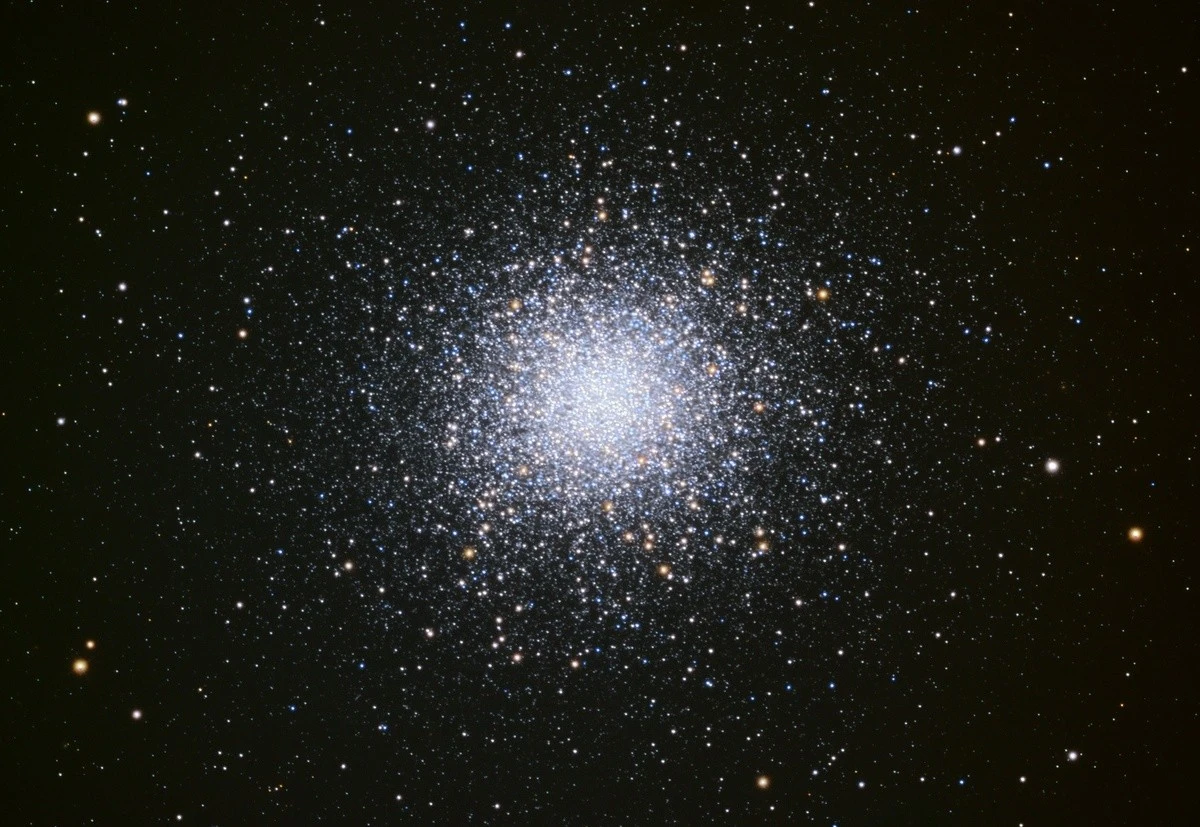
Distance from Earth: ~22,200 light-years;
Diameter: 165 light-years;
Mass: 600,000 solar masses.
M 13 is one of the most magnificent globular clusters in the northern sky, containing approximately 300,000 densely packed stars.
The Great Hercules Cluster is renowned for its symmetrical structure and brightness. At the cluster's center, the stellar density reaches incredible levels: there are more than 1,000 stars per cubic parsec (3.26 light-years)!
M 13 moves in an elongated orbit around the center of the Milky Way, periodically crossing the galactic disk. The cluster is approximately 11.65 billion years old, making it one of the oldest objects in the Milky Way.
It is noteworthy that in 1974, the famous Arecibo radio message was sent to M 13—a symbolic attempt to announce its existence to hypothetical extraterrestrial civilizations. However, it is extremely unlikely that complex life could have emerged under such extreme conditions (extreme stellar density, monstrous radiation, gravitational perturbations, and the absence of heavy elements in ancient stars).
M 22 (NGC 6656): The Pearl of Sagittarius 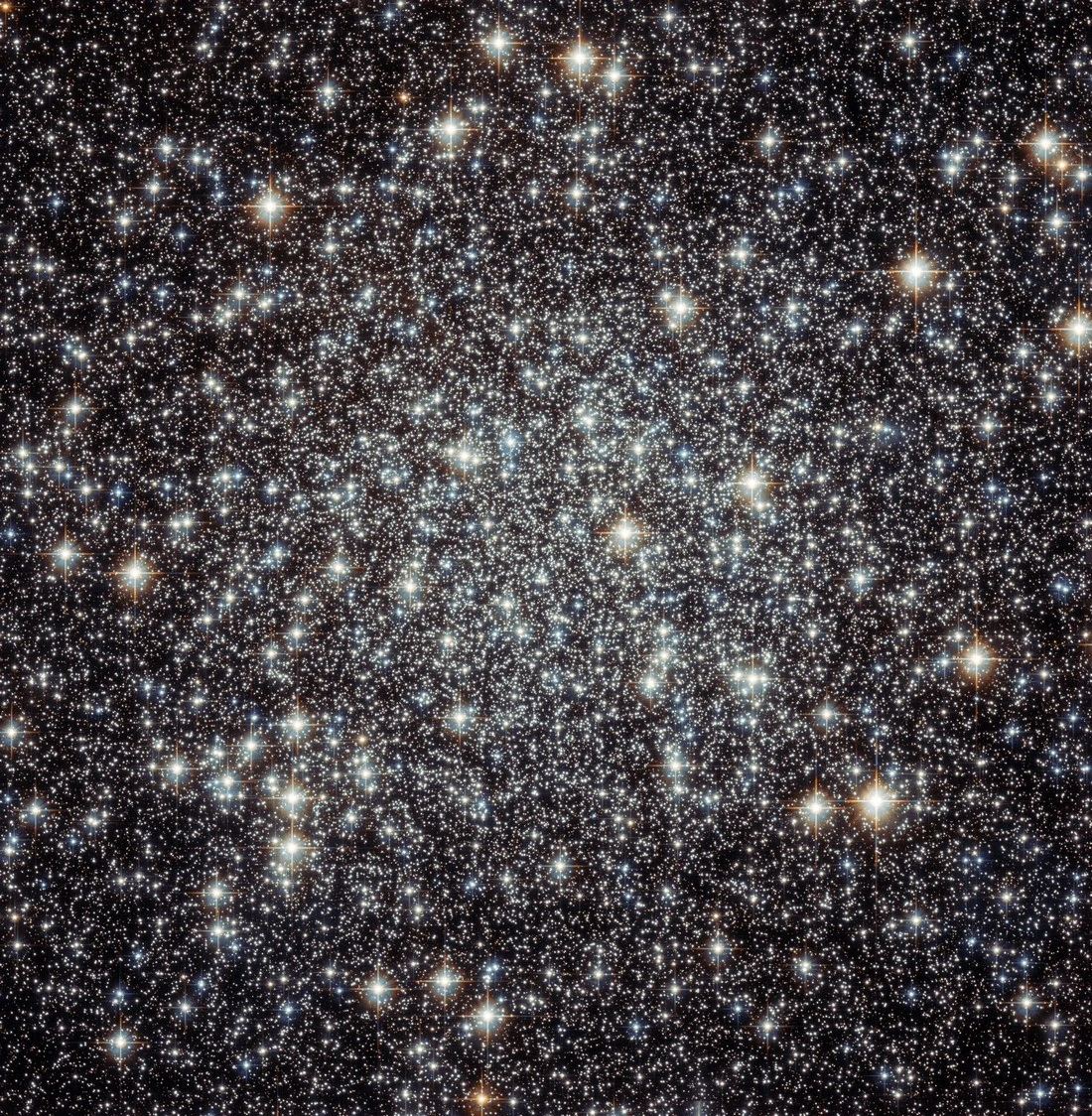
Distance from Earth: ~10,600 light-years;
Diameter: 99 light-years;
Feature: One of the brightest clusters in the sky.
M 22 is one of the brightest clusters in the northern sky, easily visible with binoculars. M 22 contains approximately 500,000 stars and is one of the closest globular clusters to us.
M 22 has been found to contain an anomalously large number of planetary nebulae, which represent the final stages of the lives of Sun-like stars that have shed their outer layers.
M 15 (NGC 7078): An Ancient Wanderer 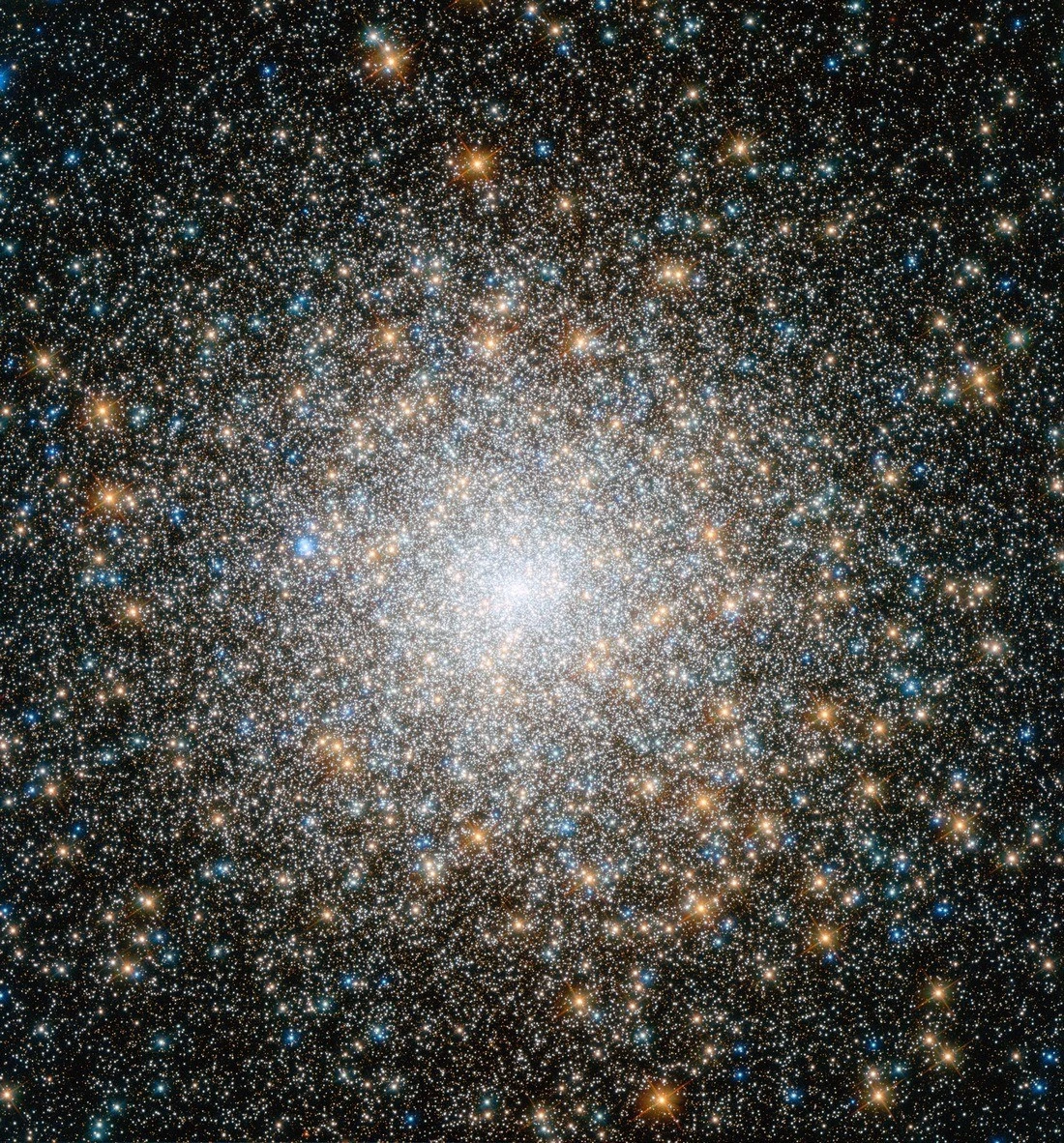
Distance from Earth: ~36,000 light-years;
Diameter: 175 light-years;
Age: 13 billion years.
M 15 is one of the oldest and densest globular clusters known to astronomers. It is 13 billion years old, making it nearly as old as the universe itself (13.8 billion years). Some evidence suggests that the cluster's center harbors an intermediate-mass black hole—a very rare class of black hole whose study could shed light on the formation of supermassive black holes.
The cluster contains an unusually large number of variable stars and pulsars. M 15 moves in an elongated orbit around the center of the Milky Way, periodically "diving" into the galactic disk and then returning to the halo (a tenuous spherical region around the galaxy that is home to the oldest stars and globular clusters).
47 Tucanae (NGC 104): The Southern Corona 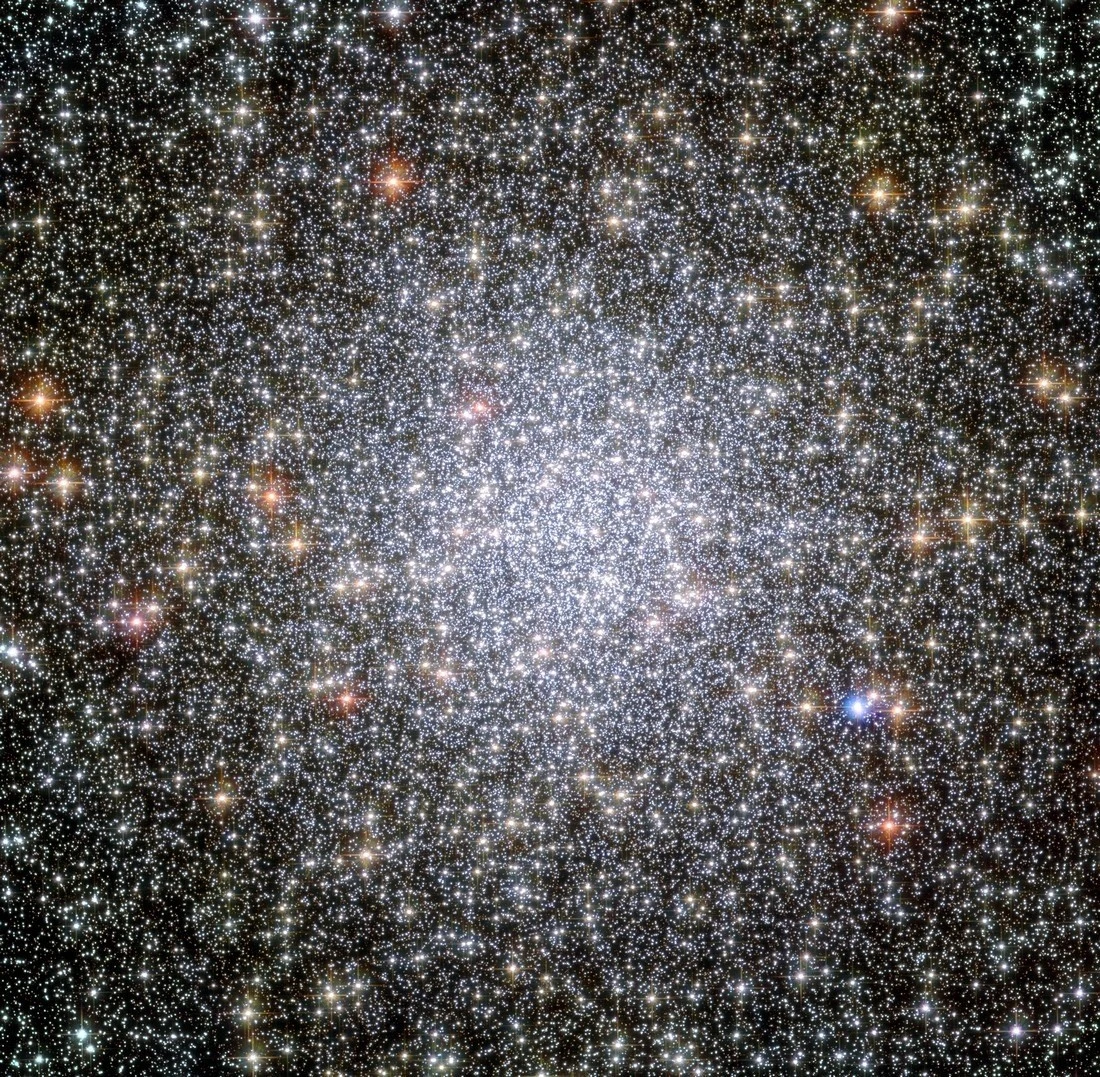
Distance from Earth: ~14,500 light-years;
Diameter: 120 light-years;
Feature: The second-brightest cluster in the sky.
47 Tucanae is the second-brightest globular cluster after Omega Centauri and one of the most studied due to its relative proximity and brightness. Even with an amateur telescope, approximately 10,000 stars can be seen, many of which are concentrated within a small, dense central core.
Twenty-five millisecond pulsars—neutron stars that rotate hundreds of times per second—were discovered in the cluster. 47 Tucanae, like Omega Centauri, contains stars of several generations, and this phenomenon may have a similar explanation.