Wanted to become an ace pilot, but didn't pass the medical exam? (2 photos)
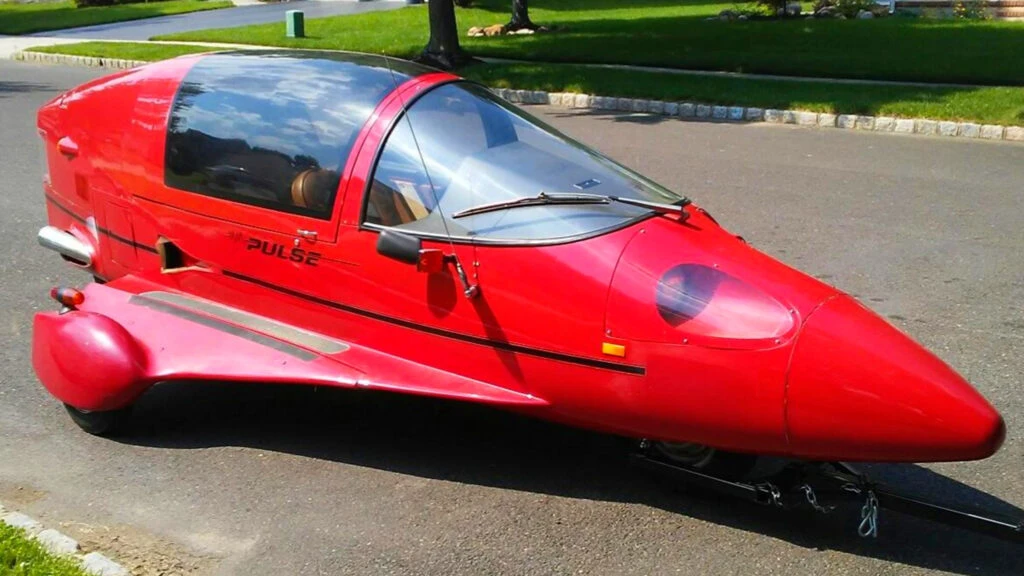
The Pulse Autocycle: A Land-Based Aircraft for Top Gun Dreamers
After the release of the film “Top Gun” in 1986, the number of volunteers who wanted to join the US Navy increased by 8%, but only a few were able to become real pilots. For the remaining enthusiasts, there was an alternative option - the Pulse autocycle.
Aviation origins of the design
Advertised as a “land-based recreational vehicle”, the Pulse inherited the aviation genes from its predecessor, the Litestar. It was designed by aircraft designer Jim Bede, whose miniature Bede BD-5J aircraft appeared in the James Bond film Octopus.
Design Features
Unlike Bond's plane, the Pulse did not fly and did not have a jet engine. Instead, it received a less exotic engine from a Yamaha motorcycle, and additional wheels, hidden in wing-shaped casings, acted as stabilizers.
This system kept the fiberglass body on a steel frame from tipping over during turns and when parking, with only three of the four wheels in contact with the ground at a time.
Controls and Interior
Raising the aircraft roof, the driver revealed two tandem seats. Steering was via a three-spoke car-style steering wheel, and the six-speed manual transmission was controlled by a lever near the driver's right elbow. For ease of maneuvering, an electric reverse drive was provided. 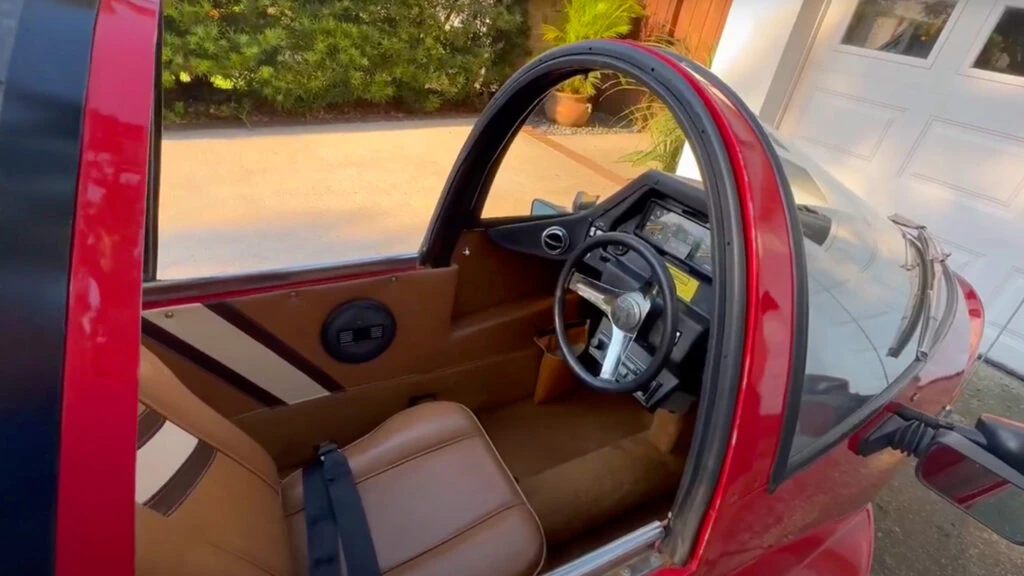
History of a specific instance
This example is the 162nd of approximately 326 autocycles produced and dates from the first year of production. After two years of operation, it was placed in storage, where it remained for three decades. In 2019, the current owner purchased the autocycle, who installed LED lighting.
A Legacy of Unusual Transportation
Jim Bede's idea of a hybrid of a car, motorcycle and airplane inspired the creation of similar structures that lean when cornering. The Pulse remains an interesting example of experimental vehicles that appeared in the United States in the 1980s in search of fuel economy.
This autocycle is part of a wider trend of creating alternative vehicles during the oil crises. Such developments demonstrate how technologies from aviation and motorsports found unexpected applications in civilian transportation. Today, such examples are valued by collectors as artifacts of engineering thought of their era.