Rabbit Harvestman: Why Does a Spider Have a Dog's Head on Its Back? (5 photos)
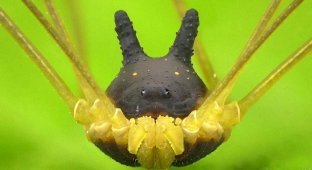
Here comes a dog. Well, let it hop along on its eight legs; let's not disturb it. After all, our goal isn't to torment the poor arachnid dog, but to find out who it is, why it grew a dog's head on itself, and why it's called a hayseed rabbit. 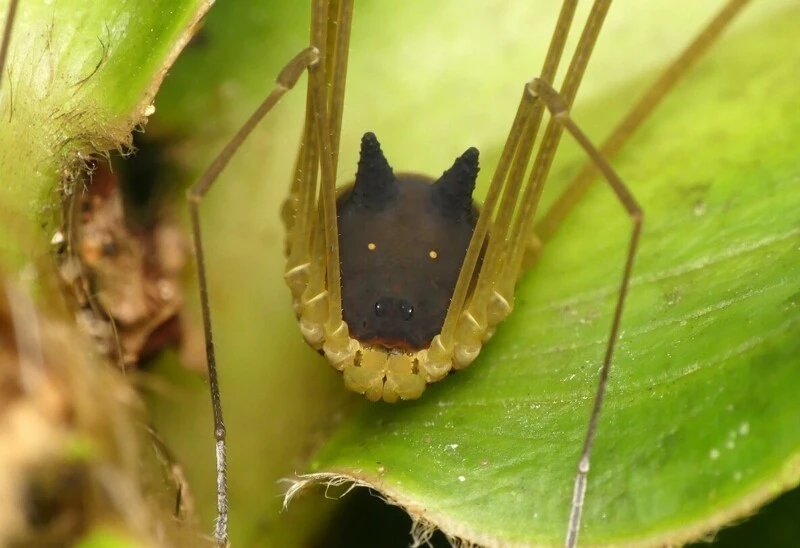
The answer to the last question is simple: the discoverer apparently forgot his glasses at home, and without them, you can't see this long-legged, fingernail-sized bug. So it became a rabbit, not a dog. 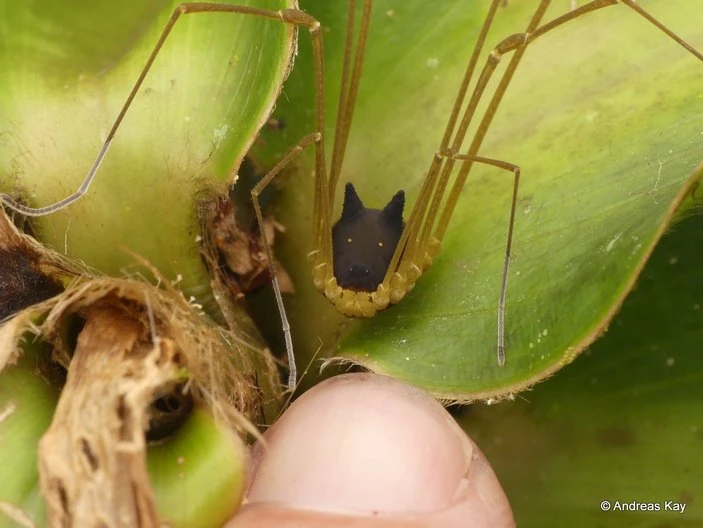
Vicious, but very small.
And yes, despite its frightening appearance, this dog doesn't bite and can't hurt you in any way. It has no venom glands, and its jaws are incapable of penetrating human skin. Ultimately, it's just a harvestman, sucking up small insects as it goes. 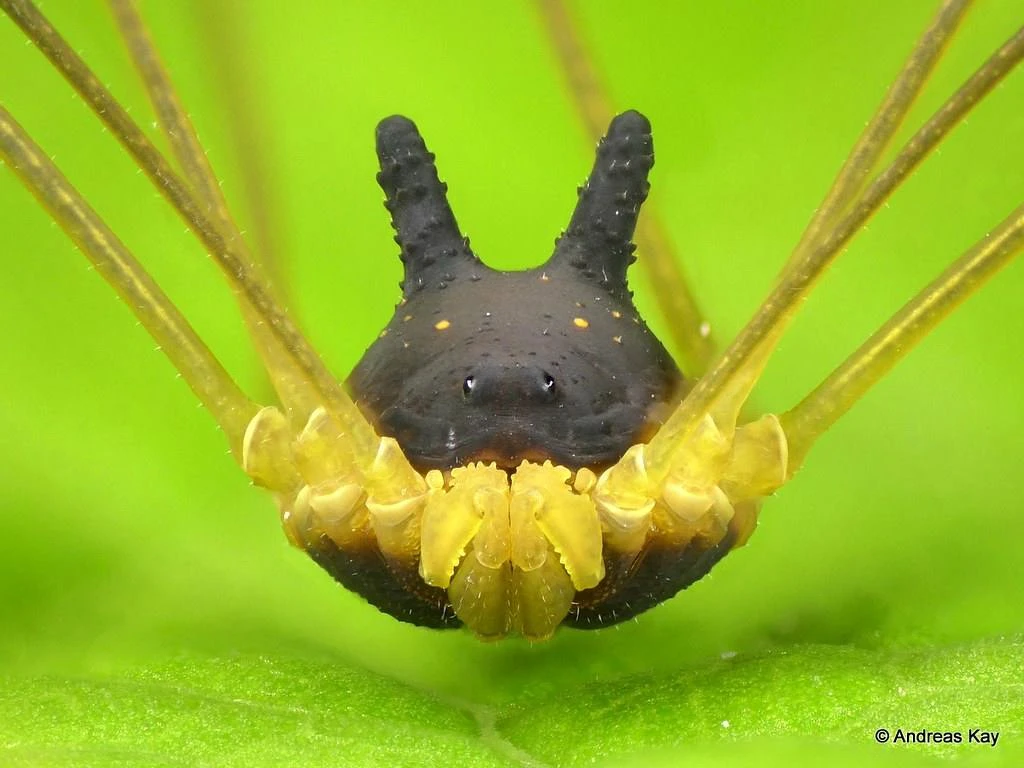
As you can see, the yellow dots are not eyes. The real eyes are below.
So, the purpose of the dog's head on its back isn't to bark and bite people. Its purpose is to deceive small predators, making them mistake the harvestman for a larger animal. At least, that's what the discoverer of the species believed, and so do his followers. This pattern on the back serves a mimicry function—it helps deter predators. When the harvestman feels threatened, it raises its hindquarters, and the pattern resembles the muzzle of a larger animal with eyes. This can frighten or confuse potential predators, such as birds or lizards. This strategy is called eyespot mimicry—a common defense mechanism in the insect and arachnid worlds. Predators instinctively avoid what might be a larger or more dangerous animal staring at them. 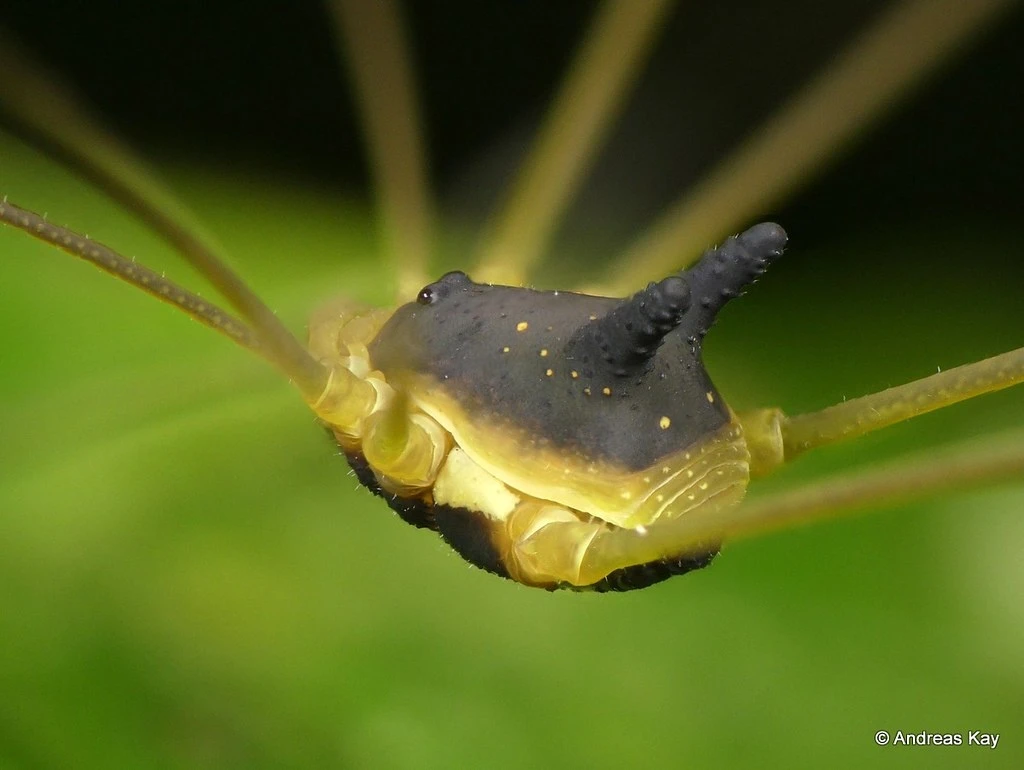
It's like the spider is wearing a funny hat.
But not everyone agrees. Other arachnologists believe that back-faced spiders simply find each other attractive! They believe the dog/rabbit head on their backs developed as a sign of sexual selection. Harvestmen use it to distinguish members of their own species from others and determine which of them is most worthy of mating. 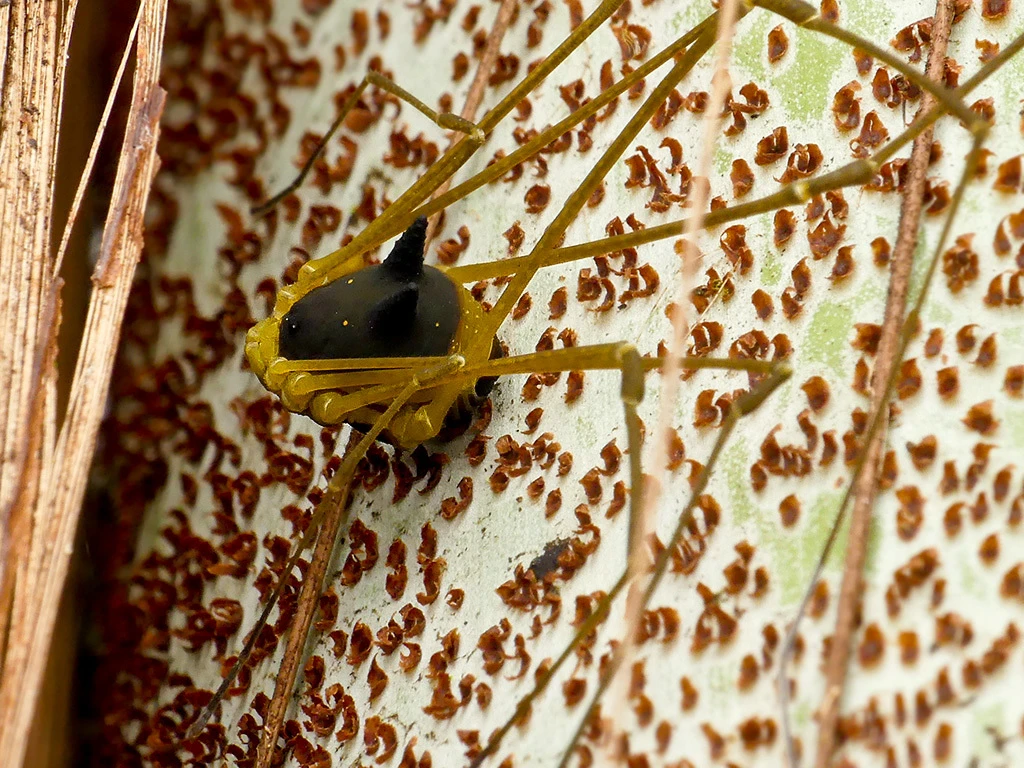
Your dog is a little strange. It's sitting on the wall.
Which point of view is correct is unknown, just as practically nothing is known about the harvestmen's lifestyle. After all, the little ones live in remote corners of Ecuador and are in no hurry to show themselves to scientists. And try finding them, they're so tiny!