Giant weta: in New Zealand, these monsters are replacing hares! (7 photos)
And also mice, shrews, squirrels, and even moles. But how did it happen that a grasshopper—despite being incredibly large—managed to occupy a whole host of ecological niches and become the most important inhabitant of the jungle? 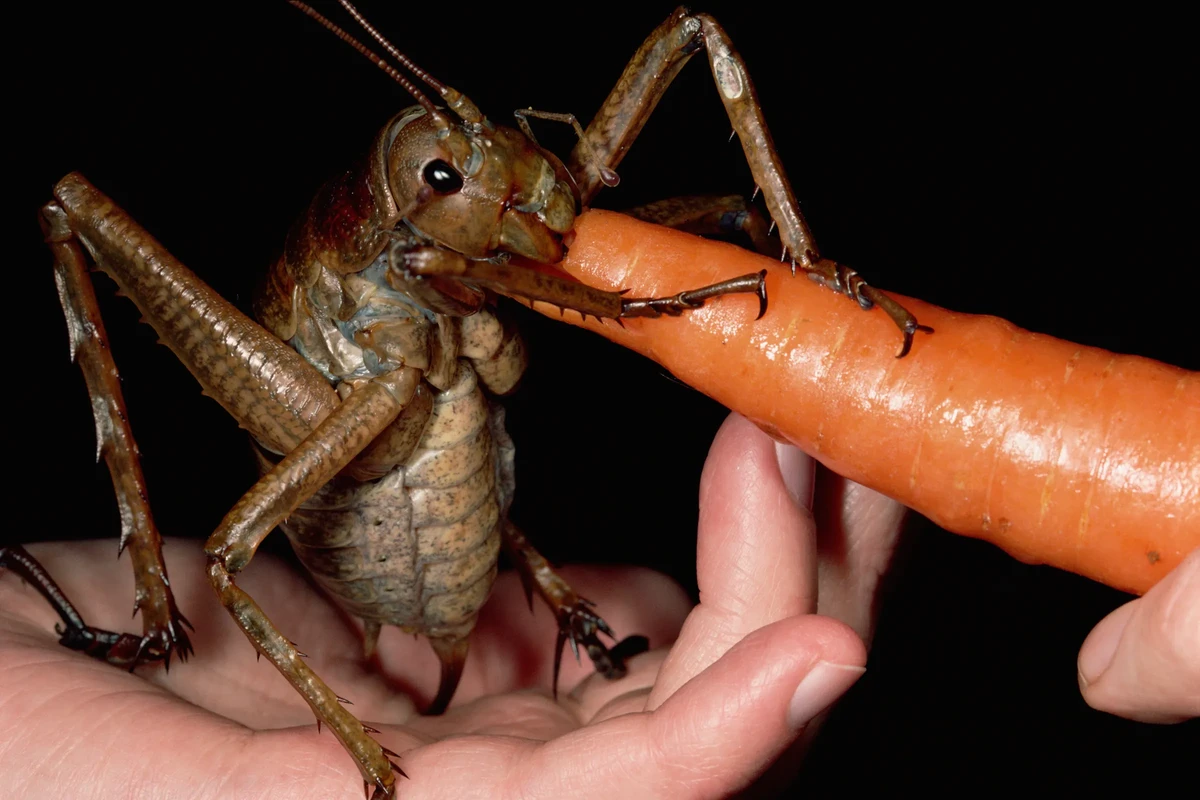
Just look at this cute New Zealand bunny!
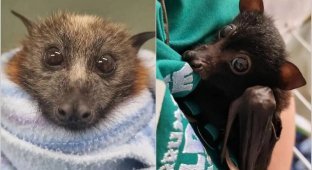
In short, he was just lucky! Tens of millions of years ago, the ancestors of the grasshopper accidentally landed on the New Zealand archipelago and found themselves in a veritable paradise! The climate is ideal, food is plentiful, and the only predators are birds and bats, which have their own agendas. 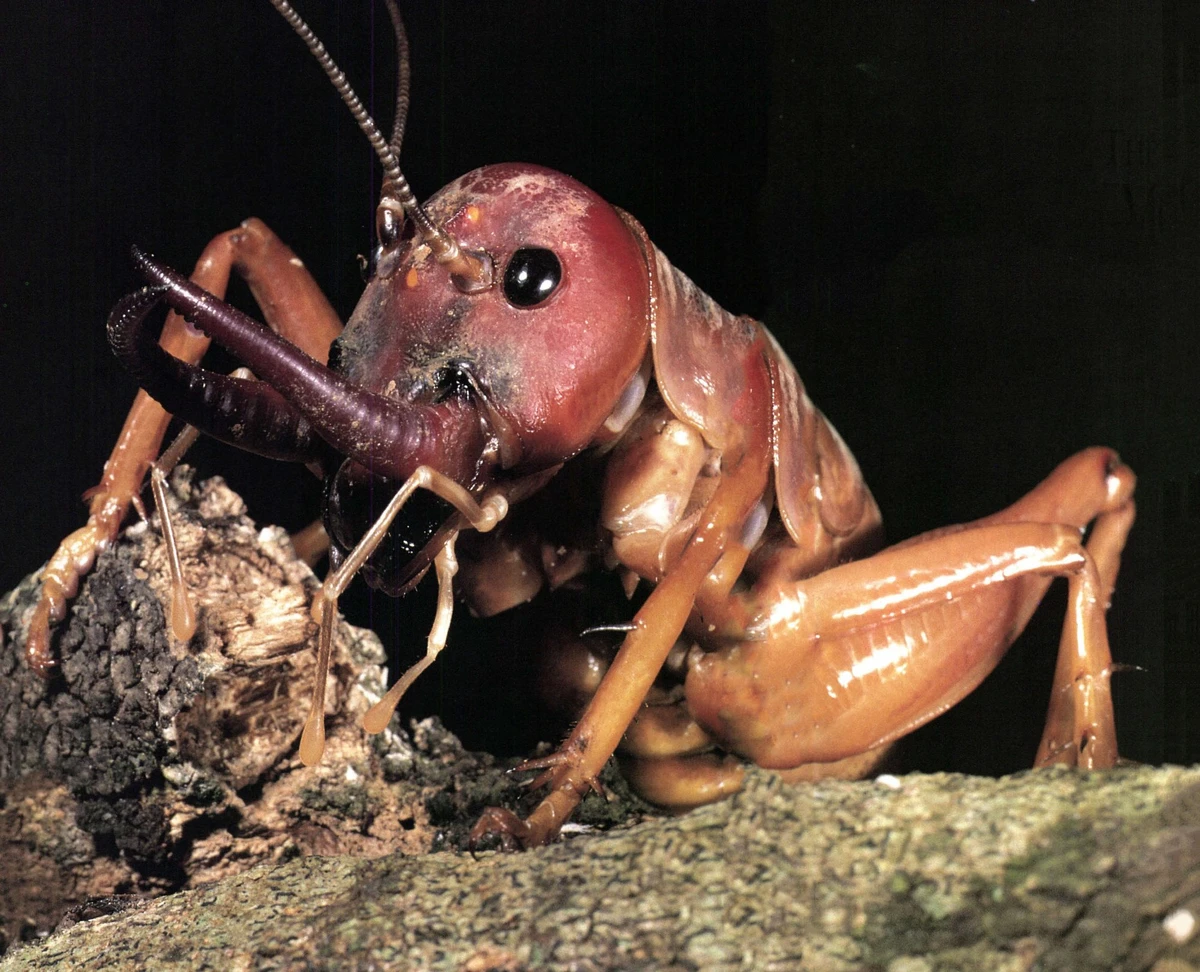
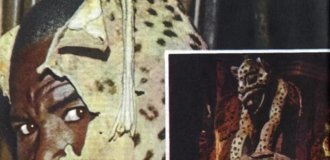
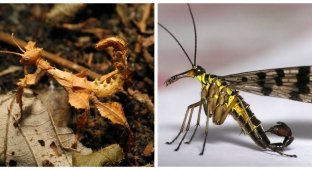
And this is the horned demon weta. A related, but different species. Males use their "horns" to compete for females, just like stag beetles!
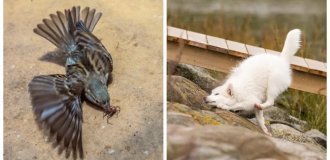
The insects quickly realized they needed to reproduce and grow while they could. That's how these once-ordinary grasshoppers evolved into true giants: the largest wetas can be up to 22 centimeters long and weigh 70 grams. "That's not much," you might say. "He weighs as much as two sparrows," I'll answer. 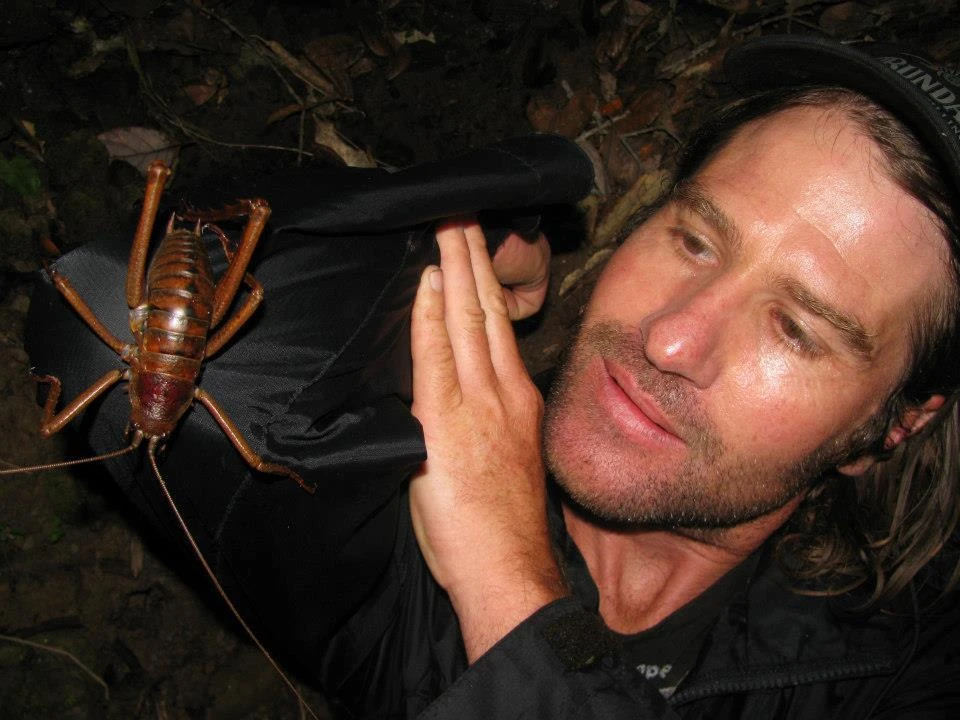
The man feels a little uncomfortable. To be honest, I do too...
The significantly larger grasshoppers gradually spread across all the major islands of New Zealand, diversifying into 11 species and densely populating every landscape. Some moved to cliffs and rocky outcrops, others climbed trees, and still others remained to dig through leaf litter. But all of them, regardless of their location, are ready to devour anything that isn't nailed down. 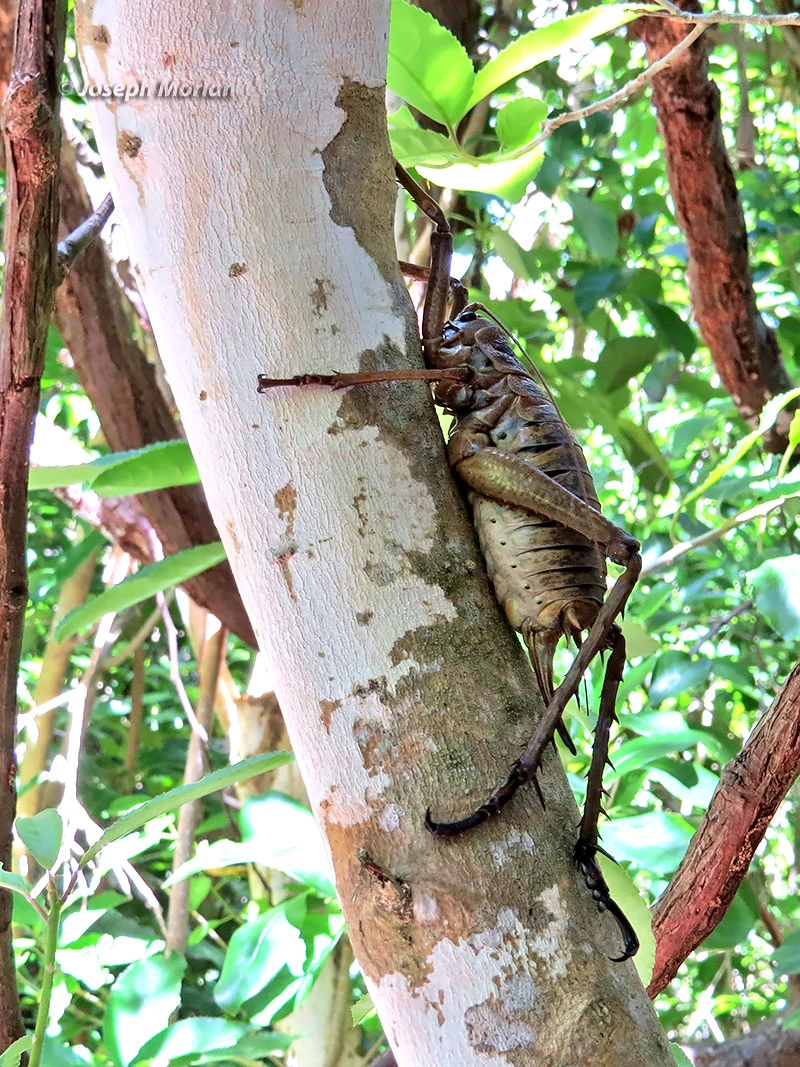
Meet the local squirrel.
Grasshoppers feed on fruits and nuts, and don't mind munching on juicy stems, as well as beetles that munch on juicy stems nearby. They don't even shy away from carrion—experiments show that grasshoppers readily devour raw pork and beef, practically purring while doing so. 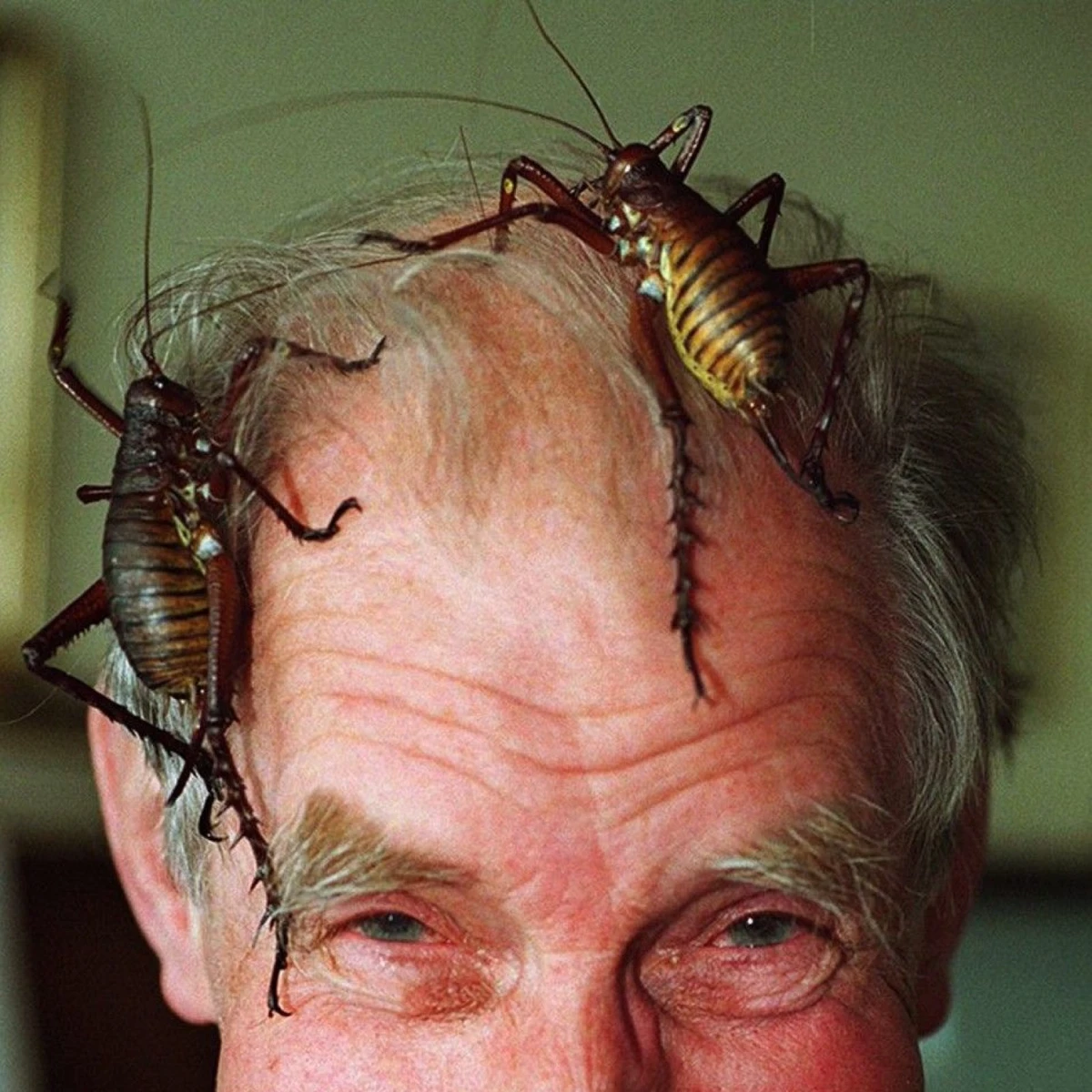
I'm sure they wouldn't turn down a human, but I can't prove it.
Thanks to this ability, they've managed to take on multiple ecological roles at once, forcing island ecosystems to revolve around themselves. Like rodents, they control plant growth on the islands, preventing them from overwhelming each other. Like insectivores, they consume herbivorous insects, preventing them from consuming the vegetation root and branch. A perfect balance on fragile chitinous shoulders. 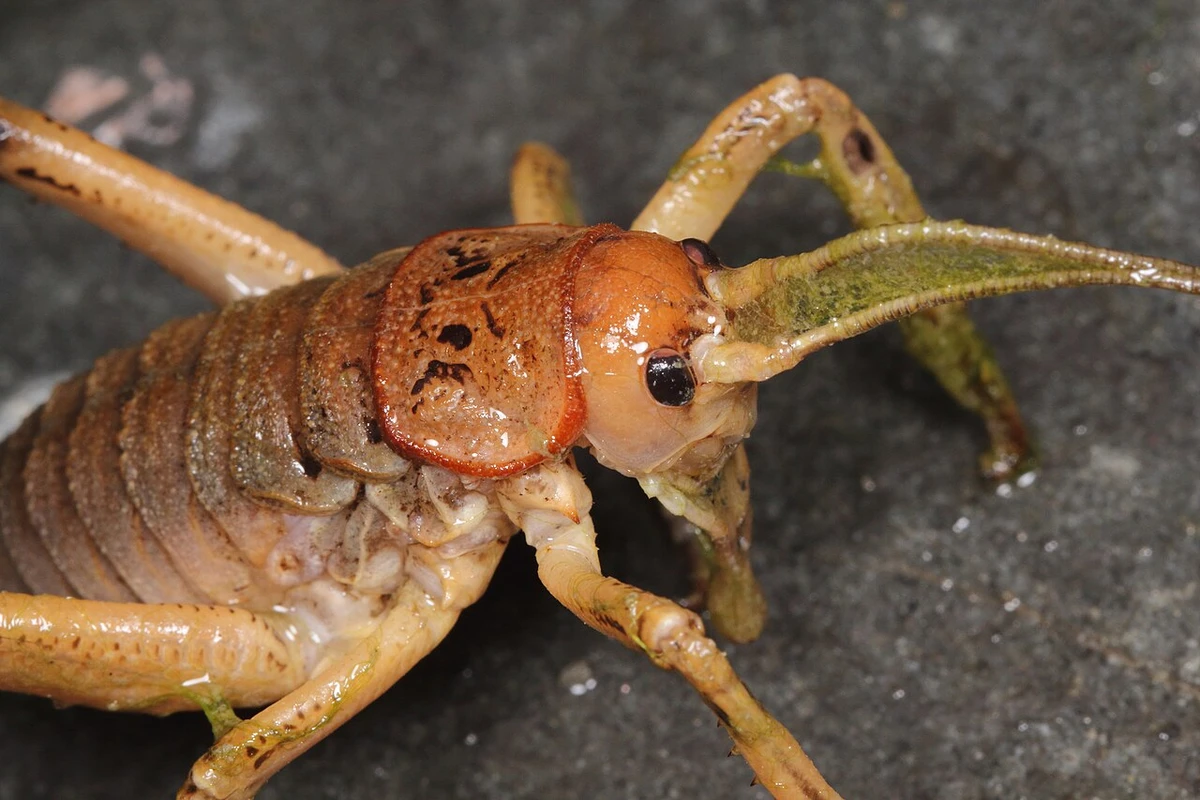
Despite their small habitat, not all uetas are well studied. Pictured is the Kaikoura ueta, about which we have nothing to say.
But even this privileged position didn't last forever. Europeans arrived on the islands in their pot-bellied ships, with mice and rats hiding in their holds. People began cutting down forests, plowing fields, and building the first cities, destroying the insects' habitat. And the rats and mice began to rob the uetas of their livelihood. After all, not even the largest grasshopper can compare to a common mouse. 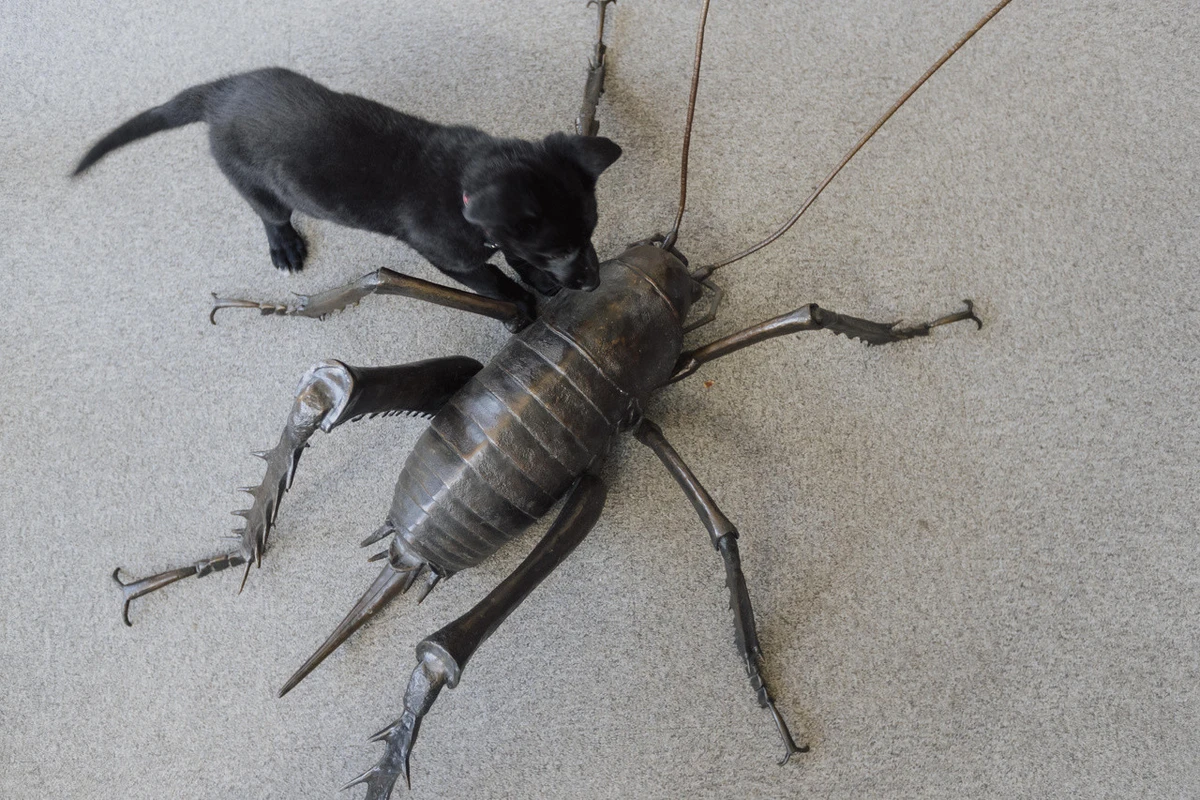
New Zealanders are very fond of their unusual grasshoppers. Souvenir figurines, 3D models, and even plush toys are in abundance.
The ending of this story has not yet been written, but it is unlikely to be a good one. Ten of the 11 giant weta species are listed as endangered, and their numbers continue to decline despite all human efforts. However, there is still a chance that New Zealanders can reverse the situation.