SpaceX launched the largest rocket in history, but there's a catch (1 photo + 3 videos)
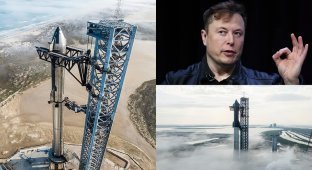
Silicon Valley's leading storyteller, Elon Musk, has the world looking to the skies once again. His company, SpaceX, has launched the updated Starship V3. 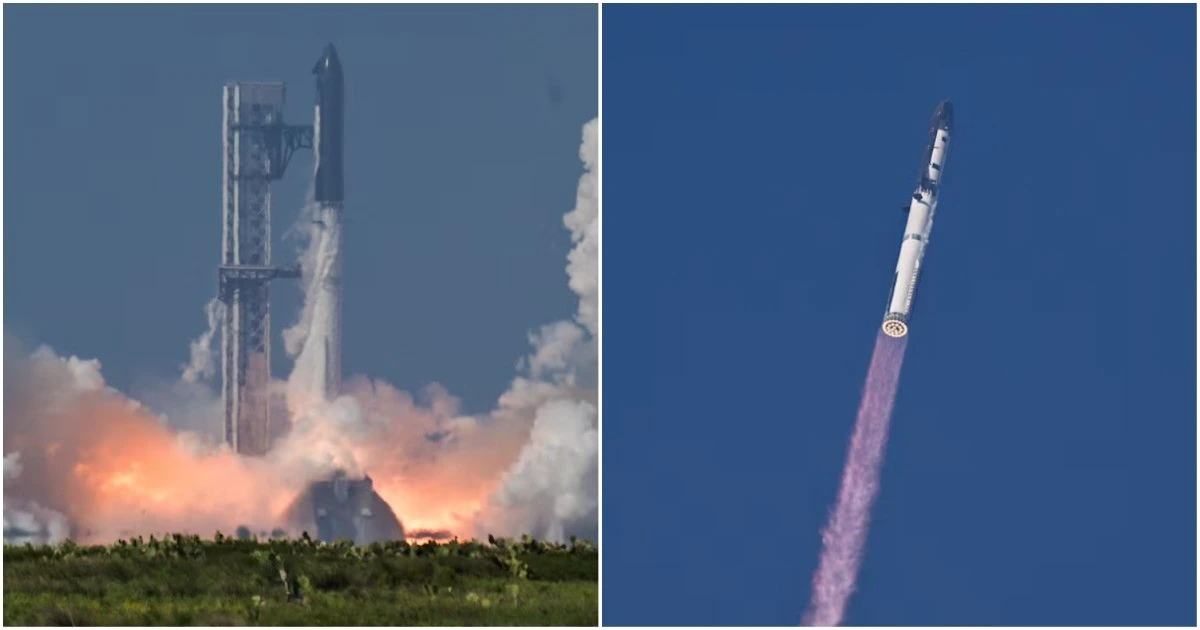
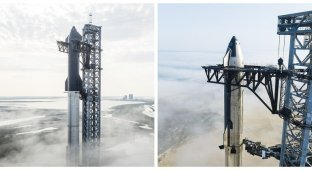
This 124-meter-tall colossus, as tall as a 40-story building and with a thrust of nearly 8,000 tons, has officially become the largest and most powerful rocket in human history, surpassing both the legendary Soviet Energia and the American Saturn V lunar rockets. While Musk assures investors that he's building a shuttle to Mars, skeptics are simply shrugging their shoulders. This thing might get there, but no one has yet figured out how to return future colonists back.
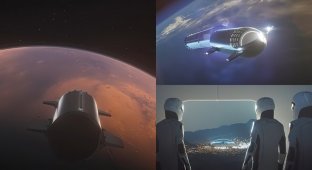
Musk's entire Mars Odyssey so far looks like the perfect plan to rid Earth of naive romantics. The ship is indeed capable of hauling up to 100 tons of payload, including people, to the Red Planet at a time. But the catch is that it's physically impossible to take off from Mars again on the same rocket. To solve this problem, SpaceX engineers are relying on methane, hoping that future robots sent to Mars will be able to somehow extract fuel on-site from the local water and carbon dioxide. It sounds like the perfect plot for a sci-fi thriller, where workers arrive at the facility, but the inverse propellant production plants haven't even been built yet.
The current flight itself isn't a colonization mission, but a simple hour-long test drive to check whether the new V3 version will disintegrate in mid-air. The scenario for this space show is standard. A few minutes later, the two stages separated, and the Starship spacecraft continued its cruise flight despite the failure of one of its six engines, then jettisoned the simulated satellite, and then experienced a fiery reentry and splashdown. The entire flight lasted just over an hour.
The most talked-about moment of today's Starship launch, after which problems with the booster (at least one engine exploded) led to a hard landing.
The show is impressive, but Musk is still as far from seeing real Martian apple trees as he is from the Moon, which, incidentally, he also promised to launch everyone to a couple of years ago.