The Coma Cluster: thousands of galaxies in a single frame (4 photos)
This is a massive galaxy cluster in the constellation Coma Berenices (the Coma Cluster), one of the densest and most massive galactic "megalocities" in the nearby Universe. Almost every object in the image below is a separate galaxy. 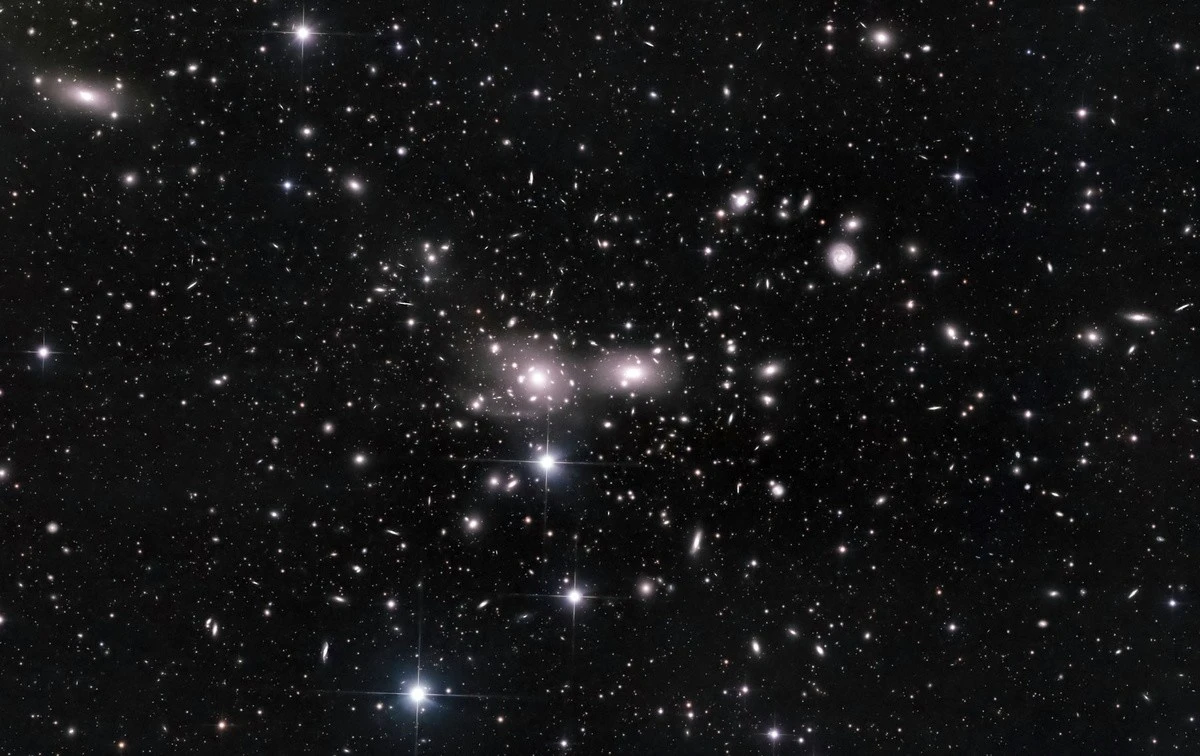
The Coma Cluster in the constellation Coma Berenices is one of the key arguments for the existence of dark matter.
The Coma Cluster is made up of thousands of galaxies, each comparable in size to our Milky Way and containing billions of stars. Intergalactic space is filled with rarefied hot gas and invisible mass (dark matter), which holds the elements of this system together in a single gravitational field.
How far and how big is it?
The Coma Cluster is located approximately 320 million light-years from Earth. Its size is so vast that from one end to the other, it's not just "a few galaxies," but more than 20 million light-years. For comparison, the diameter of the Milky Way is "only" about 100,000 light-years. The Coma Cluster is one of the largest and most massive galaxy clusters in the nearby Universe. 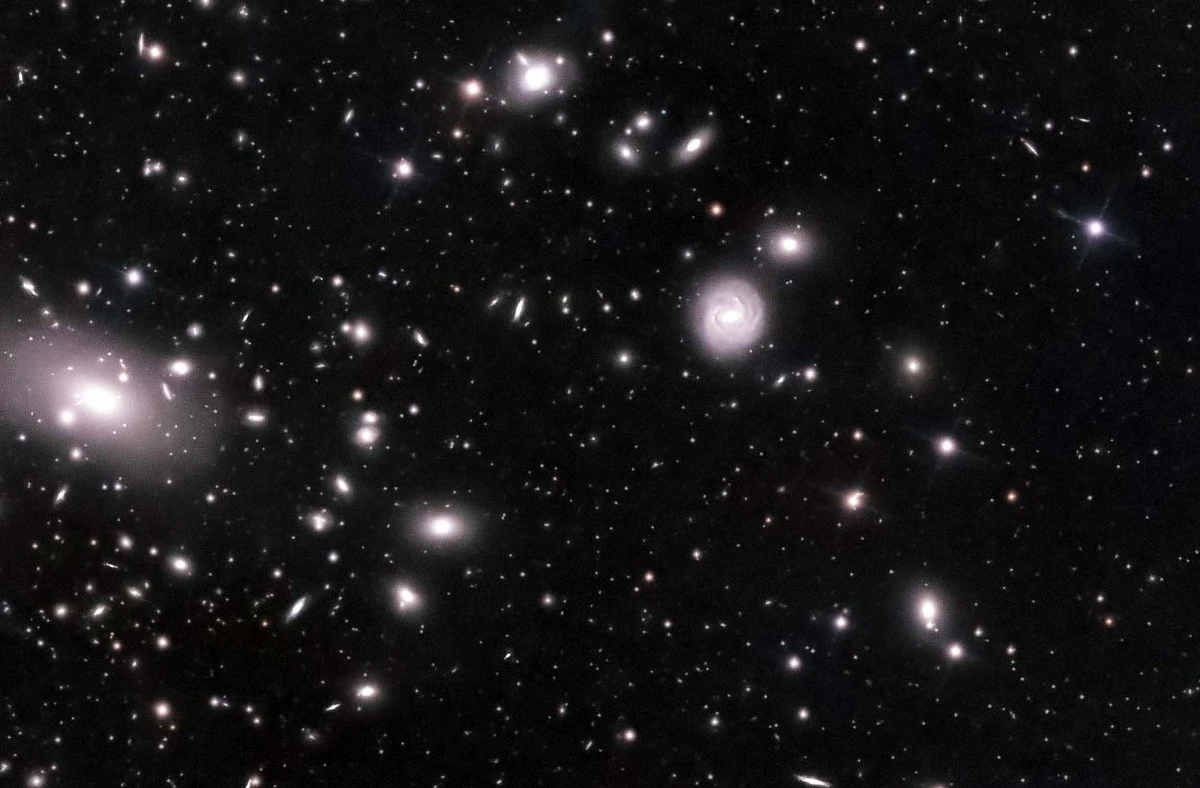
It's important to understand that you're not looking at a "scattering of galaxies," but at a vast system where each object is constantly influenced by its neighbors.
Central Evolution
Most galaxies within a cluster are elliptical and lenticular, while spiral galaxies, like our Milky Way, are more common in its outer regions. This difference is explained by the influence of the environment: frequent gravitational interactions, collisions, and mergers, occurring primarily in the inner regions, change the structure of galaxies over time. 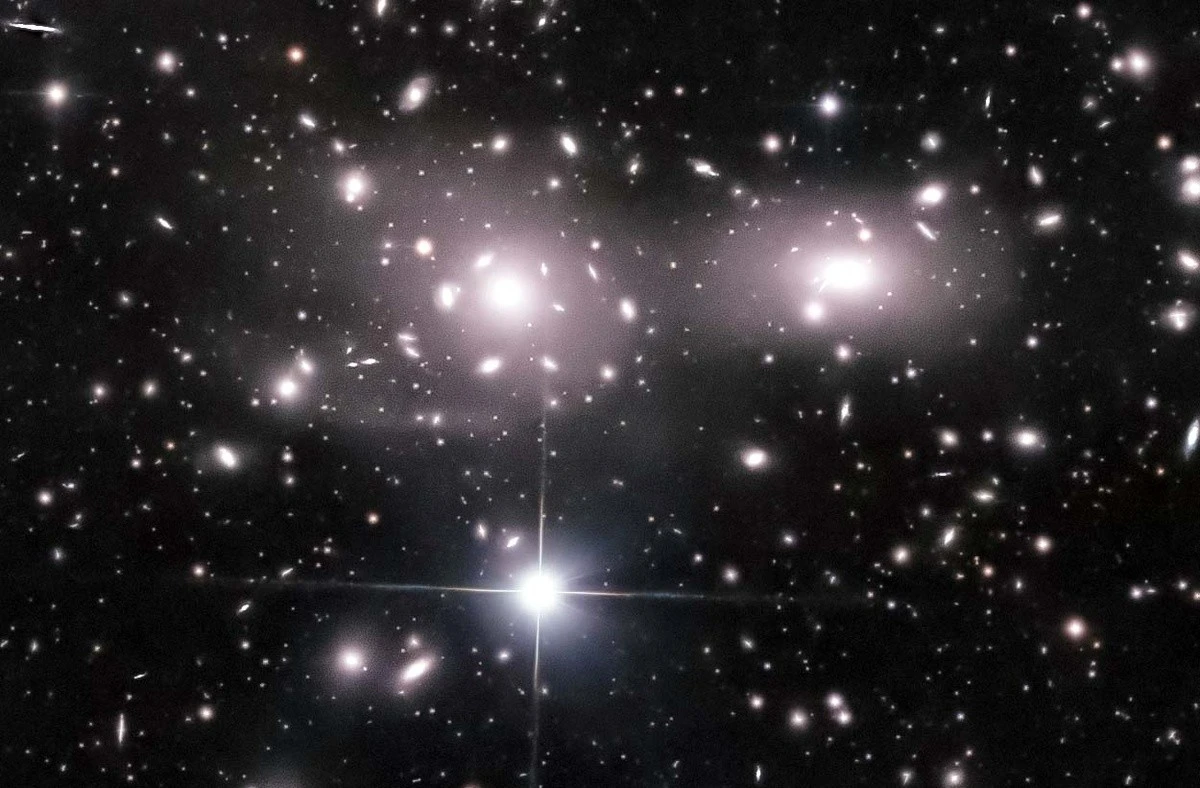
For example, when two spiral galaxies merge, the resulting elliptical is more massive.
Hot gas within a cluster can "blow out" or "strip" cold gas from galaxies, gradually depriving them of a key resource needed to form new stars. Without close interactions with their neighbors, which often leads to mutual bursts of star formation, such galaxies slowly "die out."
In isolation, a galaxy can remain a spiral for a long time. But in a cluster, despite the harsh conditions, its evolution proceeds more rapidly, meaning its chances of "survival" in the ocean of the universe become higher.
Interestingly, the Milky Way is a "fading" galaxy, as the rate of star formation within it is gradually decreasing. However, in the distant future, a possible encounter with the Andromeda Galaxy could lead to a "reset"—although the collision itself is no longer considered inevitable. 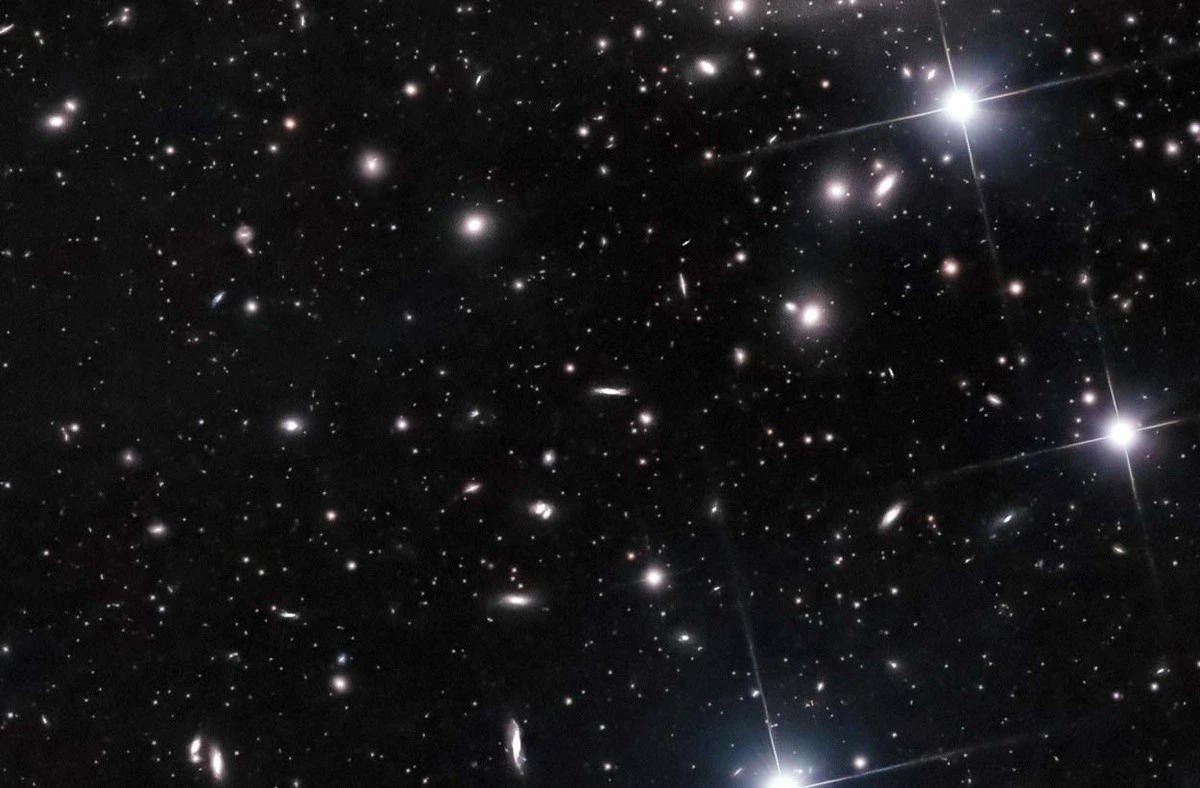
Explanation about "almost every object"
The image of the Coma Cluster was taken from inside the Milky Way, so the frame also includes stars in our galaxy located between the Solar System and the observed cluster.