Worms that eat wood: a new environmental problem in the US (2 photos + 1 video)
When people hear about earthworms, they usually imagine something beneficial and even ecologically important: loose soil, a healthy garden, a fertile forest. But in North America, worms are increasingly being talked about as an environmental threat. 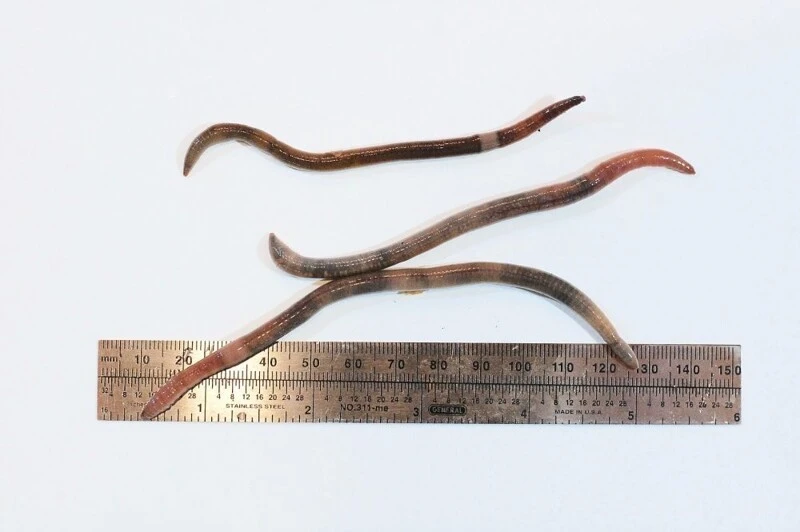
The reason is invasive Asian "jumping worms" of the species Amynthas agrestis and its relatives, which are rapidly spreading across the United States and have already reached California.
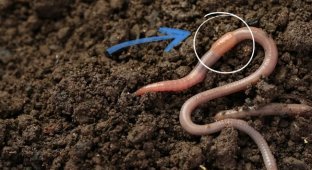
American media call them crazy worms, snake worms, or Alabama jumpers. And that's no exaggeration. If you pick one up, it starts to behave completely differently from a typical earthworm: it writhes violently, thrashes, jumps, and literally tries to "escape" your hand. Sometimes, the worm can even discard part of its body—behavior more typical of lizards than annelids.
But this unusual behavior is only the most noticeable part of the problem.
The paradox is that common earthworms are often beneficial to the soil. They recycle organic matter, aerate the soil, and promote nutrient cycling. However, Asian jumping worms work too fast. So fast that they actually destroy forest ecosystems.
In natural forests, the topsoil consists of more than just soil. It's a complex, multilayered structure of fallen leaves, fungi, humus, microbes, and slowly decomposing organic matter. This layer retains moisture, protects seeds, nourishes plants, and creates a microenvironment for thousands of invertebrate species.
Jumping worms literally "eat" this system.
In a matter of months, they convert the thick layer of forest litter into a loose, granular mass reminiscent of coffee grounds. The soil becomes dry, unstable, and poorly retains nutrients. The seeds of many plants can no longer germinate properly, and young trees lose their chance to establish themselves in the soil.
This particularly affects the forests of the northeastern United States and the Great Lakes region—ecosystems that, evolutionarily speaking, existed for a long time without earthworms. After the last Ice Age, many native worm species disappeared, and the forests adapted to the slow accumulation of leaf litter. The arrival of invasive Asian species literally restructures the ecosystem from scratch.
The effect extends far beyond the soil. When the leaf litter disappears, the moisture and temperature of the forest surface changes. This affects salamanders, insects, spiders, and ground-nesting birds. Scientists are already comparing the activity of jumping worms to "ecosystem engineering"—they alter the habitat so dramatically.
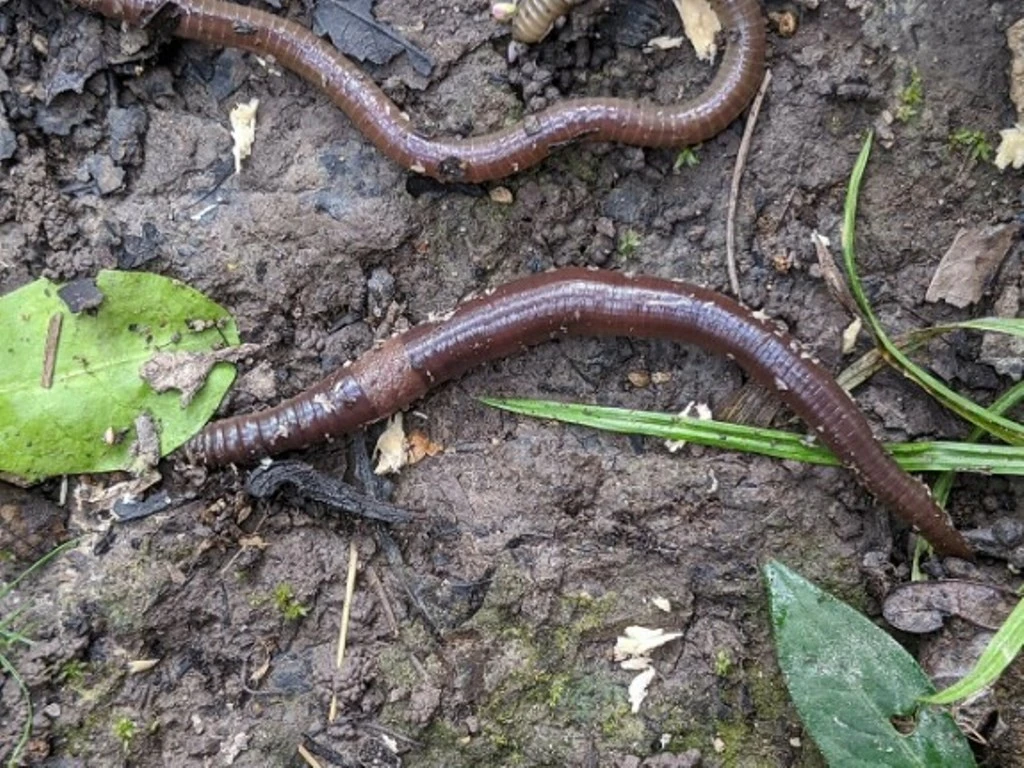
At the same time, the worms themselves are extremely effective invaders. Many species of the genus Amynthas are capable of parthenogenesis—reproducing without a partner. A single worm can effectively establish a new population. Their mustard-sized eggs are almost invisible in the soil, and they survive even cold winters. This makes them extremely difficult to control.
Worms spread through garden soil, mulch, compost, container plants, and even fishing bait. Just a small amount of contaminated soil can spread, and dozens of individuals can appear in a new location. Unlike many invasive species, it's nearly impossible to create a physical barrier: the soil itself becomes the carrier.
California is of particular concern to biologists. Although the climate in many parts of the state is drier than in the eastern United States, moist forests, parks, and suburban gardens can provide an ideal environment for new colonies. Given the size of California's agriculture and gardening industries, the worms' spread could accelerate very quickly.
Interestingly, the problem of invasive earthworms was long underestimated. People tended to think of worms as inherently "good" animals. But ecology isn't that simple: a beneficial species in one ecosystem can become destructive in another. Jumping worms are a good example of how even a small and seemingly harmless animal can radically alter an entire forest.
Today, scientists are trying to understand whether their spread can at least be slowed. Methods of thermal soil treatment, biological control, and methods for detecting cocoons are being investigated. But for now, the main defense remains prevention: testing garden soil, being careful when transporting plants, and monitoring compost.
Because, as it turns out, an ecological catastrophe can sometimes be caused not by wolves, locusts, or giant snakes, but by a few wriggling worms the length of a pencil.