Nobel Laureate Claims We're Living in the Wrong Universe: By 2026, Scientists Uncover Something Bizarre (7 Photos)
Nobel laureate Adam Riess has spent years studying the expansion of the universe. He was part of the team that co-discovered dark energy, the mysterious force driving cosmic expansion to accelerate.
Recently, the astrophysicist made a startling claim: humanity may have fundamentally misunderstood how the universe works. 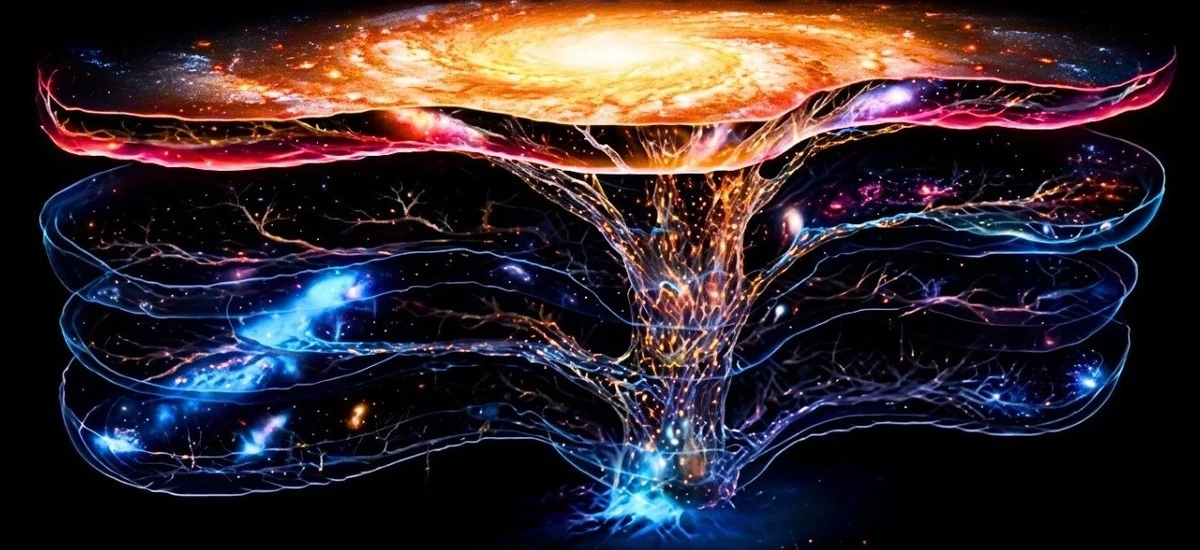
His warning stems from observations made by two of the world's most powerful telescopes, which revealed that the actual cosmos behaves differently than our calculations predict.
Put simply, scientists built a detailed cosmological model, projected its evolution over billions of years, and got one answer. But when they looked through their telescopes, they saw something entirely different.
By 2026, another puzzle deepened the mystery. Galaxies discovered by the James Webb Space Telescope resemble structures that should only form in a universe governed by different properties of dark matter.
It appears the discrepancy touches the very foundations of modern cosmology.
The Universe Is Expanding Too Fast 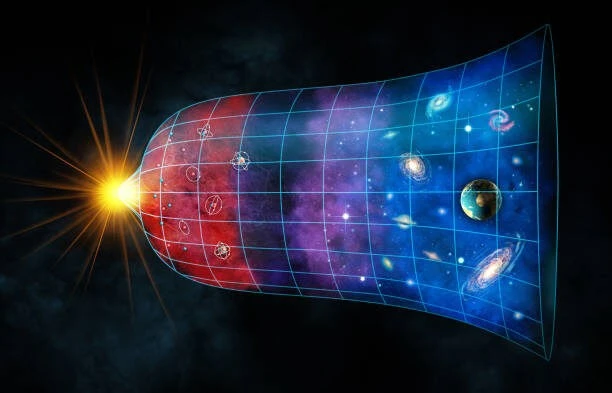
Astronomers have long known that galaxies are flying apart as space itself expands. The farther away a galaxy is, the faster it recedes from us.
The rate of this expansion is defined by the Hubble constant. While the name suggests a well-established, precise figure, scientists keep getting two completely different answers.
The first value was calculated using the cosmic microwave background—the oldest light in existence, dating back to shortly after the Big Bang. It carries a cosmic footprint of the early universe.
The Planck satellite mapped this light, enabling scientists to simulate how the cosmos should have evolved over the next 13.8 billion years. According to these calculations, today's universe should be expanding at roughly 67 kilometers per second per megaparsec. 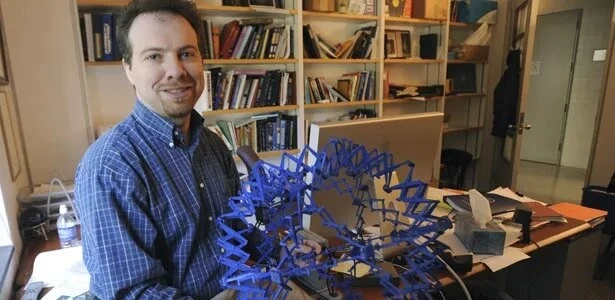
However, Adam Riess's team set out to measure the expansion rate directly by gauging distances to nearby galaxies and calculating how fast they are currently moving away.
Their result came out to about 73 kilometers per second per megaparsec. This means the universe around us is expanding about nine percent faster than theoretical models dictate.
In everyday terms, a nine percent difference might seem negligible, but in cosmology, it is massive. The expansion rate dictates the age of the universe, cosmic distances, and our fundamental understanding of dark energy.
It was as if scientists were observing two different universes at once: one preserved in ancient light expanding at 67, and the local universe today expanding at 73.
James Webb Was Supposed to Find the Error 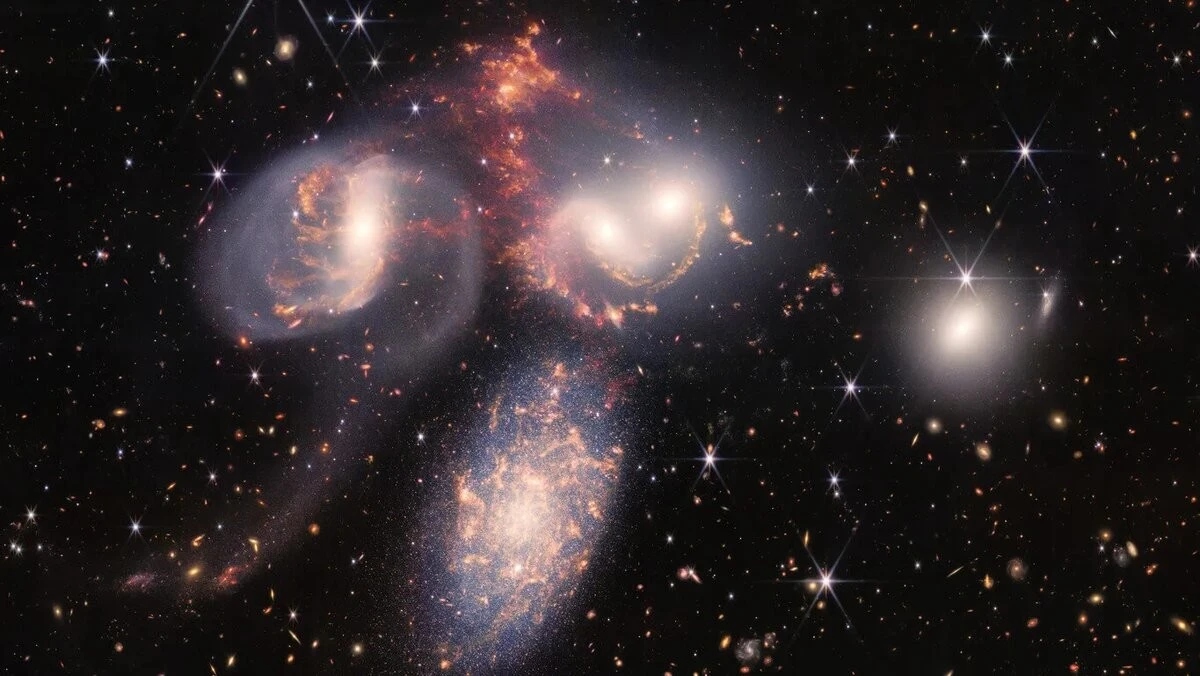
At first, astronomers assumed the discrepancy stemmed from measurement errors. To measure cosmic distances, Riess’s team relied on Cepheid variables—stars whose brightness pulses with predictable regularity.
By measuring a Cepheid's pulsation rate, astronomers can calculate its true intrinsic brightness. Comparing that to how bright the star appears from Earth reveals its distance.
The catch was that Cepheids often sit in crowded stellar fields. The Hubble Space Telescope could sometimes blur their light with neighboring stars, making distances seem shorter and the expansion rate artificially higher.
The James Webb Space Telescope was expected to settle the matter. Its advanced infrared instruments can peer through cosmic dust and clearly resolve closely packed stars.
Many astrophysicists anticipated that Webb would spot Hubble’s error, bringing the measured rate down from 73 to the predicted 67 kilometers per second per megaparsec.
Instead, Webb confirmed its predecessor’s findings. Two completely distinct observatories examined the same stars and returned virtually identical distance measurements.
That was when Adam Riess suggested that scientists might be misunderstanding the universe itself. The flaw they spent years looking for in their instruments is likely embedded in our theoretical model.
What It Means to Live in the "Wrong" Universe 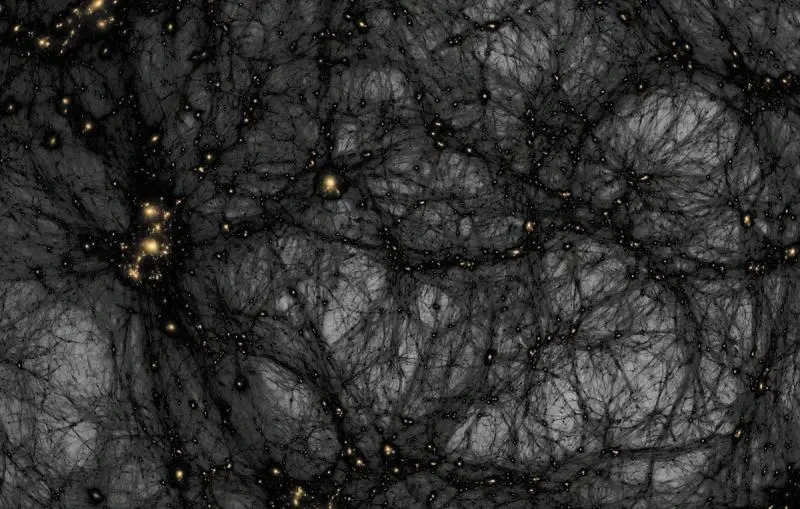
Riess isn't suggesting that the Solar System slipped into an alternate reality. Rather, the evidence shows that the universe around us exhibits properties it simply shouldn't have according to standard physics.
Scientists have a clear picture of the early cosmos thanks to cosmic microwave background radiation, and they can precisely measure the universe today. Yet connecting these two snapshots with a single coherent narrative has proven impossible.
Imagine finding a baby photo of a person and using standard growth charts to predict what they should look like at age 50. But when the adult arrives, they are significantly taller and older-looking than predicted—even though both the baby picture and current measurements are 100% accurate.
That would mean something crucial happened during those missing years. Cosmologists are now hunting for a similar missing link between the early cosmos and the modern universe.
Perhaps shortly after the Big Bang, space experienced an extra push—a hypothetical process scientists call "early dark energy."
This transient energy surge could have briefly accelerated expansion before vanishing. The residual effects of that brief kick would persist over billions of years, accounting for the higher speed detected by Hubble and Webb today.
Other hypotheses are even bolder: the universe might harbor undiscovered exotic particles, obey modified laws of gravity, or conceal an unknown fundamental force missing from the Standard Model.
A New Anomaly Discovered in 2026 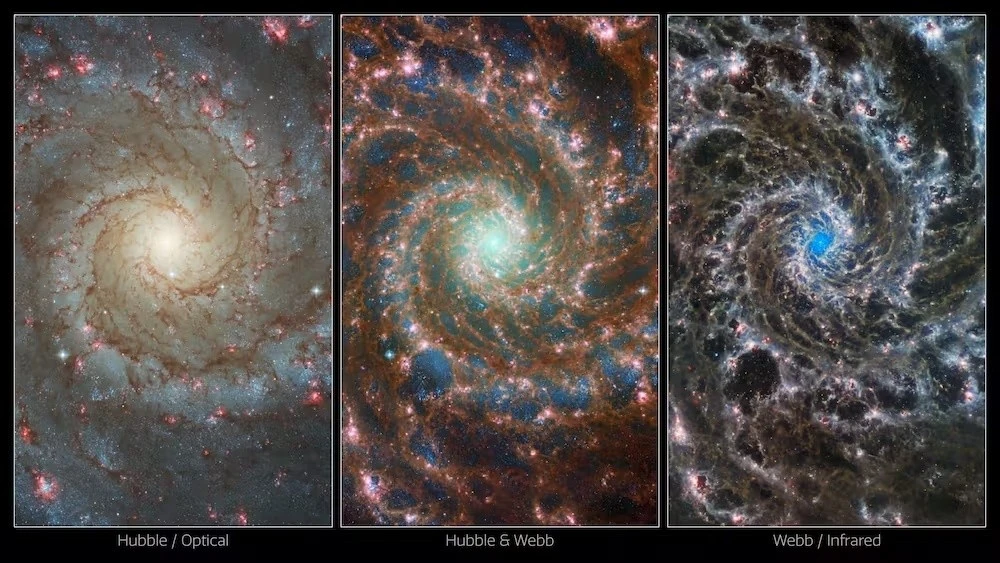
At the same time, the James Webb Space Telescope began discovering surprisingly mature galaxies in the infant universe. Some existed just a few hundred million years after the Big Bang, yet looked as though they had been evolving for billions of years.
Initial mass estimates were slightly inflated due to supermassive black hole activity. Yet even after accounting for this, there remain roughly twice as many massive early galaxies as the standard model predicts.
Another anomaly was reported in the February 2026 issue of Nature Astronomy. Researchers analyzing young galaxies spotted by Webb and Hubble noticed an unusually high proportion of elongated structures.
Rather than spherical blobs, these galaxies resembled long cigars or bananas. Under standard models, young stellar systems should collide more frequently, merge, and take on irregular or rounded shapes.
Researchers ran computer simulations using different models of dark matter. Standard cold dark matter struggled to produce these elongated shapes, whereas warm and wave dark matter models yielded structures strikingly similar to the actual observations.
This detail is critical because dark matter acts as the invisible scaffolding of the cosmos. It governs where ordinary matter accumulates, how galaxies grow, and how the universe as a whole takes shape.
If dark matter behaves differently than assumed, much of our framework for galaxy formation could be wrong. In that case, JWST's puzzling discoveries may be the inhabitants of a universe that evolved under entirely different rules.
Which Cosmos Is Real? 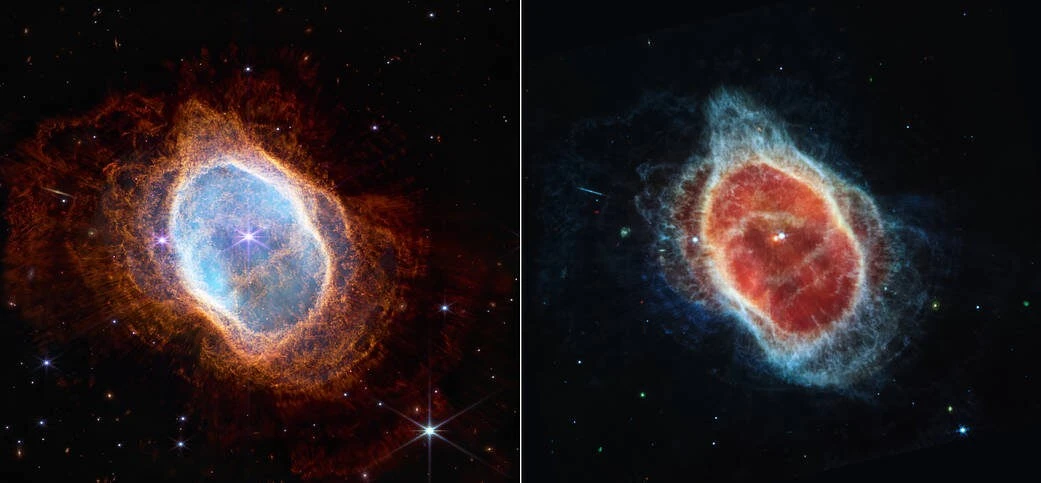
The standard cosmological model still holds up well in explaining many phenomena. The problem is that every year brings more perplexing anomalies that defy it.
The universe expands faster than theoretical models dictate. Early galaxies matured too quickly, and the shapes of many early structures align far better with alternative dark matter physics.
Thus, speaking of living in the "wrong universe" captures the current crisis in cosmology well. The universe reconstructed from ancient background light is fundamentally at odds with the universe our telescopes observe nearby today.
Somewhere across its nearly 14-billion-year timeline, humanity missed a key cosmological event—something that altered space's expansion rate and reshaped the birth of early galaxies.
Cosmology faced a similar crisis in the 1990s, when calculations suggested the universe was younger than its oldest stars. The breakthrough came with the discovery of dark energy—a finding that revolutionized physics and earned Adam Riess his Nobel Prize.
Now, the same scientist stands before another contradiction that cannot be brushed aside as a calculation error. If history repeats itself, JWST's baffling findings could spark the discovery of yet another hidden layer of our cosmos...