Behind the Scenes of 'The Terminator': Hauling an 85-Pound Robot on His Shoulders (6 Photos)
In the finale of 1984's
The Terminator
, a gleaming metallic skeleton relentlessly pursues Sarah Connor. For several of these shots, the puppet's torso was mounted directly onto the back of effects artist Shane Mahan, who had to haul around nearly 85 pounds (39 kg) of animatronic machinery. 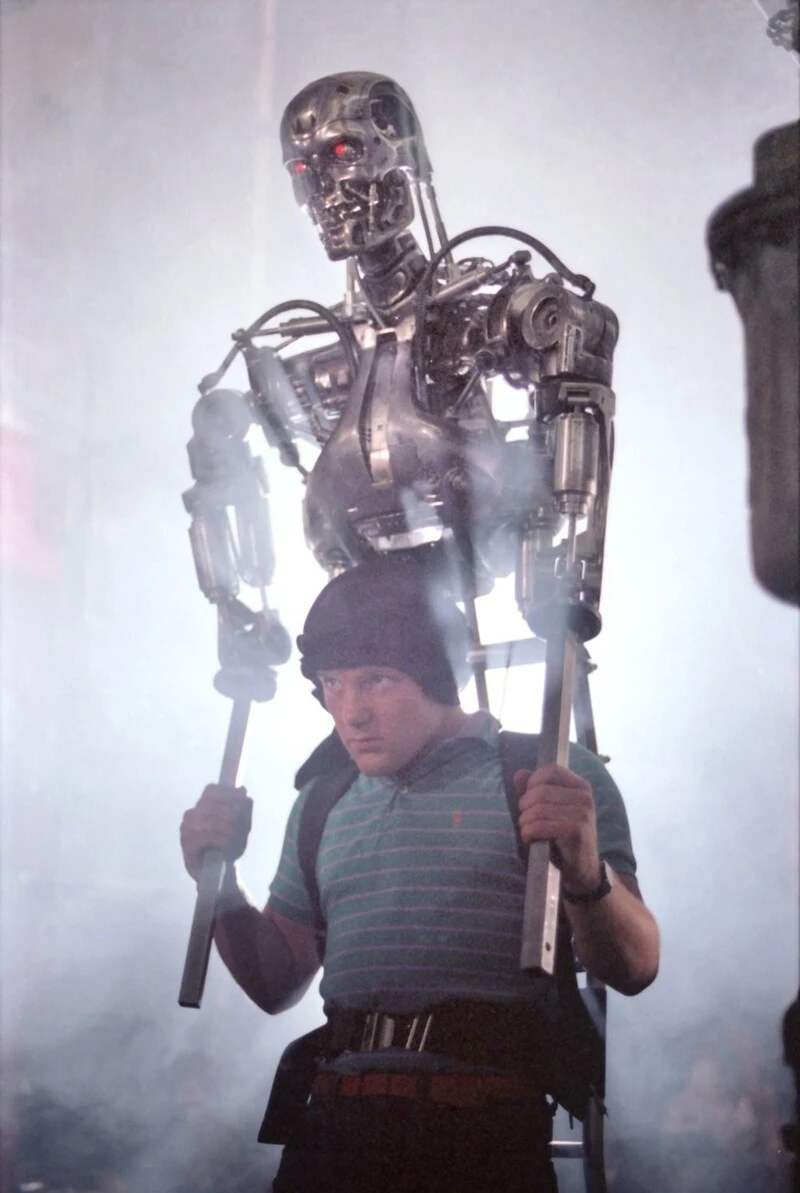
Shane Mahan wearing the back-mounted puppet rig.
James Cameron originally intended to capture the revealed endoskeleton using stop-motion animation with a miniature puppet. However, Stan Winston proposed building a full-size practical puppet as well. Wide walking shots were still left to stop-motion, but close-ups allowed the team to place the life-sized machine right in front of the lens.
The skull was sculpted over a life cast of Arnold Schwarzenegger's head. The components were cast in steel-reinforced epoxy resin and fiberglass, with a specialized finish giving it a menacing metallic sheen. During early test assemblies, the machine looked completely different. 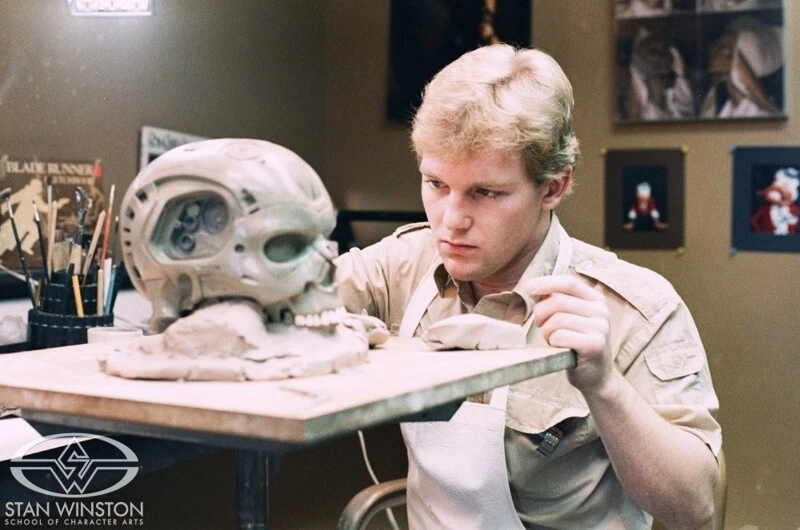
Shane Mahan prepping the skull sculpt for mold making. 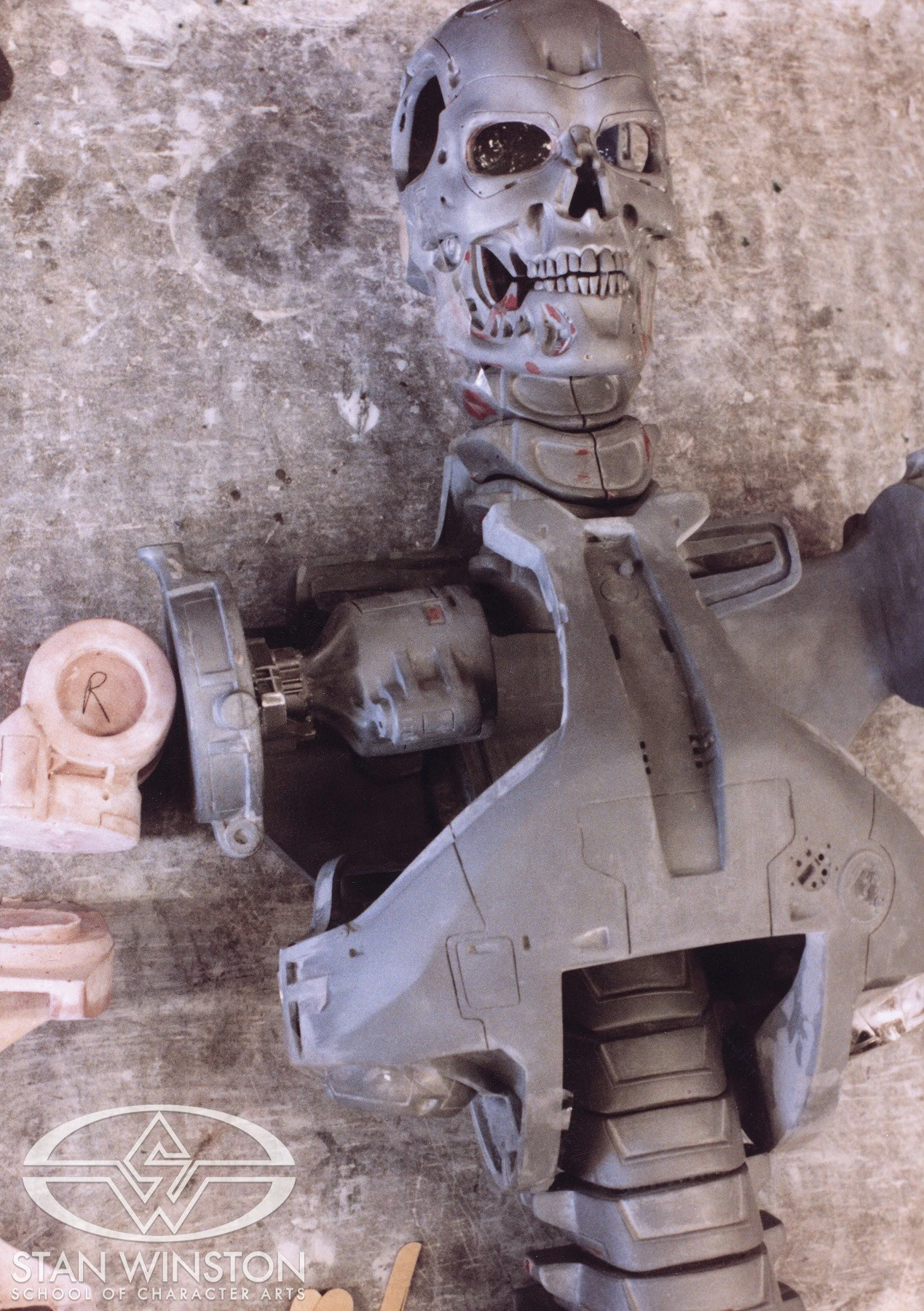
Test assembly of the epoxy resin components.
To bring the machine to life on camera, the team created a dedicated head-and-torso assembly that strapped onto the puppeteer's back, directly translating Mahan's physical movements to the puppet. Mahan was selected in part due to his shorter stature; had a taller crew member worn the backpack rig, the towering skeleton would have appeared impossibly massive.
Cinematographer Adam Greenberg tackled that same sense of scale through purely photographic techniques. In an April 1985 interview with
American Cinematographer
, he explained how clever lighting solutions helped maximize the film's modest $6 million budget. The nocturnal streets look as though they were filmed under ambient light, even though the crew brought in substantial supplementary illumination. 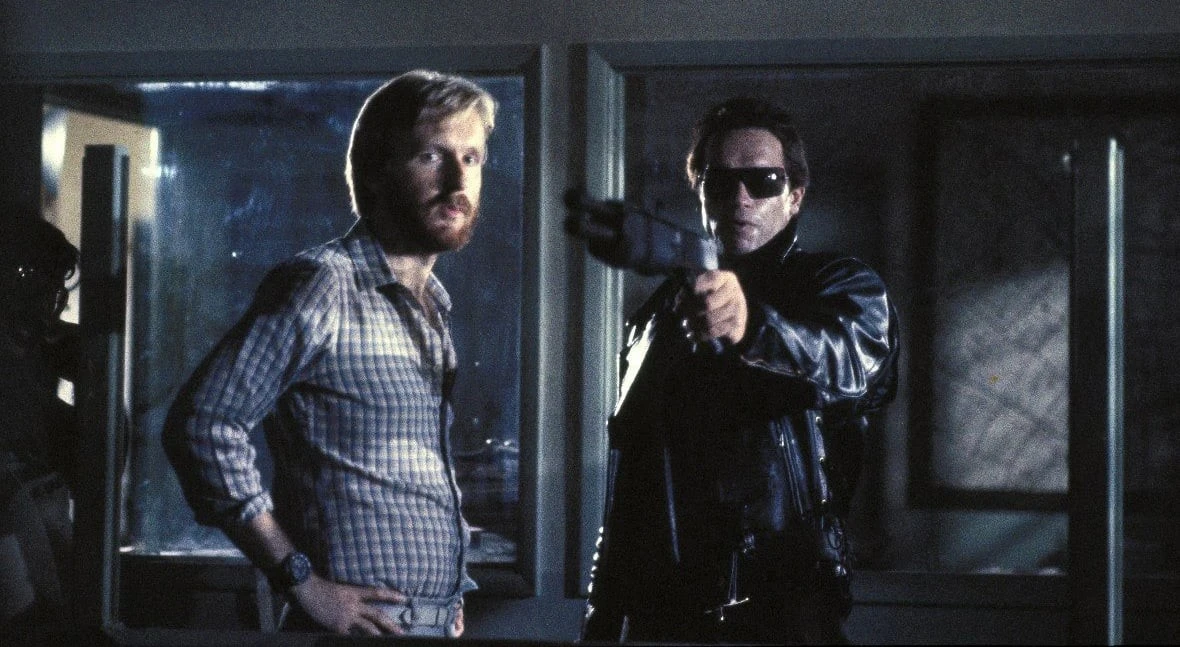
James Cameron and Arnold Schwarzenegger filming the police station shootout.
Greenberg approached each character with distinct lighting: soft, natural illumination for Linda Hamilton, dramatic, harsh shadows for Michael Biehn, and stark, hard light on Schwarzenegger to emphasize his mechanical visage. Extreme low angles made the Terminator appear even more towering and intimidating.
Schwarzenegger was already an imposing presence, but Greenberg wanted to drop the lens down to floor level while maintaining the freedom to move. A Steadicam was simply out of the budget. Working with his key grip, Greenberg devised an ingenious rig made from two L-shaped aluminum tubes: the camera was mounted on one end, balanced by sandbags on the other. 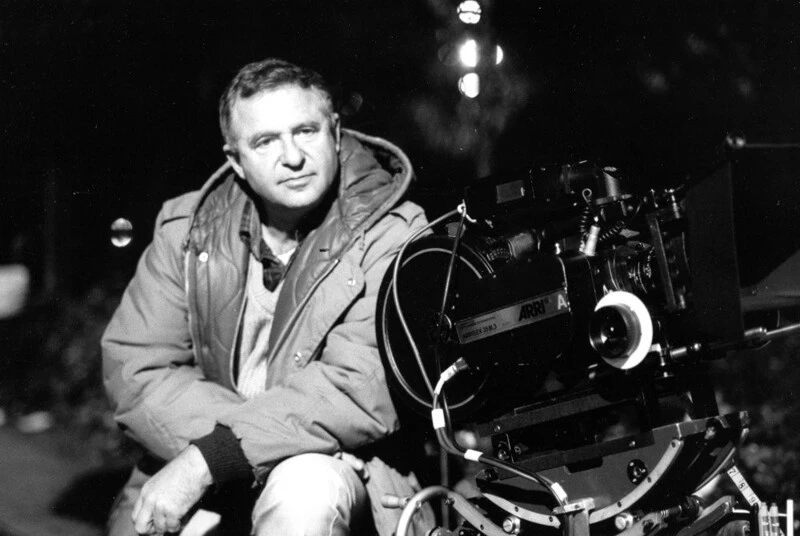
Cinematographer Adam Greenberg.
The crew dubbed the contraption the "Adam Rig." It allowed the cinematographer to sprint along with the camera hovering inches from the ground, tracking the frame on a small video monitor. This is how they captured the frenetic shootouts at the Tech Noir nightclub and the police station—hallmark scenes where the Terminator looms over everything in his path.
Shooting the puppet engulfed in real flames once again fell to Winston’s team. Archival photos show the puppeteers wrapped in aluminum foil to shield against the heat. In these shots, the puppet’s outer foam rubber skin burned away, leaving the plaster structure of the head intact beneath. 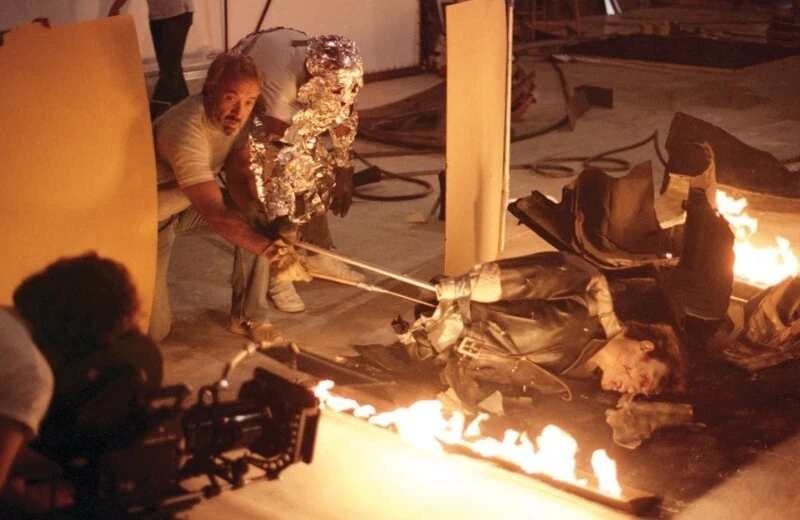
Operating the puppet amid real flames. Aluminum foil served as thermal protection for the puppeteers.