The common mantis: why is it the best among all other praying mantises? (10 photos)
The most important proof of its greatness is the insect's range. Even before encountering humans, the common mantis had spread incredibly widely. They can be found throughout virtually the entire temperate and subtropical zone of the Northern Hemisphere. From Portugal to China, including North Africa and hundreds of small coastal islands. 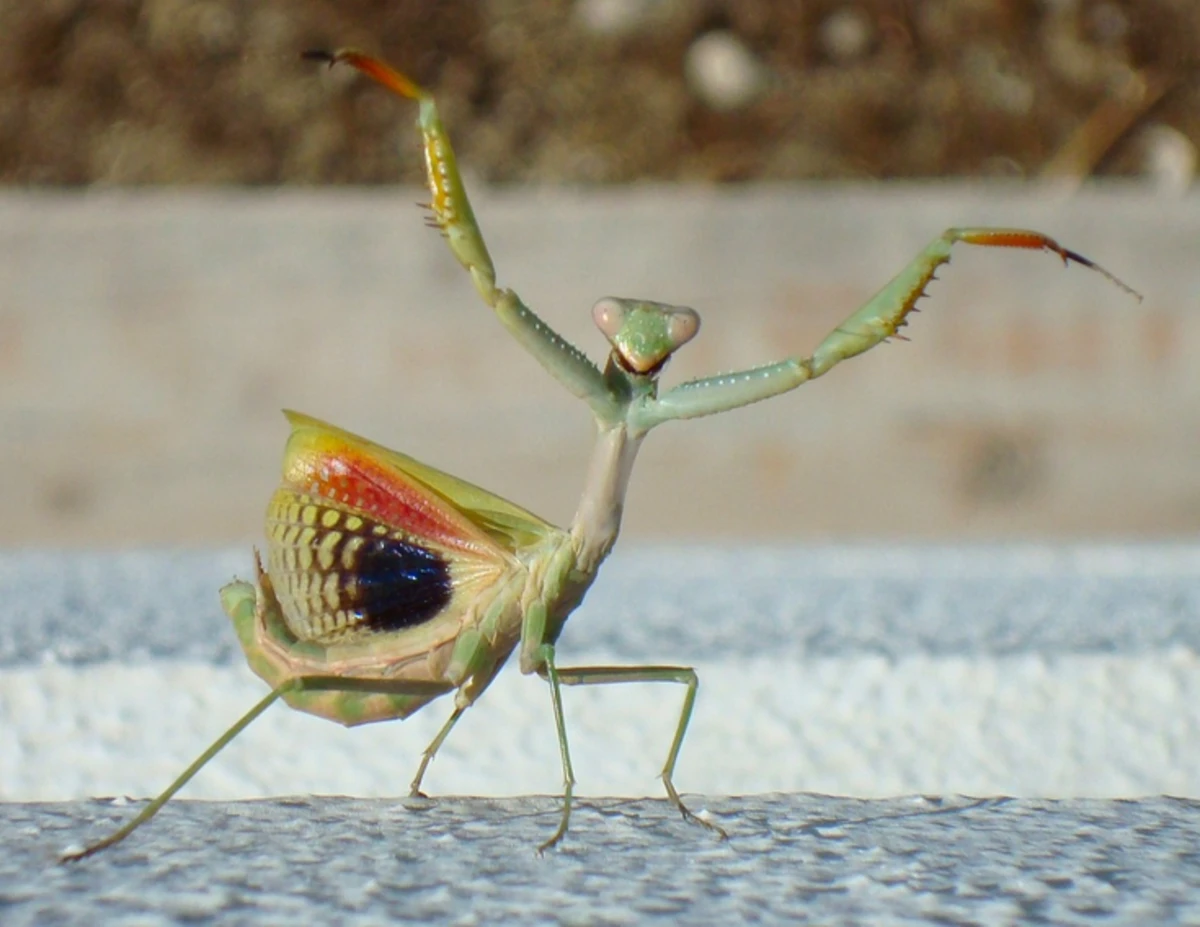
Hello! 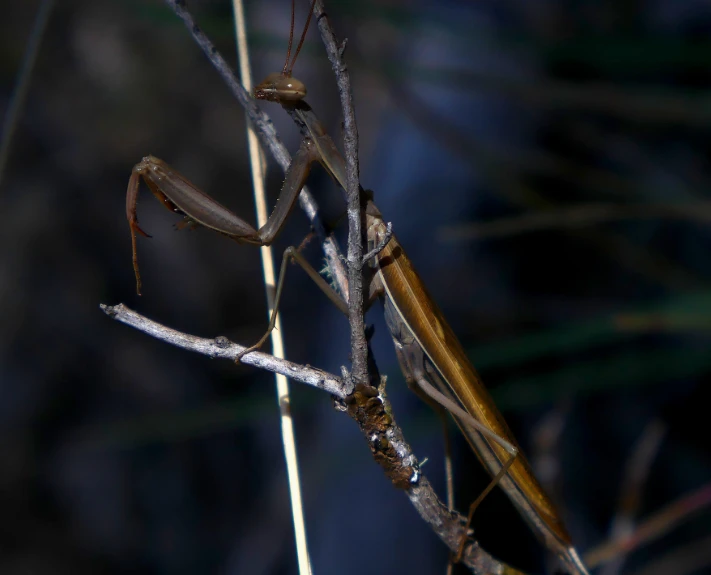
Common praying mantises come in a wide variety of colors: from green to yellow and black. These insects are no fools and use their camouflage cleverly. Green ones hide on fresh greenery, yellow ones on withered leaves, and brown and black ones on tree bark.
And when Europeans began sailing back and forth on their large ships, they brought praying mantises to Australia and North America. And although locals are well aware that it's an invasive species, dangerous to the ecosystem, Americans were so enamored of this predator that the mantis became the official state insect of Connecticut! 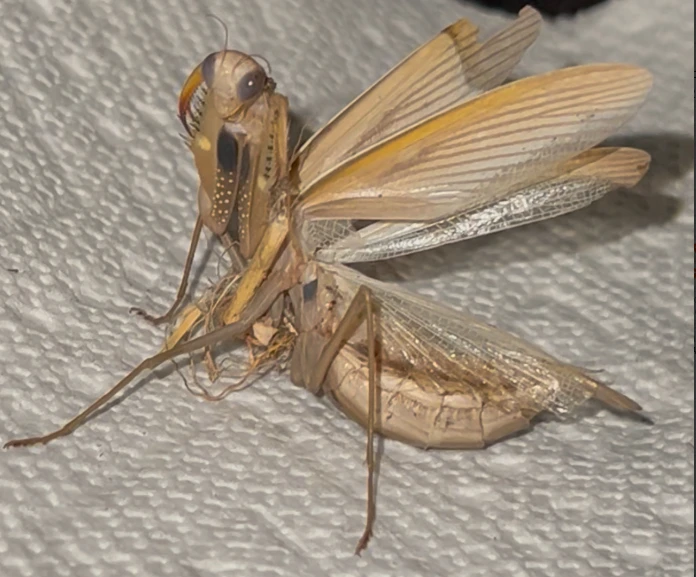
The American common mantis is taking this opportunity to send greetings to its relatives in Europe and Asia!
Its range continues to expand today—thanks to global warming. Over the past five years, the insect has reached the southern British Isles, invaded Denmark, Estonia, and is now living north of Moscow! 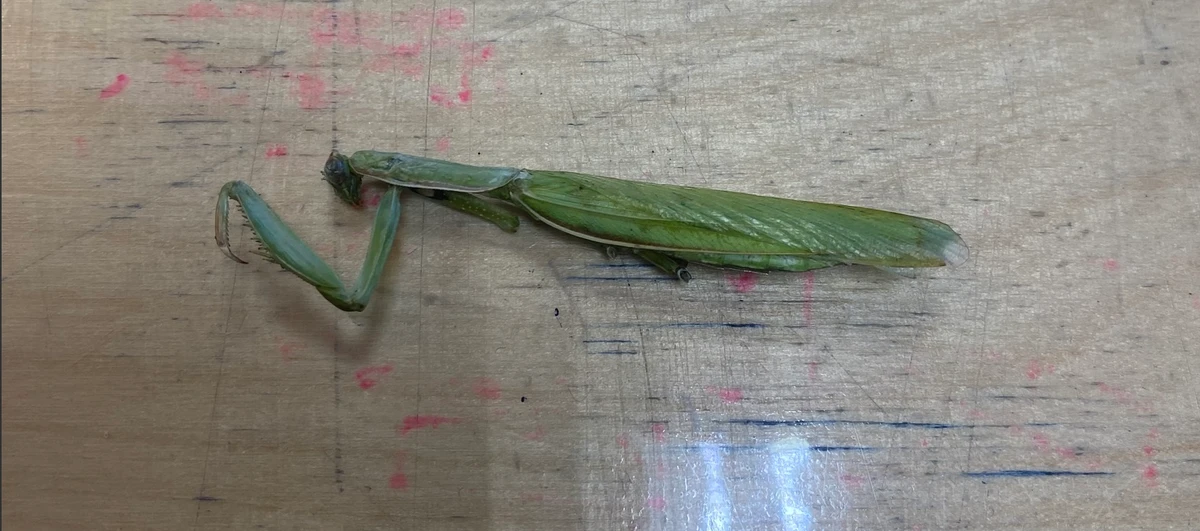
Last summer, a common mantis was discovered on Petrogradsky Island. It's still unknown whether it was a local resident or simply an escaped pet. But I'm sure we'll find out for sure this summer.
That said, the common mantis is no opportunist, but a formidable predator worthy of both respect and fear. The female is a large insect, reaching up to 9 (!) centimeters in length. Her eyes are a masterpiece of biooptics, allowing her to focus on flies and butterflies flying at full speed. And her honed reflexes and modified front legs allow her to catch those very flies right in mid-flight! 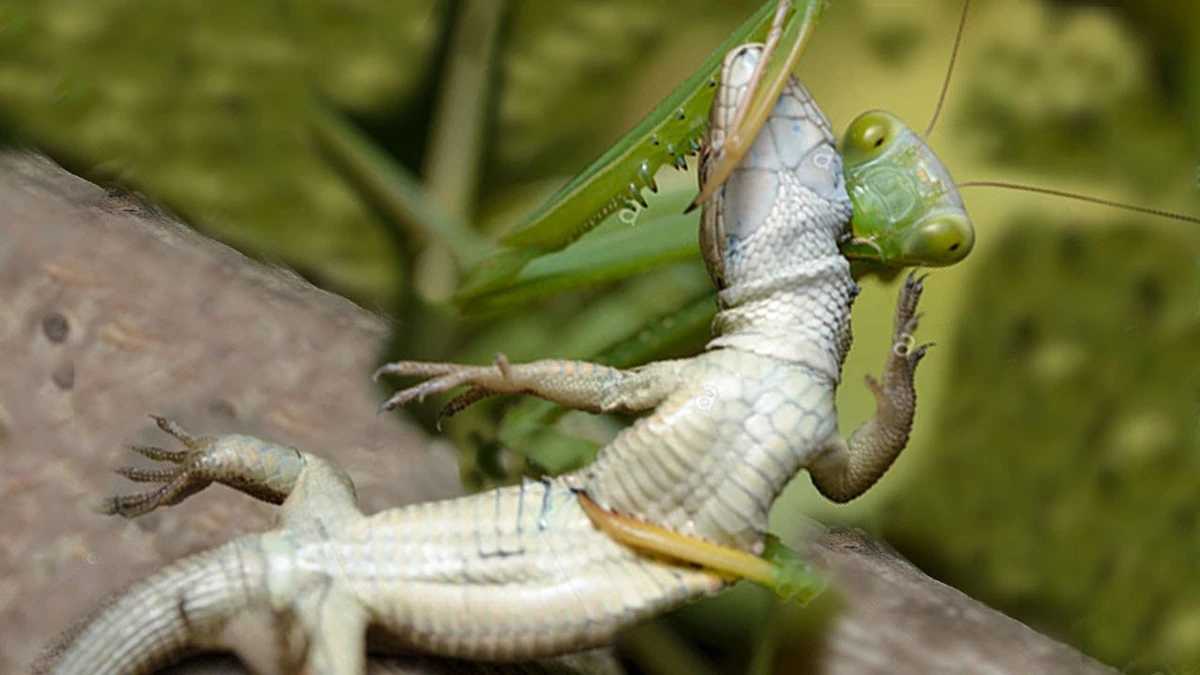
And not just flies...
Males, however, are just as impressive as females. Yes, they're 2-3 centimeters smaller, but their eyes are even larger, and their antennae—their sense of touch and smell—are even longer. Therefore, although males can't catch larger prey, they have a higher chance of a successful hunt. 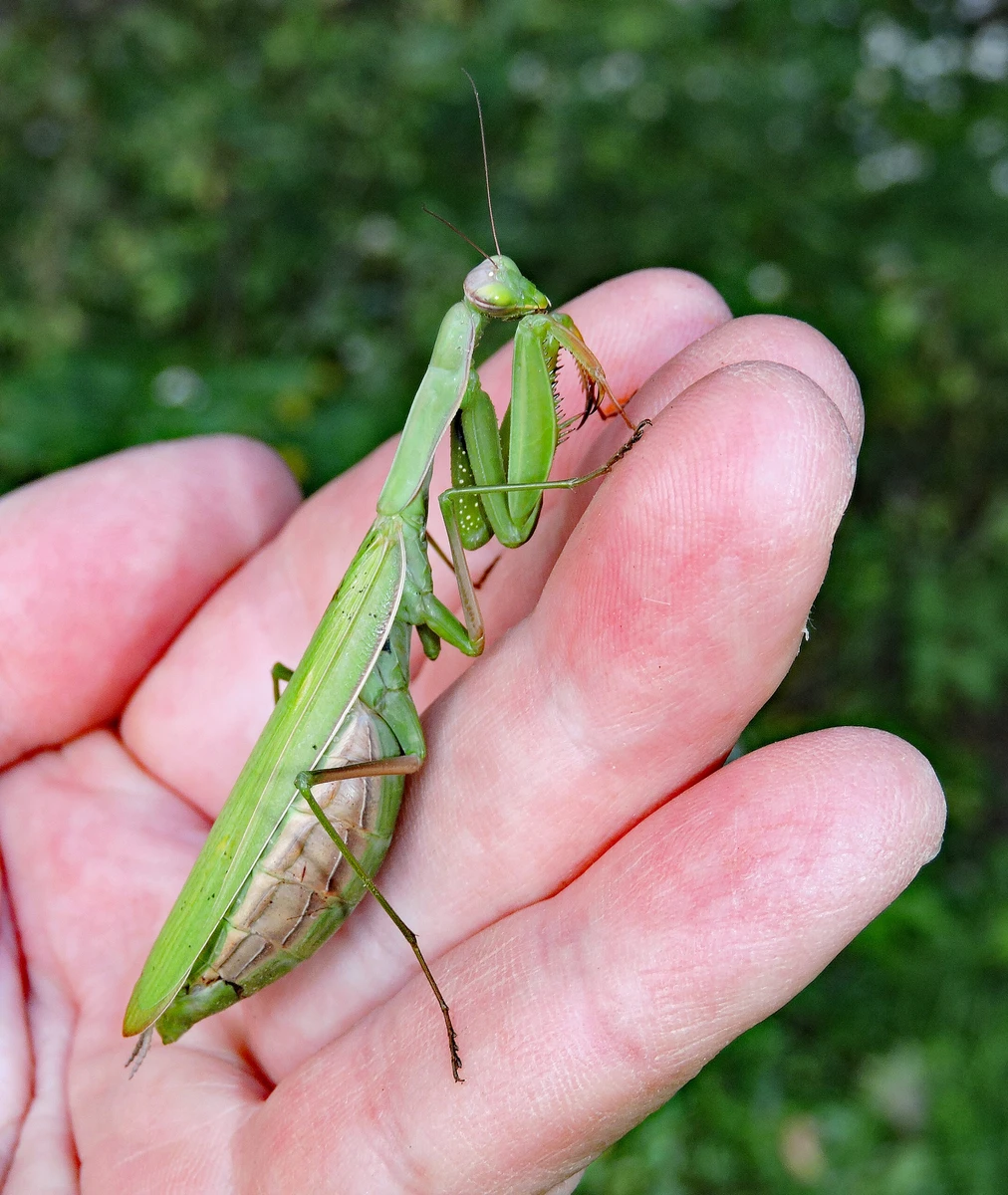
A female praying mantis eyes a potential meal...
But I bet you're not interested in their hunting prowess, but in their mating games, with a hint of cannibalism. It begins like this: a female praying mantis, ready to reproduce, releases pheromones, which the males are supposed to detect with their enhanced senses. Upon sensing the pheromones, the mantis takes off and flies slowly but surely toward the female. 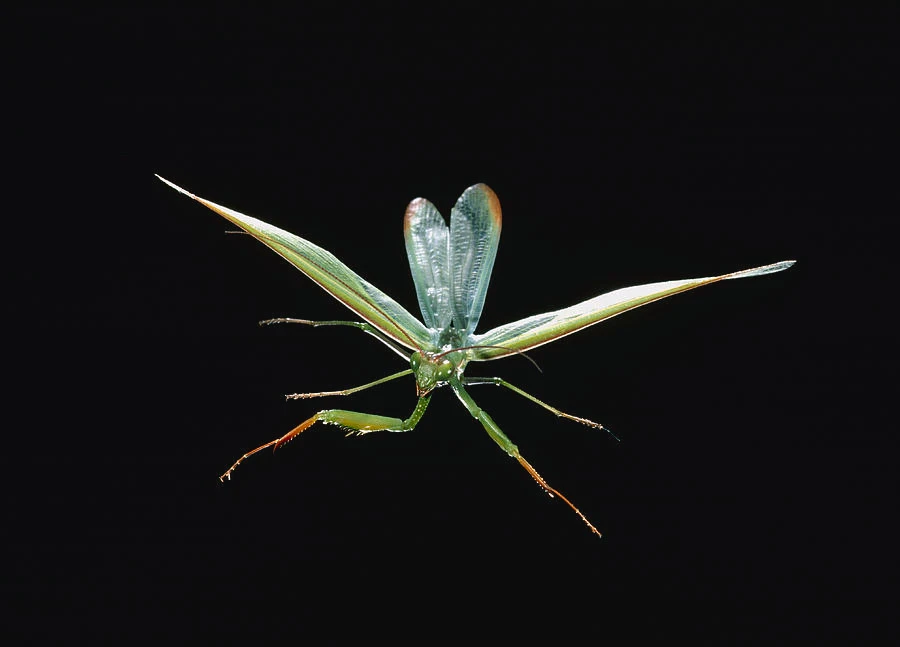
Praying mantises fly comically, with their legs spread out.
Upon reaching her, he watches carefully, trying to figure out whether he should approach the female. He has no room for error. The male isn't afraid of being eaten during mating; he's afraid of being eaten BEFORE mating. After all, mantises practice cannibalism year-round. After ensuring he won't be eaten on the spot, the male begins to slowly approach. No sudden movements, courtship dances, or even defensive displays. One unnecessary movement, and he'll go from a potential mate to an enemy. Only when he's close enough does the male lunge forward and leap onto the female's back. And then nothing depends on him. 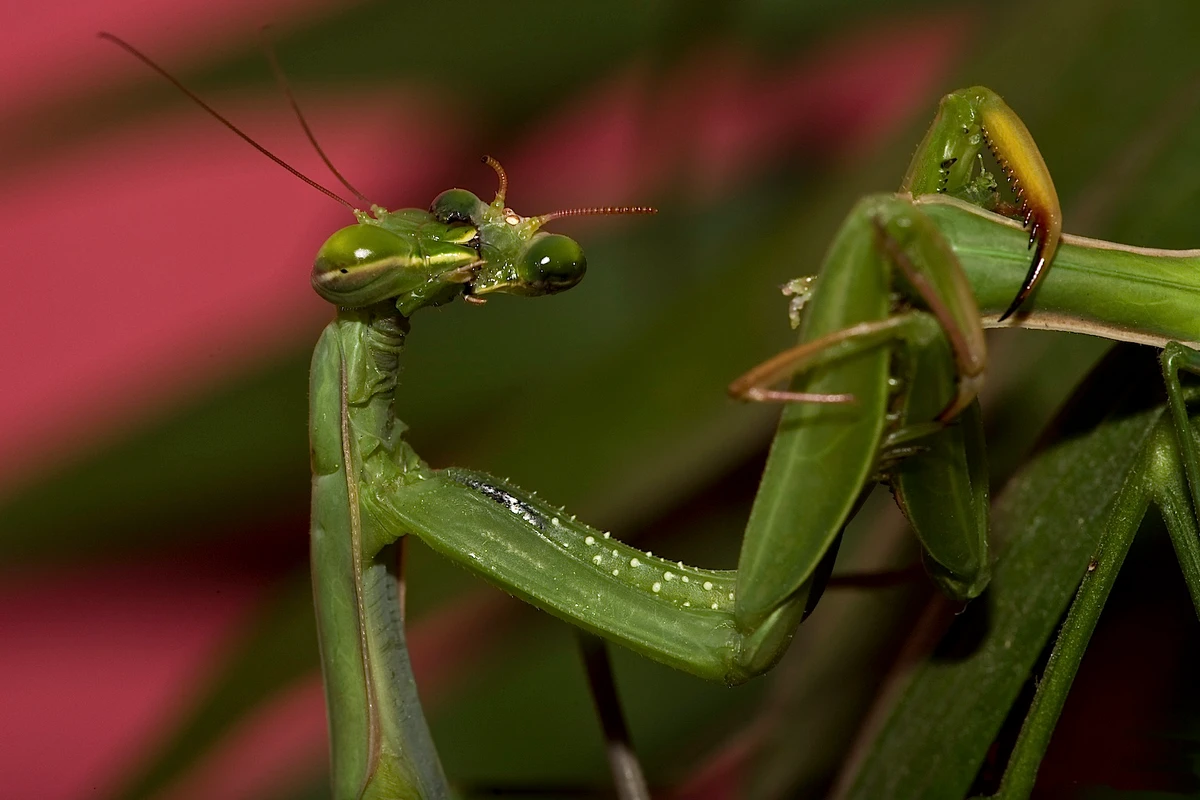
A date is a blast!
Contrary to popular belief, mating doesn't always end with a meal for one. If the female is well-fed and healthy, she can safely let the male go. After a few weeks, she will create an ootheca—a special capsule containing eggs—and that will be the end of her role as a mother, so she can safely die. Females mate only once in their lives, after which their bodies simply shut down. 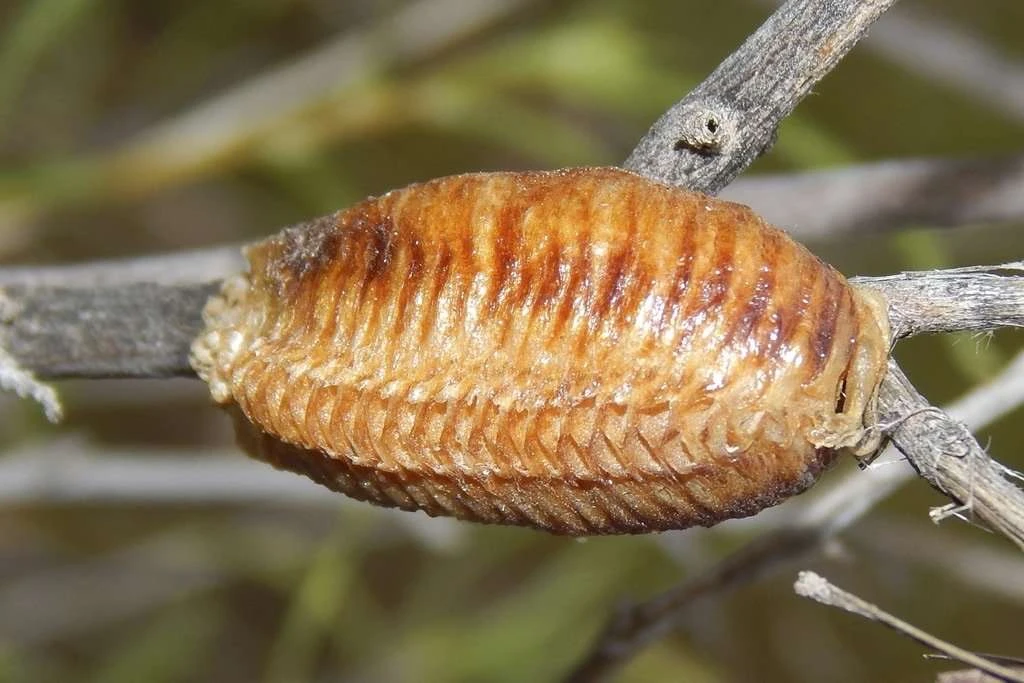
Praying Mantis Ootheca. If the word "ootheca" sounds familiar, it's because you've heard it in a different context. Cockroaches also create oothecae to protect their young, as they are related to praying mantises.
If a woman decides to dine on a male, it may be the right decision not only for her, but for him as well! In most cases, a praying mantis that successfully escapes cannibalism never mates again and quietly fades away with the first frosts. But if a female begins to eat him during mating, his headless body continues mating automatically, injecting the female with ever-increasing amounts of genetic material. This, in turn, increases the chances of successful fertilization. His death means the male's genes won't be wasted. 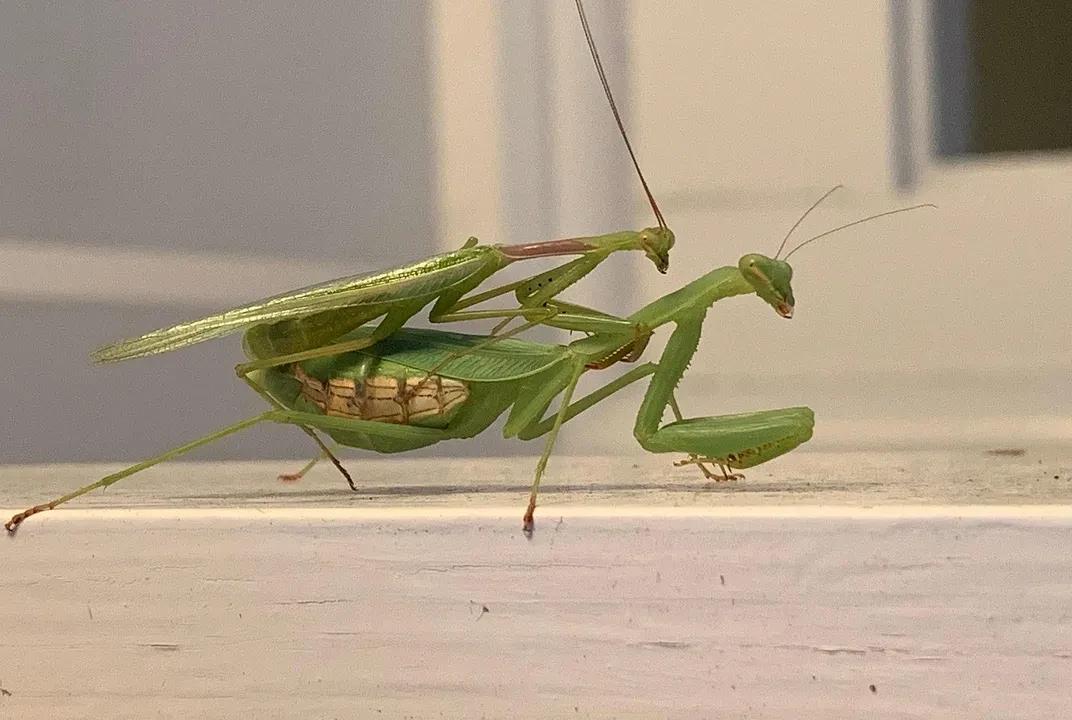
"Are you sure you won't eat me?" "Absolutely!" — Well, damn.
As a finale, I could have drawn a moral about the selflessness of praying mantises, who give their lives completely for the sake of future generations. But right now, to be honest, I'm just glad I belong to the human race and didn't have my head bitten off in the first three months of my life!