This composite image of Titan's surface was stitched together from images transmitted by the European Space Agency's (ESA) Huygens lander, which soft-landed on Saturn's largest moon on January 14, 2005. 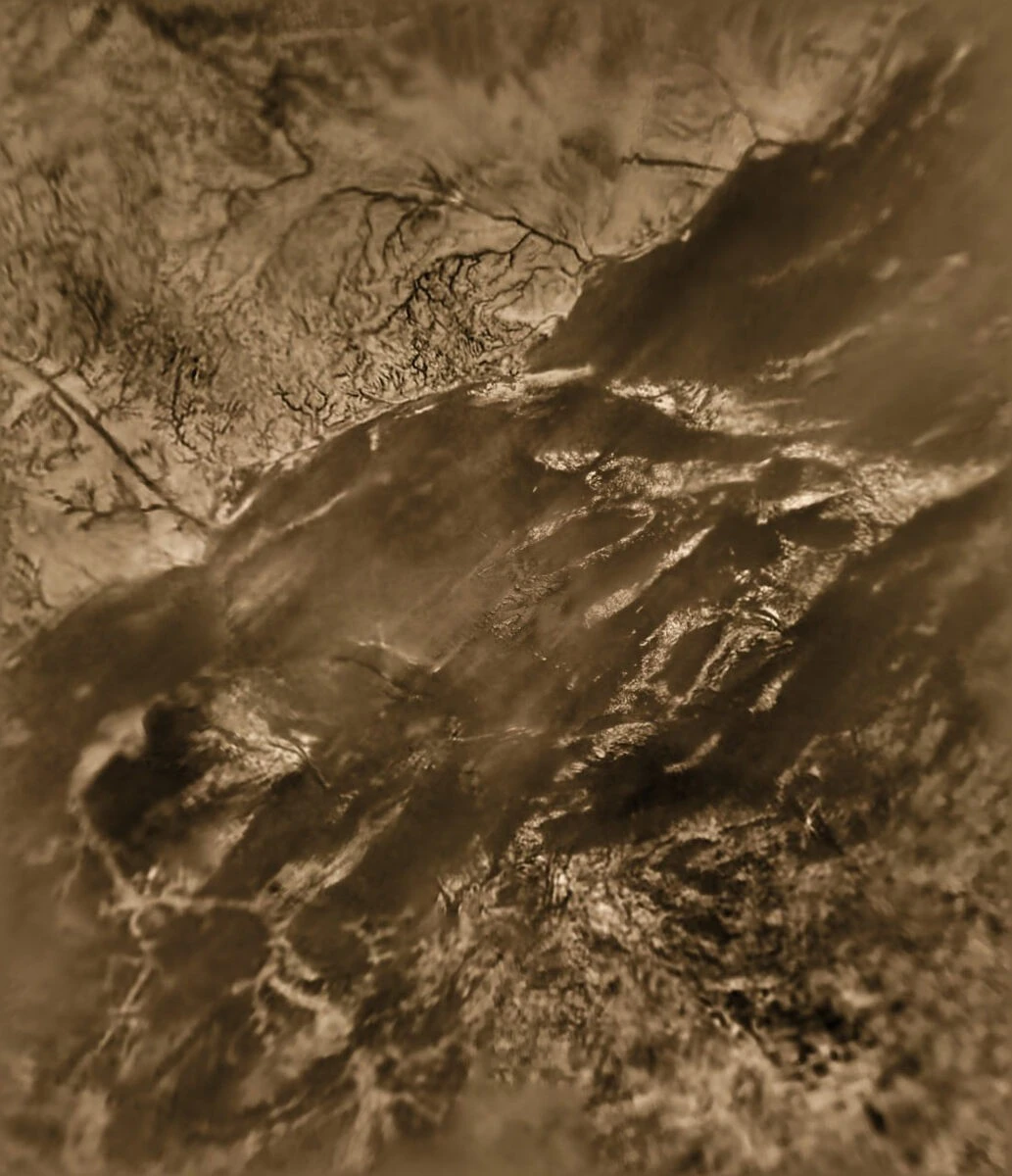
The images, taken from altitudes of 17 to 8 kilometers, reveal a world eerily similar to Earth from a distance, yet utterly alien in chemistry and conditions.
The image reveals dark channels reminiscent of terrestrial rivers, carved by liquid hydrocarbons (primarily methane and ethane). At temperatures around -180°C, methane and ethane act as water here: they evaporate, condense into clouds, and then return to the surface as rain.
Huygens is the only spacecraft to have landed in the outer solar system. Data transmitted back to Earth confirmed scientists' predictions: Titan's surface is covered in organic "sand" and rock-hard water ice, and its atmosphere is saturated with complex hydrocarbons.
Add your comment
You might be interested in:












Almost half a million dollar weapon skin
Terex Titan - the largest truck in the world (11 photos)

View from the Sky (15 photos)

An actor from "Stranger Things" directed a music

An ordinary maid from a Chilean hotel has become famous

25 dogs that madly love their little owners!

Acrylic submarine for travel to depths of up to 200 m (7

They want to sell a broken McLaren Senna for more than a
Ancient asteroid Ryugu (1 photo)

Margaret Hamilton Dies at 90: The Story of the Moon
25 Incredibly Beautiful and Rare Stones (26 Photos)
16 Fascinating and Surprising Facts About Life in Sweden

"What Is This Thing?": 20+ Bizarre Objects That

13 "Healthy" Habits You Should Actually Quit (14
Cassini Spacecraft Reveals Saturn’s Rings (10 Photos)
How Germany Got a Mountain Made of Salt (6 photos)

30 Everyday Details That Will Change How You See the World

Hypnotic and Oddly Satisfying GIFs That Show How Food Is
